Filters

13 filtered results

Clear all filters
Favorites
With answer key
Interactive

13 filtered results

Difficulty Level

Grade


Enhance your child's math skills with our engaging Problem Solving Addition Worksheets designed specifically for ages 4-6. These worksheets focus on creative problem solving, helping young learners develop critical thinking while mastering fundamental addition concepts. Each activity is tailored to capture children's interest and foster a love for learning. From colorful illustrations to real-life scenarios, students will be motivated to explore addition in a fun and interactive way. As they complete these worksheets, children will build confidence and improve their mathematical abilities, setting a strong foundation for future success. Start their math journey today with our expertly crafted resources!
Check out this FREE Trial Lesson on Addition for age 4-6!

Exactly the Same, or Not

Favorites
With answer key
Interactive
  • 4-6
  • Problem Solving
  • Addition
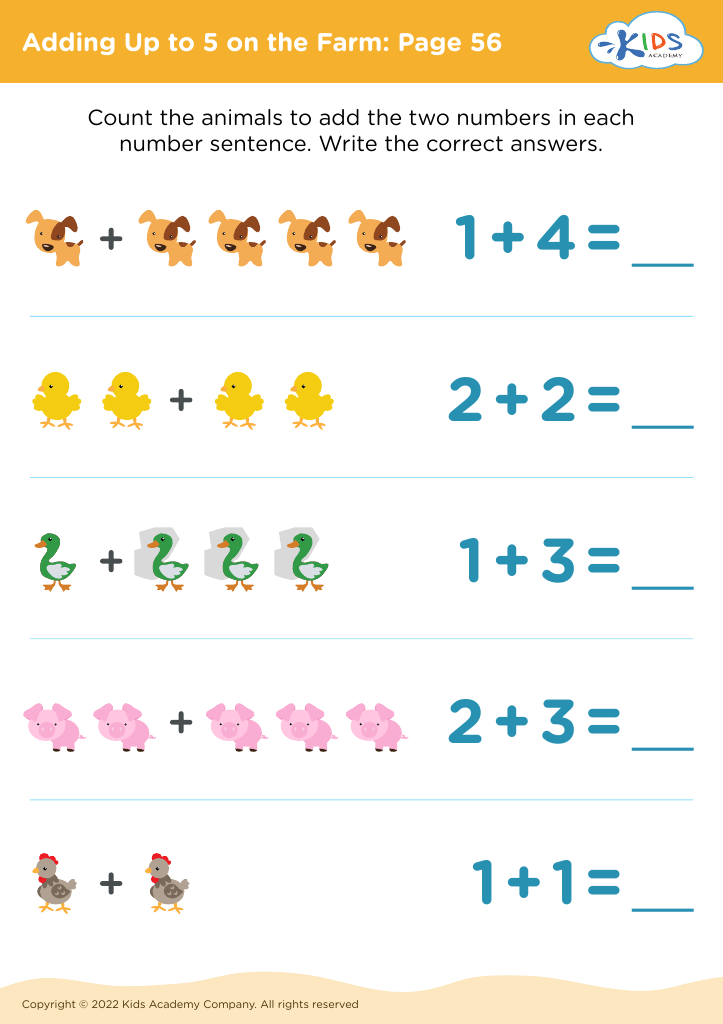
Adding Up to 5 on the Farm: Page 56
Worksheet
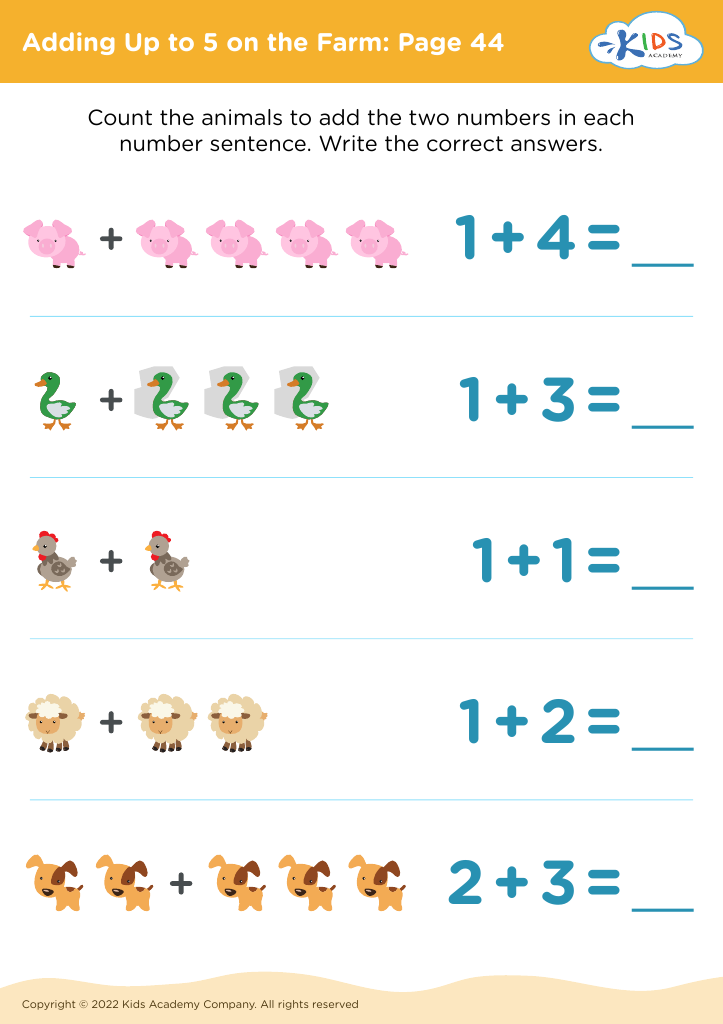
Adding Up to 5 on the Farm: Page 44
Worksheet
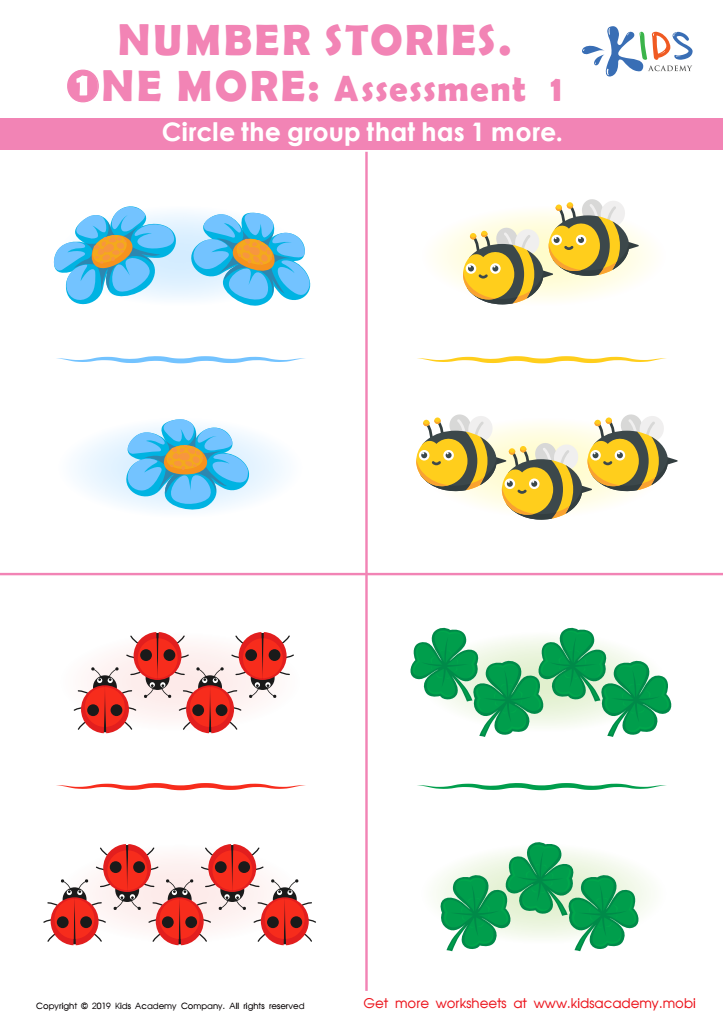
Number Stories One More - Assessment 1 Worksheet Preview

Number Stories One More – Assessment 1 Worksheet

Does your child need a fun way to practice distinguishing between different groups of numbers? This free PDF worksheet will have them circle the group that has one more. With its colorful nature drawings, it's an attractive activity that visual learners will enjoy!
Number Stories One More – Assessment 1 Worksheet
Worksheet
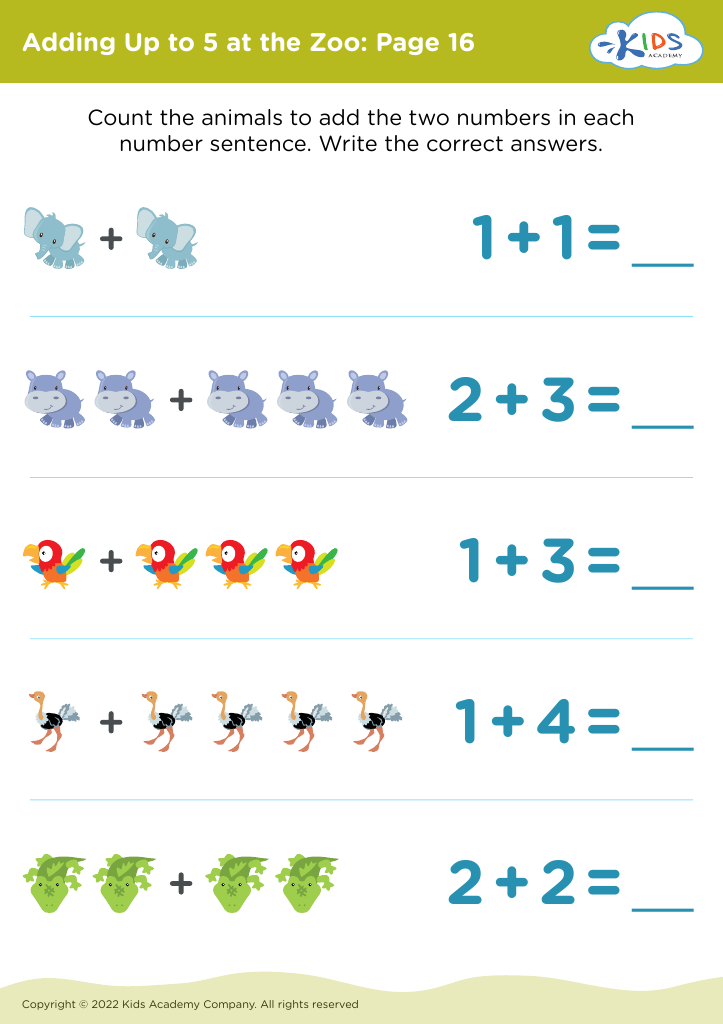
Adding Up to 5 at the Zoo: Page 16
Worksheet
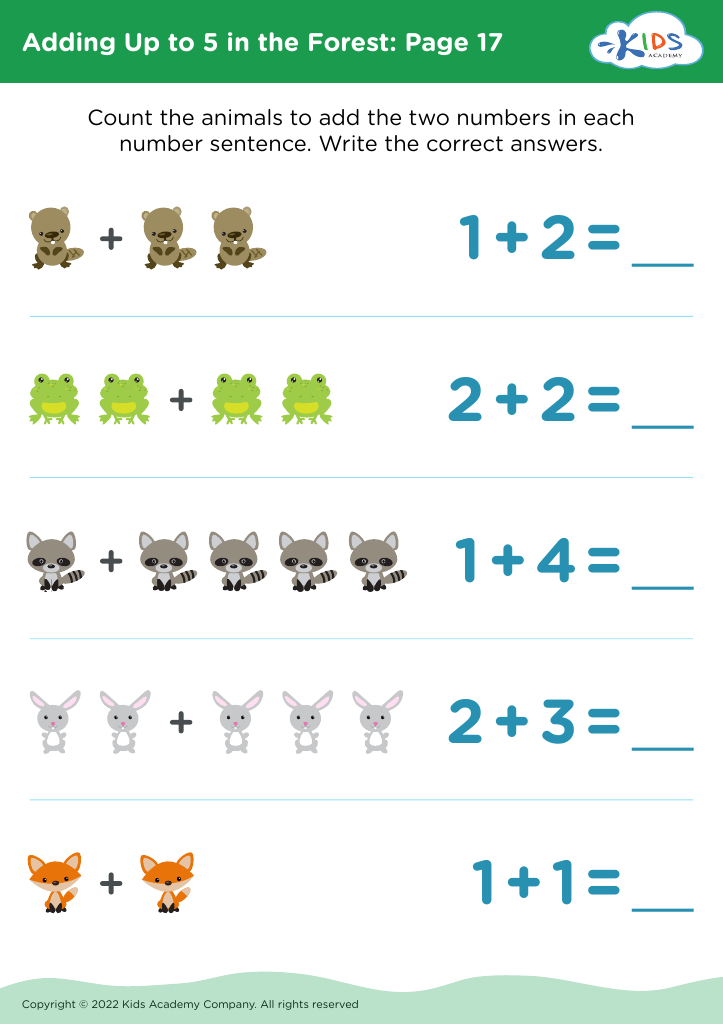
Adding Up to 5 in the Forest: Page 17
Worksheet
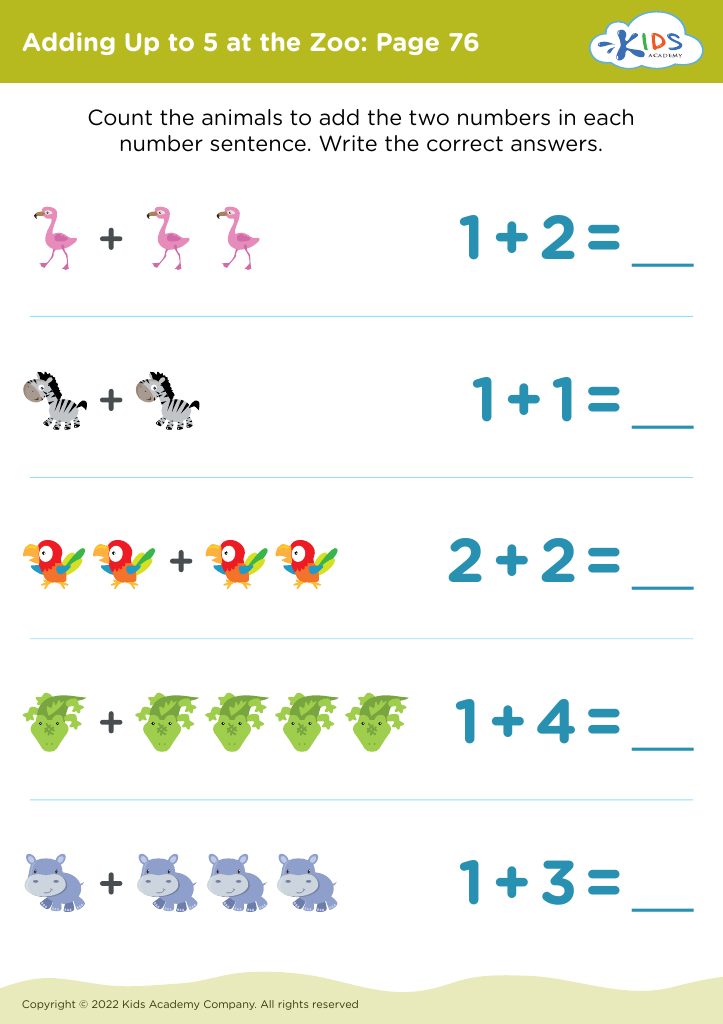
Adding Up to 5 at the Zoo: Page 76
Worksheet
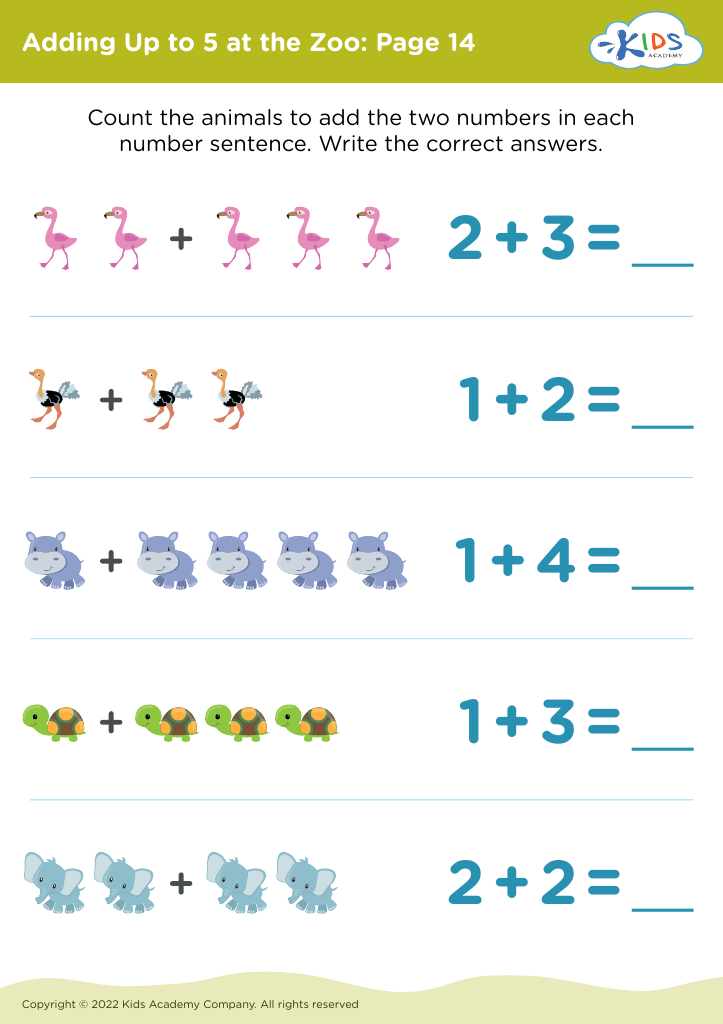
Adding Up to 5 at the Zoo: Page 14
Worksheet
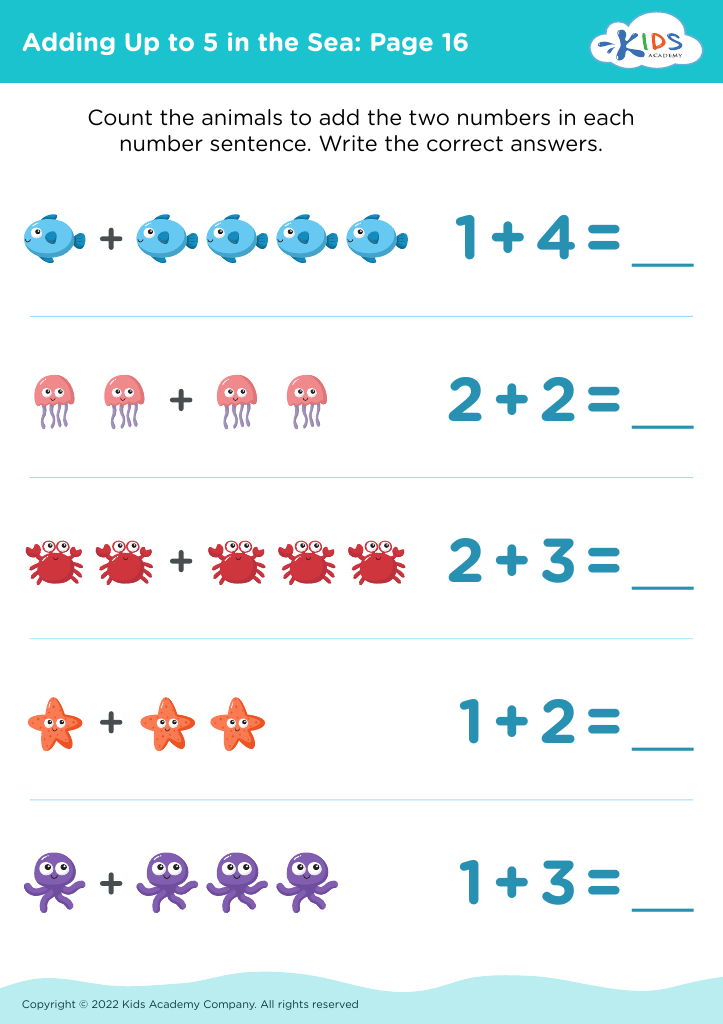
Adding Up to 5 in the Sea: Page 16
Worksheet
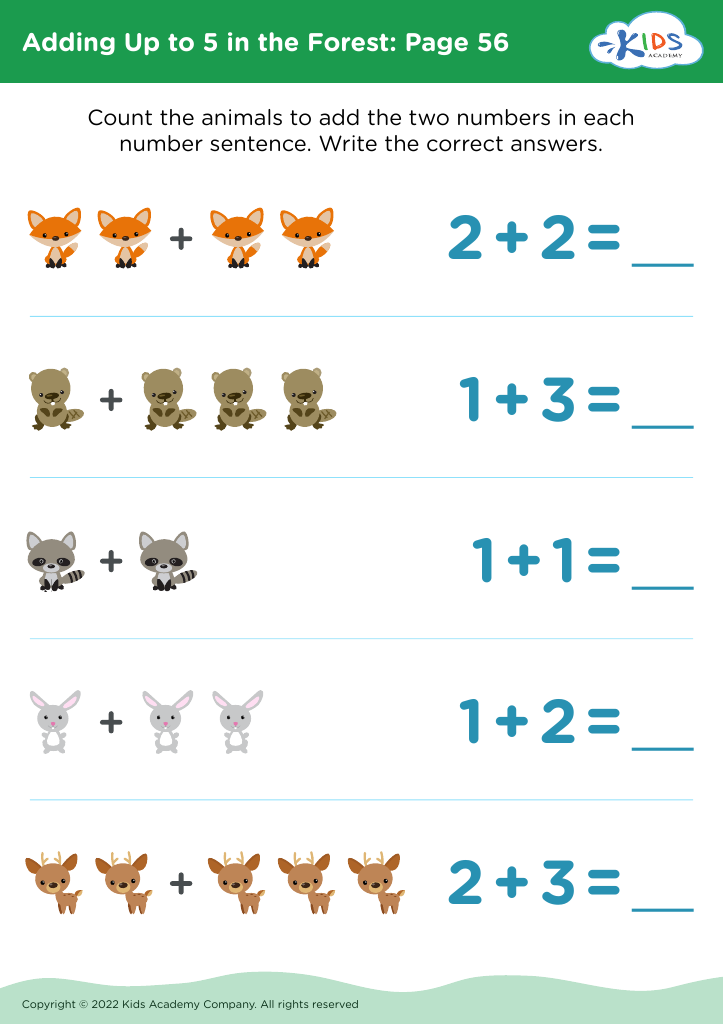
Adding Up to 5 in the Forest: Page 56
Worksheet
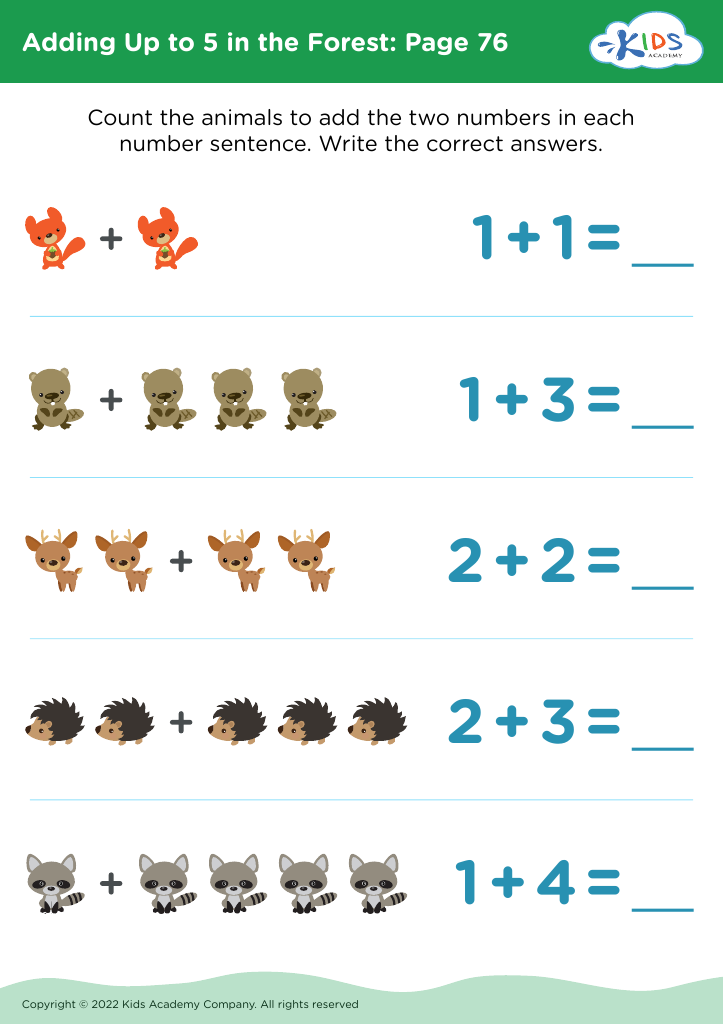
Adding Up to 5 in the Forest: Page 76
Worksheet
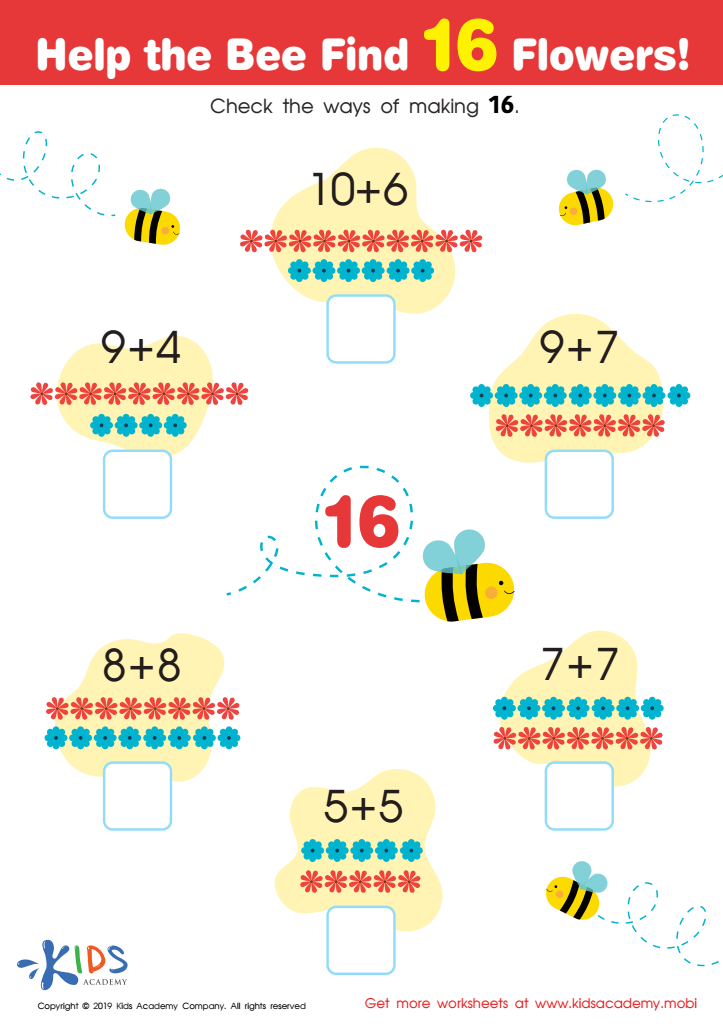
Help the Bee Find 16 Flowers Worksheet
Help the Bee Find 16 Flowers Worksheet

Ask your students to count as high as they can. Show them that different numbers can equal the same figure with examples like 2+2=4 and 3+1=4. Ask for more examples, then help the bees find 16 flowers by checking the ways of making 16.
Help the Bee Find 16 Flowers Worksheet
Worksheet
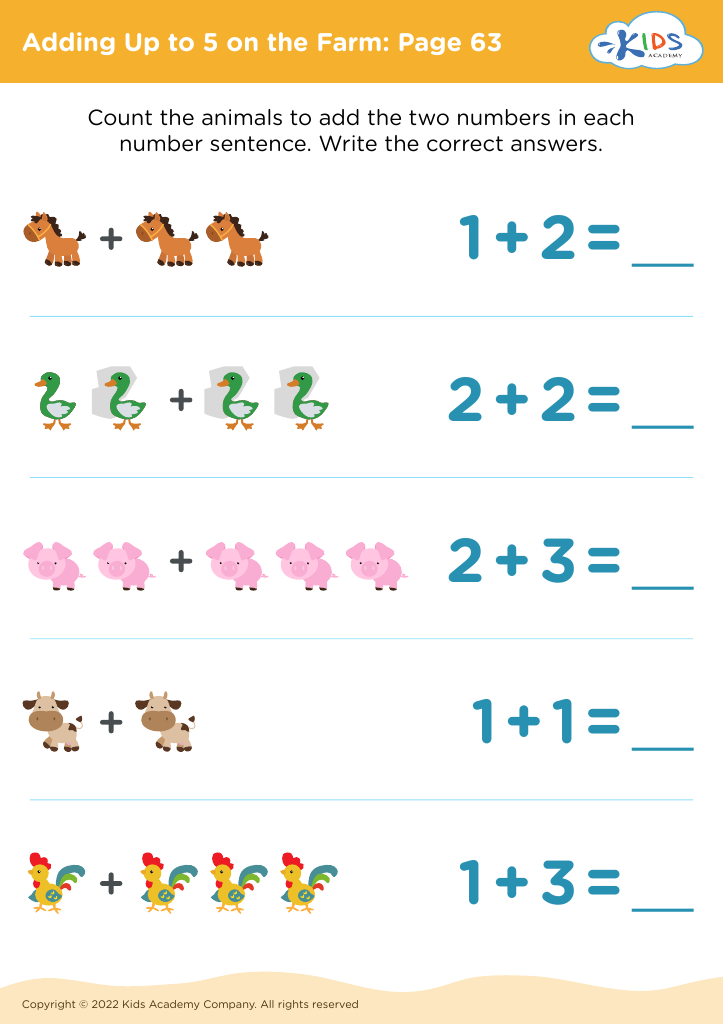
Adding Up to 5 on the Farm: Page 63
Worksheet
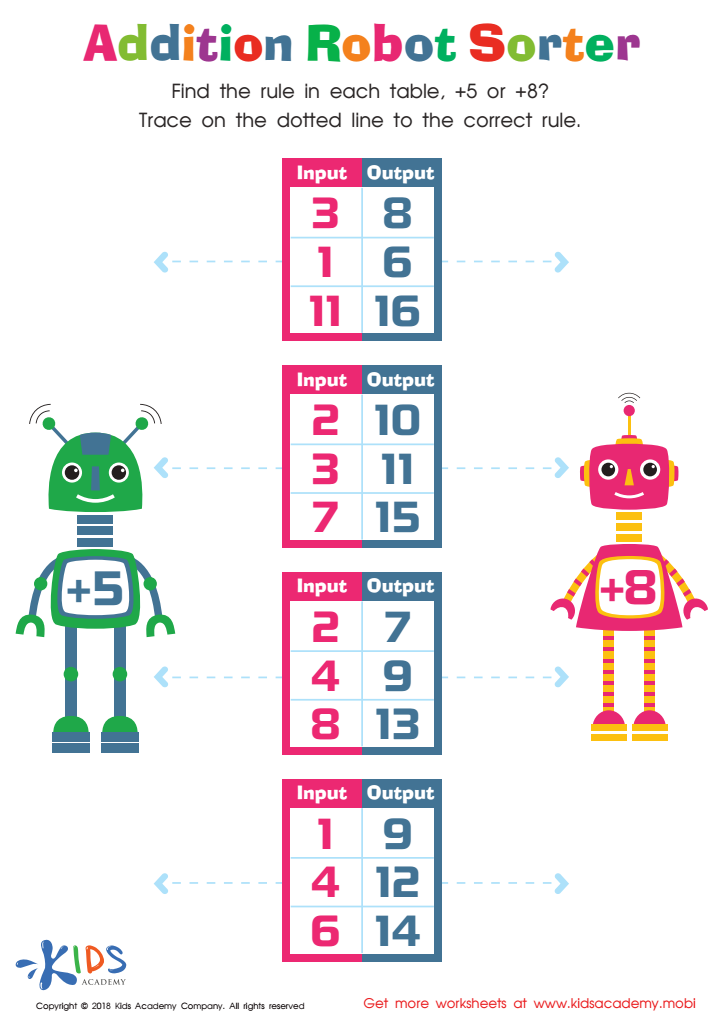
Addition Robot Sorter Worksheet


Addition Robot Sorter Worksheet

This worksheet helps your child understand addition. Have them trace the dotted lines to the correct equations: +8 and +5. It's a great way to aid their mathematical comprehension and get them comfortable with adding equations.
Addition Robot Sorter Worksheet
Worksheet


Problem Solving Addition for ages 4-6 is crucial for laying the foundation of mathematical understanding and critical thinking skills in young learners. During this developmental stage, children are naturally curious and eager to explore concepts, making it an ideal time to engage them in problem-solving activities.

When parents and teachers promote problem-solving addition, children learn to approach real-world situations mathematically. This helps them develop not only computational skills but also reasoning and the ability to think creatively. Engaging with addition through problems encourages children to analyze, hypothesize, and arrive at solutions, fostering cognitive development that transcends math.

Moreover, mastering basic addition through problem solving builds confidence. As children tackle challenges, they learn resilience and perseverance—essential qualities for lifelong learning. It also enhances collaboration and communication when working in groups, which nurtures social skills.

Additionally, these early experiences with math can excite a child's interest in the subject, promoting future academic success. By prioritizing problem solving in addition, parents and teachers not only teach fundamental math skills but also empower children with crucial life skills, setting them up for a brighter future. Overall, investing in these early math experiences is vital for holistic child development.