Money recognition Math Worksheets for Ages 4-6
6 filtered results
-
From - To
Introduce your child to the fascinating world of money with our engaging Money Recognition Math Worksheets designed for ages 4-6. These delightful, age-appropriate worksheets help children recognize coins and bills while enhancing their counting skills and understanding of money's value. Through fun and interactive activities, kids will learn to identify different denominations, associate them with written numerals, and solve simple monetary problems. Perfect for at-home practice or classroom use, our worksheets make learning about money enjoyable and accessible, laying a solid foundation for your child's future financial literacy. Explore now and give your child the confidence to succeed in math!
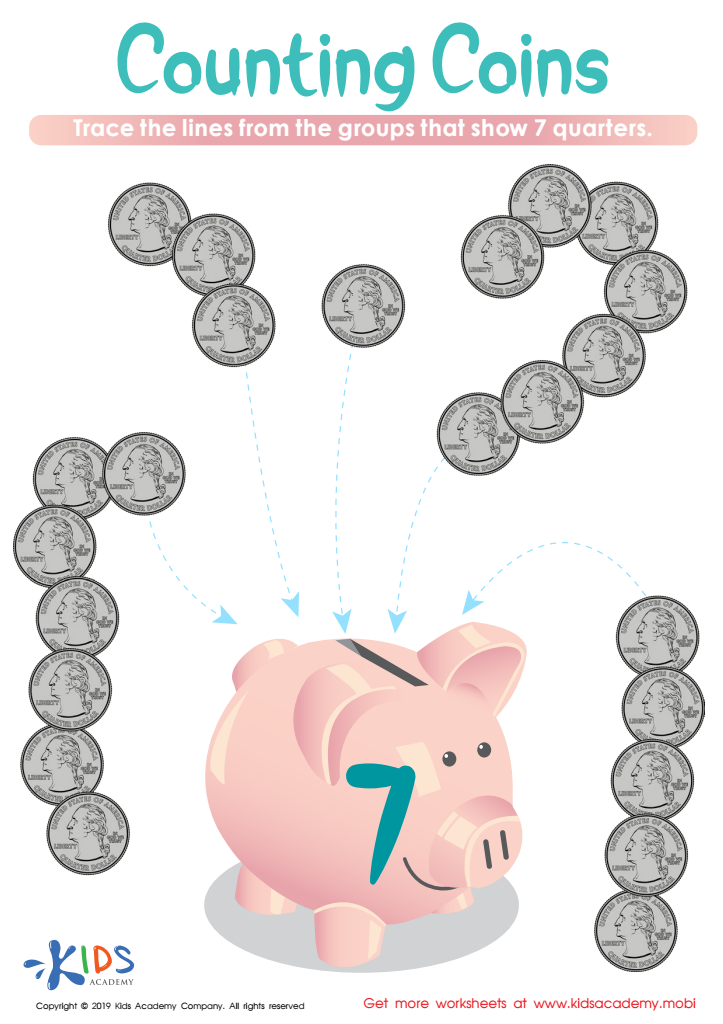
Counting Coins Worksheet
 Assign to My Students
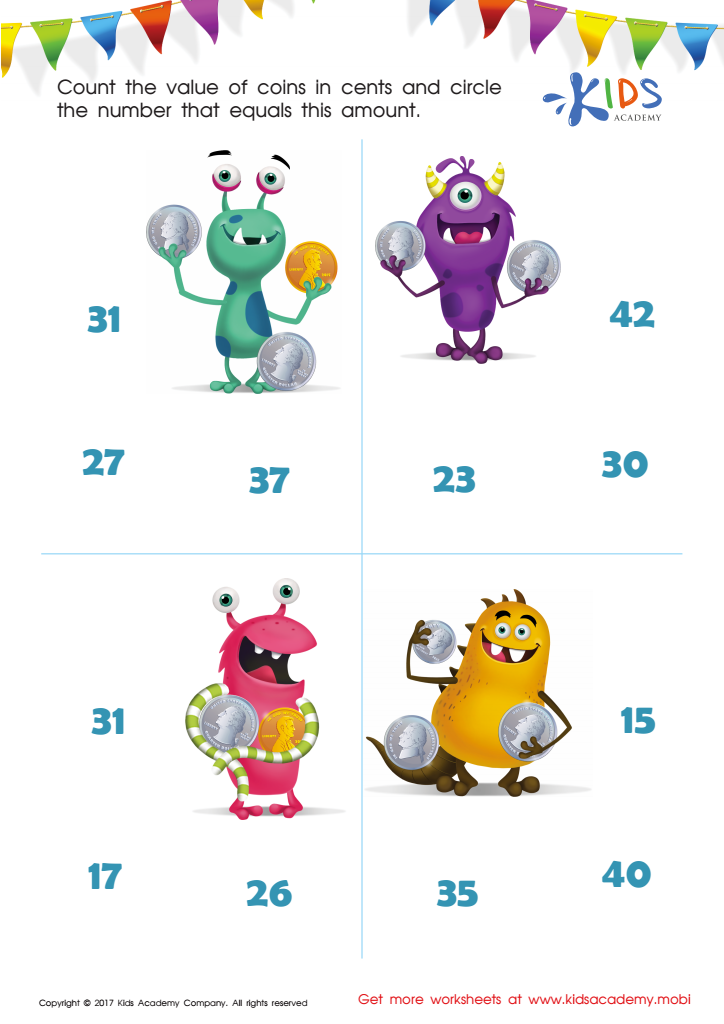
How Many Coins Money Worksheet
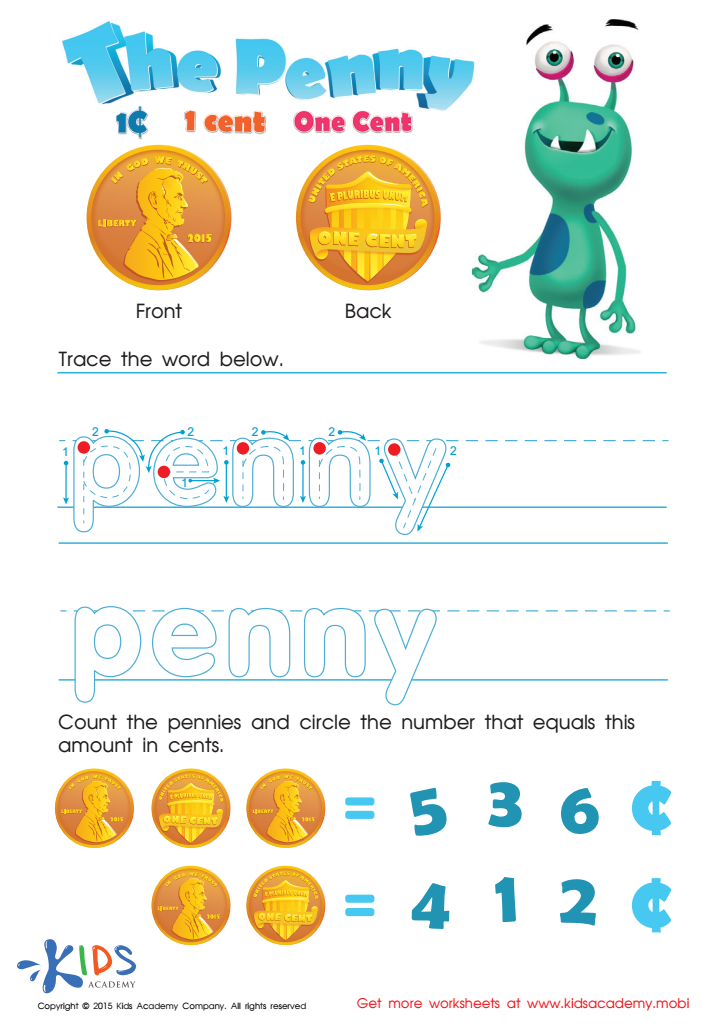
One Cent or the Penny Money Worksheet
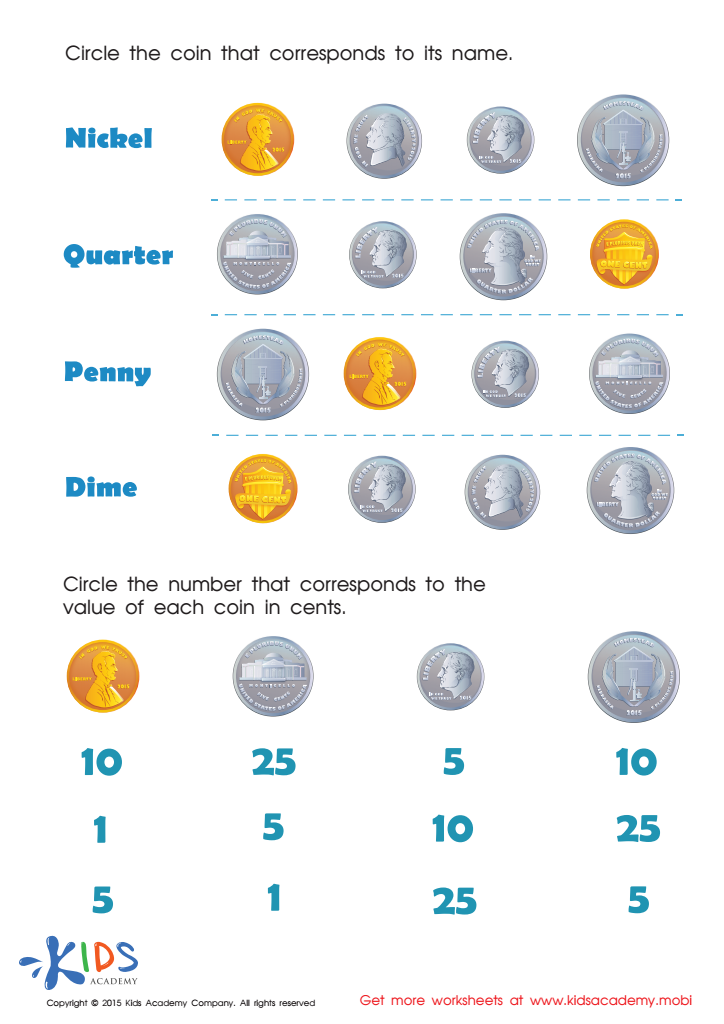
Coin Names and Values Money Worksheet
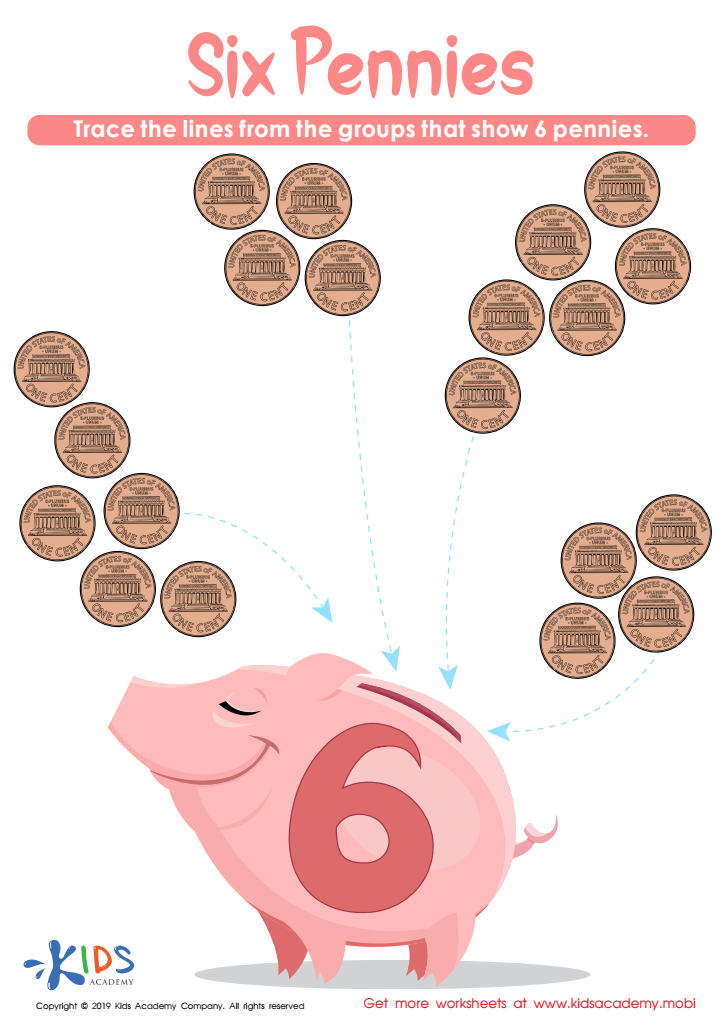
Six Pennies Worksheet
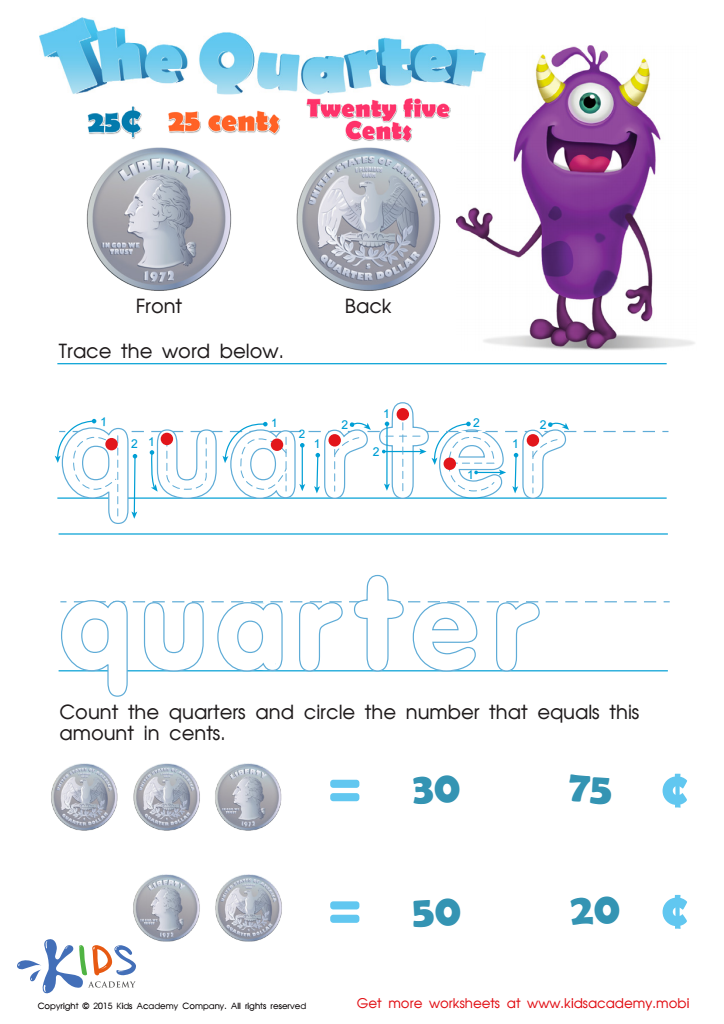
Twenty Five Cents or the Quarter Money Worksheet







Money recognition is an essential skill for children ages 4-6 because it lays the groundwork for their future financial literacy and independence. Teachers and parents should prioritise this aspect of early math education for several reasons. Understanding money helps children grasp the value of items, the concept of trading, and fundamentals of counting. Real-life applications, such as identifying coins and bills, foster practical learning experiences, making math relatable and engaging. These activities help children practice and improve their counting skills, understand basic arithmetic (like addition and subtraction), and develop problem-solving abilities.
Early money recognition also promotes cognitive development. Children learn to recognise different shapes, colours, and symbols, which enhances visual discrimination skills and short-term memory. Furthermore, discussing money and its use can improve language skills, as children learn new vocabulary. In turn, they gain confidence in their ability to discuss monetary concepts and make simple transactions.
In addition, teaching kids about money instils a sense of responsibility and beginning financial management skills. Grasping the concept of saving, budgeting, and eventually financial planning starts with recognising money. This early exposure sets children on a path toward becoming financially literate adults, capable of navigating the complexities of financial systems independently. Therefore, parents and teachers play a crucial role in fostering these foundational money recognition skills.








