Sea creatures identification Math Worksheets for Ages 4-6
3 filtered results
-
From - To
Dive into learning with our engaging Sea Creatures Identification Math Worksheets tailored for kids aged 4-6. These fun, educational worksheets bring the wonders of the ocean to your child’s fingertips while reinforcing essential math skills. With adorable illustrations of various sea animals, young learners will practice counting, number recognition, and basic addition and subtraction. Perfect for early learners, each worksheet blends the excitement of ocean discovery with interactive math challenges, fostering both curiosity and foundational math abilities. Ideal for home or classroom use, these worksheets make learning an underwater adventure!
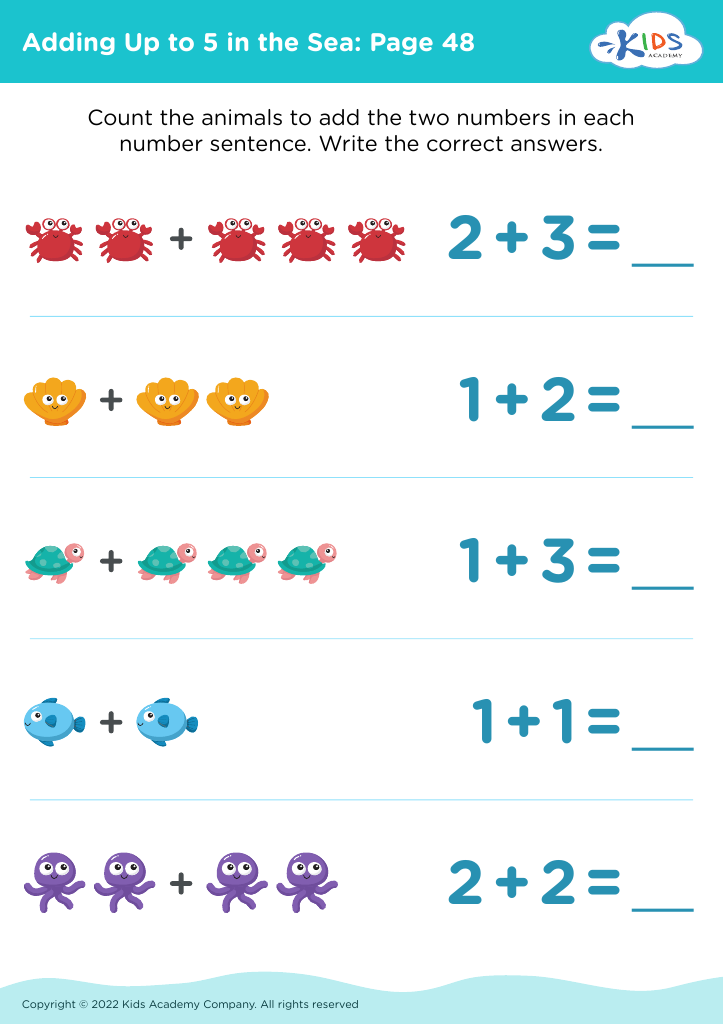
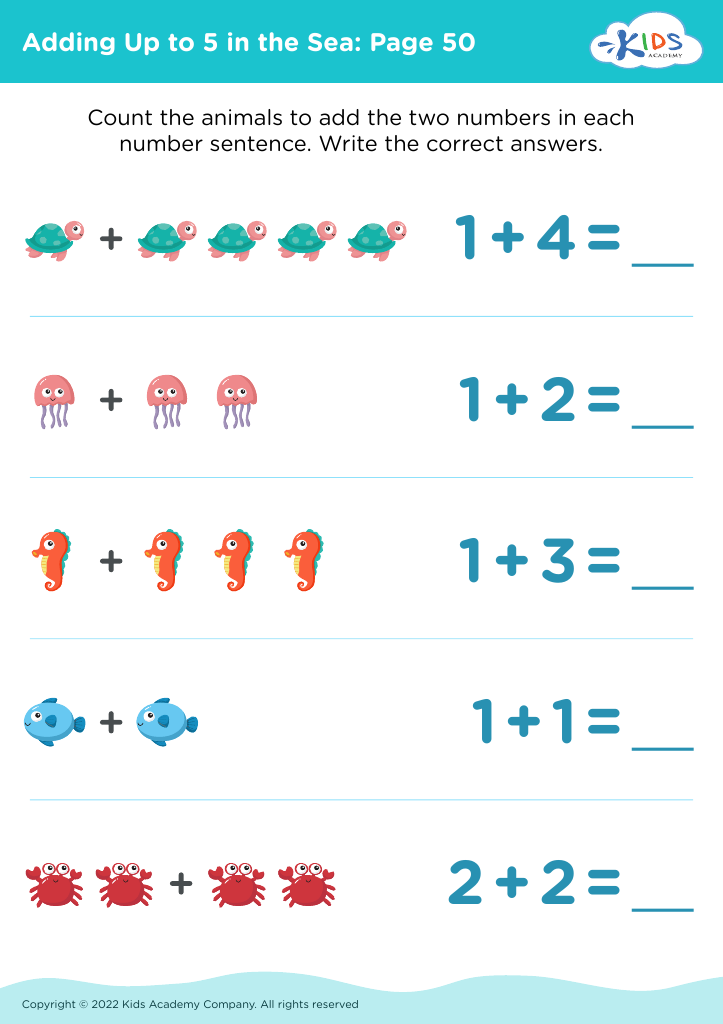
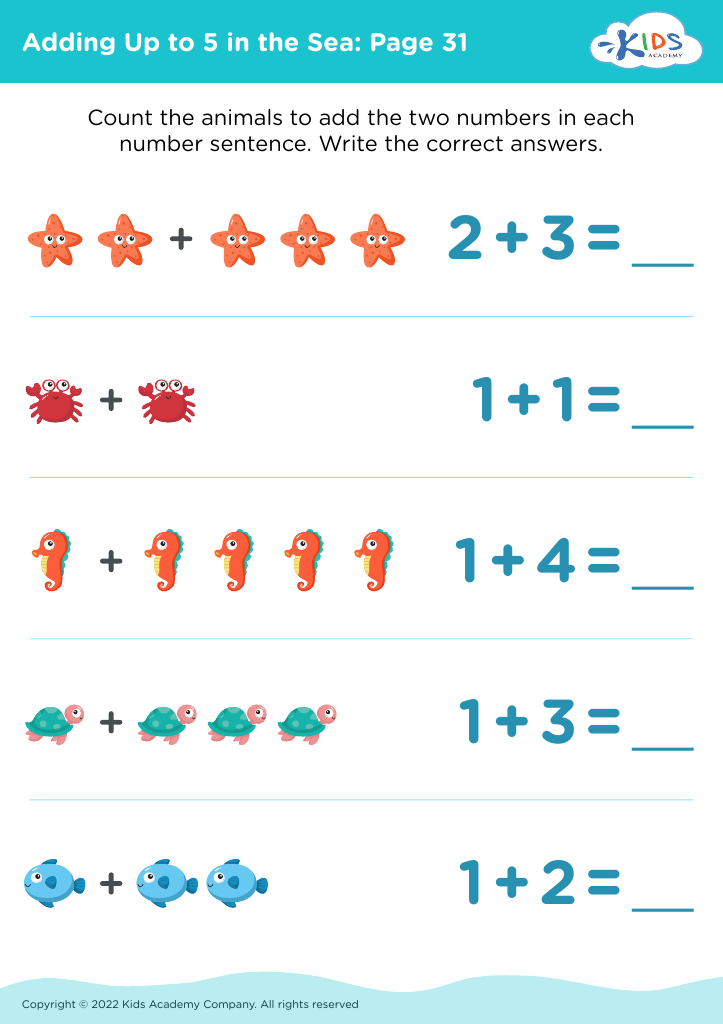







Parents and teachers should care about Sea Creature Identification Math for children ages 4-6 because it offers an engaging, multi-faceted approach to early childhood education. This activity blends fundamental mathematical concepts like counting, sorting, and pattern recognition with an exploration of marine biology, igniting both numerical and scientific curiosity. By linking math to tangible, fascinating subjects such as sea creatures, children become more enthusiastic and motivated to learn, enhancing their retention and comprehension.
Additionally, Sea Creature Identification Math enriches a child's vocabulary and general knowledge, fostering language development and critical thinking skills. When children differentiate between various sea animals, they not only sharpen their observational skills but also begin forming categorical and relational understanding.
Interactive and fun exercises like these encourage parental and student-teacher bonding, creating a positive learning environment. This foundation helps children develop a lifelong interest in learning, equipping them with crucial cognitive and social skills. Lastly, such interdisciplinary methods align with modern educational standards, emphasizing holistic development over rote learning by integrating real-world science with foundational math. Thus, a focus on Sea Creature Identification Math cultivates young minds, ensuring they are both knowledgeable and curious about the world around them.








