
Spatial reasoning Math Worksheets for Ages 4-6
8 filtered results
Difficulty Level
Grade
Age
-
From - To
Subject
Activity
Standards
Enhance your child's spatial reasoning abilities with our engaging Math Worksheets designed for ages 4-6. These easy-to-follow activities foster critical thinking and problem-solving skills while making learning fun. Worksheets cover essential concepts like shapes, patterns, and spatial relationships, helping young learners visualize and manipulate objects in their minds. Suitable for home or classroom use, our vibrant, interactive resources encourage independent learning and boost confidence in math. Ideal for supporting early learning standards, these worksheets provide a solid foundation for future academic success. Explore our collection today and watch your little ones develop essential skills through play-based learning!
Favorites
With answer key
Interactive
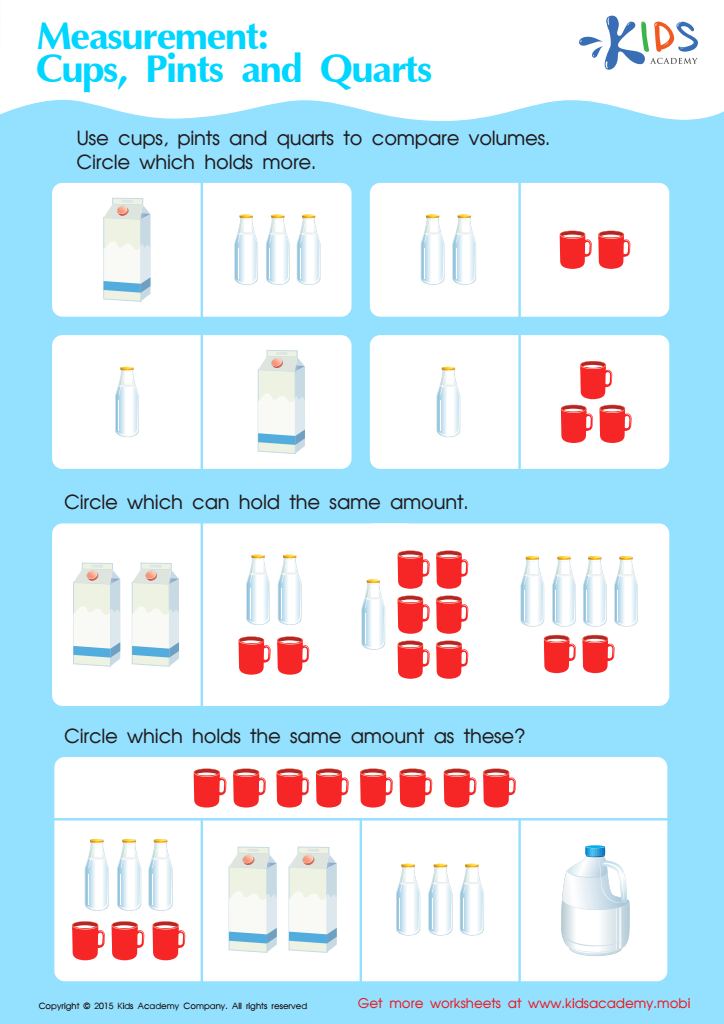
Measurement: Compare Volumes Worksheet
Compare volumes with Kids Academy and have fun! (80 words)
Practice measuring with Kids Academy and have fun! Compare volumes in pictures and circle which holds more. Keep learning with free math worksheets available on our website. Enjoy the process and have fun!
 Assign to My Students
Measurement: Compare Volumes Worksheet
Worksheet
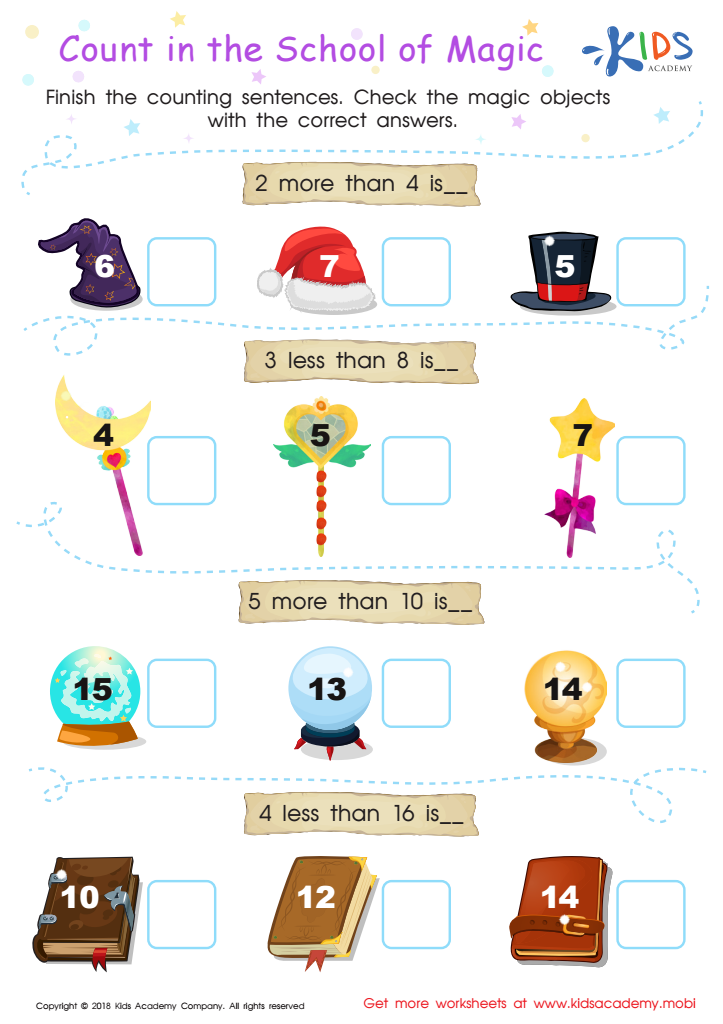
Count in the School of Magic Worksheet
Your math learners can explore the School of Magic with this worksheet. They'll read equations with addition and subtraction numbers under 20, count back and forth to find the answer, then complete the counting sentences. Fun pictures and easy accuracy make it an enjoyable and successful learning experience.
Count in the School of Magic Worksheet
Worksheet
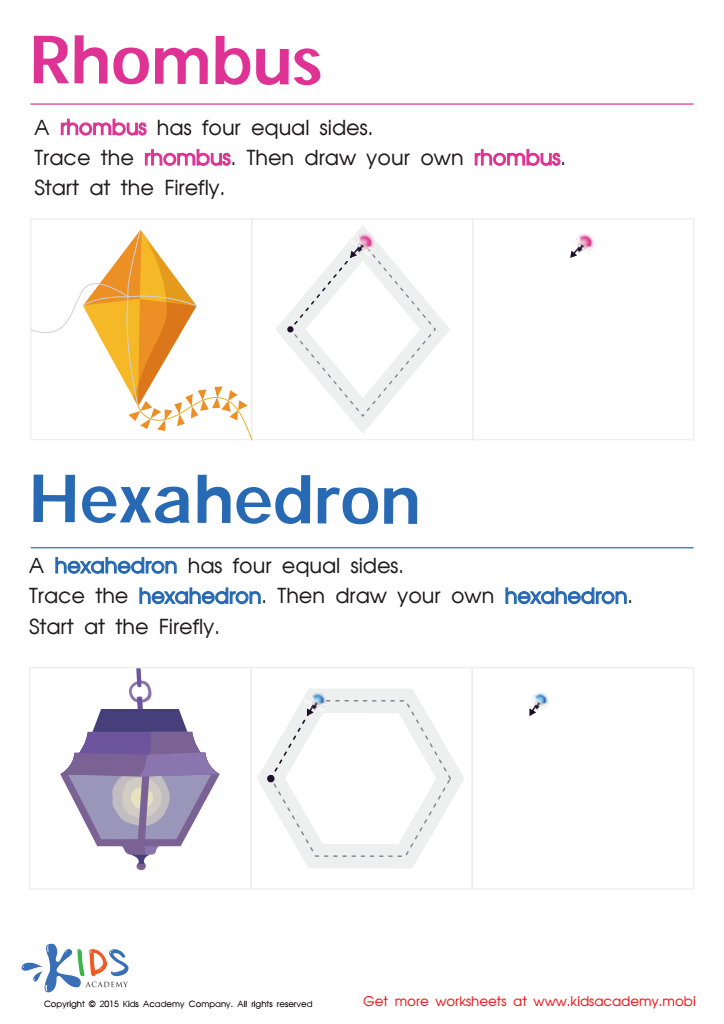
Draw a Rhombus And a Hexahedron Printable
Trace, draw and recognize shapes like rhombus, hexahedron and more! Start with the firefly to trace a rhombus, then use the yellow kite to remember the shape. Use the light to trace and draw a hexahedron. Learn with the best!
Draw a Rhombus And a Hexahedron Printable
Worksheet
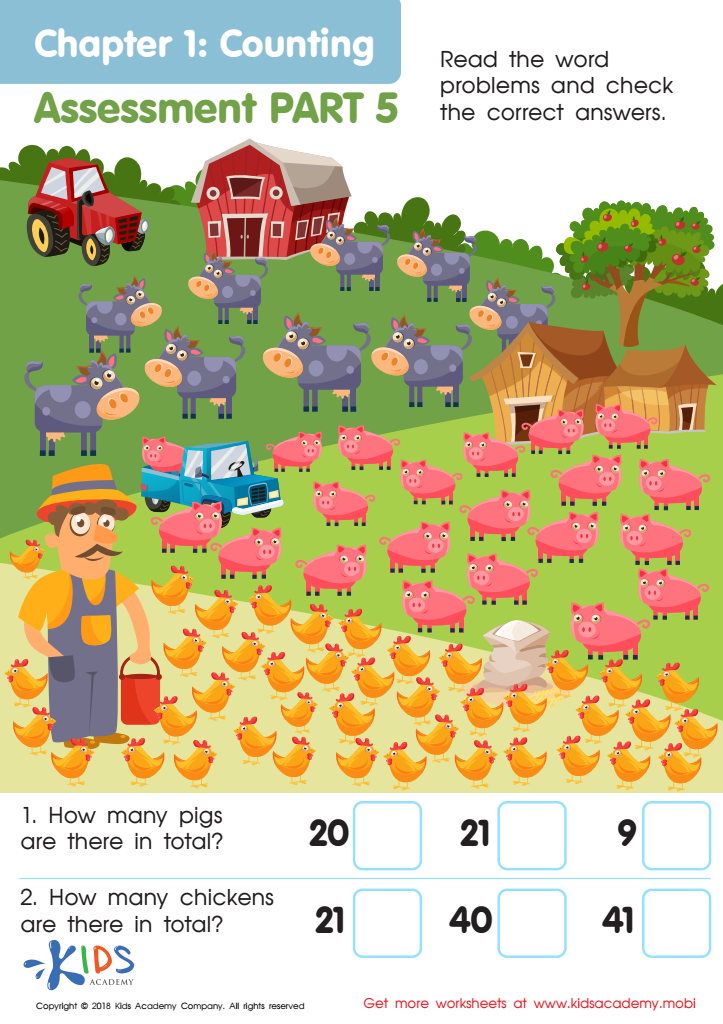
Counting: Assessment 5 Worksheet
Let your kids have fun counting farm animals on this worksheet! Help the farmer count the animals and have your child check the answers to assess their counting skills. Read the word problem at the bottom of the page and count the animals together. It's an entertaining way to practice counting and have a great time!
Counting: Assessment 5 Worksheet
Worksheet
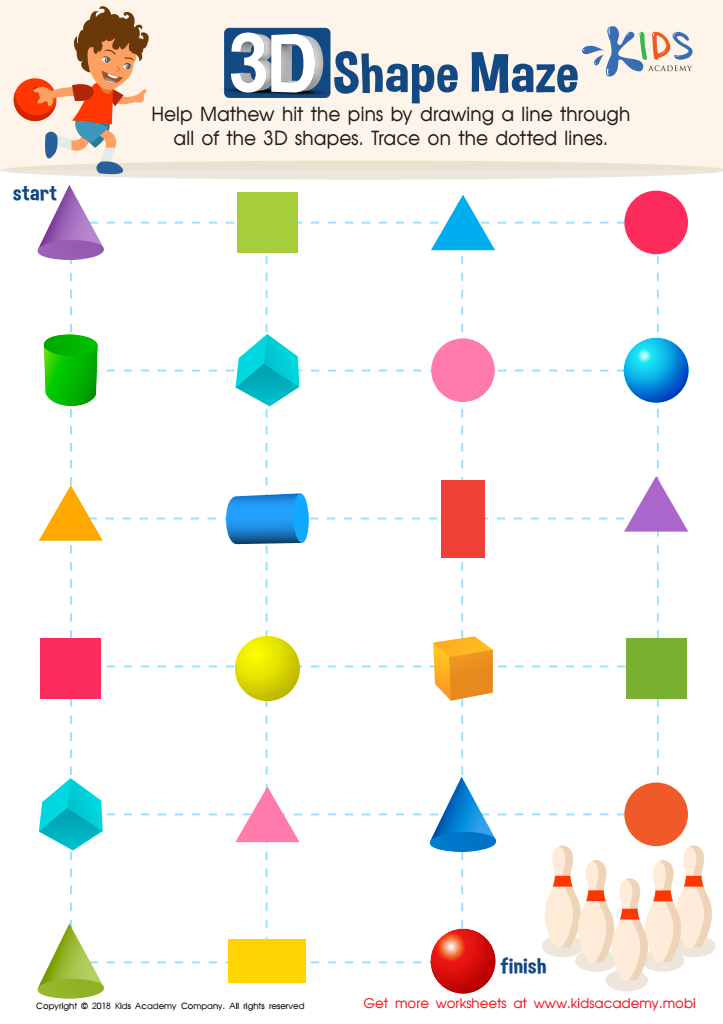
Shapes Maze Geometry Worksheet
Boost your child's geometry skills with this shapes maze worksheet! Help Matthew bowl a strike by guiding him through the maze to draw a line through every 3D shape. It's a fun and challenging way to practice foundational math skills!
Shapes Maze Geometry Worksheet
Worksheet
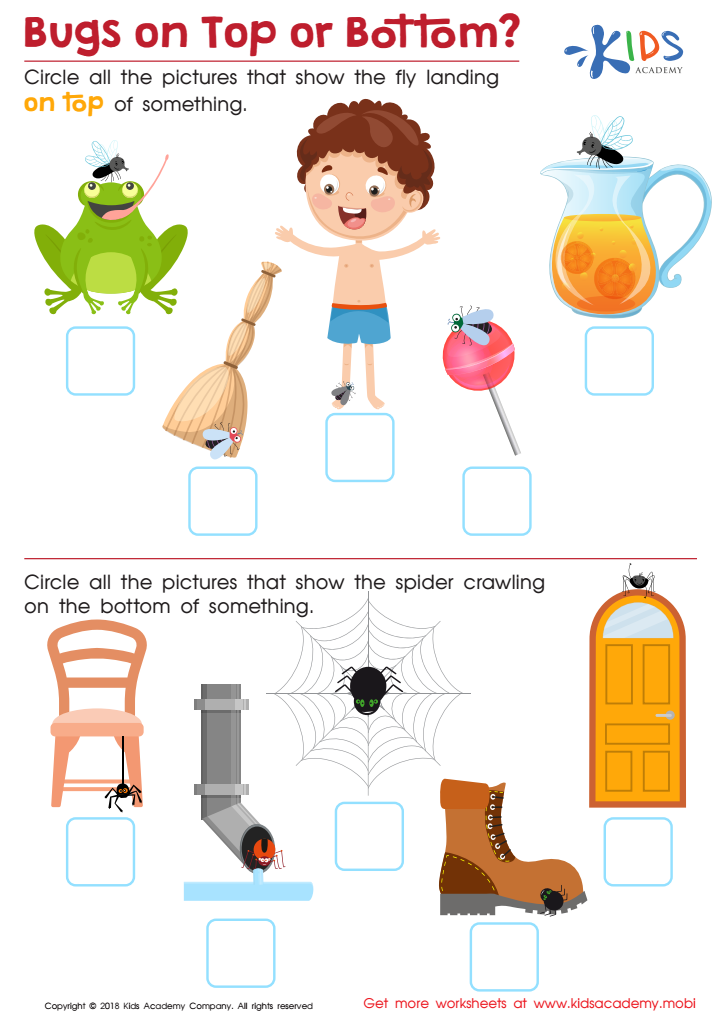
Bugs on Top or Bottom? Worksheet
Preschoolers need to learn directional skills such as top and bottom. This PDF worksheet helps them recognize bugs on the top or bottom using fun visuals. It builds their spatial reasoning while teaching prepositional words in an engaging way.
Bugs on Top or Bottom? Worksheet
Worksheet
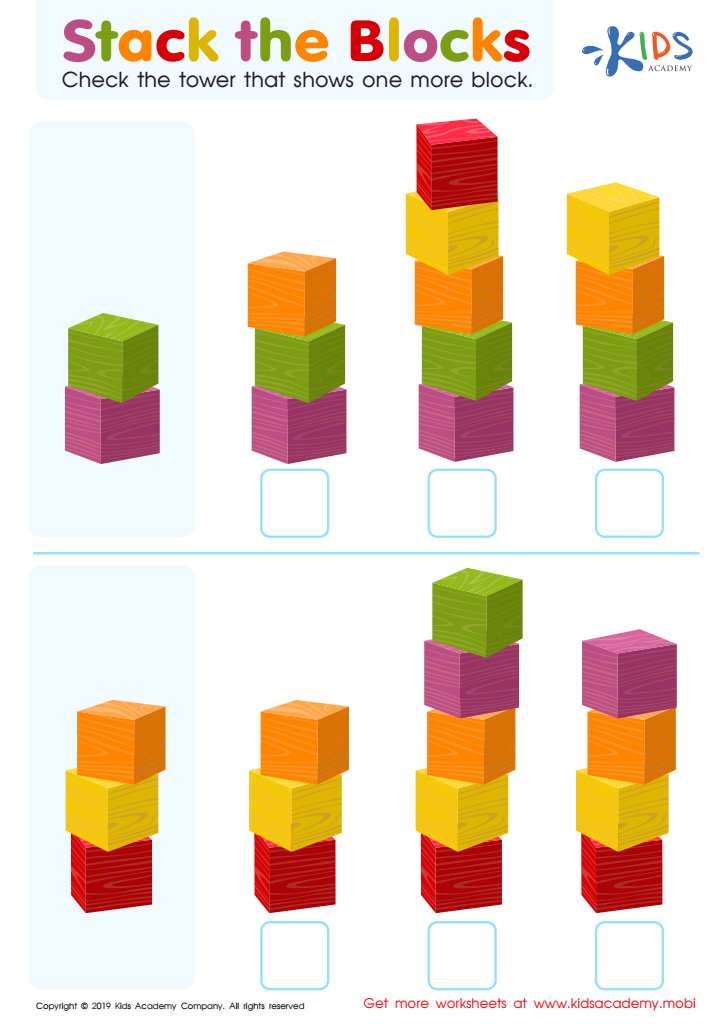
Stack the Blocks Worksheet
Playing with blocks is a great way for kids to learn! They can create patterns, shapes, and even count. In this worksheet, ask them to identify the colors and count each stack of blocks. If they can spot one extra block in the tower, even better! Encourage learning through play with these fun blocks.
Stack the Blocks Worksheet
Worksheet
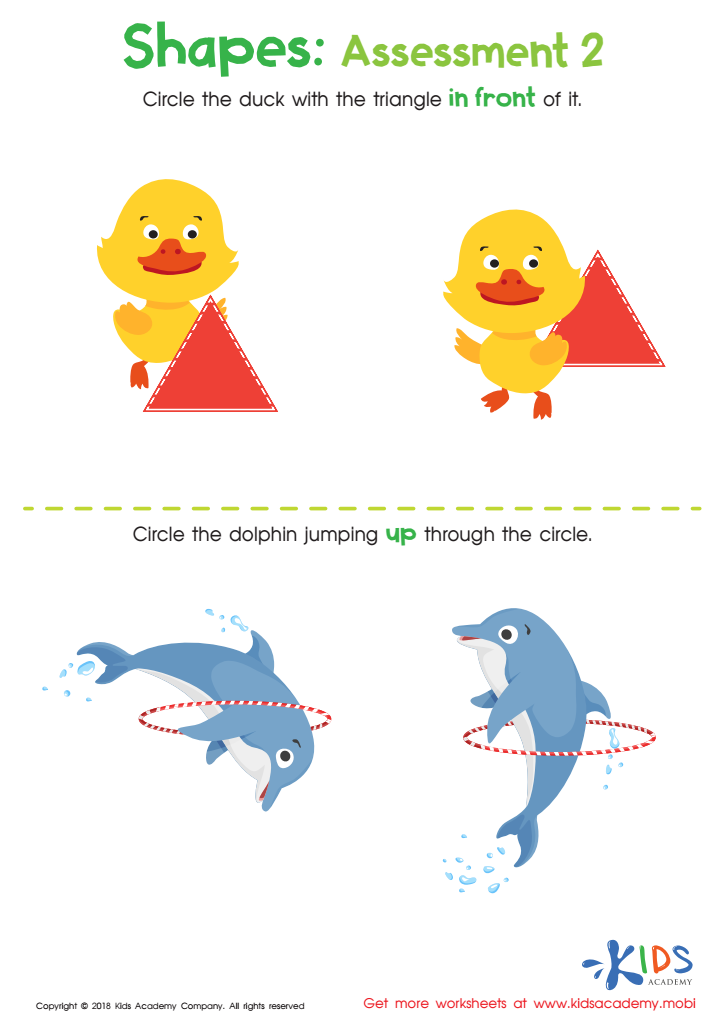
Geometry – Assessment 2 Worksheet
Preschoolers will learn to identify circles and triangles and practice using terms like "in front of" to place objects. This skill is key to further learning and is an important part of development.
Geometry – Assessment 2 Worksheet
Worksheet
Join Kids Academy for Free
Who is primarily going to use this learning content?








Spatial reasoning is a critical skill that significantly impacts the mathematical understanding and overall cognitive development of children aged 4-6. This primarily involves the ability to visualize, manipulate, and understand spatial relationships among objects. Building strong spatial reasoning skills in early childhood can enhance a child’s problem-solving and critical thinking abilities.
For parents and teachers, fostering spatial reasoning is essential because it lays the groundwork for more complex mathematical concepts later in life, such as geometry, measurement, and algebra. Engaging children in spatial activities, such as puzzles, sorting shapes, and building blocks, facilitates hands-on learning and encourages exploration. Additionally, enhancing these skills supports literacy development, as children who can visualize and understand spatial relationships are often better at comprehending stories and concepts.
Moreover, in today’s technology-driven world, strong spatial skills correlate with success in STEM (science, technology, engineering, and mathematics) fields. By investing time in spatial reasoning math at this foundational age, parents and teachers equip children with essential tools for future academic and career success, promoting a lifelong love for learning and exploration. Thus, prioritizing spatial skills is far more than just math—it's about nurturing well-rounded, competent learners.








