Sorting skills Numbers 0–10 Worksheets for Ages 4-6
3 filtered results
-
From - To
Enhance your child's sorting skills with our engaging Worksheets for Numbers 0-10, designed specifically for ages 4-6. These fun and interactive activities help young learners develop essential math concepts while improving their ability to categorize and organize numbers. Each worksheet provides colorful, visually appealing tasks that capture children's interest while fostering their critical thinking and problem-solving abilities. Perfect for both classroom and home use, our Sorting Skills Worksheets make learning enjoyable and effective. Encourage your child's early math development and set the foundation for future success with these educational resources available at Kids Academy. Start sorting with us today!
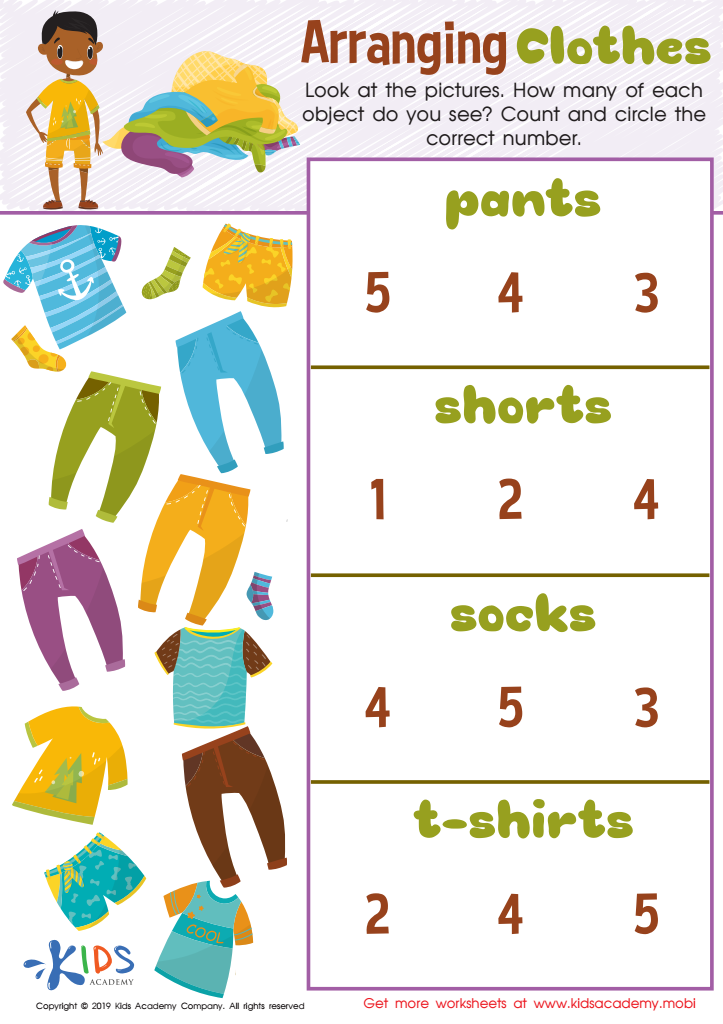
Arranging Clothes Worksheet
 Assign to My Students
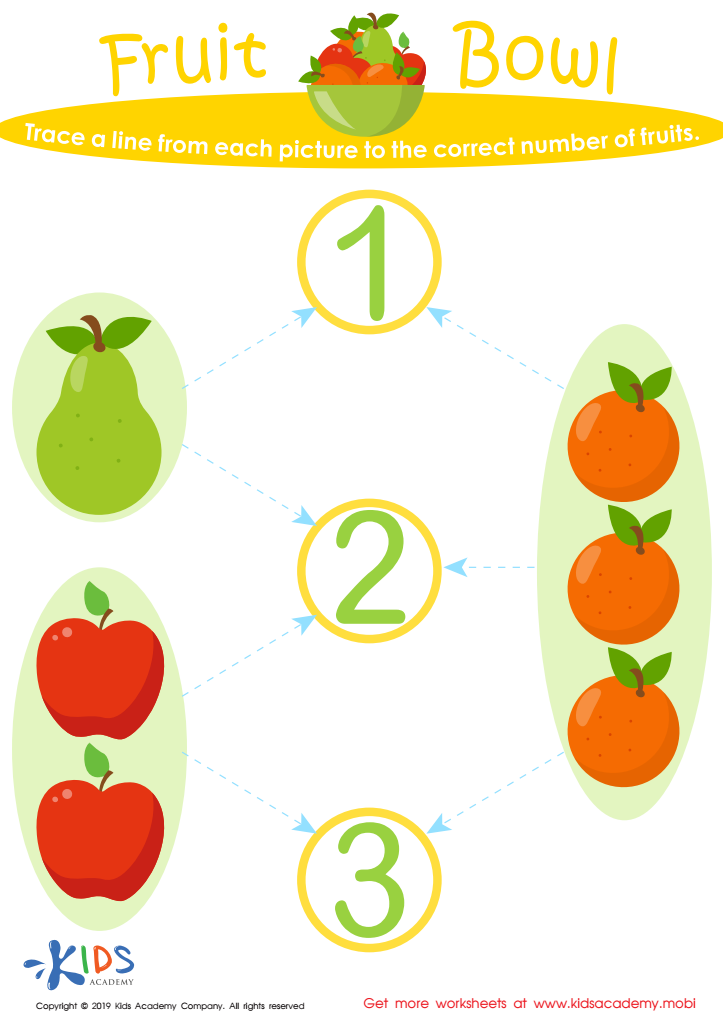
Fruit Bowl Worksheet
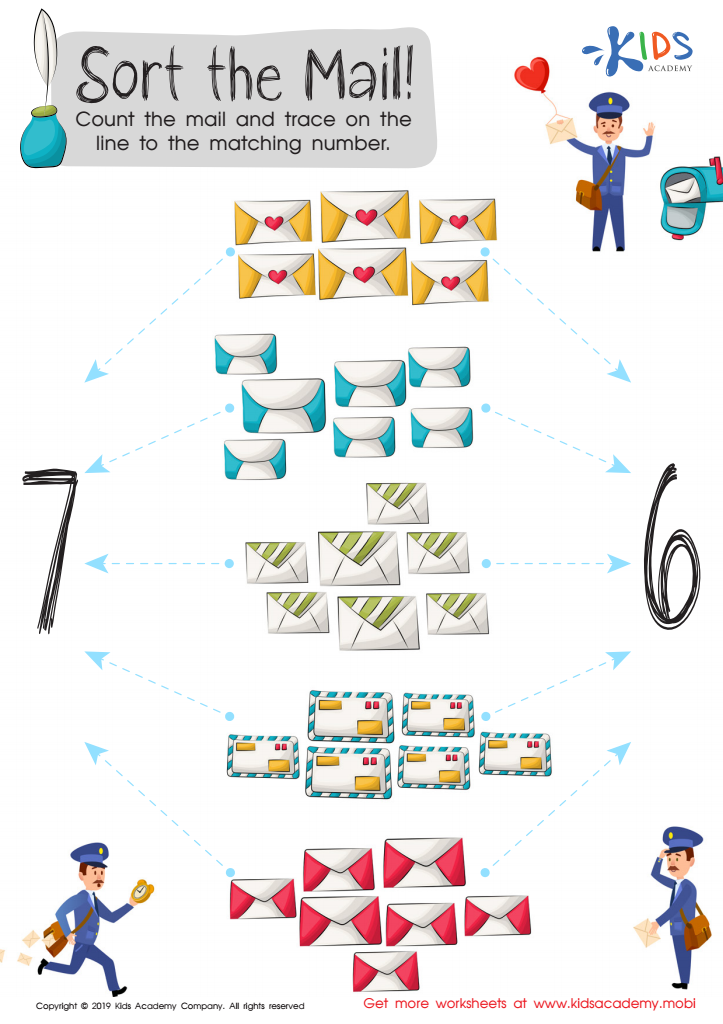
Sort the Mail Worksheet








Sorting skills for numbers 0-10 are essential for preschool and early elementary children as they lay the foundation for critical mathematical understanding. During ages 4-6, children begin to develop logical thinking and reasoning abilities, and learning to sort and organize numbers helps strengthen these skills. Sorting fosters important cognitive skills like categorization, pattern recognition, and problem-solving, which are vital for later math success.
Additionally, sorting activities encourage children to engage with numbers in a hands-on manner. By grouping objects or numbers based on attributes like size, color, or quantity, children develop a deeper understanding of numerical relationships and quantities. This tactile experience supports memory retention and helps bridge abstract concepts with real-world applications.
Moreover, sorting reinforces foundational concepts such as counting and one-to-one correspondence, ensuring children are well-prepared for more advanced mathematical concepts in subsequent grades. By actively participating in sorting activities, children also enhance their fine motor skills, concentration, and social interaction during group tasks.
For teachers and parents, emphasizing sorting skills ensures that children are not only building essential math skills but also developing critical thinking, enhancing their overall learning experience. Supporting these skills aids in fostering confidence and a positive attitude towards mathematics.








