Animal identification Reading Non-Fiction Worksheets for Ages 4-6
3 filtered results
-
From - To
Engage young learners with our "Animal Identification Reading Non-Fiction Worksheets" designed for ages 4-6. These fun, educational resources enhance early reading skills while teaching kids about various animals. Each worksheet combines vivid illustrations with simple, informative text to help children recognize and name different creatures. Perfect for developing comprehension, vocabulary, and a love for reading, these worksheets align with learning standards and are ideal for home or classroom use. Give your child a head start in reading and animal knowledge with our expertly crafted, age-appropriate materials. Explore and download today for a fun, educational experience!
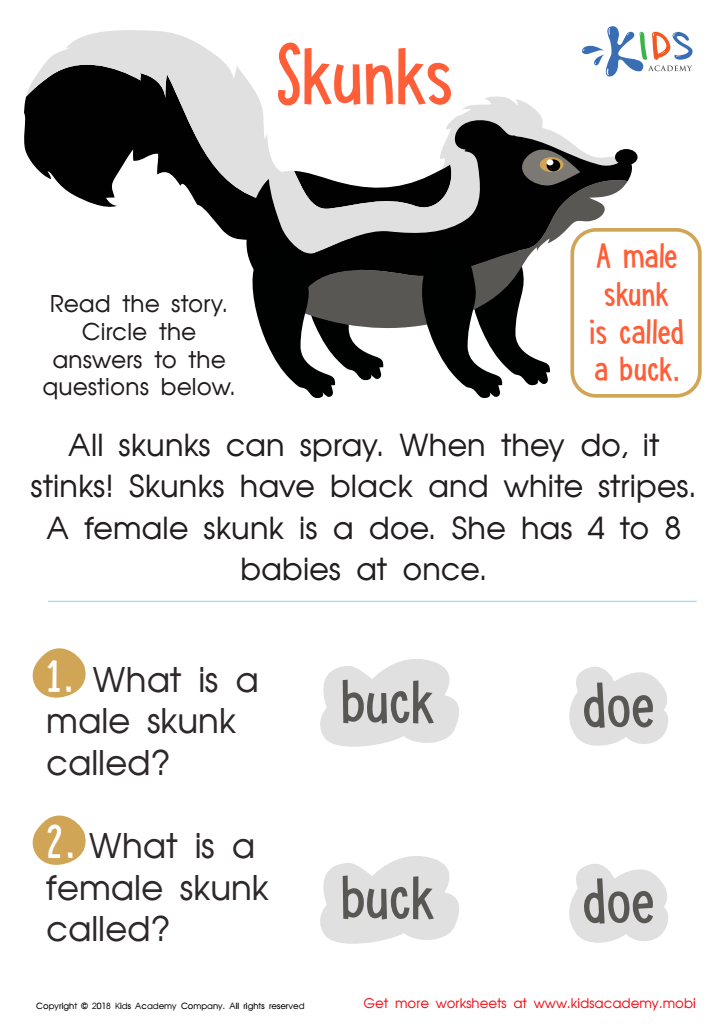
Skunks Worksheet
 Assign to My Students
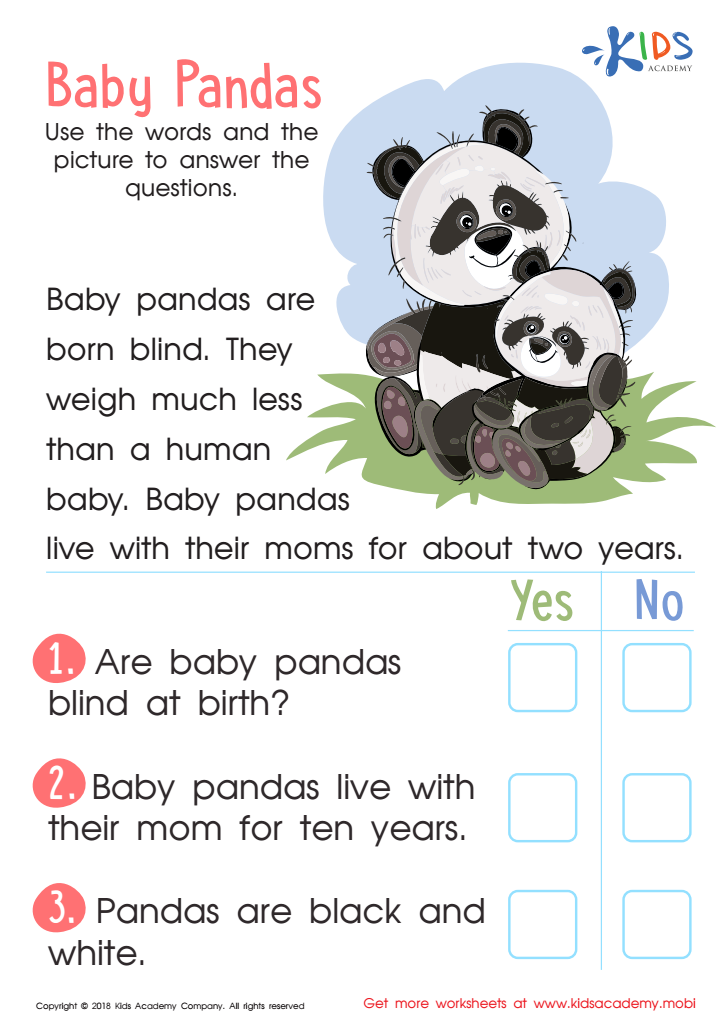
Baby Pandas Worksheet
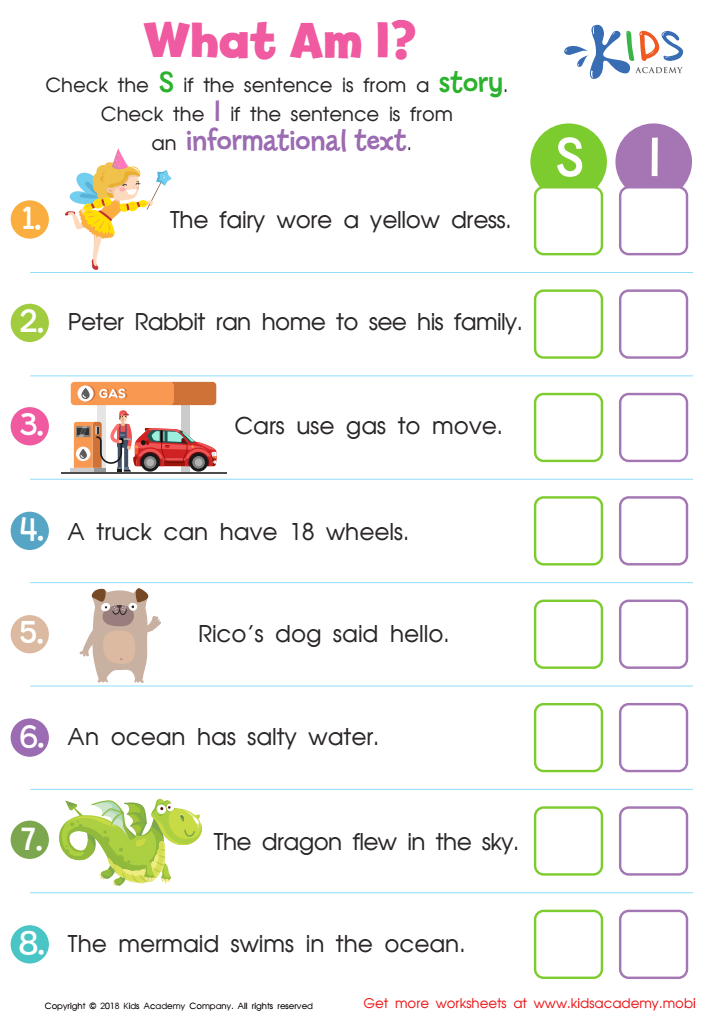
What Am I? Worksheet








Parents and teachers should prioritize Animal Identification Reading for ages 4-6 because it fosters both cognitive and emotional development in young children. At this formative age, children are naturally curious about the world around them, and engaging non-fiction material about animals can capture their interest and fuel this innate curiosity. By learning to identify different animals, children enhance their vocabulary and comprehension skills, which are crucial for future academic success.
Moreover, understanding animals and their habitats promotes curiosity and a sense of connection to nature. This can lay the groundwork for environmental stewardship and empathy towards living beings, teaching children to value and respect biodiversity from a young age. Reading non-fiction texts also hones critical thinking and information-gathering skills as children learn to differentiate between various species based on distinct characteristics.
Additionally, animal identification activities often incorporate elements such as counting animals and categorizing them, thus supporting mathematical and analytical skills. Brightly colored illustrations and engaging text can make learning enjoyable, further reinforcing a love for reading. Cultivating these skills early on through a topic as universally appealing as animals can set a strong foundation for lifelong learning and curiosity.








