Animal knowledge Reading Non-Fiction Worksheets for Ages 4-6
3 filtered results
-
From - To
Explore our engaging "Animal Knowledge Reading Non-Fiction Worksheets" designed for children ages 4-6! These worksheets foster a love for reading while boosting comprehension skills through fascinating facts about animals. Each activity promotes critical thinking and vocabulary development, encouraging young learners to discover the wonders of the animal kingdom. By integrating fun visuals and easy-to-follow content, these worksheets make learning enjoyable and interactive. Perfect for classroom or home use, our non-fiction resources help children build essential literacy skills while exploring the diverse lives of animals. Start your child’s journey into the world of reading and discovery with these captivating worksheets!
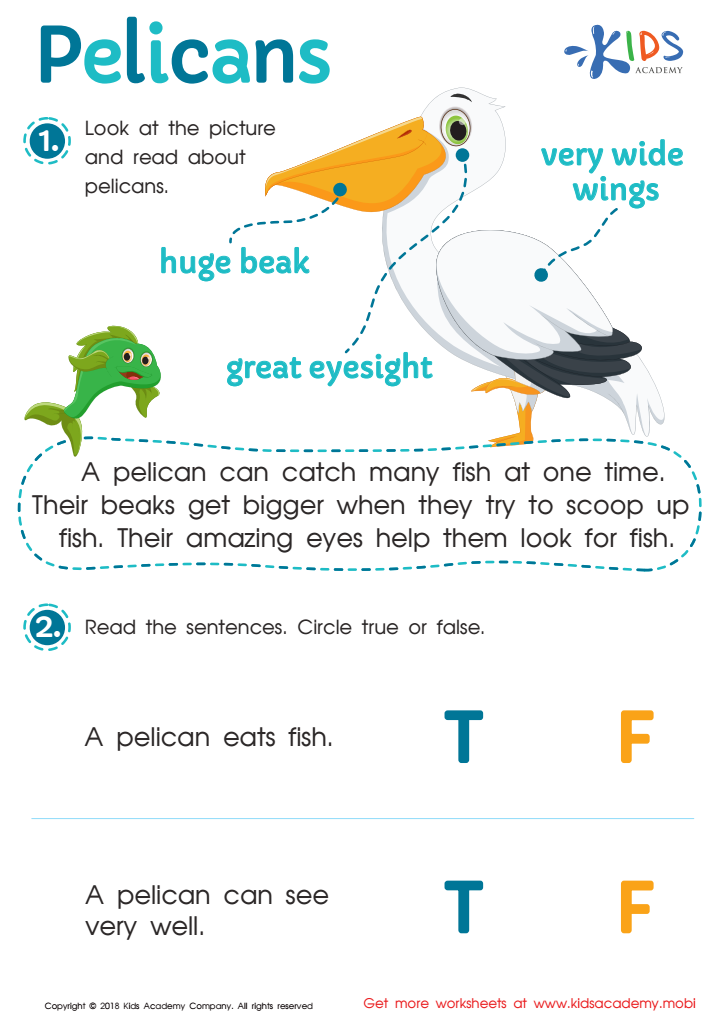
Pelicans Worksheet
 Assign to My Students
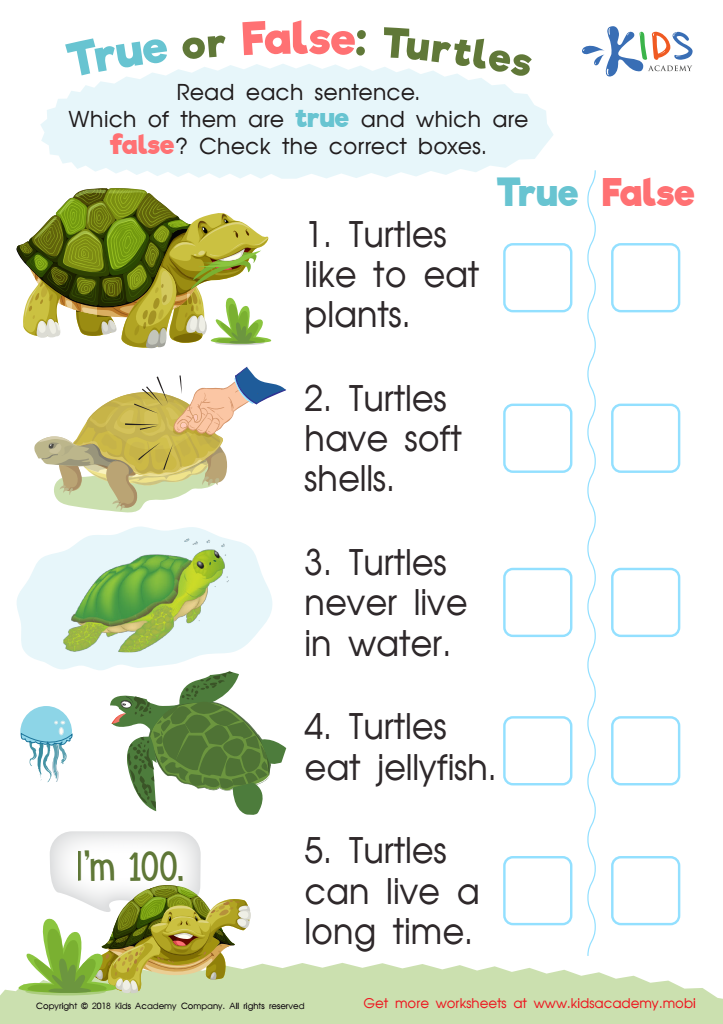
True or False: Turtles Worksheet
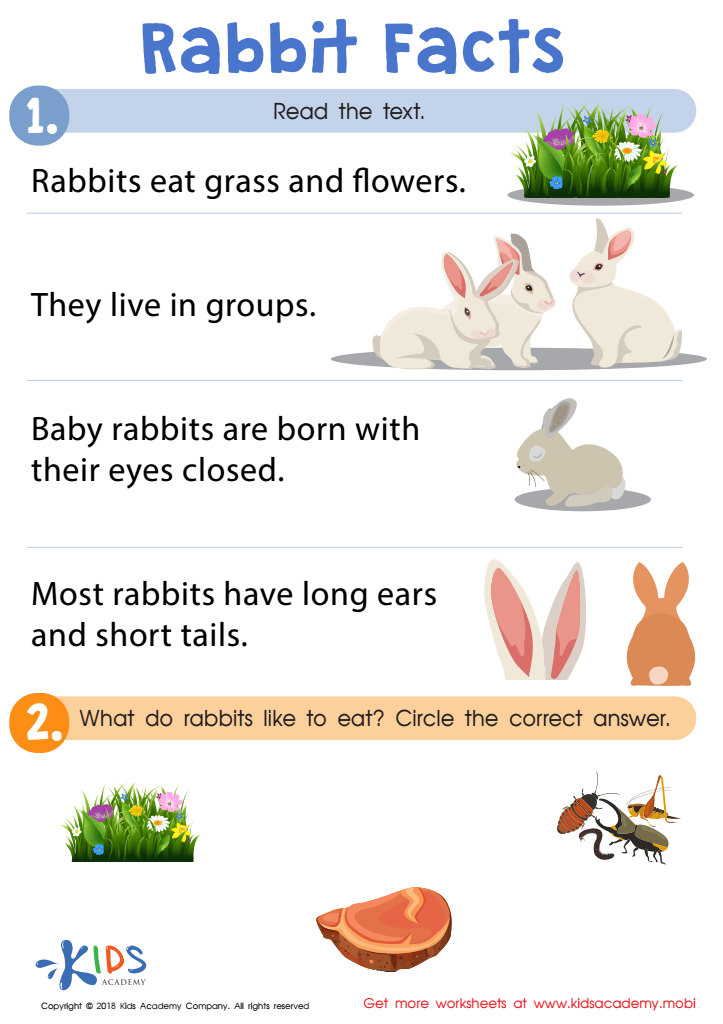
Rabbit Facts Worksheet








Parents and teachers should prioritize animal knowledge reading non-fiction for ages 4-6 because it significantly enhances children's understanding of the natural world, fosters curiosity, and sparks a love for reading. At this age, children are naturally inquisitive, and exposing them to non-fiction texts about animals provides accurate information that helps satisfy their questions and interests. This genre nurtures critical thinking as kids learn to distinguish facts from fiction, laying the groundwork for more advanced literacy skills.
Moreover, animal knowledge promotes empathy and compassion towards living beings. By reading about various species, children develop an appreciation for wildlife and understand the importance of conservation and environmental responsibility. This aligns with educational goals in teaching respect for diversity—both human and animal.
Additionally, engaging with non-fiction increases vocabulary development through exposure to new words and concepts. Interactive elements like photographs and diagrams enhance comprehension, making learning dynamic and enjoyable.
Ultimately, incorporating animal knowledge reading into early education supports holistic development, equipping young learners with essential skills for lifelong learning while cultivating an informed, caring future generation. Encouraging curiosity about animals is a gateway to broader scientific knowledge and environmental stewardship.








