Critical Thinking Reading Non-Fiction Worksheets for Ages 4-6
4 filtered results
-
From - To
Unlock your child's potential with our "Critical Thinking Reading Non-Fiction Worksheets for Ages 4-6." Designed to engage young readers, these worksheets introduce fundamental critical thinking skills through captivating non-fiction content. By exploring a variety of topics, children sharpen their comprehension abilities while learning to question, analyze, and interpret information. Perfect for early learners, our worksheets provide an interactive and enjoyable way to build a strong educational foundation. Equip your child with vital critical thinking skills that will serve them throughout their academic journey. Visit Kids Academy to download these enriching resources now.
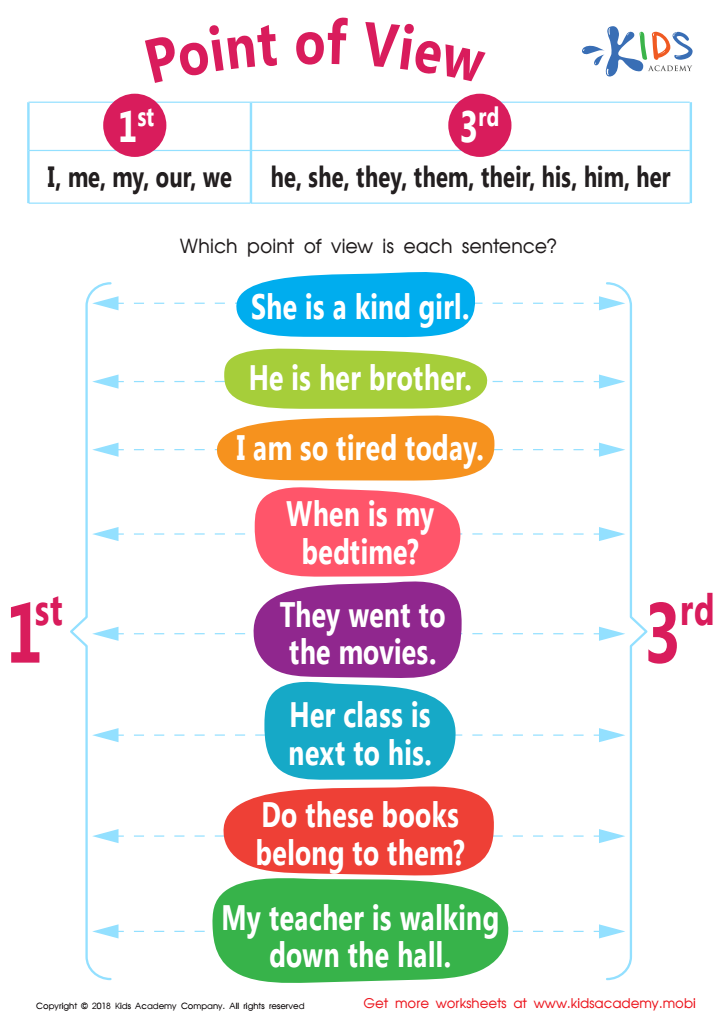
Point of View Worksheet
 Assign to My Students
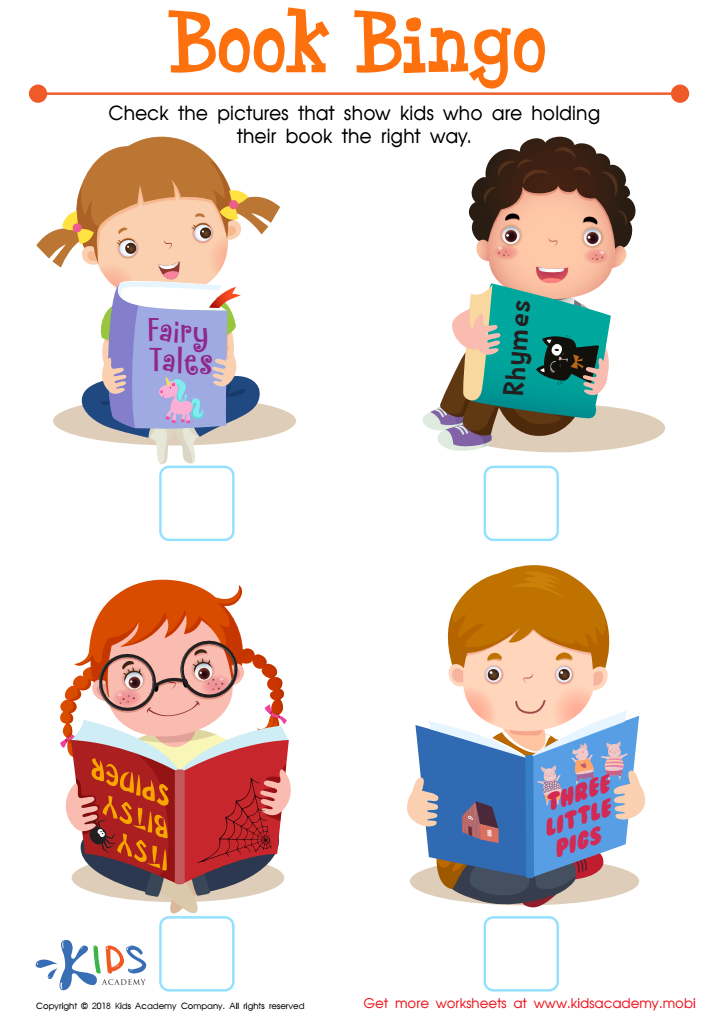
Book Bingo Worksheet
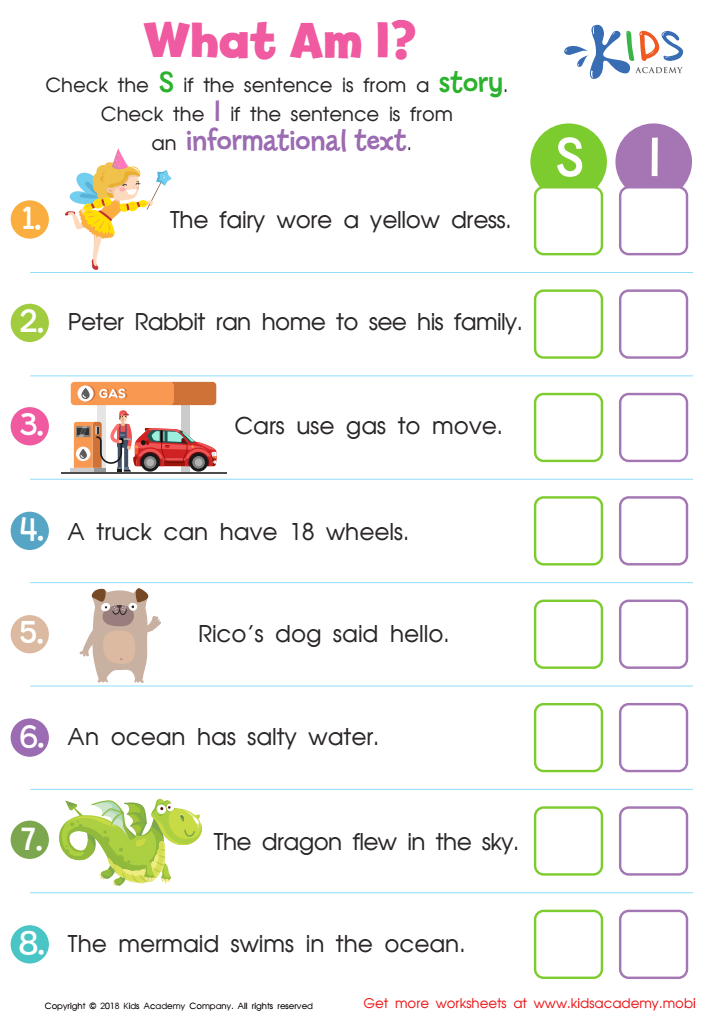
What Am I? Worksheet
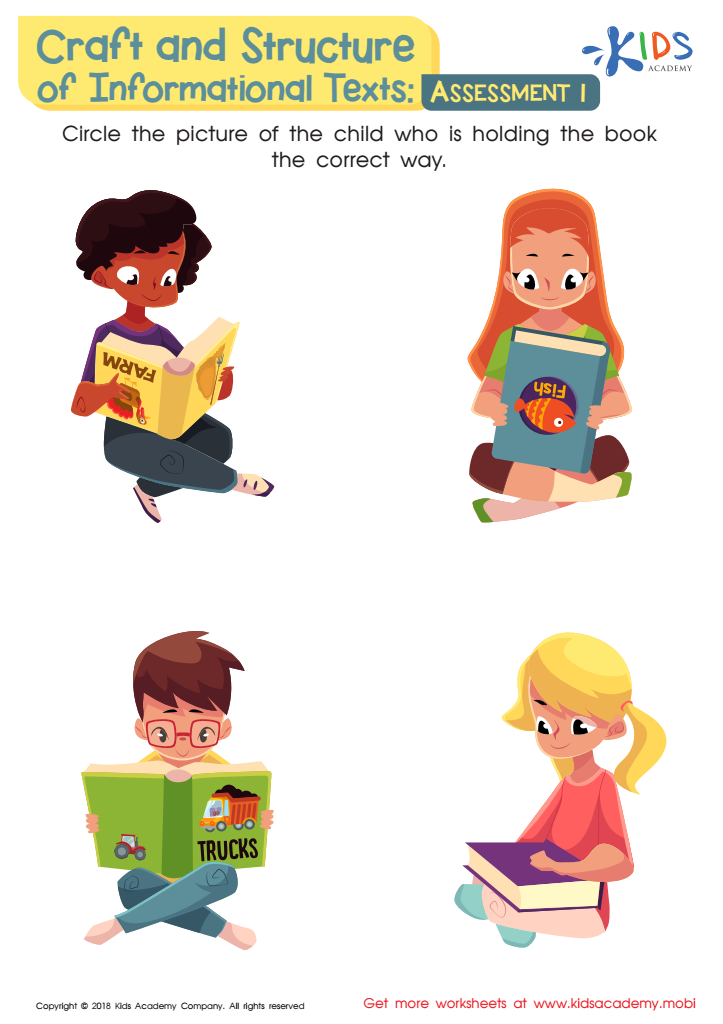
Craft and Structure of Informational Texts: Assessment 1 Worksheet








Fostering critical thinking through reading non-fiction at an early age, specifically for children aged 4-6, is fundamental for their cognitive and educational development. It's important for parents and teachers to understand that critical thinking encompasses the ability to analyze, evaluate, and synthesize information, and these skills are beneficial for laying a strong intellectual foundation.
Non-fiction books provide young children with factual content that stimulates curiosity about the world around them. Engaging with real-life concepts helps them develop observation skills, recognize cause-and-effect relationships, and differentiate between facts and opinions. These interactions are crucial in building neural pathways involved in complex thought processes.
Additionally, embracing critical thinking through non-fiction reading enhances comprehension and vocabulary. Children learn to ask meaningful questions, make connections to their own experiences, and communicate ideas effectively. This doesn’t just prepare them for later academic achievements, but also nurtures a lifelong love of learning.
Moreover, with the influx of information in today’s digital age, equipping children early on with skills to critically assess information empowers them to make informed decisions in the future. By investing in critical thinking skills through non-fiction at a young age, we're promoting capable, reflective, and informed future citizens.








