Mathematical reasoning Sight Words Worksheets for Ages 4-6
5 filtered results
-
From - To
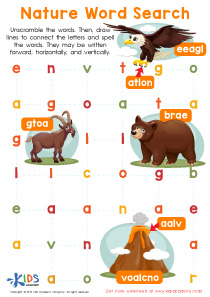
Discover our engaging "Mathematical Reasoning Sight Words Worksheets for Ages 4-6" designed to blend foundational math concepts with essential early reading skills! Each worksheet introduces young learners to sight words while fostering critical thinking and problem-solving abilities through colorful, interactive activities. Perfect for prepping preschoolers and kindergarteners, these worksheets stimulate cognitive development by incorporating math into literacy tasks, like counting, patterns, and basic arithmetic. Boost your child's confidence, vocabulary, and numeracy skills simultaneously. Our thoughtfully crafted resources are ideal for educators and parents aiming to create a solid learning foundation in both math and reading for young minds.
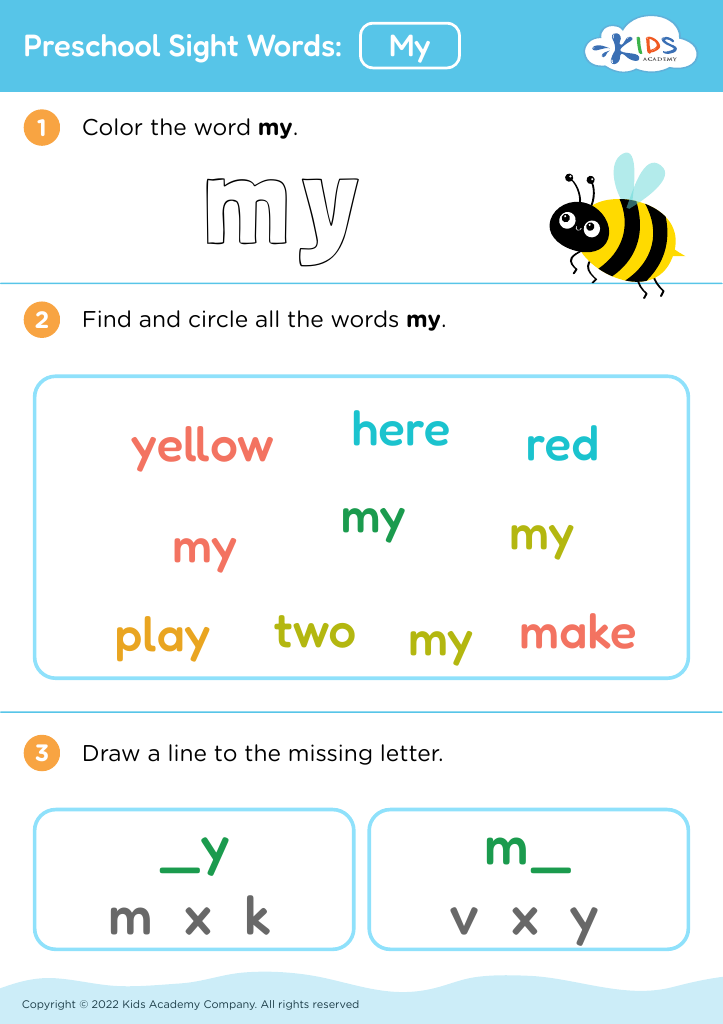
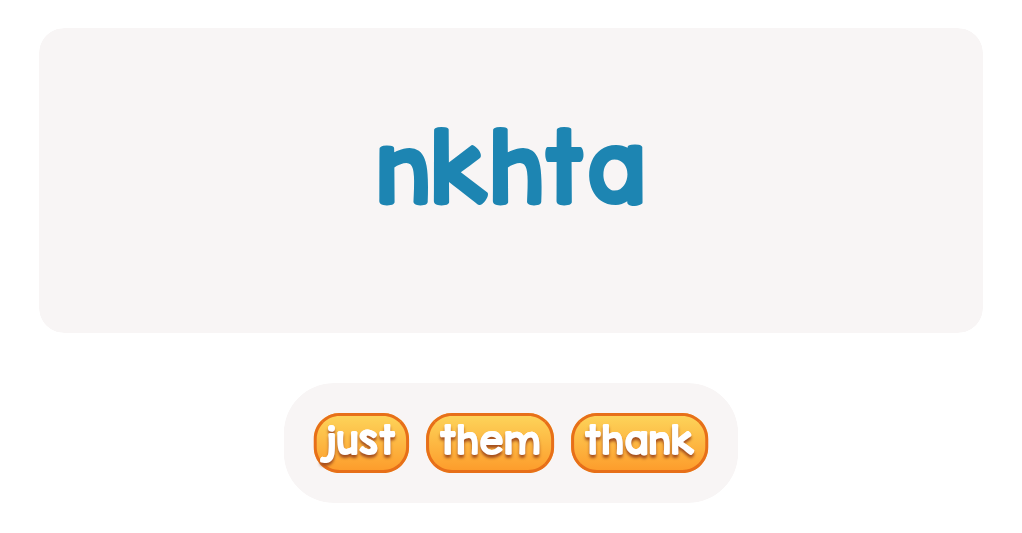







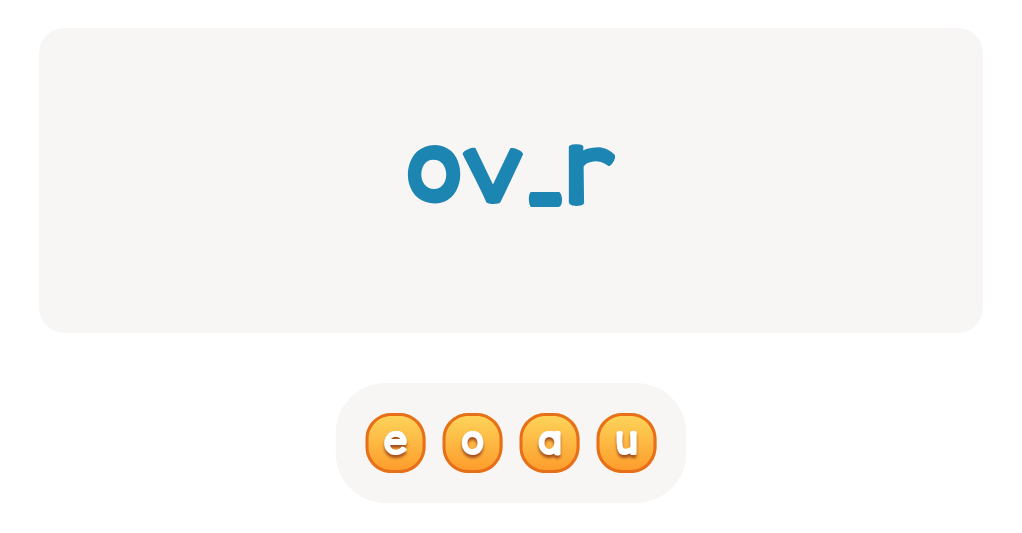
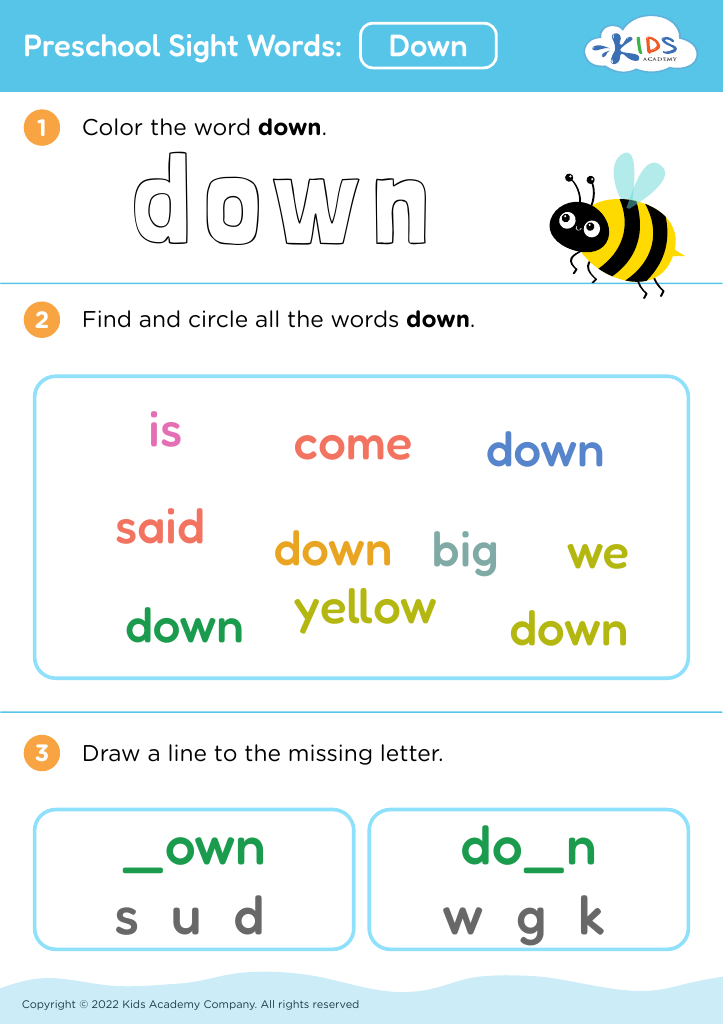
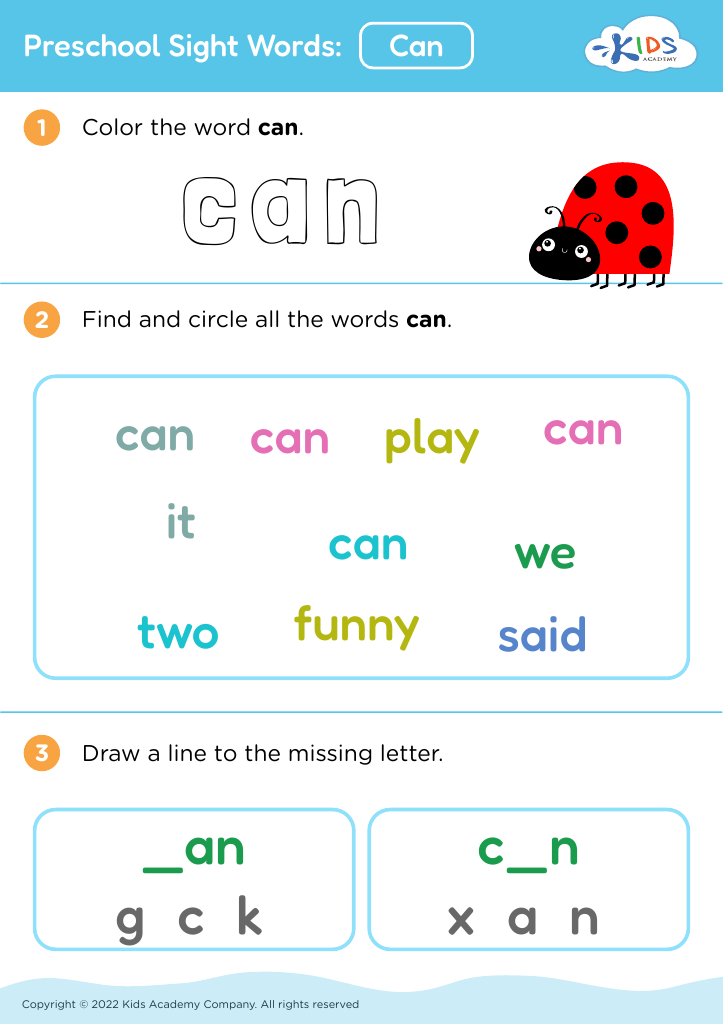
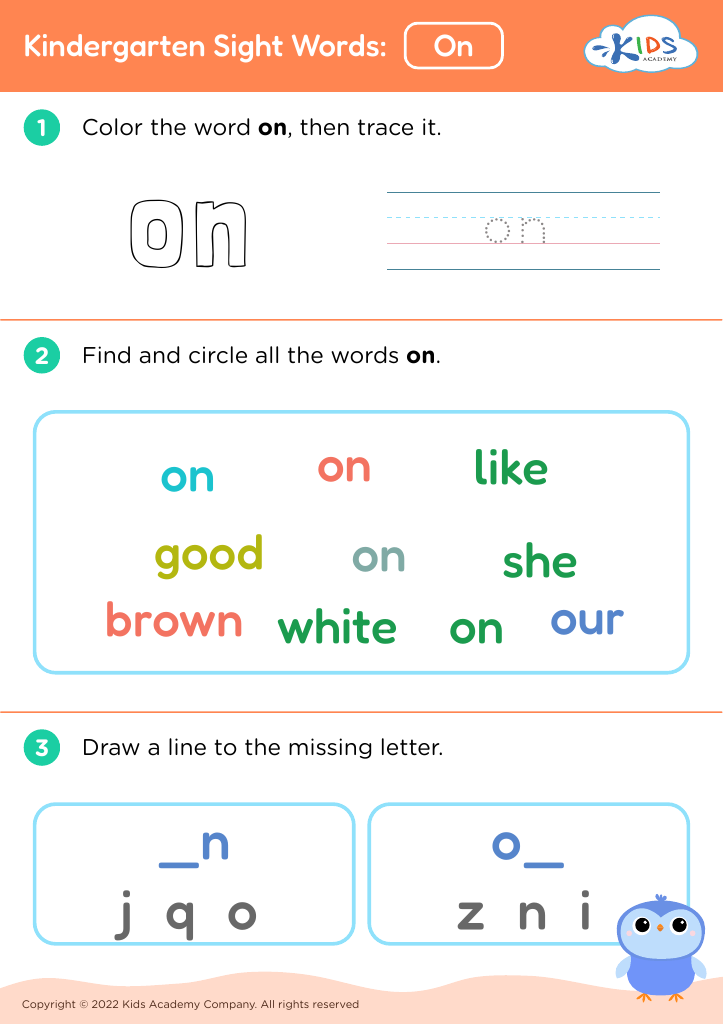
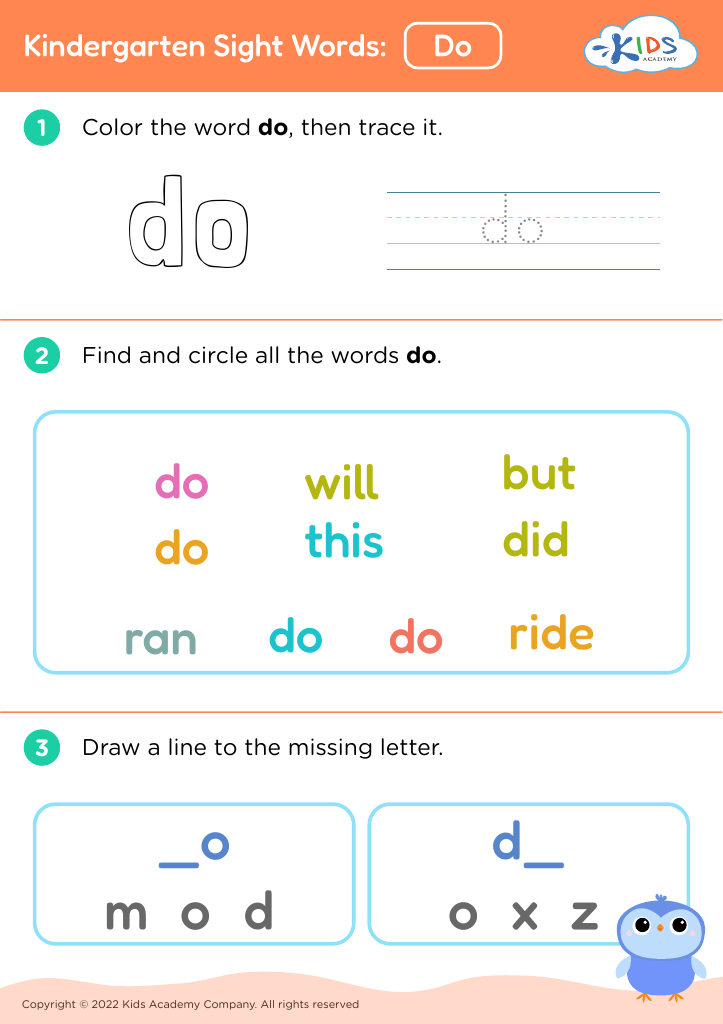








Mathematical reasoning and sight words form foundational skills for children aged 4-6, crucial for their cognitive and academic development. Developed early, these skills establish a strong base for future learning.
Mathematical reasoning in young children fosters logical thinking, problem-solving abilities, and an understanding of the world around them. It encourages curiosity about numbers, shapes, and patterns, foundational concepts for higher mathematics and STEM fields. Integrating math into daily activities, like counting objects during play, helps children grasp abstract concepts in a tangible way. This hands-on approach boosts confidence and interest in mathematics, setting a positive attitude towards future learning.
Sight words, on the other hand, are common words that children are encouraged to recognize by sight rather than decoding them phonetically. Mastery of sight words boosts reading fluency, enabling children to read more smoothly and with better comprehension. Recognizing these frequently used words quickly reduces the cognitive load of sound-out decoding, allowing young readers to focus on understanding the text’s meaning, thereby enhancing overall literacy skills.
In summary, cultivating mathematical reasoning and proficiency in sight words in early childhood equips kids with essential problem-solving skills and reading fluency. These competencies not only improve academic performance but also build confidence, enhancing enthusiasm for learning across all subjects.