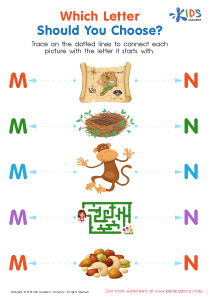
Alphabet Recognition Lowercase/Small Letters Worksheets for 4-Year-Olds
9 filtered results
-
From - To
Discover engaging and interactive worksheets designed to enhance alphabet recognition among 4-year-olds! Our lowercase/small letters worksheets provide a fun and educational way for children to learn essential pre-reading skills. Featuring a variety of playful activities, each worksheet focuses on identifying, tracing, and writing lowercase letters, ensuring a well-rounded understanding of the alphabet. These age-appropriate exercises are crafted to keep young learners motivated and excited about learning. Perfect for parents and teachers, our resources support early literacy development, promoting confidence and independence in reading. Explore our collection today and watch your child’s love for letters grow!
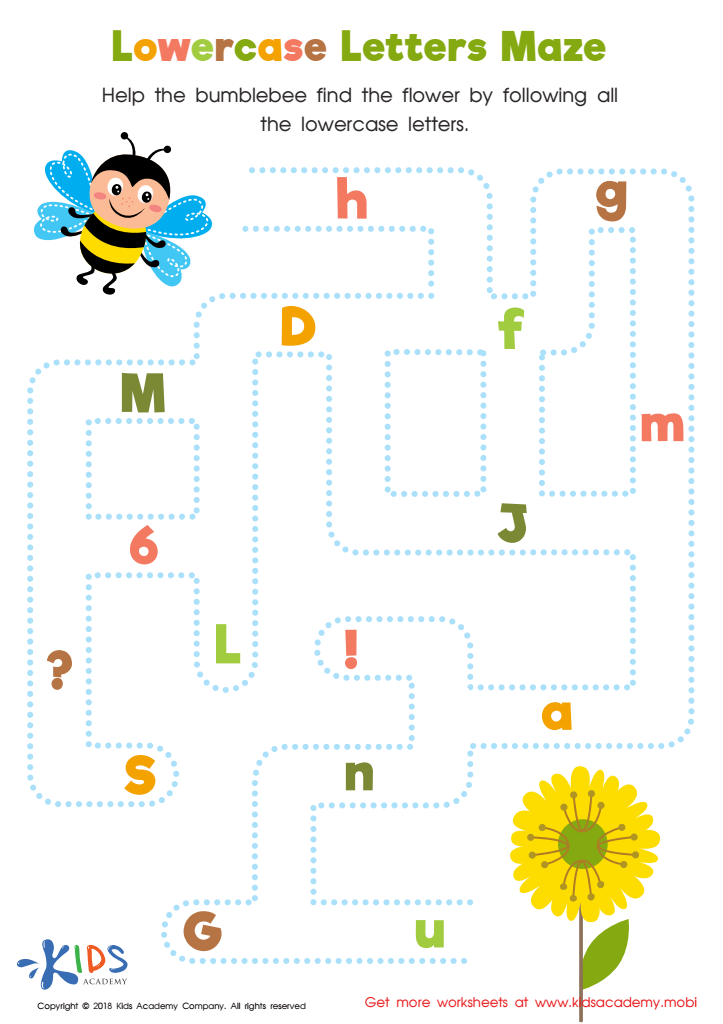
Lowercase Letters Maze Worksheet
 Assign to My Students
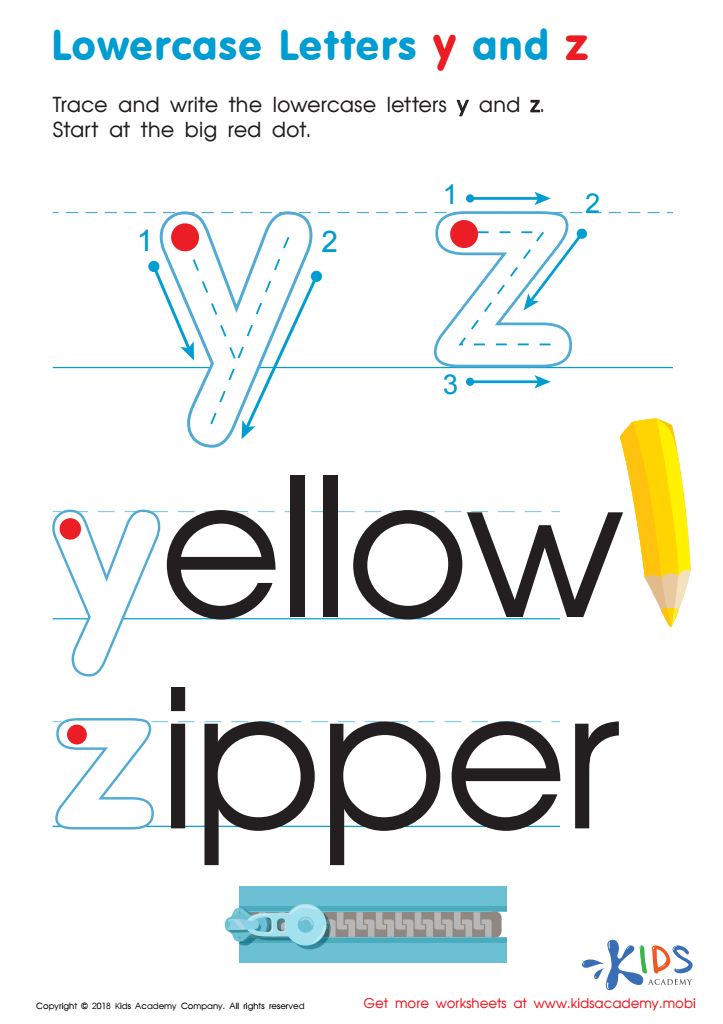
Lowercase Letters y z Worksheet
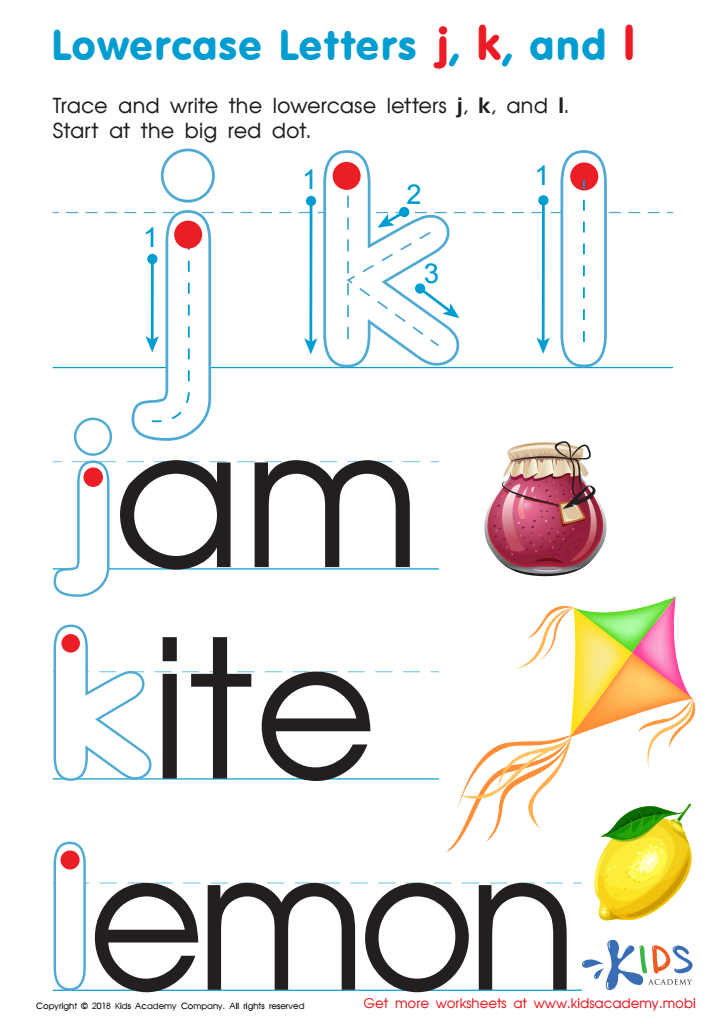
Lowercase Letters j k l Worksheet
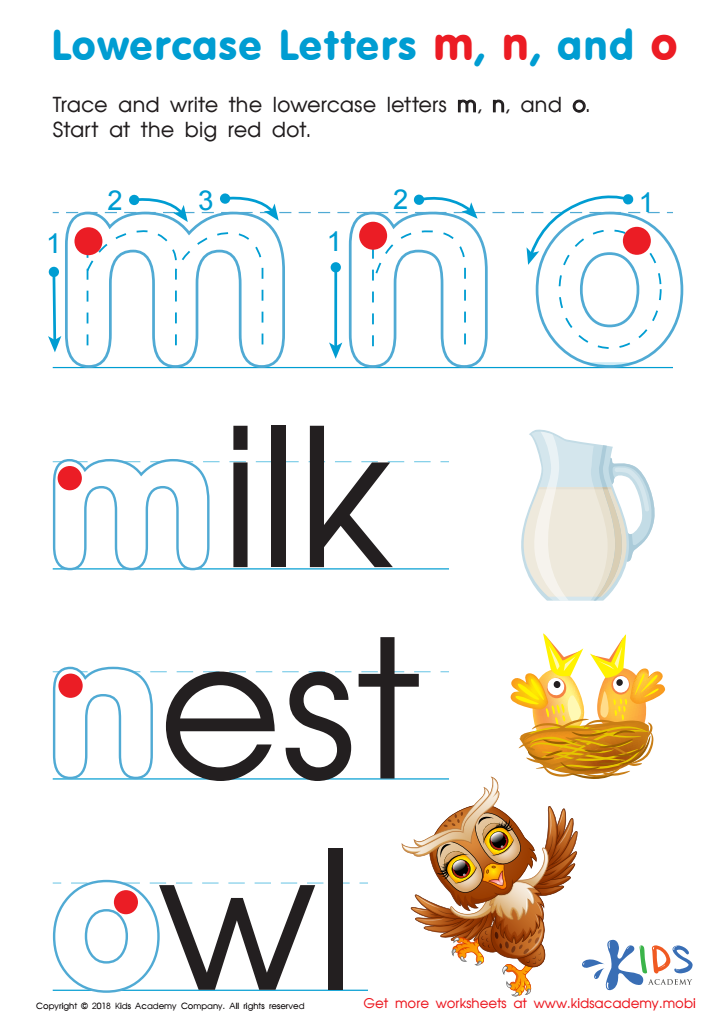
Lowercase Letters m n o Worksheet
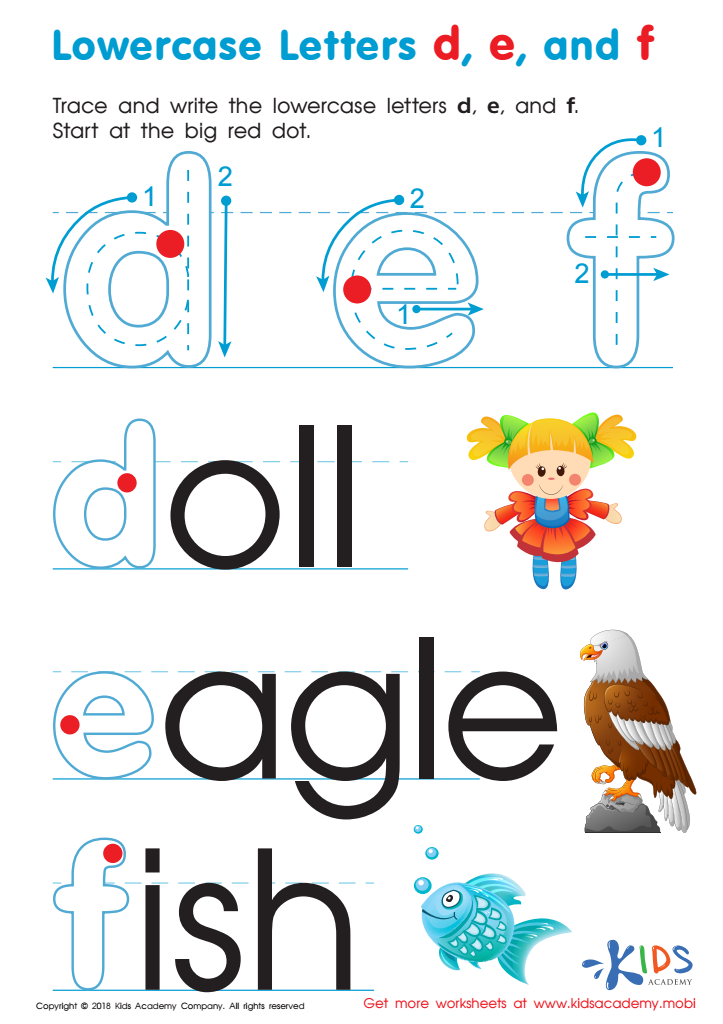
Lowercase Letters d e f Worksheet
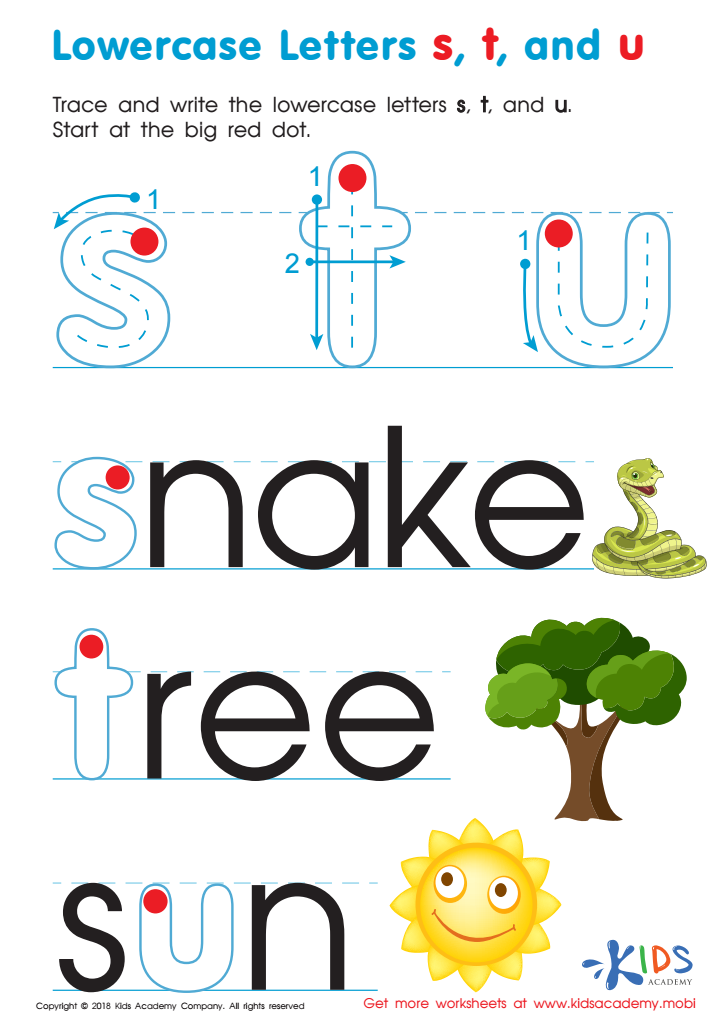
Lowercase Letters s t u Worksheet
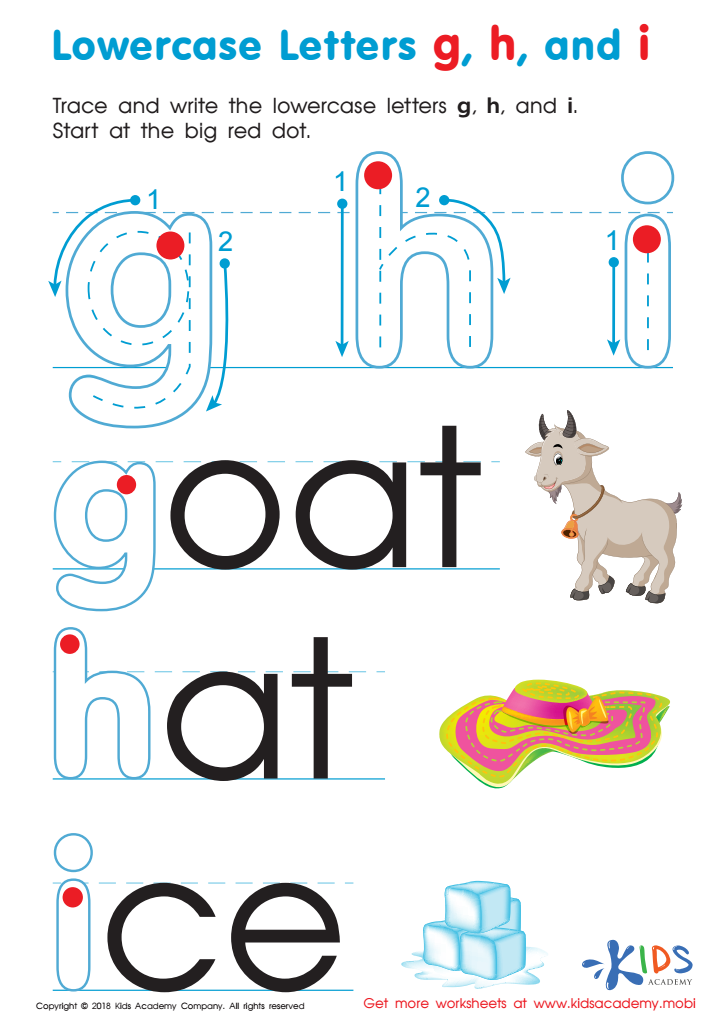
Lowercase Letters g h i Worksheet
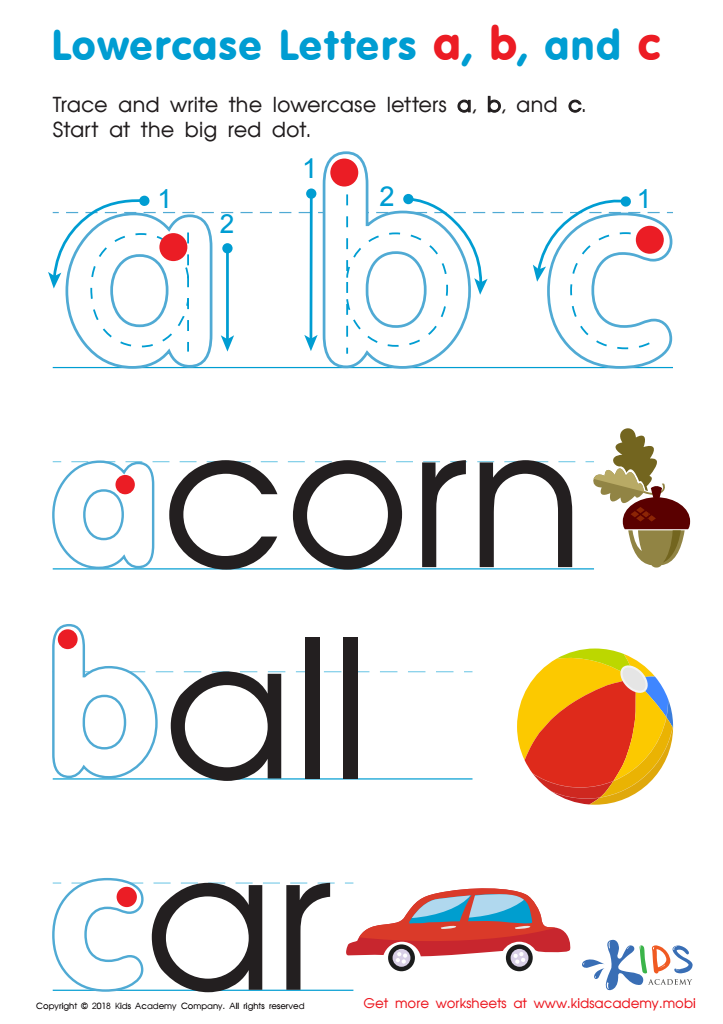
Lowercase Letters a b c Worksheet
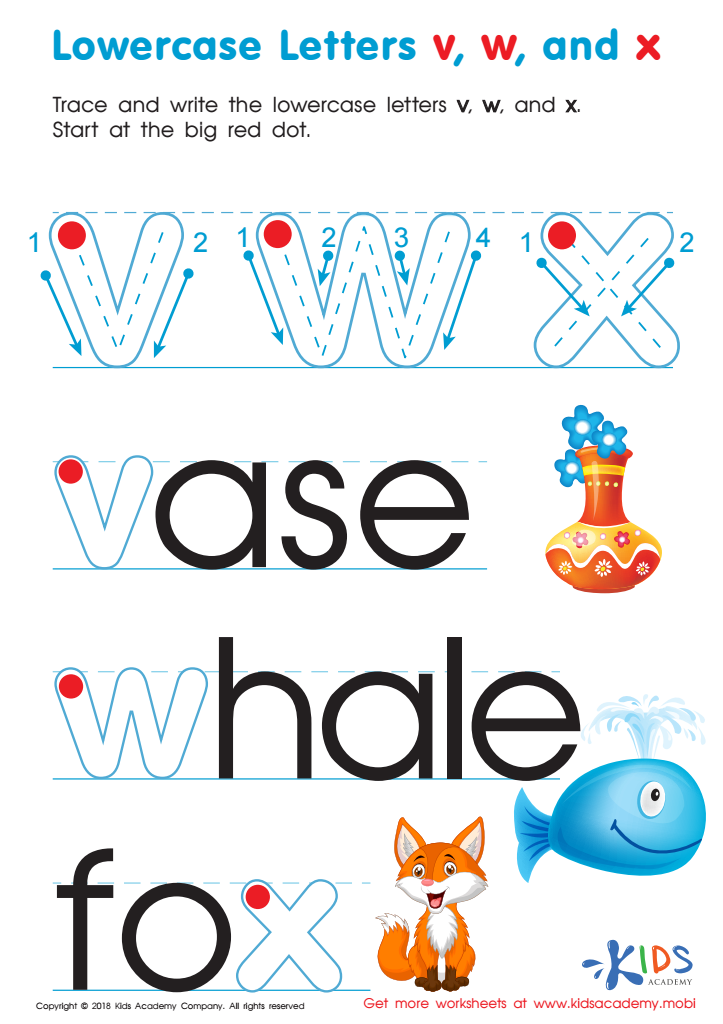
Lowercase Letters v w x Worksheet


Alphabet recognition, particularly of lowercase letters, is crucial for 4-year-olds as it lays the foundation for literacy and overall academic success. At this age, children are developing vital cognitive and language skills. Recognizing lowercase letters is important because these are the letters they will encounter most frequently in books, labels, and everyday writing. Mastering lowercase letters encourages early reading and writing abilities, critical for effective communication.
Furthermore, recognizing letters helps children to understand the connection between sounds and symbols, promoting phonemic awareness—a key predictor of reading success. When children can identify and differentiate between letters, they build confidence in their ability to communicate, read, and write.
Moreover, fostering this skill in early education can positively affect a child’s attitude towards learning. Engaging activities, such as games and crafts centered around lowercase letters, keep children excited and motivated. As they develop this skill, children learn to decode words and form sentences, propelling their literacy journey forward.
Ultimately, supporting lowercase letter recognition can enhance not just literacy but also improve overall cognitive development, social interactions, and self-esteem, making it an essential focus for parents and teachers alike.