Alphabet sequencing Lowercase/Small Letters Worksheets for 4-Year-Olds
3 filtered results
-
From - To
Discover our Alphabet Sequencing Lowercase/Small Letters Worksheets, specially designed for 4-year-olds! These delightful, educational worksheets help young learners master the order of the alphabet while developing fine motor skills and letter recognition. Your child will love the engaging activities that make learning both fun and effective. Perfect for at-home practice or as a classroom resource, these worksheets ensure your little one builds a strong foundation in early literacy. Explore now and give your child a head start on their reading journey with our expertly crafted, age-appropriate worksheets at Kids Academy!
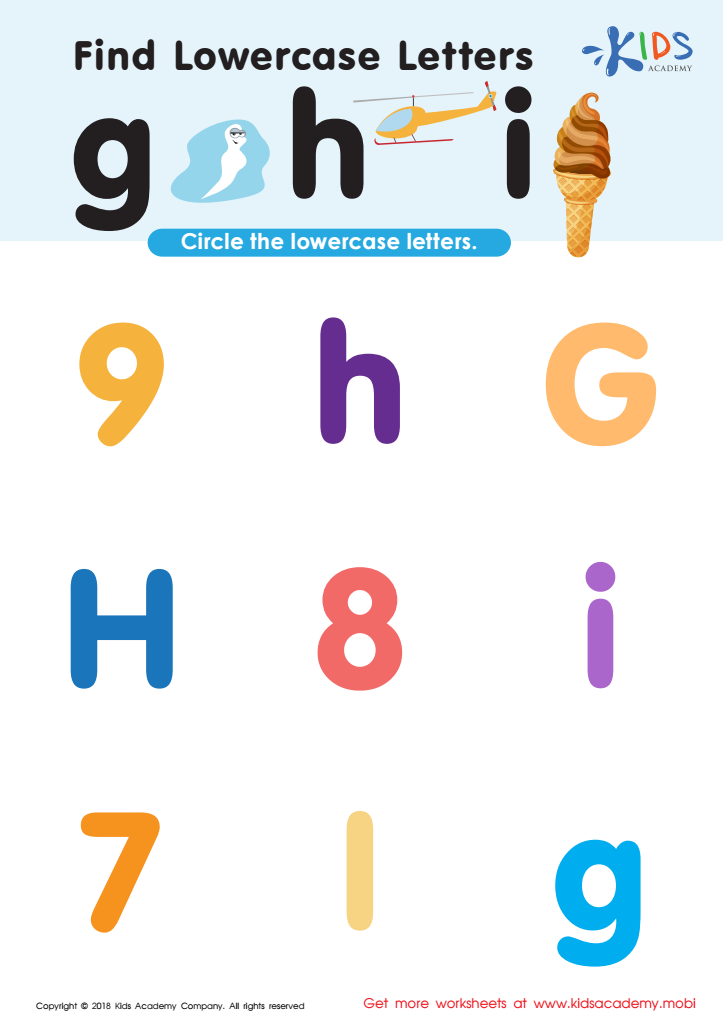
Find Lowercase Letters g h i Worksheet
 Assign to My Students
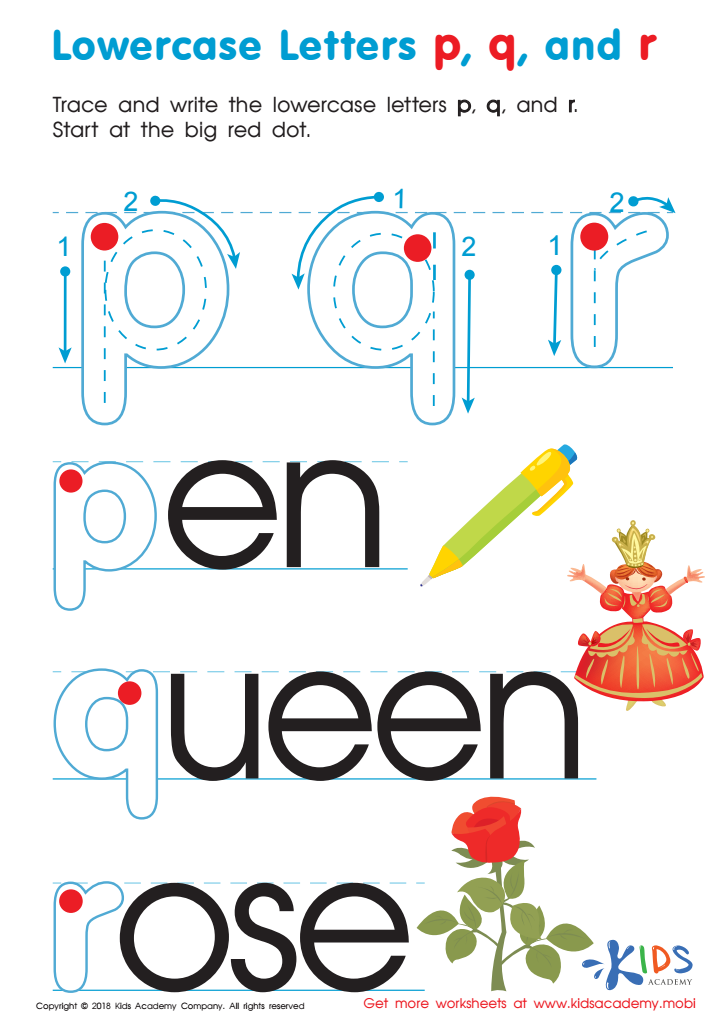
Lowercase Letters p q r Worksheet
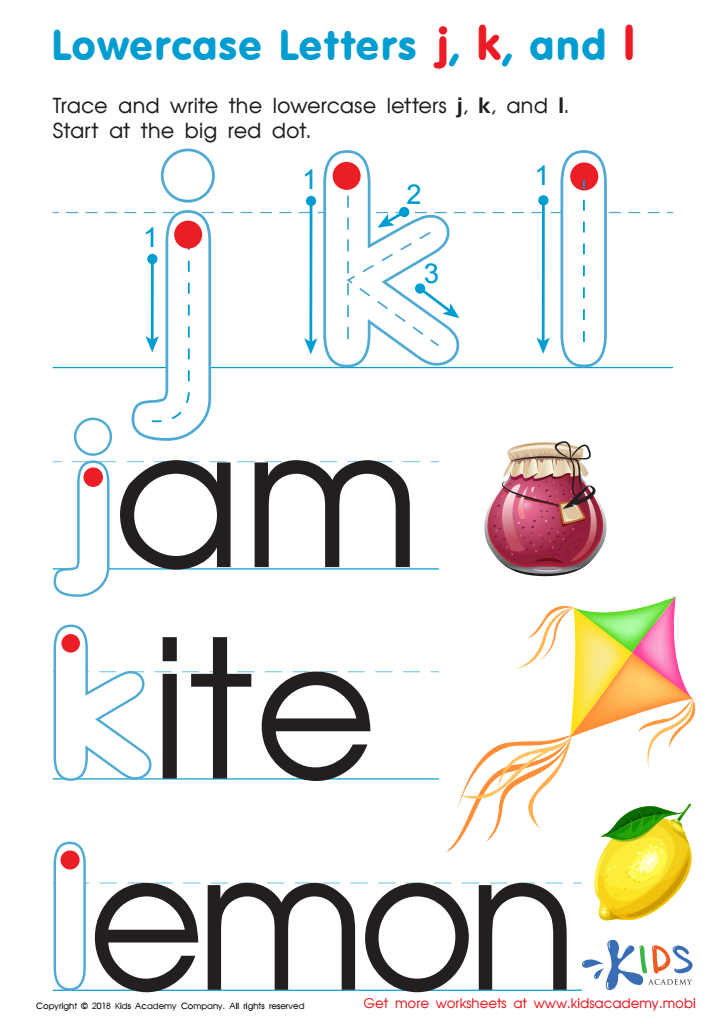
Lowercase Letters j k l Worksheet


Teaching alphabet sequencing of lowercase letters to 4-year-olds is fundamental for several reasons, forming the basis for future literacy and academic success. First, early mastery of lowercase letters is essential for reading fluency since most print materials primarily use lowercase typography. As children familiarize themselves with the alphabet sequence, they gain proficiency in recognizing letters quickly, thereby enhancing their ability to decode words and sentences seamlessly.
Second, understanding alphabetical order aids in developing organizational and cognitive skills. Sequencing relies on pattern recognition and memory, helping children improve their general problem-solving abilities. Engaging in alphabet sequencing activities also supports fine motor skill development as children trace and write each letter.
Moreover, early exposure to the alphabet boosts a child's confidence and interest in literacy, fostering a positive attitude toward reading and learning. This enthusiasm often translates into better academic performance in later years.
Teachers and parents who emphasize lowercase alphabet sequencing provide children with a tool critical for dictionary use, navigating indexes, and the technological aspects of keyboarding. Consequently, prioritizing alphabet sequencing in early childhood education not only lays the groundwork for literacy but also sets a lifelong foundation for organized thought processes and effective communication.