Shape Recognition Tracing Lines and Curves Worksheets for 4-Year-Olds
3 filtered results
-
From - To
Introduce your 4-year-old to the world of shapes with our Shape Recognition Tracing Lines and Curves Worksheets. Designed specifically for preschoolers, these fun and engaging activities help children develop their fine motor skills, hand-eye coordination, and early writing abilities. Through tracing simple lines, curves, and shapes, kids will strengthen their understanding of geometry and improve their ability to recognize common shapes in their environment. Ideal for ages 4 and up, these printable worksheets provide a perfect blend of education and entertainment, setting the foundation for future math and writing success. Download now and watch your child’s skills soar!
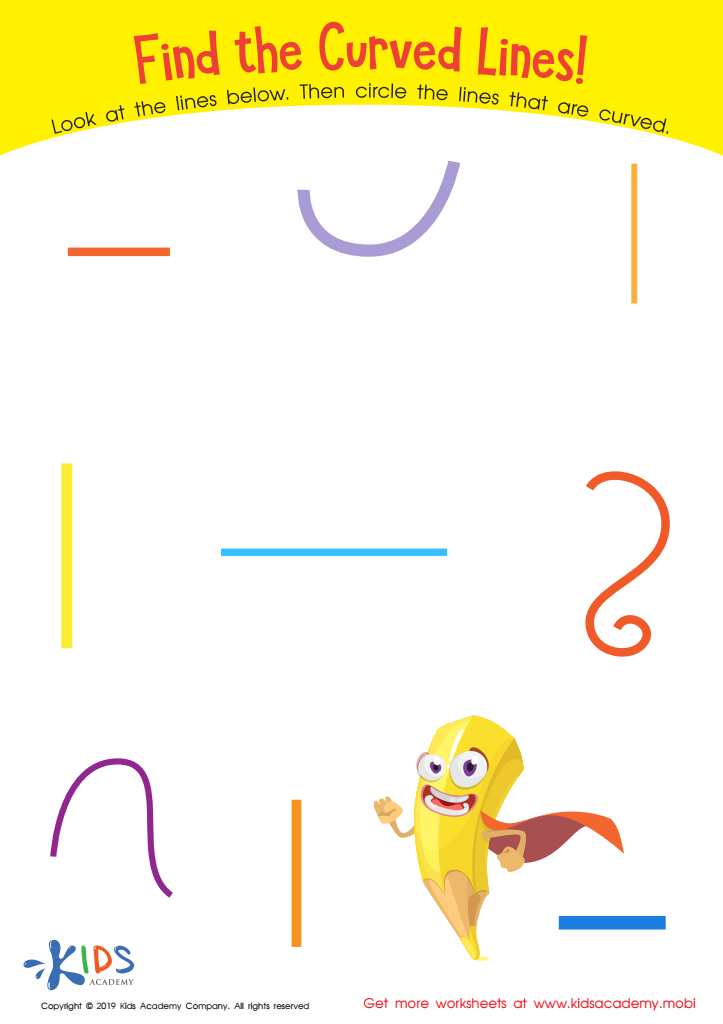
Find the Curved Lines! Worksheet
 Assign to My Students
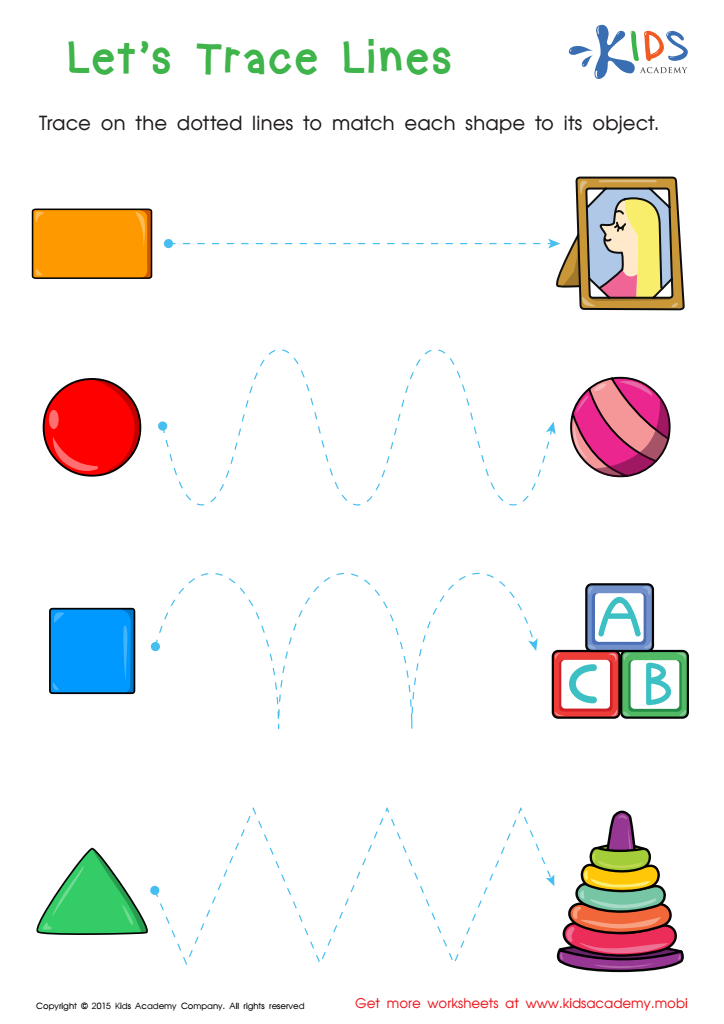
First Words: Let's Trace Lines Worksheet
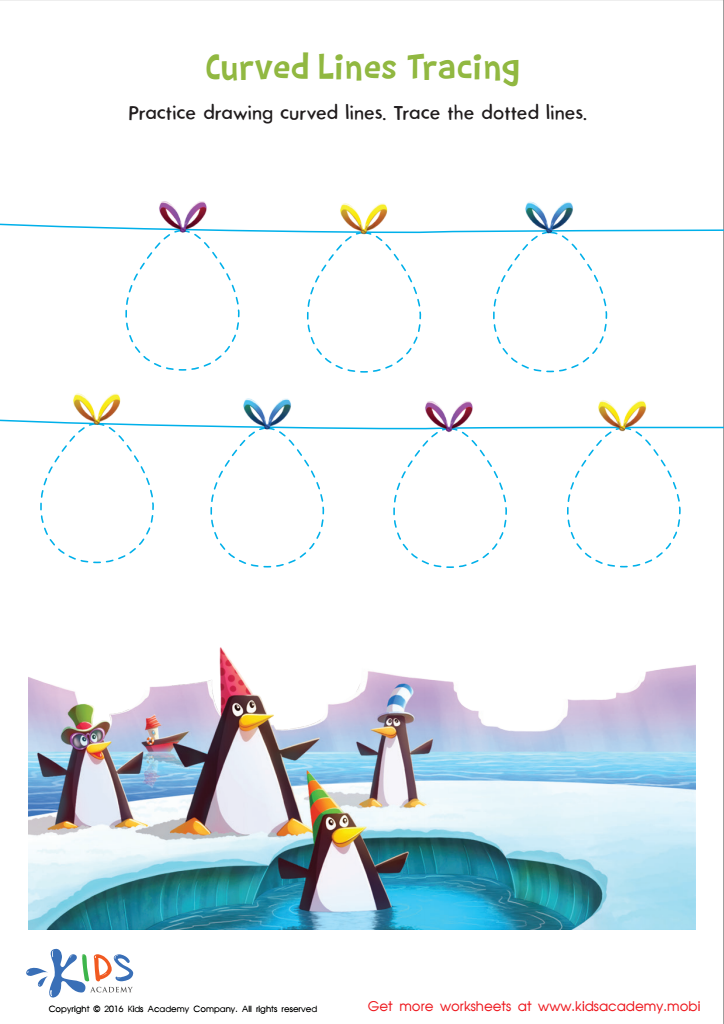
Curved Lines Tracing Worksheet




Parents and teachers should care about shape recognition and tracing lines and curves for 4-year-olds because these foundational skills are crucial for a child's cognitive and motor development. Recognizing shapes enhances visual perceptual skills, which are necessary for reading and understanding complex visuals later on. Shape recognition helps children learn how to categorize and make sense of the world around them, promoting logical thinking and problem-solving abilities.
Tracing lines and curves, on the other hand, plays a vital role in developing fine motor skills and hand-eye coordination, essential for writing and other precise tasks. By engaging in these activities, children also learn to control their hand movements, which is vital for successful handwriting in the future. Moreover, the act of tracing improves attention span and concentration, encourages patience, and builds persistence—all critical attributes for academic success.
Furthermore, integrating shape recognition and tracing into playful activities can make learning enjoyable, reducing the pressure on children and fostering a love for learning. Early mastery of these fundamentals sets a solid foundation, enabling children to progress and build more advanced skills confidently. In essence, these simple, engaging activities pave the way for a child's educational journey, making them indispensable in early childhood development.








