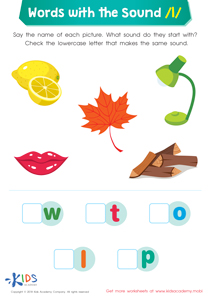
Uppercase identification Uppercase Letters Worksheets for 4-Year-Olds
5 filtered results
-
From - To
Enhance your 4-year-old's letter recognition skills with our Uppercase Identification Worksheets! Specially designed for preschoolers, these engaging activities help young learners familiarize themselves with uppercase letters. Each worksheet combines fun graphics and clear instructions to make learning enjoyable and effective. Whether they’re tracing letters, matching them, or finding hidden uppercase characters, your child will develop a solid foundation for reading and writing. Boost their confidence and prepare them for future academic success with these essential educational tools! Discover the joy of learning with our Uppercase Identification Uppercase Letters Worksheets today!
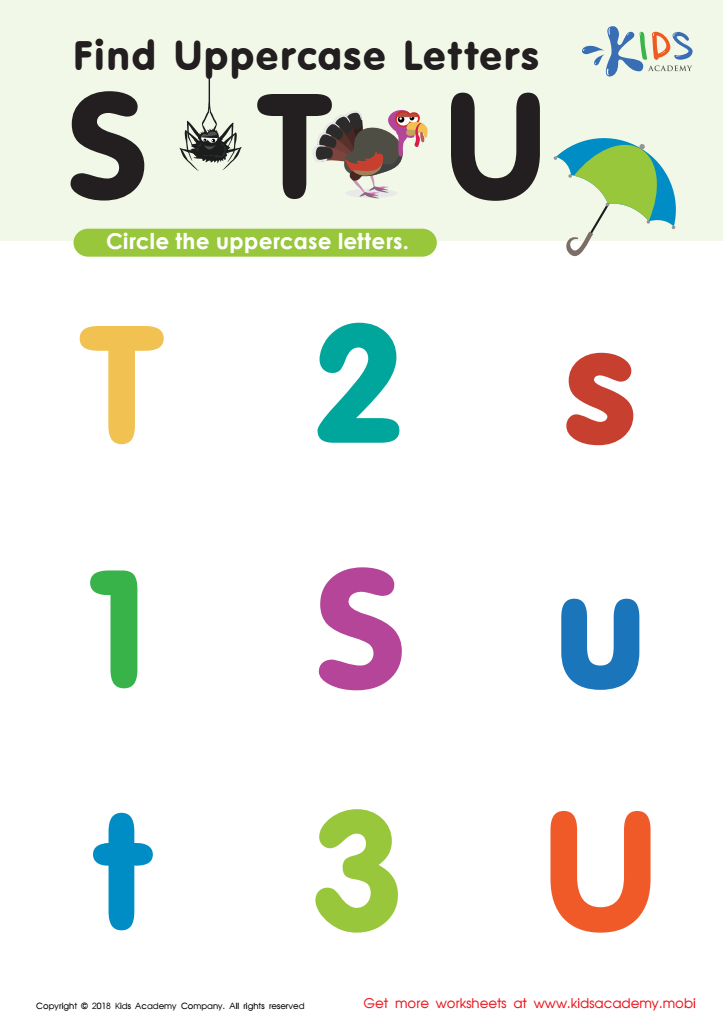
Find Uppercase Letters Worksheet
 Assign to My Students
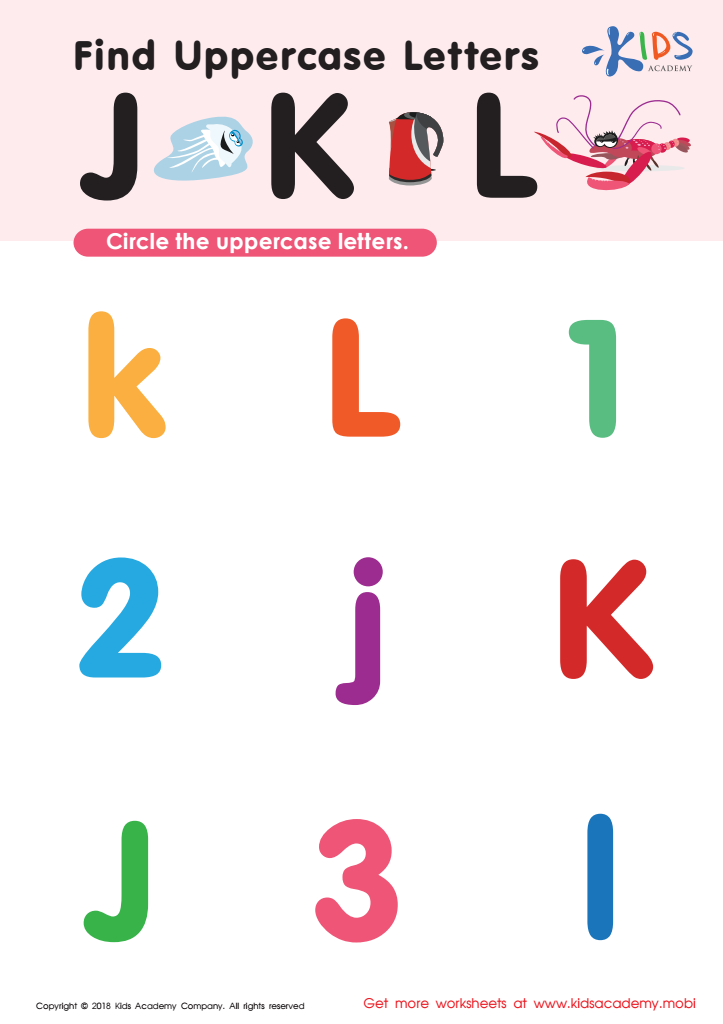
Find Uppercase Letters J, K, and L Worksheet
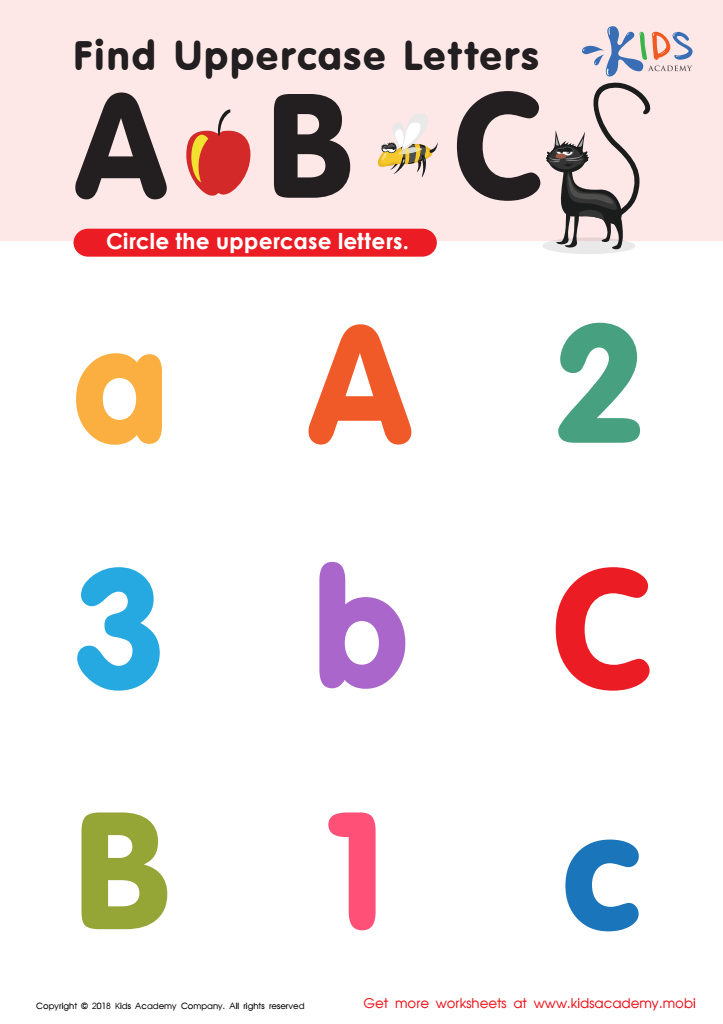
Find Uppercase Letters A, B, and C Worksheet
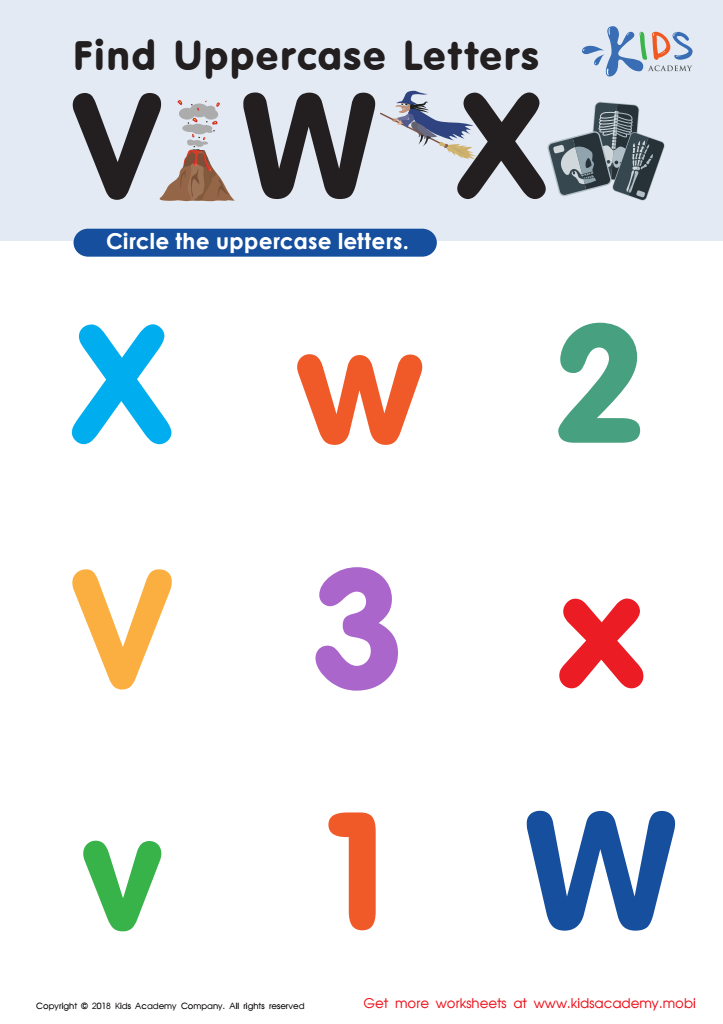
Find Uppercase Letters V, W, X Worksheet
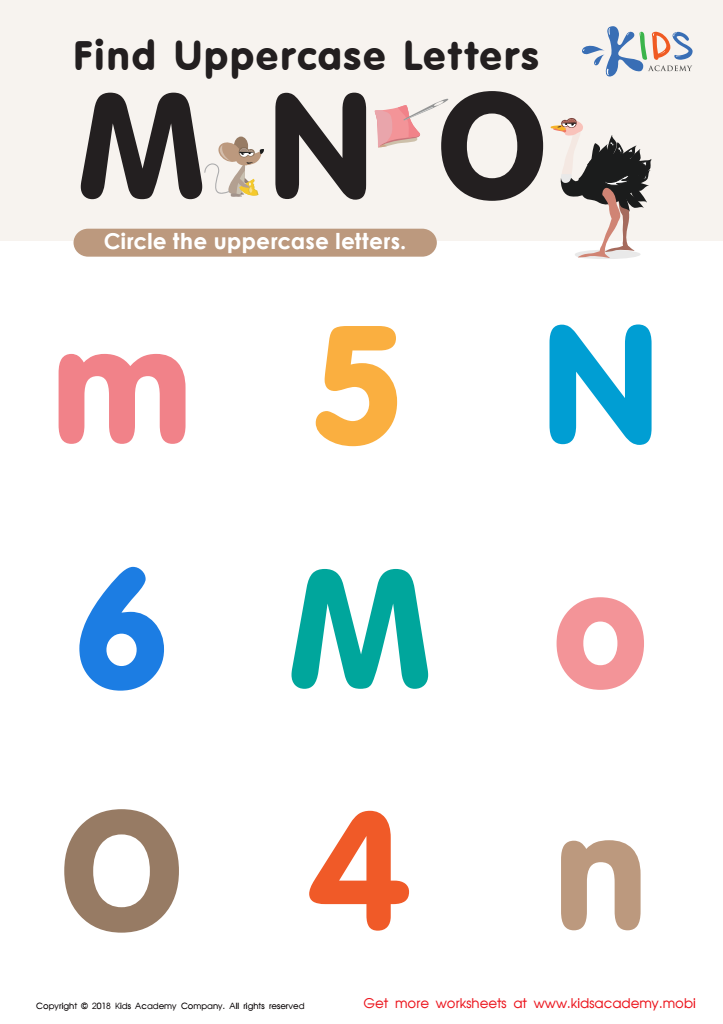
Find Uppercase Letters M, N, and O Worksheet








Parents and teachers play a crucial role in the early literacy development of 4-year-olds, and helping children recognize uppercase letters is a foundational step towards reading and writing. At this age, children's brains are highly receptive to new information, making it an optimal time to introduce and familiarize them with uppercase letters. Recognizing these letters aids in letter-sound association, which is essential for phonetic awareness and decoding skills.
When children can identify uppercase letters, they gain confidence and enthusiasm about learning to read and write. This sets a positive tone for their future educational experiences. Moreover, uppercase letters often appear in public signage and basic children's books, making them more familiar and accessible for young learners. As children begin to notice and name these letters in their environment, they naturally develop observational skills and cognitive connections that further enrich their learning experience.
Early mastery of uppercase letter identification also supports fine motor skill development, as children start practicing writing these letters, which requires hand-eye coordination and muscle control. This dual benefit of cognitive and motor skill advancement underscores the importance of focusing on uppercase letter recognition at this critical stage. In sum, this foundational skill sets the stage for a lifetime of literacy and learning, making it a key focus for early childhood educators and parents.