
Comparing numbers Worksheets for 4-Year-Olds
4 filtered results
Difficulty Level
Grade
Age
-
From - To
Subject
Activity
Standards
Discover our engaging Comparing Numbers Worksheets designed specifically for 4-year-olds! These fun and interactive activities help young learners understand the concept of comparison through vibrant visuals and age-appropriate exercises. Children will practice recognizing and comparing numbers, enhancing their counting skills and numeric vocabulary. Each worksheet encourages critical thinking and reinforces essential math foundations while being entertaining and easy to follow. Perfect for both classroom and at-home learning, our worksheets foster a love for math early on, setting the stage for future success in higher-level concepts. Visit us to find a variety of downloadable worksheets that make learning numbers a joyful adventure!
Favorites
With answer key
Interactive
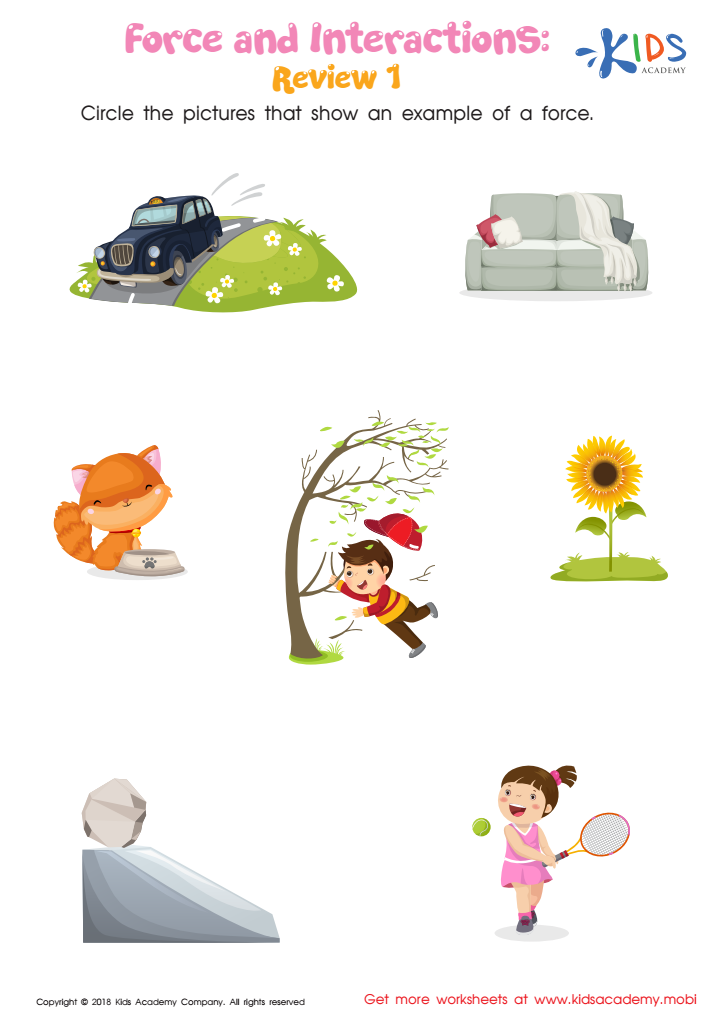
Force and Interactions: Review 1 Worksheet
See how well your child can identify the different forces.
Explain to your child that force is what causes objects to move, such as wind blowing a branch or an object going down a ramp. Ask them to circle images that show a force and assess how well they can identify them.
 Assign to My Students
Force and Interactions: Review 1 Worksheet
Worksheet
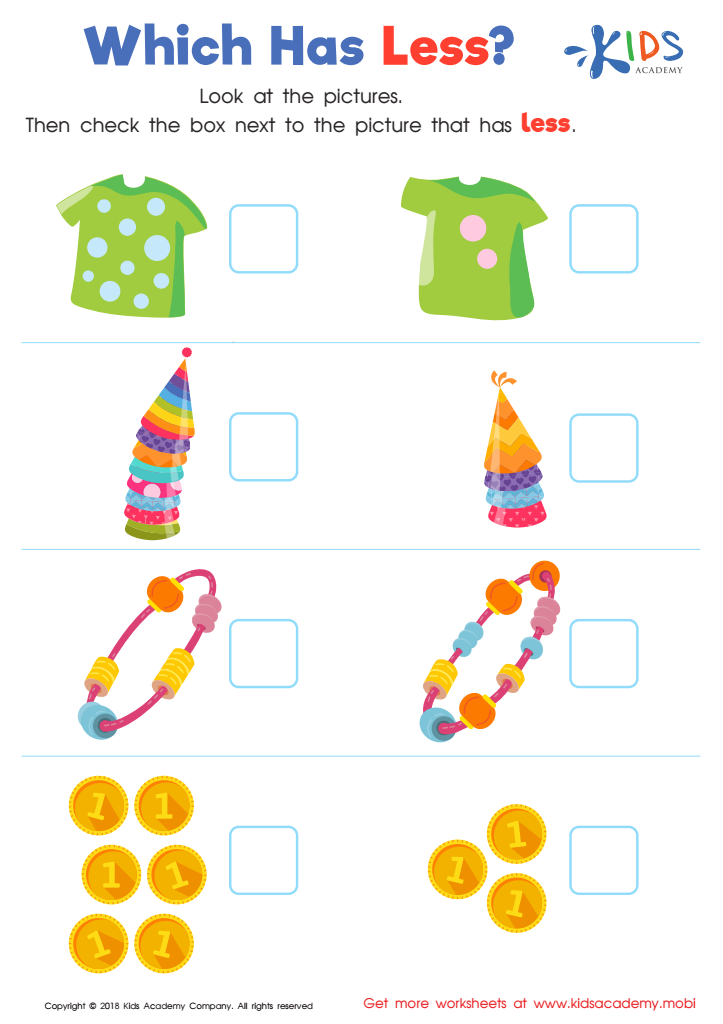
Which Has Less? Worksheet
Kids can develop their number sense by comparing and contrasting objects to identify which has less. This worksheet helps them practice: it's bright and colorful, featuring familiar objects and pictures to count, strengthening basic counting skills. It's the perfect warm-up for comparing and contrasting larger numbers.
Which Has Less? Worksheet
Worksheet
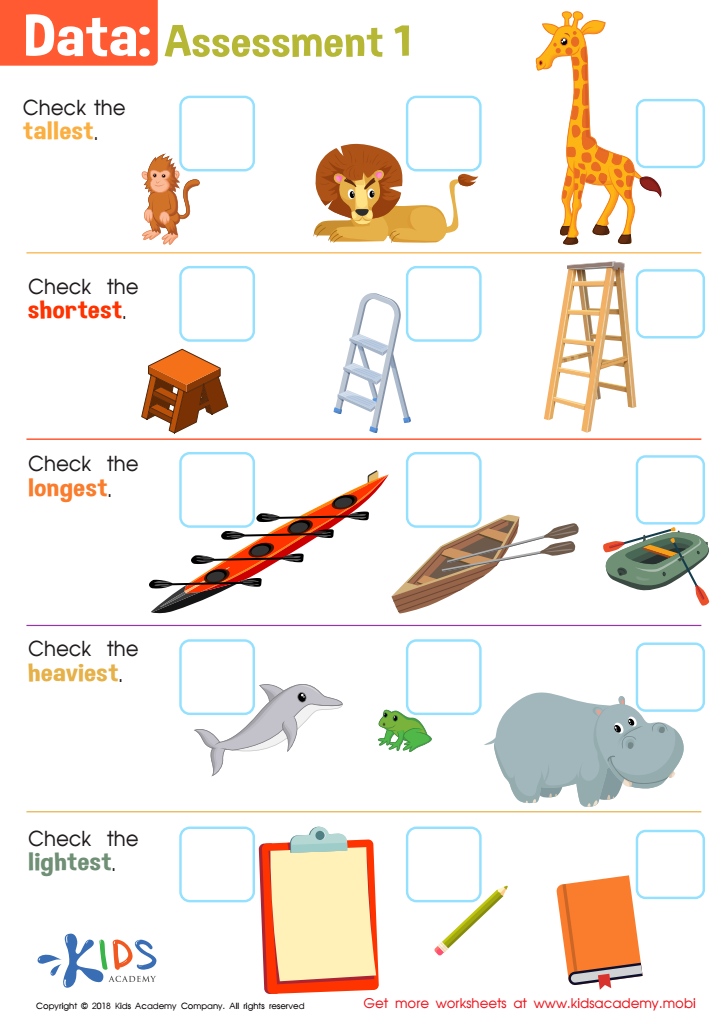
Data: Assessment 1 Worksheet
This free worksheet helps you assess where your young students are with measurement superlatives like tallest, shortest, heaviest, longest and lightest. It features cute, colorful pics of familiar objects so your kids have a reference, and helps you identify areas to work on.
Data: Assessment 1 Worksheet
Worksheet
Join Kids Academy for Free
Who is primarily going to use this learning content?



.jpg)



Teaching 4-year-olds to compare numbers is crucial for their early mathematical development. At this age, children are naturally curious and eager to explore concepts that lay the foundation for future learning. Comparing numbers enhances their understanding of quantity, helping them grasp the ideas of more and less, which are fundamental in mathematics.
When children learn to compare numbers, they develop critical thinking skills as they analyze and evaluate different values. This skill also boosts their problem-solving abilities, enabling them to make informed decisions based on numerical relationships. Moreover, understanding comparisons is essential for daily life, influencing tasks such as sharing items or determining which group has more.
From a developmental perspective, engaging children in activities that involve comparing numbers, such as counting objects or arranging them in order, fosters fine motor skills and reinforces cognitive development. These activities not only promote early math skills but also open up opportunities for engaging classroom discussions or family interactions during playtime.
By nurturing these skills early on, parents and teachers help build a strong numerical foundation, ensure confidence in mathematical reasoning, and set the stage for successful academic experiences in the future. Ultimately, early comparison skills can pave the way for lifelong learning in mathematics and beyond.








