Comparing quantities Worksheets for 4-Year-Olds
5 filtered results
-
From - To
Our "Comparing Quantities Worksheets for 4-Year-Olds" are designed to nurture early math skills through fun and interactive activities. These worksheets help children understand basic concepts of more, less, and equal by comparing different quantities and objects. Engaging visuals and simple exercises captivate young minds, encouraging them to practice counting, matching, and comparing. Ideal for preschool and early kindergarten students, our worksheets build a strong foundation for future math success. Boost your child's confidence and skills with our expertly crafted resources tailored for young learners. Download now and make learning an enjoyable adventure!
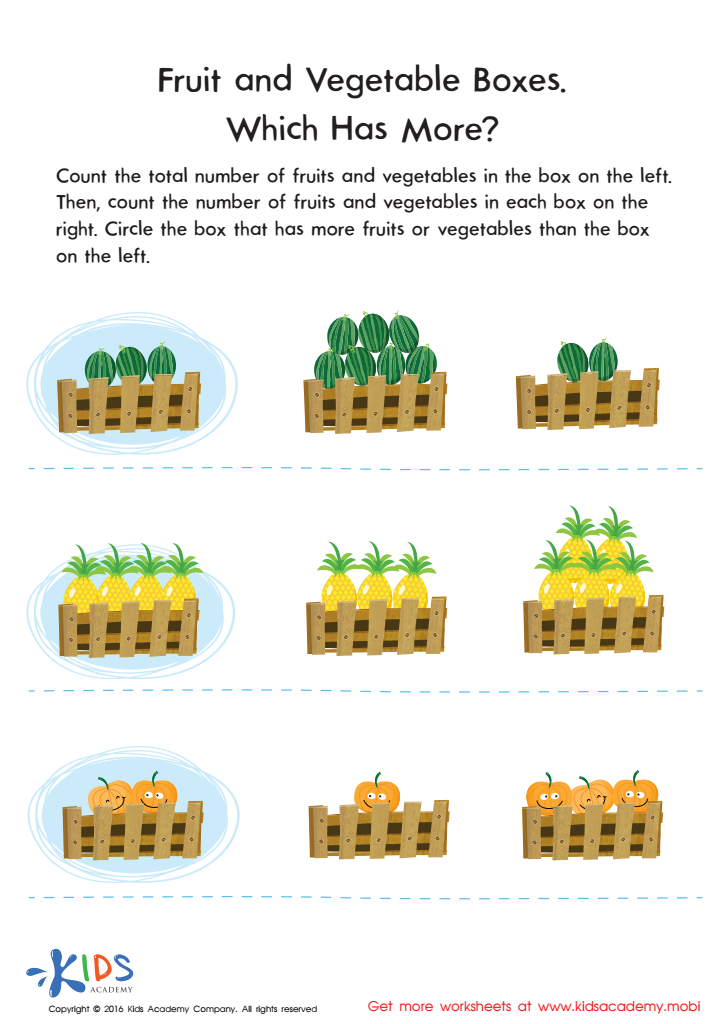
Which Has More? Size Worksheet
 Assign to My Students
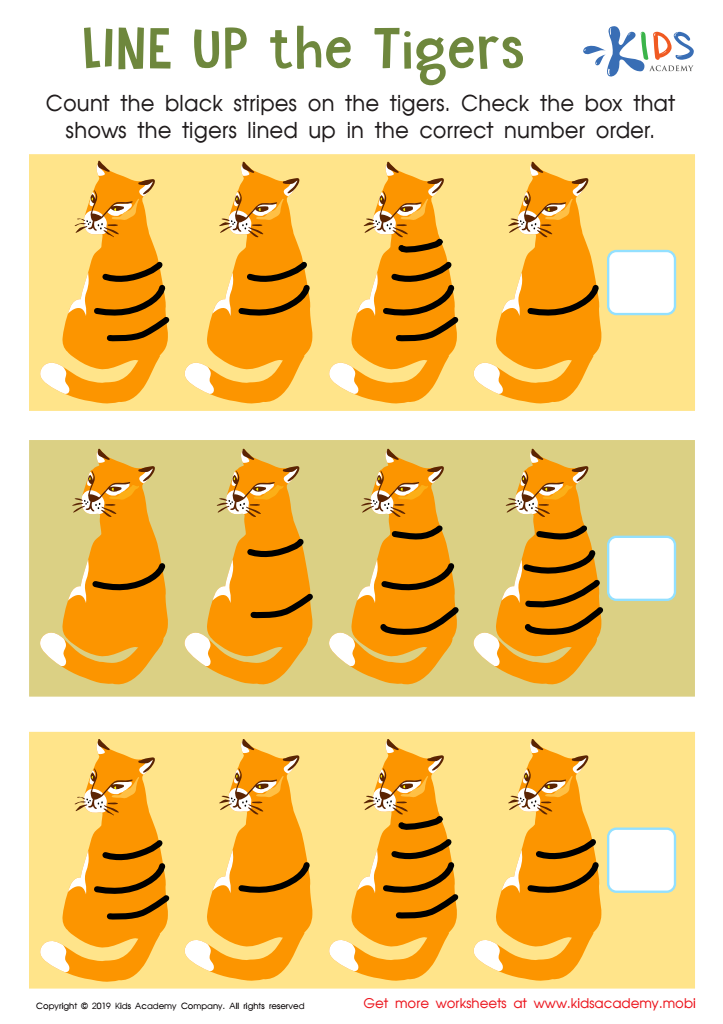
Line up the Tigers Worksheet
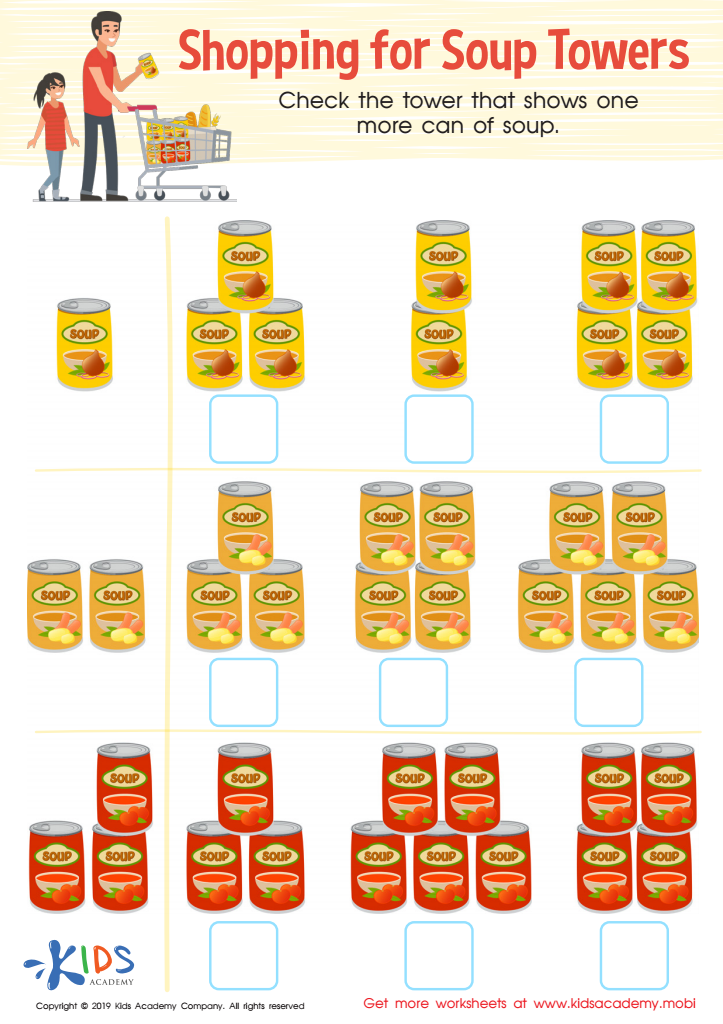
Soup Towers Worksheet
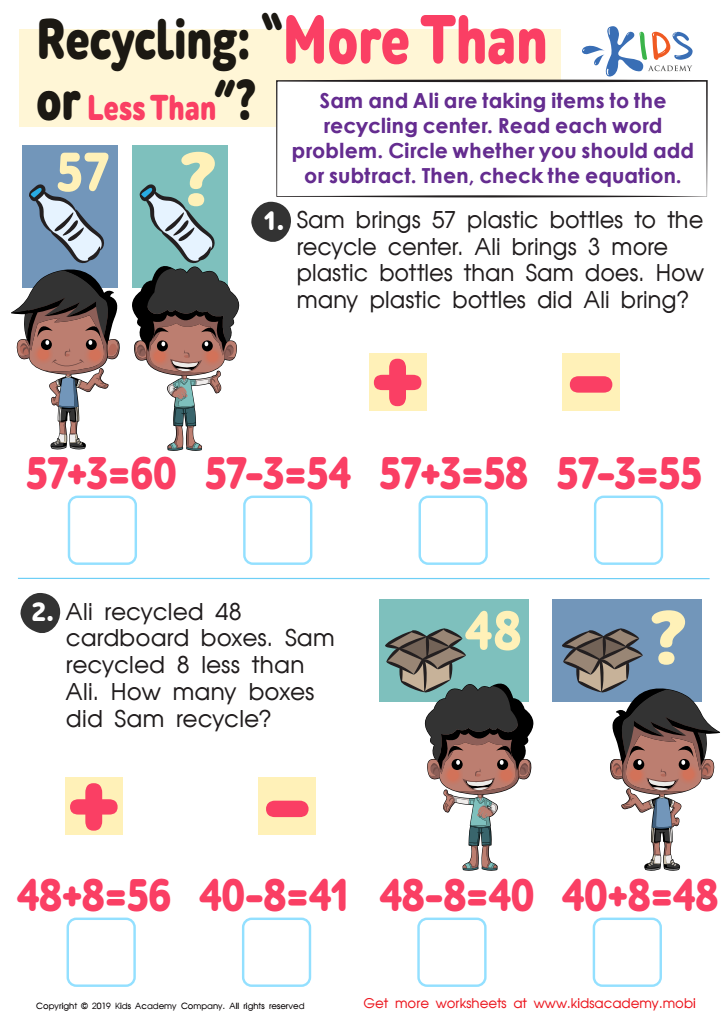
Recycling - More or Less Worksheet
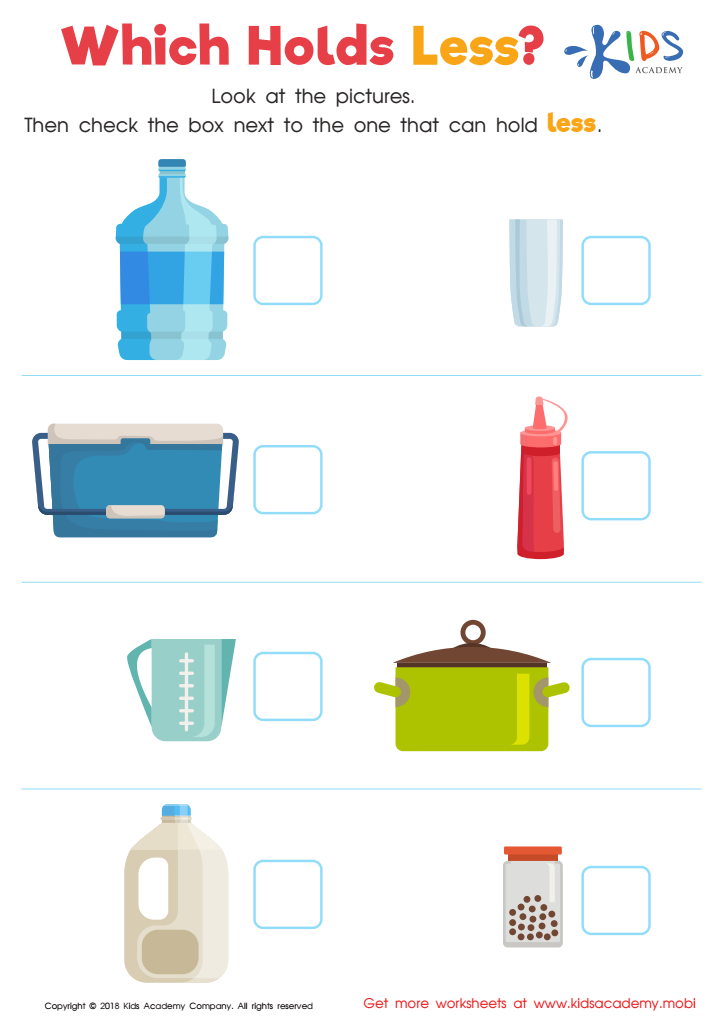
Which Holds Less? Worksheet







Understanding the concept of comparing quantities is crucial for 4-year-olds as it builds a foundational skill for their future mathematical learning. When children learn to compare quantities, such as differentiating between more and less or identifying which group has fewer objects, they develop critical thinking and problem-solving abilities. These skills are not only applicable in math but also in daily decision-making and logical reasoning.
For parents and teachers, fostering this ability at an early age can significantly enhance a child's ability to grasp more complex mathematical concepts in the future. Introducing comparison through playful activities, such as counting toys, measuring ingredients while cooking, or sorting objects by size, makes learning engaging and relatable. This also helps children to develop observational skills and enhances their vocabulary as they learn terms like "more," "less," "same," and "different."
Moreover, early exposure to comparing quantities can boost a child's confidence. As they recognize patterns and make independent comparisons, they feel more competent, which encourages a positive attitude towards learning. Therefore, parents and teachers should intertwine comparing quantities within daily activities to support cognitive development and lay a solid groundwork for future academic success.








