Understanding context Worksheets for 4-Year-Olds
5 filtered results
-
From - To
Discover engaging and educational "Understanding Context" worksheets perfect for 4-year-olds at Kids Academy! Our carefully designed worksheets help young learners grasp the meaning of words and phrases in varied situations while fostering critical thinking and comprehension skills. Featuring fun, age-appropriate activities, these resources are ideal for enhancing vocabulary and reading readiness through interactive exercises that children will love. Empower your child's early learning journey by developing foundational language skills with our high-quality, printable materials tailored to their needs and interests. Visit Kids Academy for a delightful learning experience!
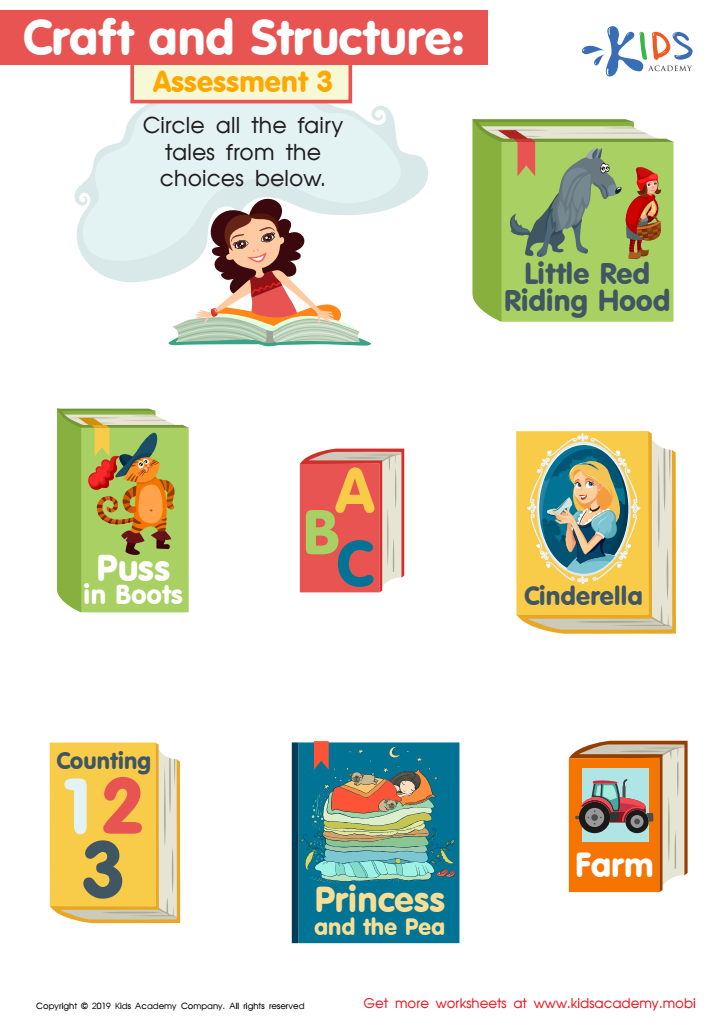
Craft and Structure: Assessment 3 Worksheet
 Assign to My Students
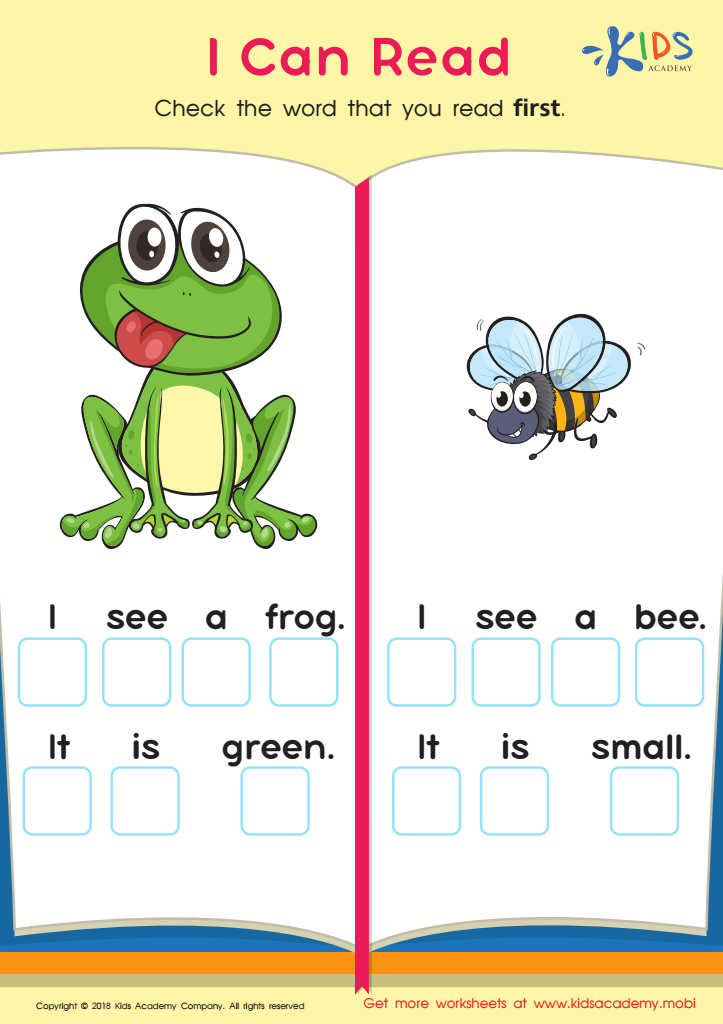
I Can Read Worksheet
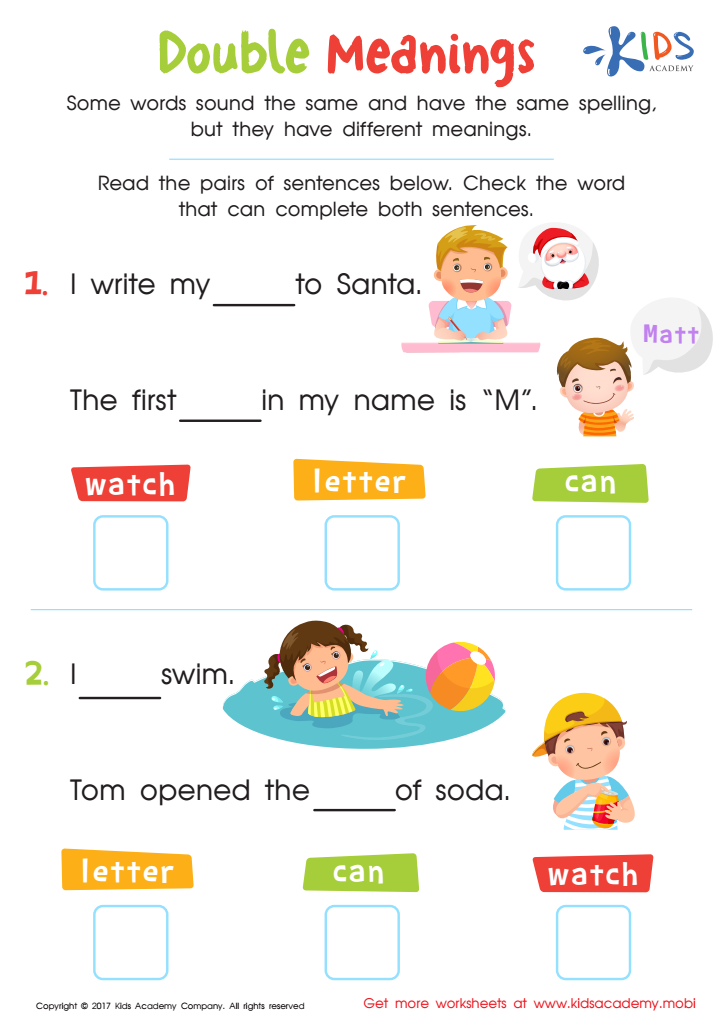
Double Meanings Worksheet
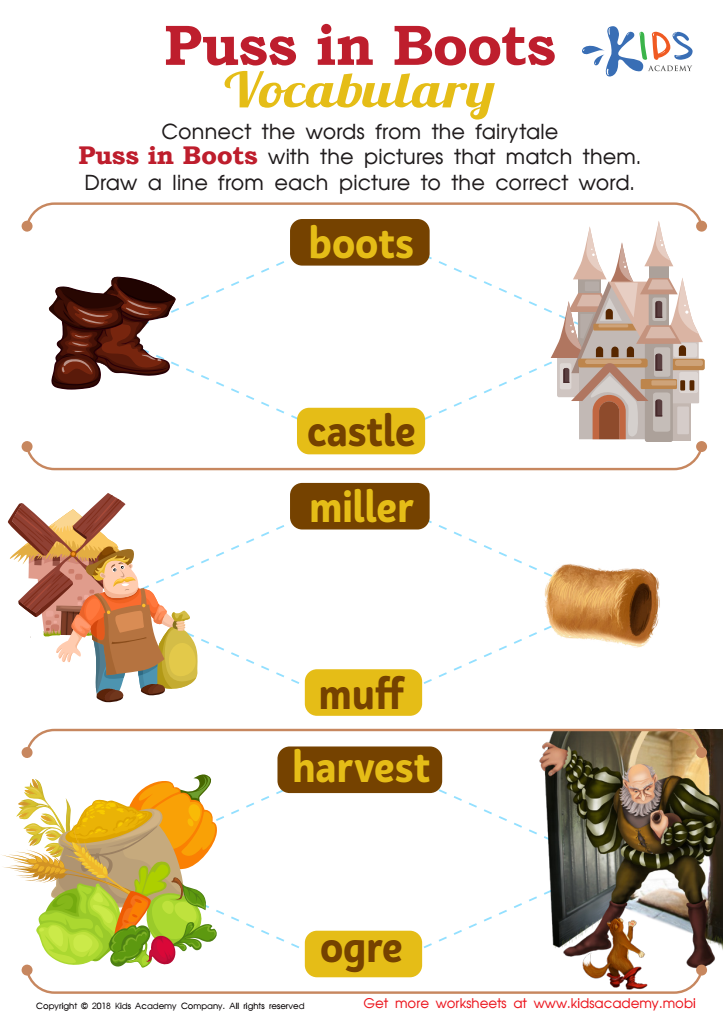
Puss in Boots Vocabulary Worksheet
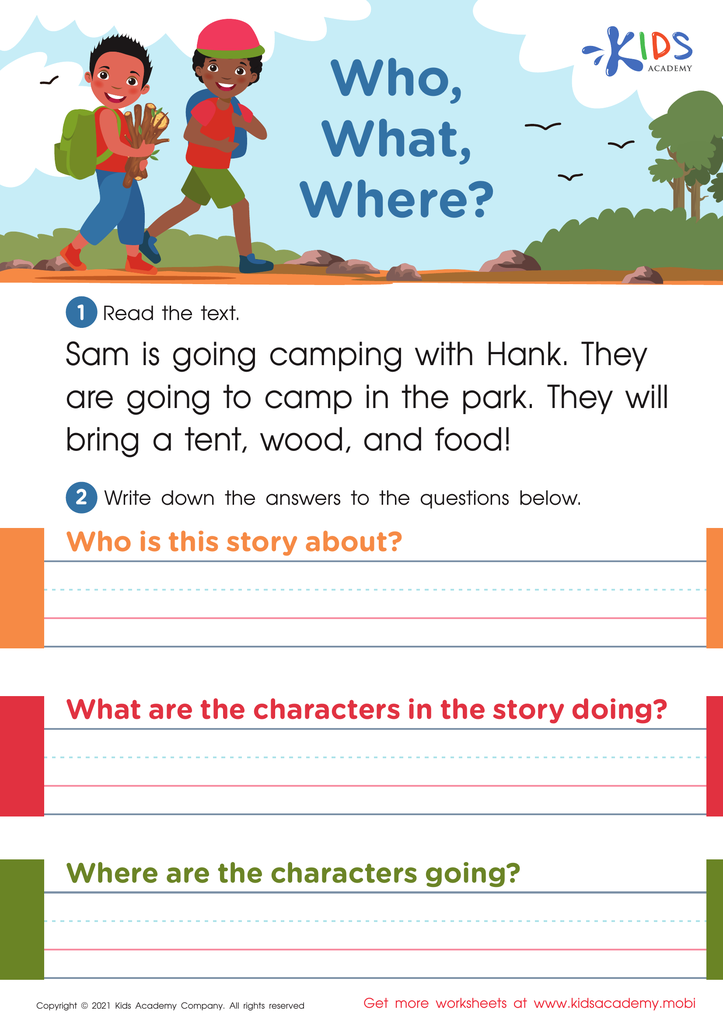
Who, What, Where? Worksheet








Understanding context for 4-year-olds is essential because it greatly influences their overall development, both cognitively and emotionally. At this age, children are rapidly developing language skills, and understanding context helps them grasp the meaning behind words and actions. When parents and teachers focus on context, they provide a rich tapestry of learning experiences that enrich vocabulary, comprehension, and problem-solving abilities.
In social settings, context helps children navigate interactions more effectively. They learn to read facial expressions, tone of voice, and situational cues, which are crucial for developing empathy and forging healthy relationships. For instance, a child who understands why sharing toys is necessary during playtime will find it easier to cooperate and make friends.
Additionally, understanding context aids in emotional regulation. By knowing why certain rules or routines are in place, children feel more secure and are better able to manage their emotions. For example, explaining the reason behind bedtime routines helps children transition more smoothly into sleep, contributing to better overall well-being.
In summary, prioritizing context fosters holistic development in 4-year-olds, equipping them with essential language, social, and emotional skills. This foundational understanding sets the stage for future learning and well-adjusted interpersonal interactions, making it crucial for both parents and teachers to guide young children in grasping the world around them.








