Understanding currency Worksheets for 4-Year-Olds
5 filtered results
-
From - To
Understanding currency worksheets for 4-year-olds help introduce the basic concepts of money and value in a fun, engaging manner. These worksheets are designed to match the developmental level of preschool children, using colorful graphics and simple activities. By participating in these exercises, young learners can start to recognize different coins and bills, learning how to associate numbers with their corresponding monetary value. As children identify and sort currency, they also begin to develop essential skills like counting, matching, and critical thinking. These foundational understandings of money will serve as a stepping stone for more advanced economic concepts in the future.
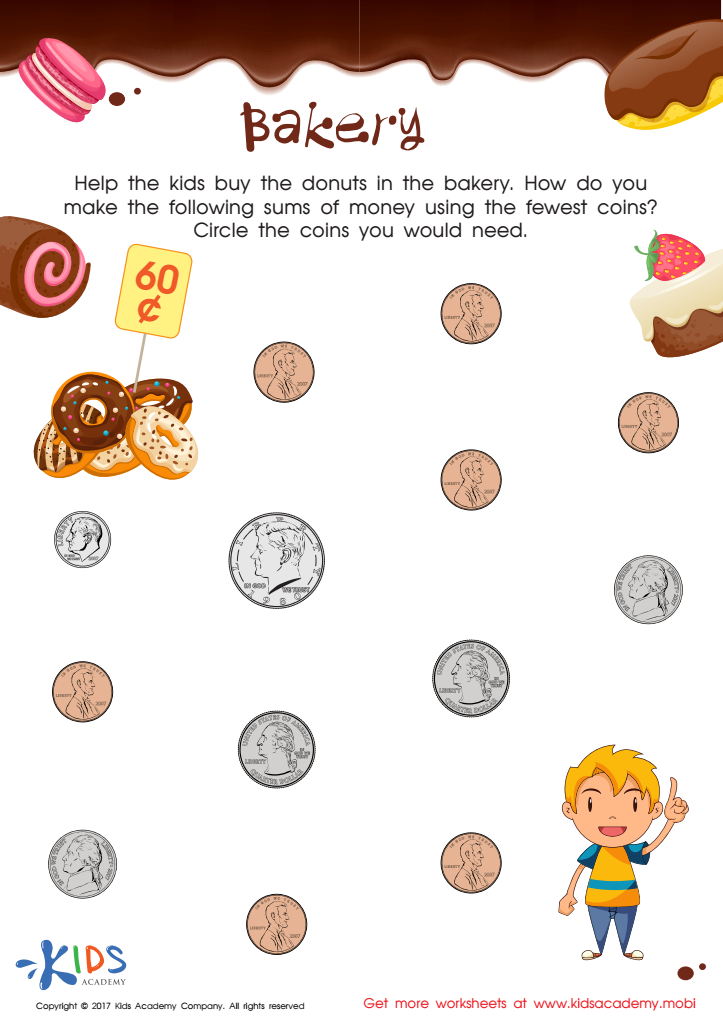
Counting Coins Worksheet
 Assign to My Students
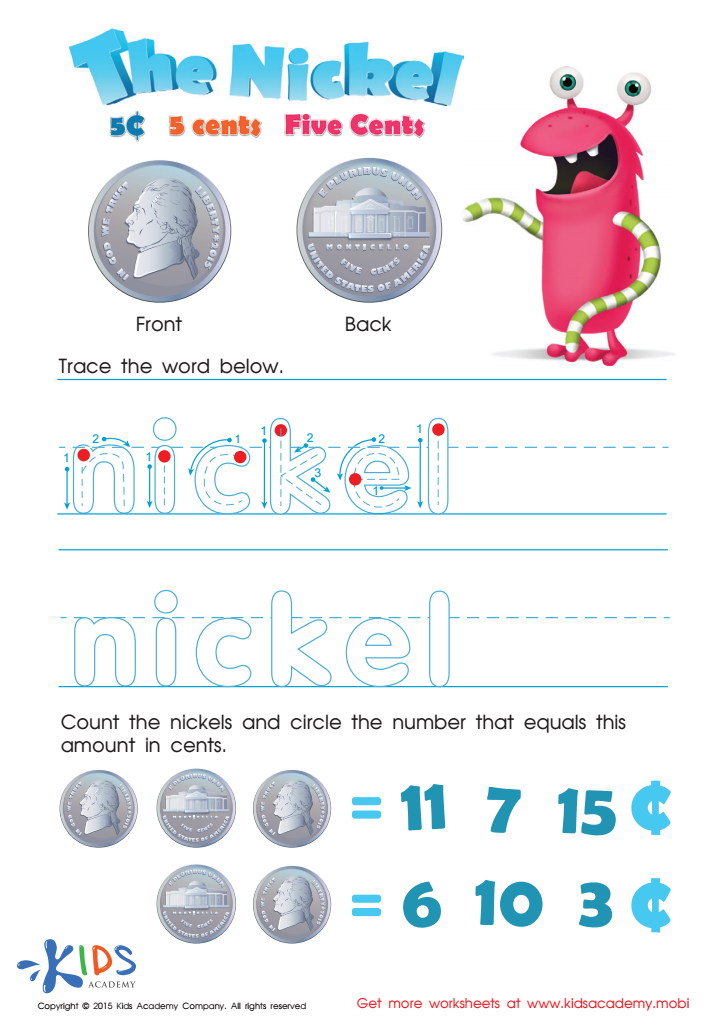
Five Cents or the Nickel Money Worksheet
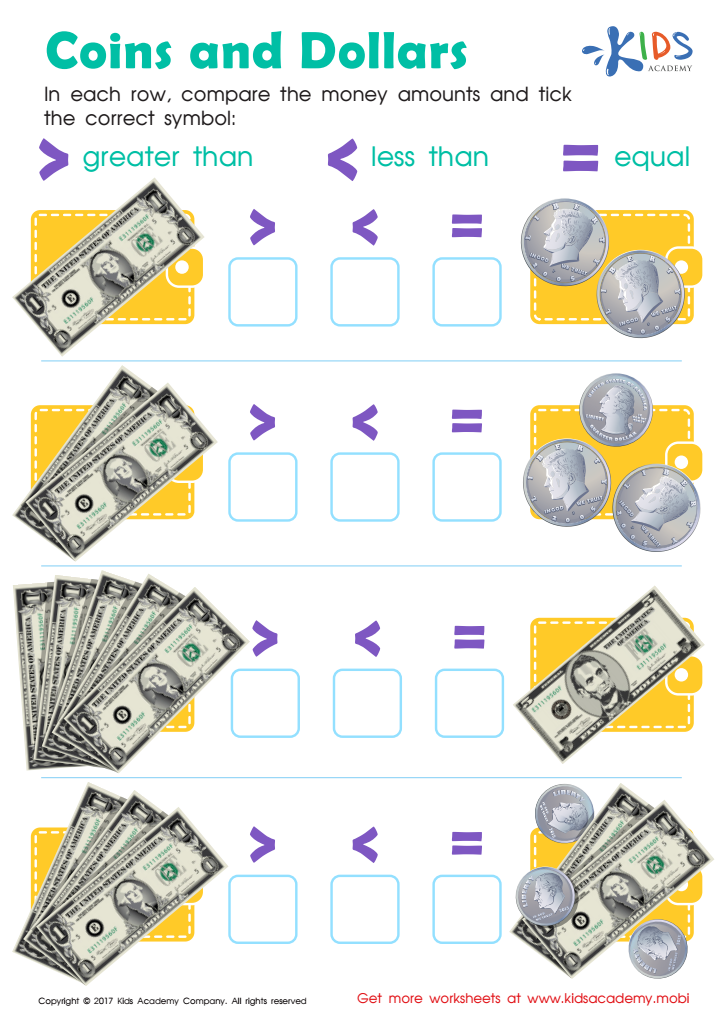
Money: Coins Dollars Printable
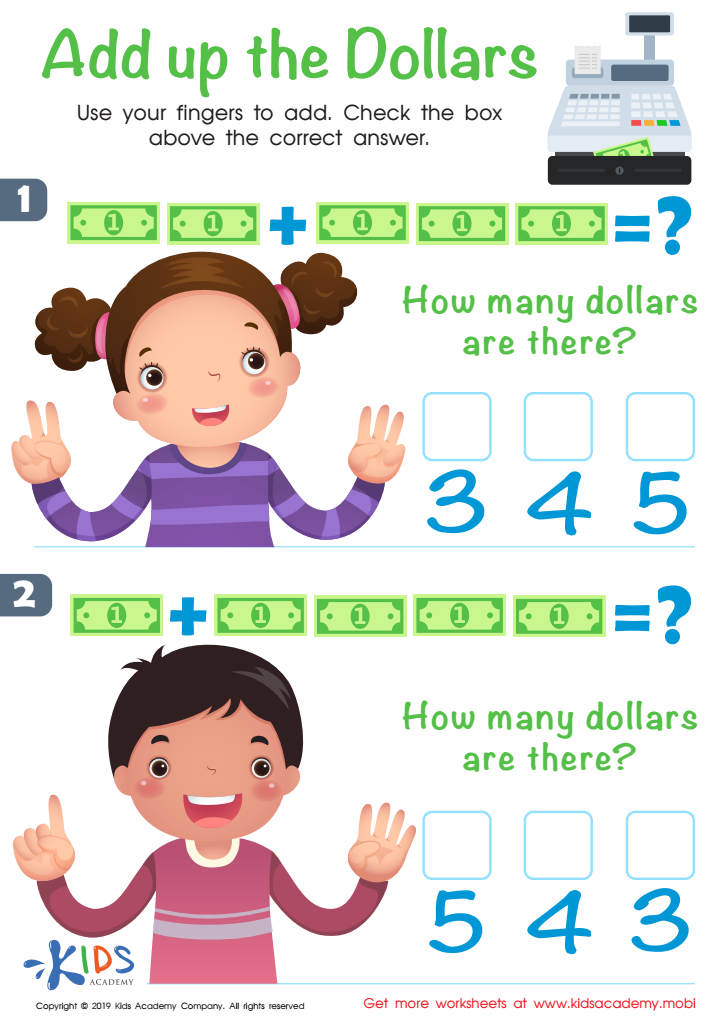
Add up the Dollars Worksheet







Understanding currency is a vital life skill, and introducing it at an early age can significantly benefit 4-year-olds. Parents and teachers should prioritize this for several compelling reasons:
-
Cognitive Development: Grasping basic concepts of money can enhance a child's cognitive abilities. Activities that involve counting coins and recognizing bills will improve their numeracy skills, including counting, addition, and subtraction.
-
Foundation for Financial Literacy: Early interactions with money lay the groundwork for financial literacy. Knowing what currency is, and how it is used, promotes an understanding of saving, spending, and budgeting, essential skills for lifelong economic stability.
-
Responsibility and Independence: Introducing concepts of currency teaches young children about responsibility. Simple tasks like buying a small toy with their pocket money give them a sense of independence and decision-making capabilities.
-
Real-world Applications: Familiarizing children with money prepares them for real-world scenarios. Whether they’re tagging along on a grocery run or saving up for a small treat, understanding currency engages them in everyday activities and fosters social maturity.
-
Language and Social Skills: Discussing currencies and their values can stimulate conversational skills. It creates opportunities for kids to participate in adult-world conversations, enhancing their verbal communication and social interactions.
By integrating currency education into early learning, parents and teachers can provide children with tools that extend beyond academic knowledge to practical, real-life skills.








