Understanding numbers Worksheets for 4-Year-Olds
4 filtered results
-
From - To
Unlock your child's mathematical potential with "Understanding Numbers Worksheets for 4-Year-Olds." Our expertly crafted worksheets are designed to introduce young learners to the world of numbers in a fun and engaging way. Featuring vibrant illustrations, interactive activities, and age-appropriate challenges, these worksheets help children develop counting, number recognition, and basic math skills. Perfect for home or classroom use, these exercises lay a strong foundation for future math success. Encourage your 4-year-old to explore numbers today and build essential lifelong learning skills with our comprehensive and enjoyable resources. Download and print now for endless learning fun!
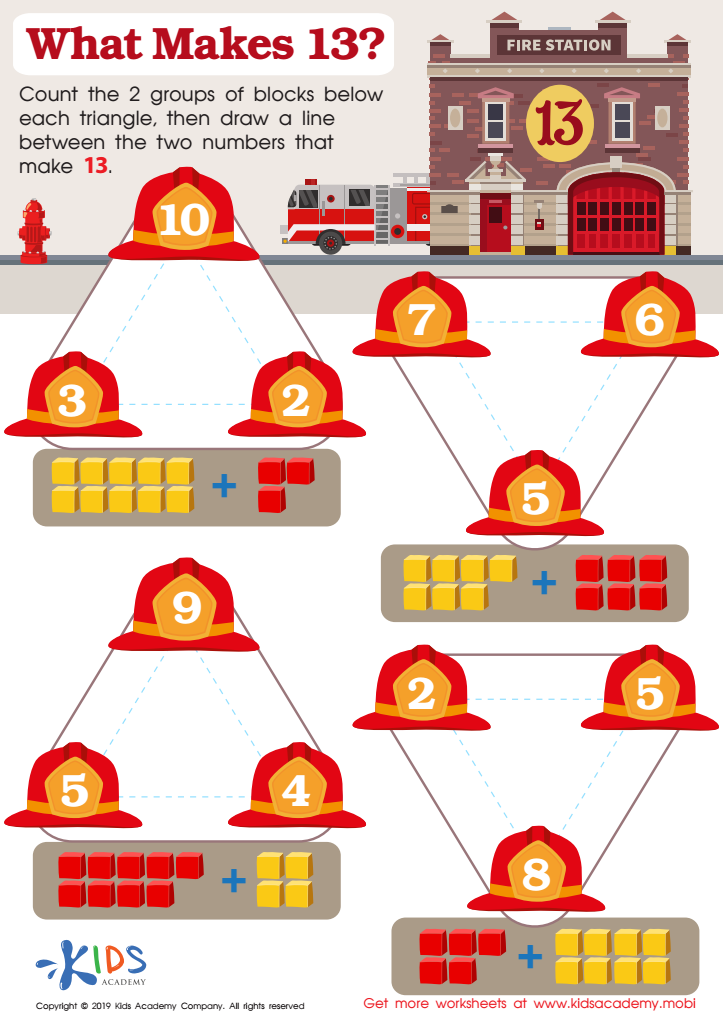
What Makes 13 Worksheet
 Assign to My Students








Parents and teachers should invest attention in understanding numbers in 4-year-olds because it lays the foundation for future academic success and critical life skills. At this developmental stage, children are like sponges; their brains are incredibly receptive to new information and concepts. Early exposure to numbers helps children develop logical thinking, problem-solving abilities, and a sense of order—all fundamental aspects of cognitive development.
Numbers are more than just digits; they represent relationships, patterns, and sequences that are essential for academic disciplines like math and science. Early number skills can predict success in later mathematical endeavors, setting the stage for more complex arithmetic, geometry, and algebra.
Moreover, a grasp of numbers aids in everyday activities. Recognizing quantities, understanding the concept of “more” or “less,” and learning simple counting can significantly aid young children in their day-to-day interactions. Numbers also enhance important skills such as time management, money handling, and following instructions.
l also learning about numbers in a fun, engaging manner, such as through play and hands-on activities, builds a positive attitude toward learning and education. Hence, understanding numbers at an early age primes children for both academic achievements and essential life competencies, making it a crucial aspect of early development.








