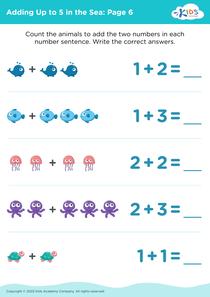
Addition skills Adding in the Forest Worksheets for 4-Year-Olds
14 filtered results
-
From - To
Introduce your little one to the wonders of math with our "Adding in the Forest" worksheets designed especially for 4-year-olds. These engaging, nature-themed activities transform basic addition into an exciting adventure through a mythical forest. Each worksheet features colorful illustrations and fun forest-themed problems that captivate young learners while reinforcing their addition skills. These printables are perfect for at-home practice or supplemental classroom work, helping children build foundational numerical skills in an enjoyable and engaging way. Unlock their potential and make math enjoyable with our expertly crafted "Adding in the Forest" worksheets. Ideal for parents and educators alike!
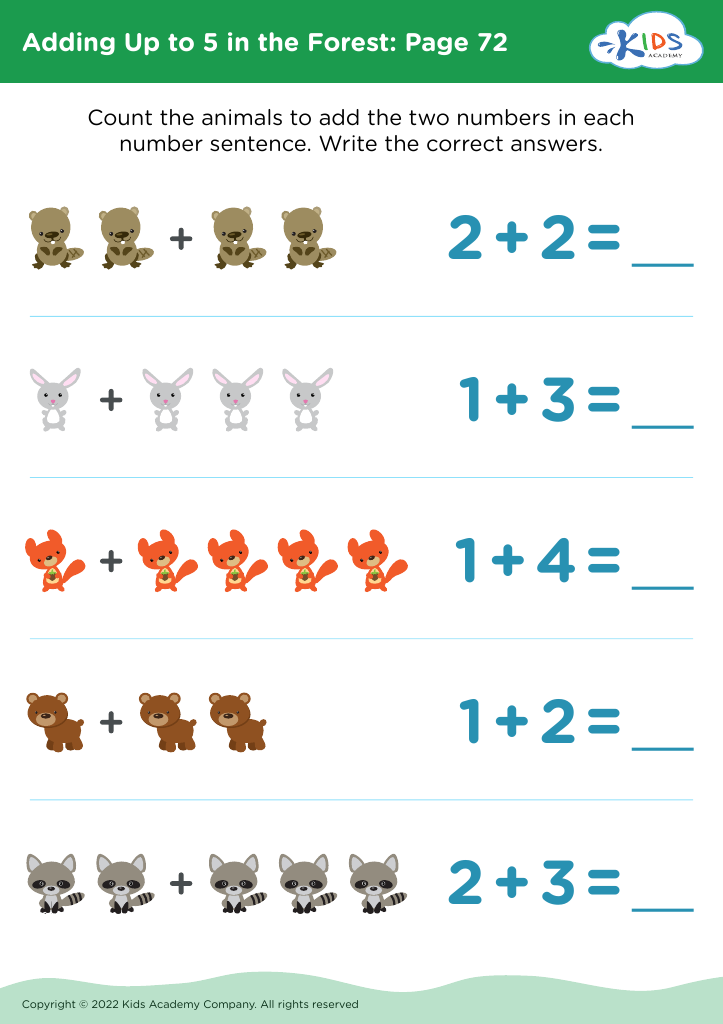
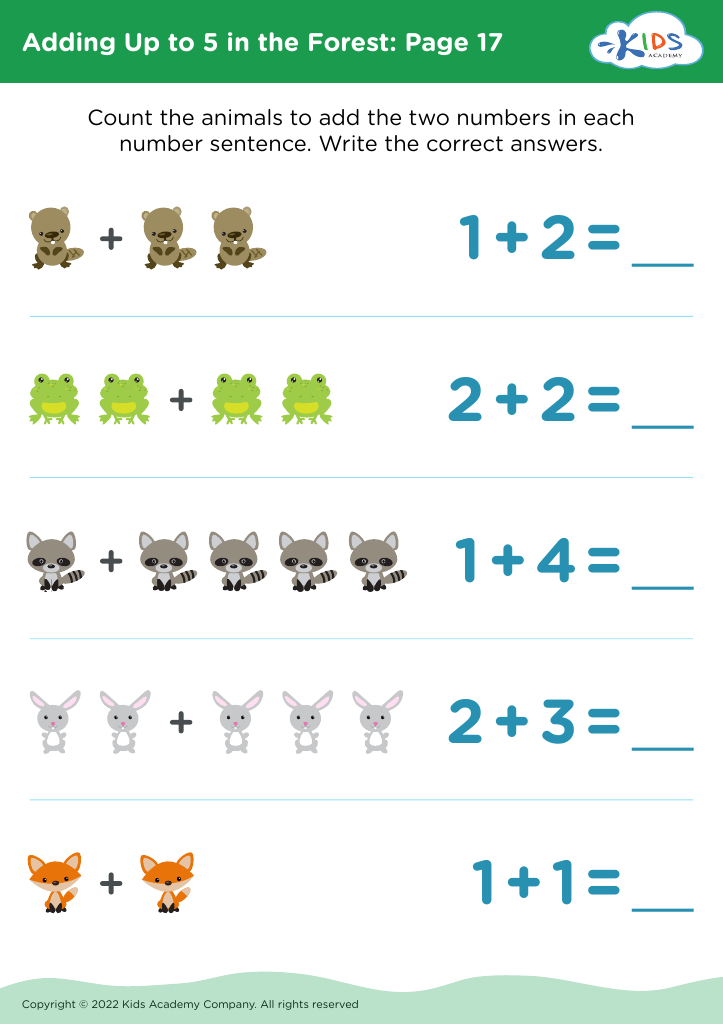
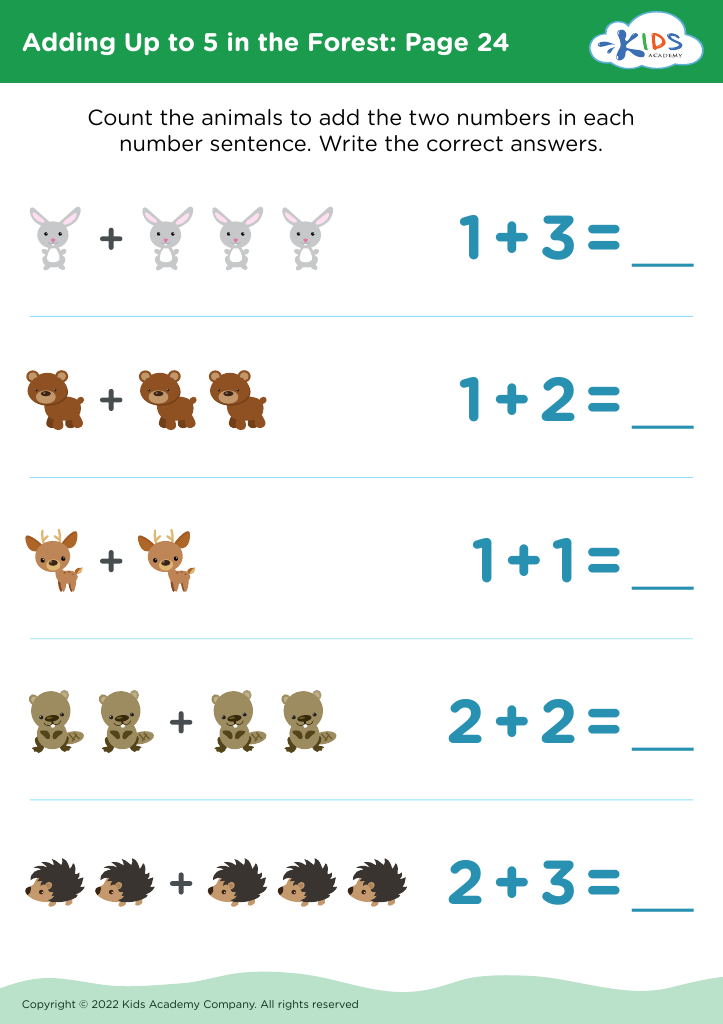
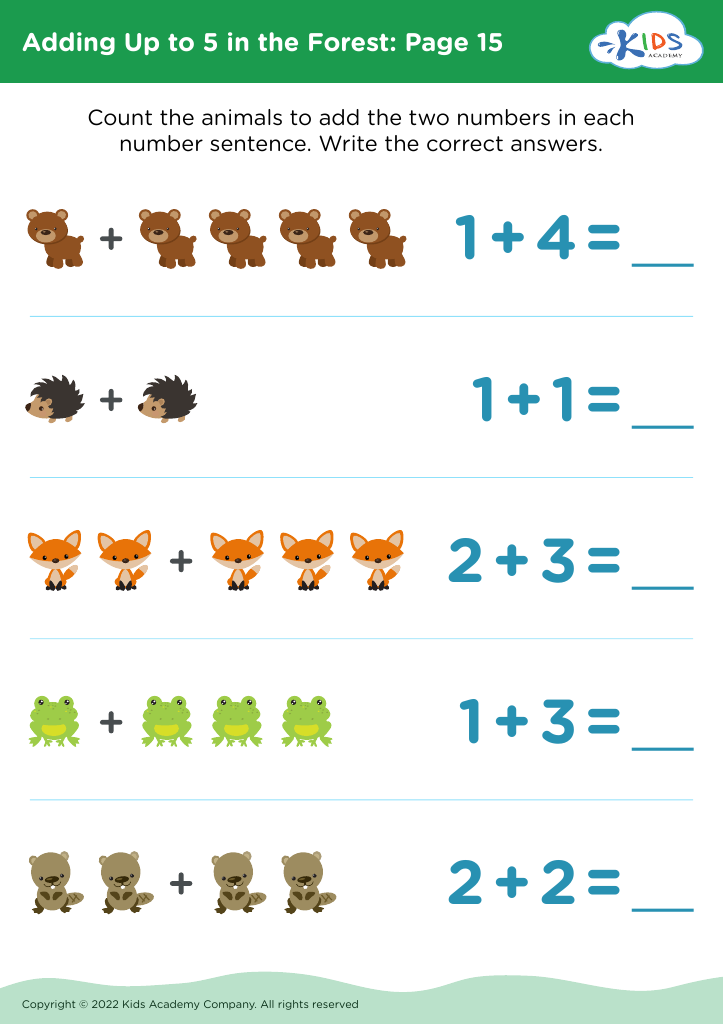
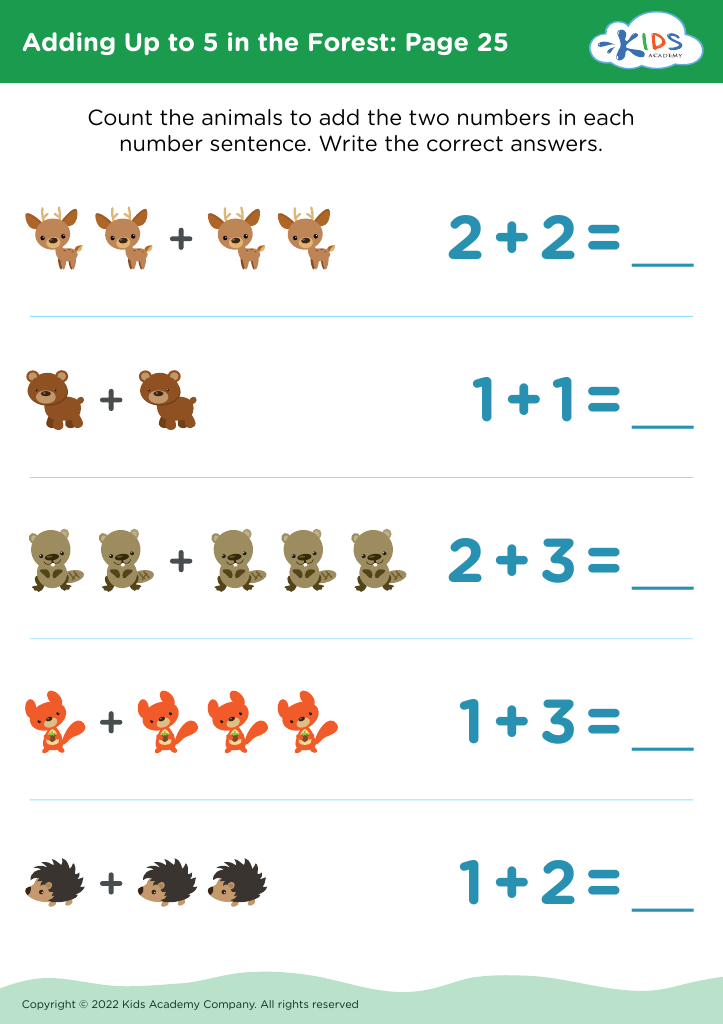
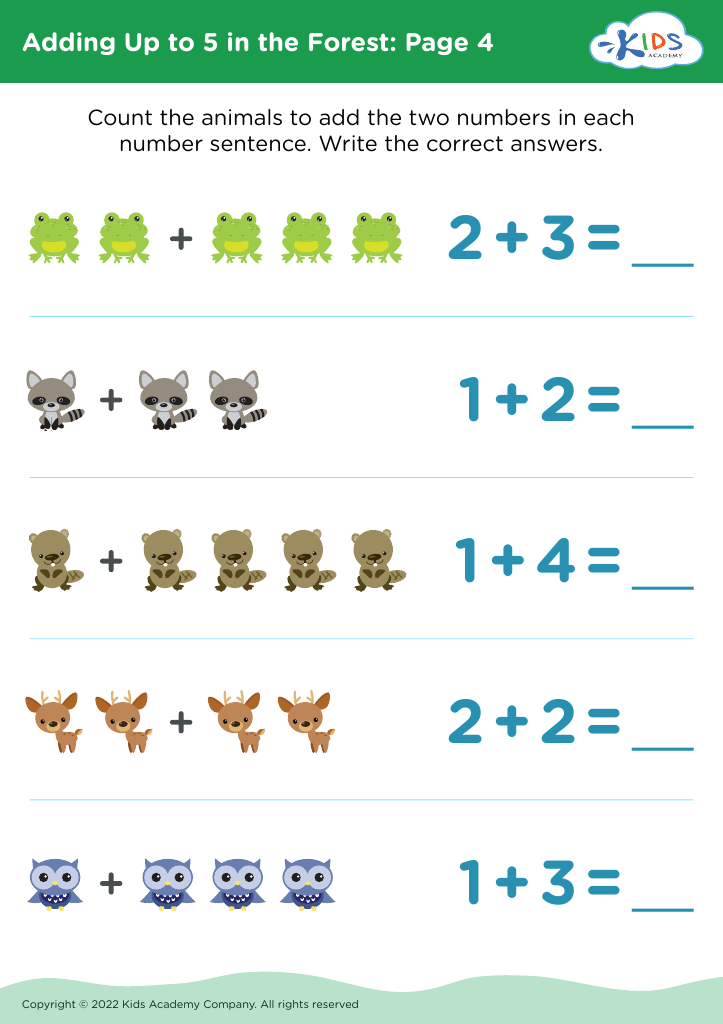
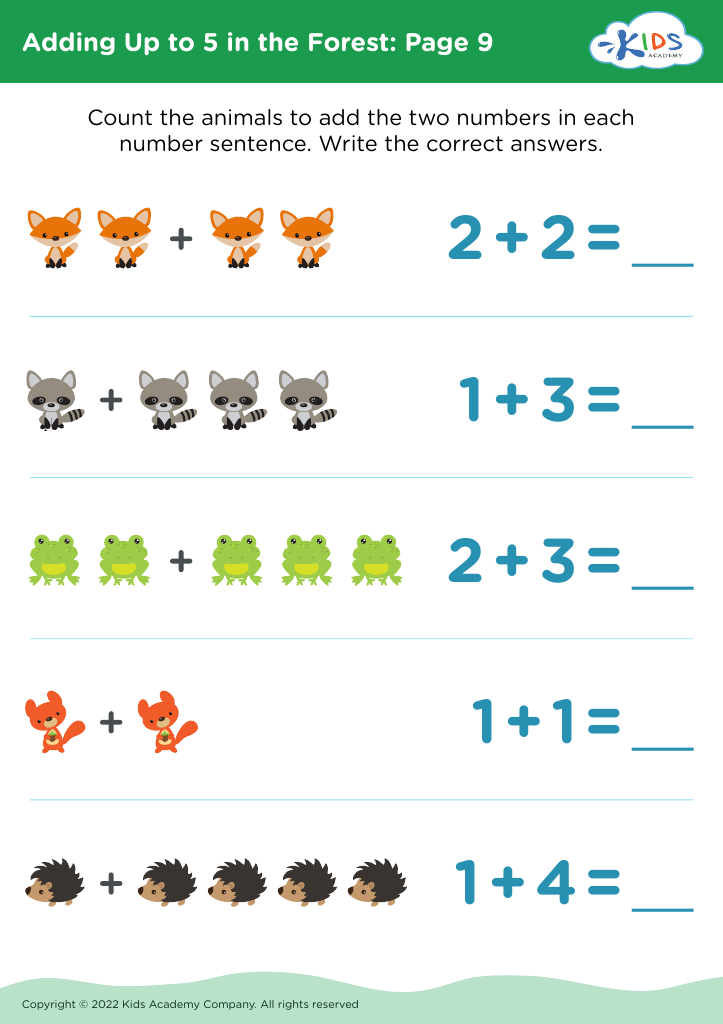
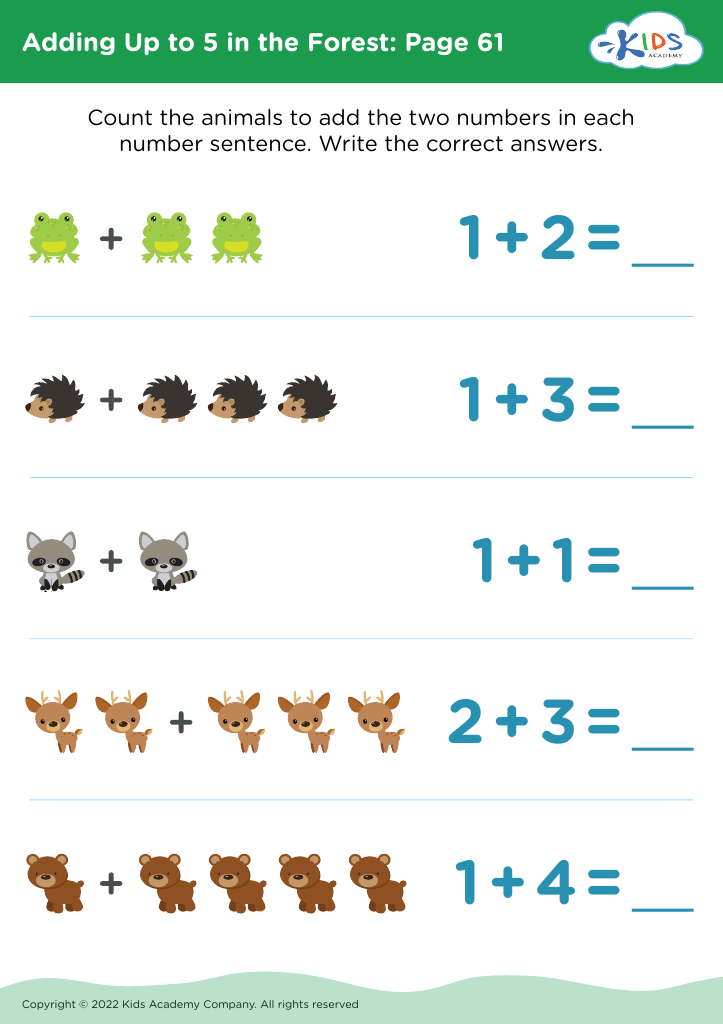
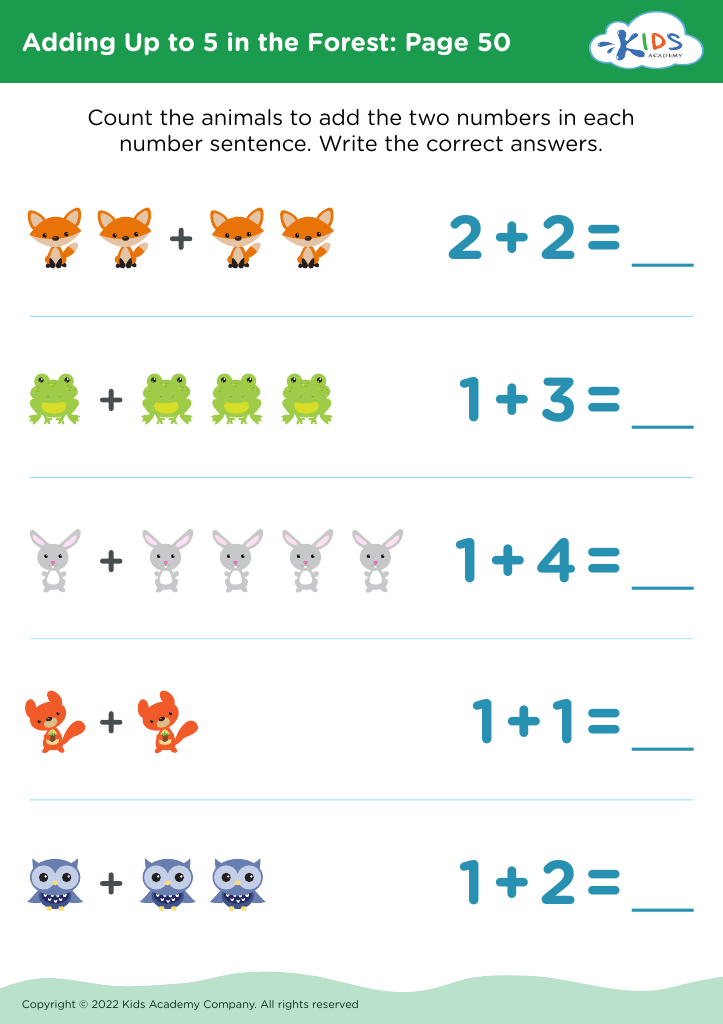
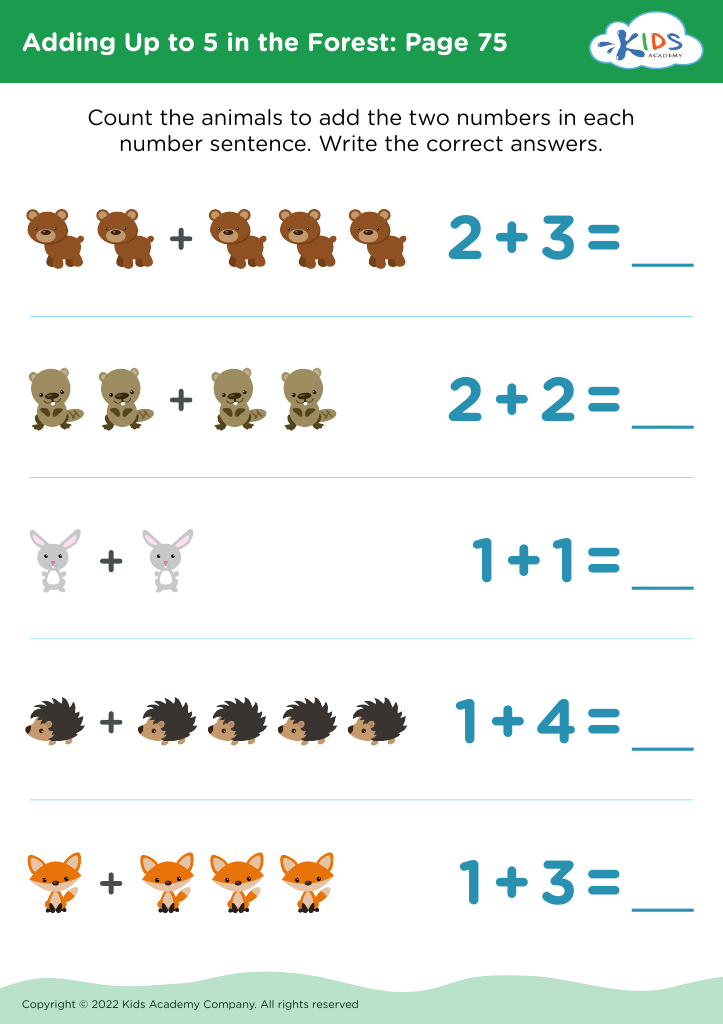
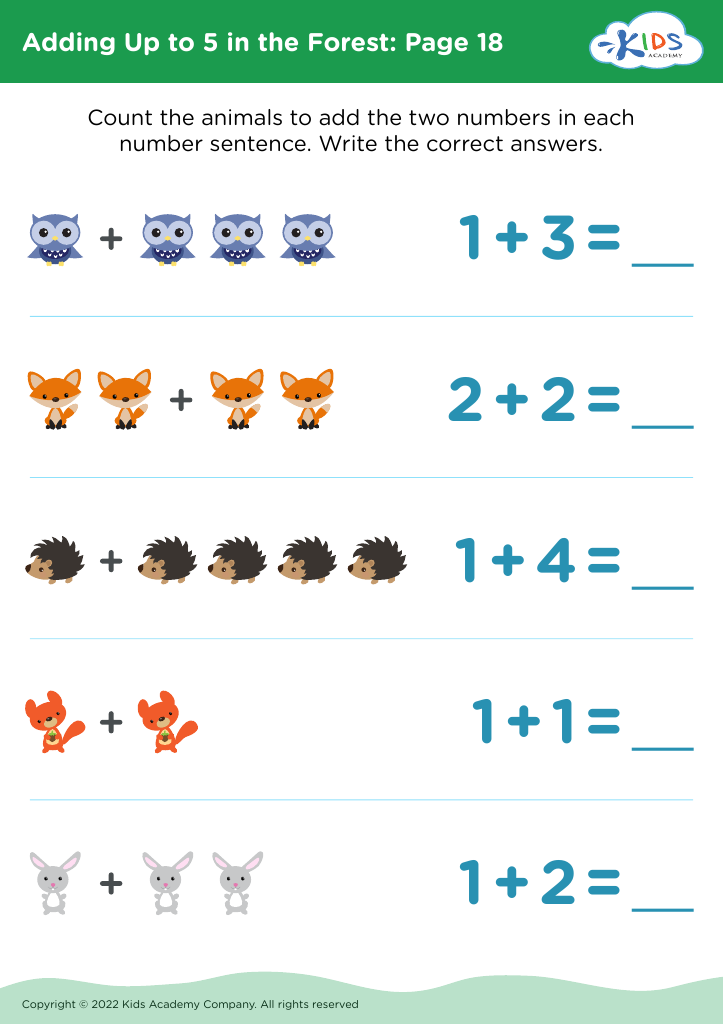
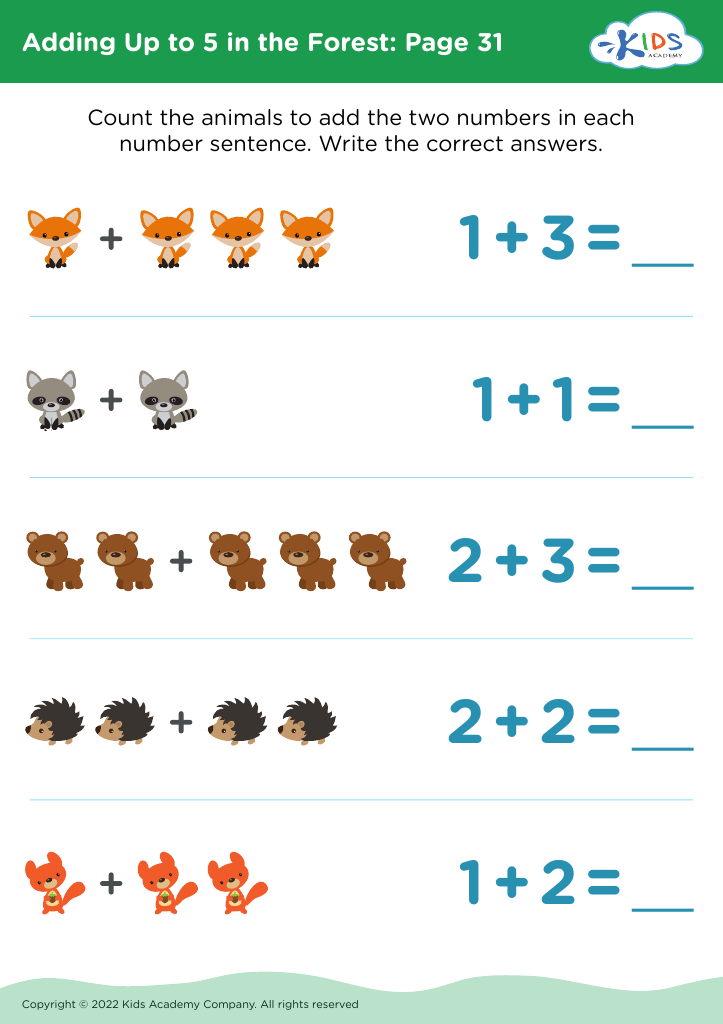
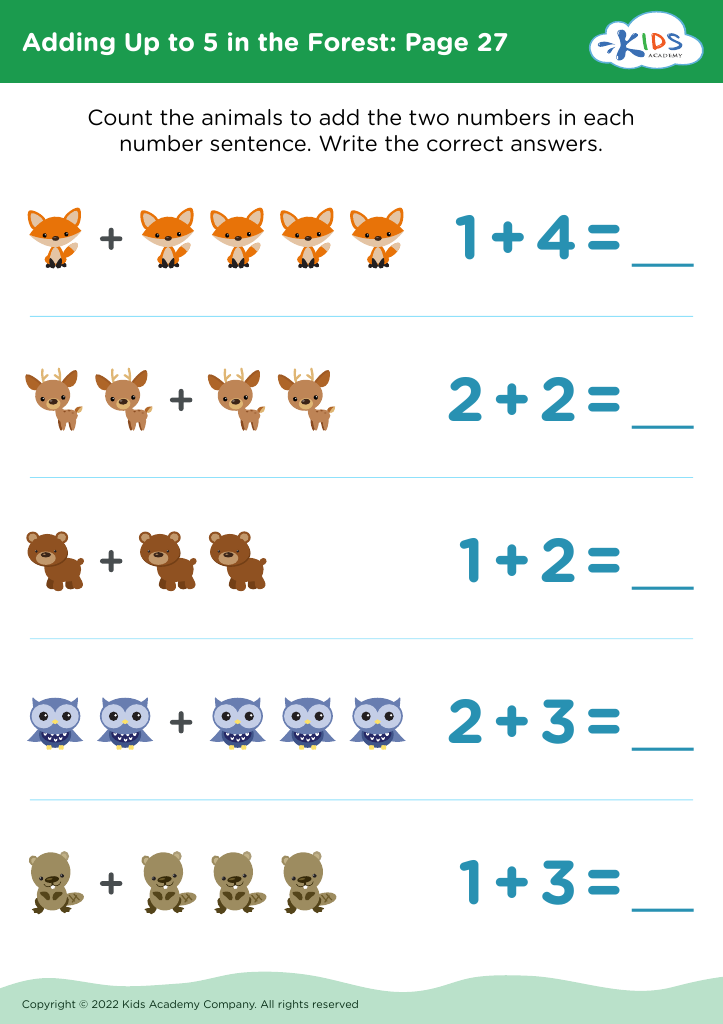
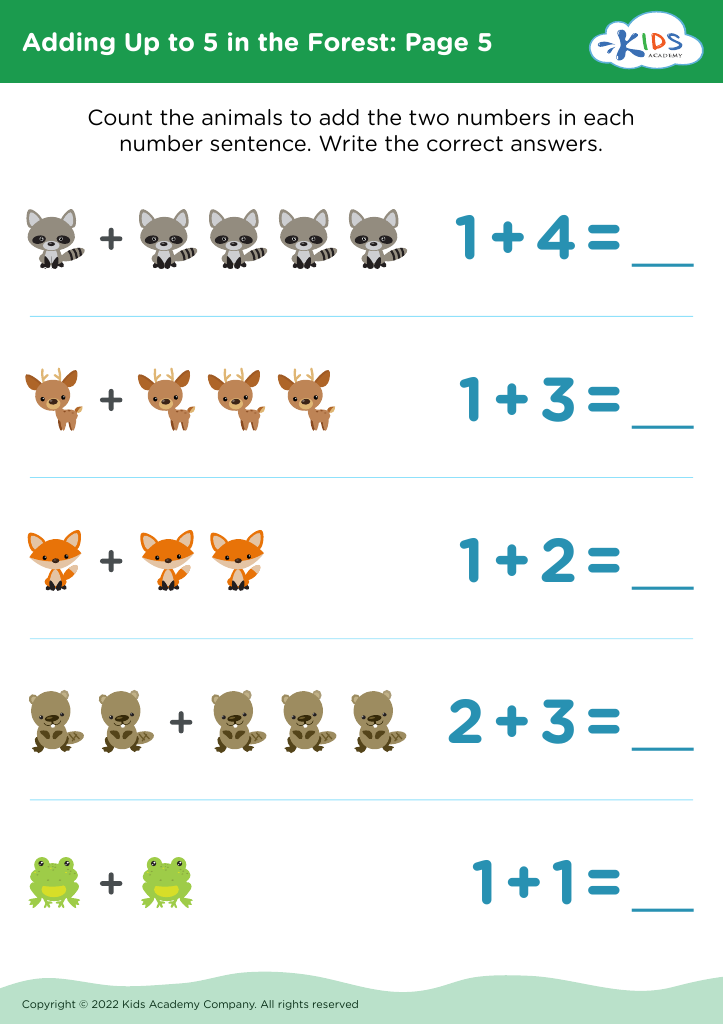



Caring about developing addition skills in 4-year-olds through engaging activities like "Adding in the Forest" is essential for several reasons. First, early math skills lay the foundation for future academic success. Strengthening addition skills at a young age can boost children’s confidence when they encounter more advanced math concepts later. "Adding in the Forest" provides a captivating and relatable context that helps young minds grasp abstract mathematical concepts through concrete and familiar examples like trees, animals, and fruits found in a forest.
Moreover, promoting early numeracy skills enhances cognitive development. Engaging with addition helps improve memory, concentration, and problem-solving skills. When children explore math through playful and creative methods, they are more likely to develop a positive attitude towards learning and retain information better.
Interactivity and storytelling make math enjoyable, reducing the likelihood of math anxiety. Including cooperative activities, whether with parents, teachers, or peers, also nurtures important social skills such as communication, sharing, and teamwork.
Lastly, illustrating math concepts through nature themes connects children to the environment, fostering both mathematical and environmental awareness. Adopting such early educational practices encourages holistic development, blending intellectual, social, and emotional growth. Therefore, parents and teachers should prioritize integrating fun and contextualized addition activities to set a strong, positive foundation for future learning and development.