Filters

19 filtered results

Clear all filters
Favorites
With answer key
Interactive

19 filtered results

Difficulty Level

Grade


Explore our engaging "Counting Skills Adding in the Forest Worksheets" designed specifically for 4-year-olds! These fun and interactive worksheets combine delightful forest-themed illustrations with fundamental math concepts, helping your child develop essential counting and addition skills in a playful environment. Through a variety of exciting exercises, young learners will practice number recognition, counting objects, and solving simple addition problems using visuals of animals and nature. Perfect for at-home learning or classroom activities, these worksheets provide a unique approach to foster a love for math while enhancing cognitive abilities. Dive into the wonders of counting with our colorful resources today!
Check out this FREE Trial Lesson on Adding in the Forest for age 4!

D

Favorites
With answer key
Interactive
  • 4
  • Counting skills
  • Adding in the Forest
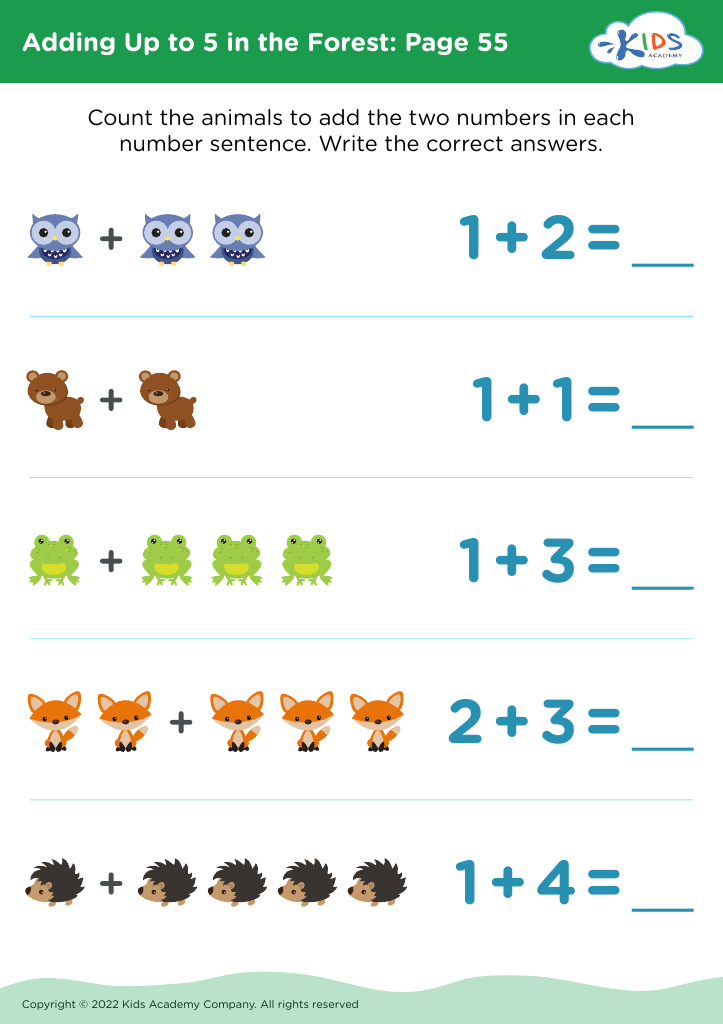
Adding Up to 5 in the Forest: Page 55
Worksheet
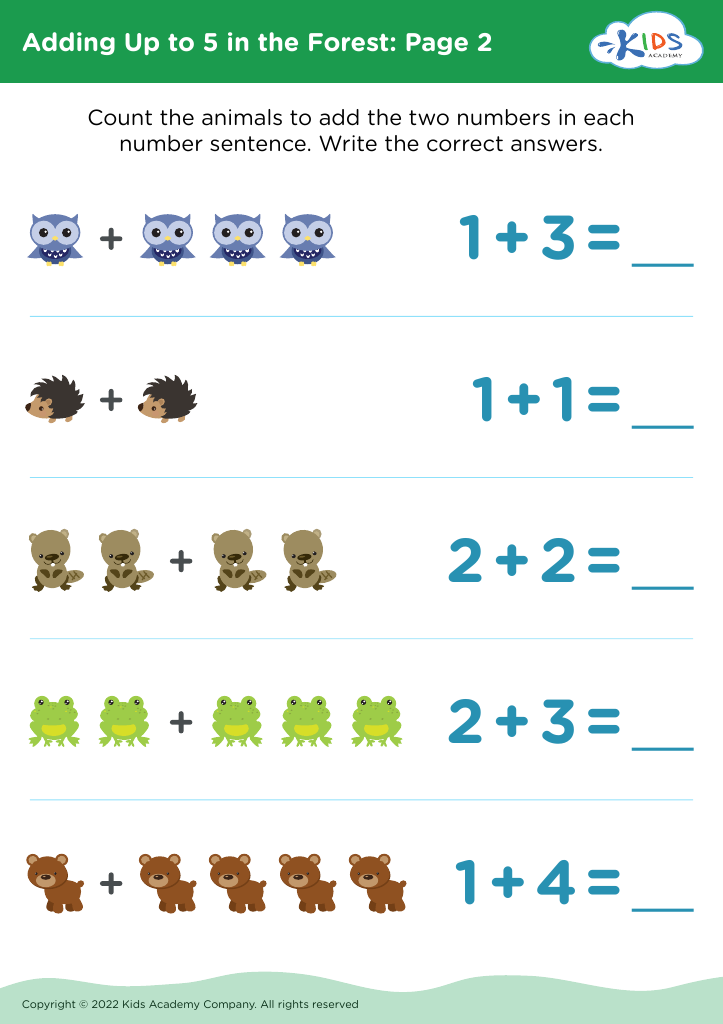
Adding Up to 5 in the Forest: Page 2
Worksheet
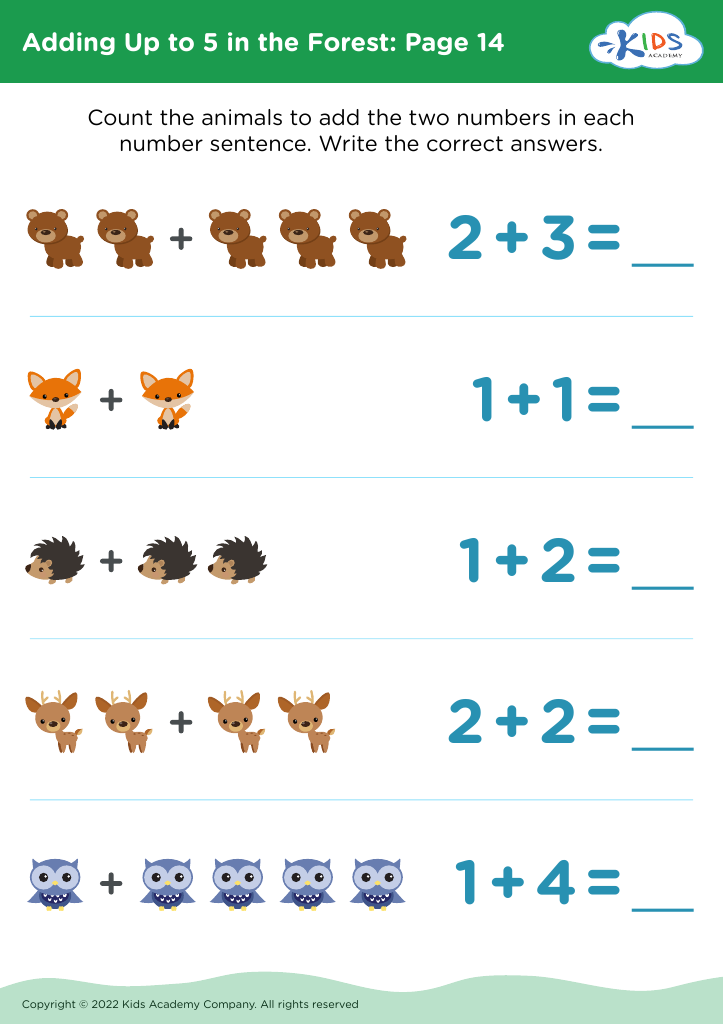
Adding Up to 5 in the Forest: Page 14
Worksheet
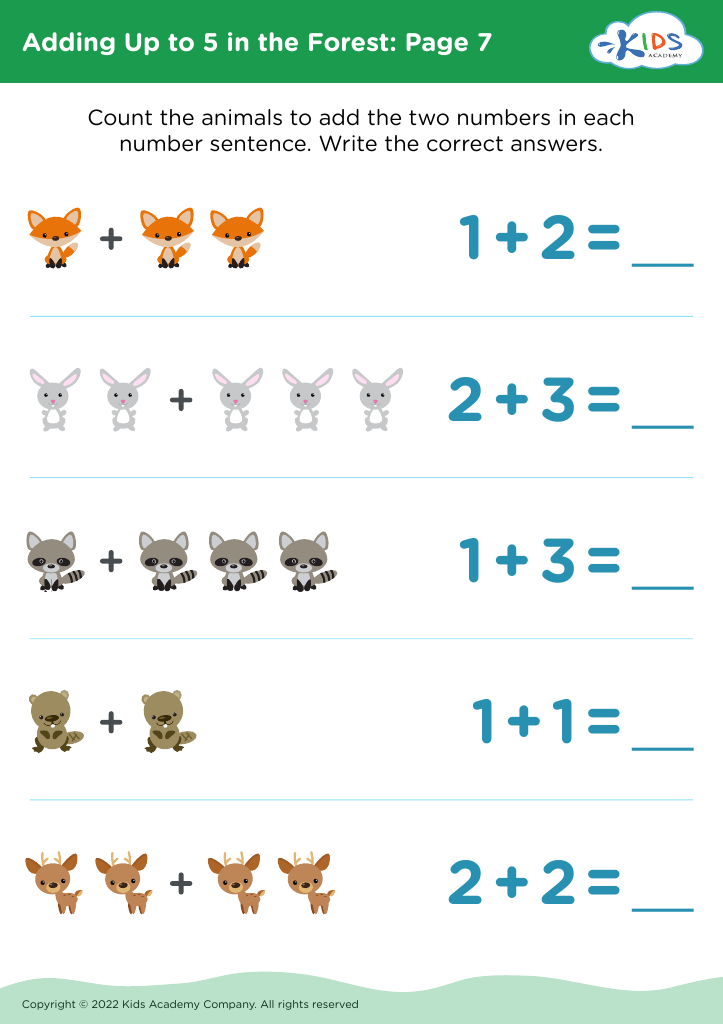
Adding Up to 5 in the Forest: Page 7
Worksheet
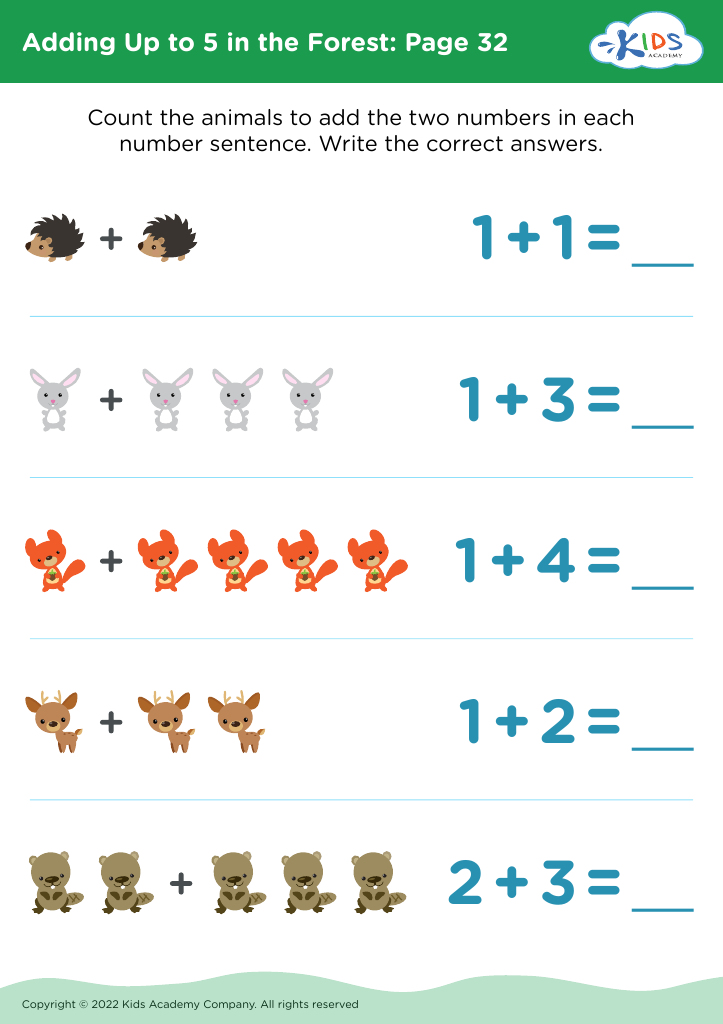
Adding Up to 5 in the Forest: Page 32
Worksheet
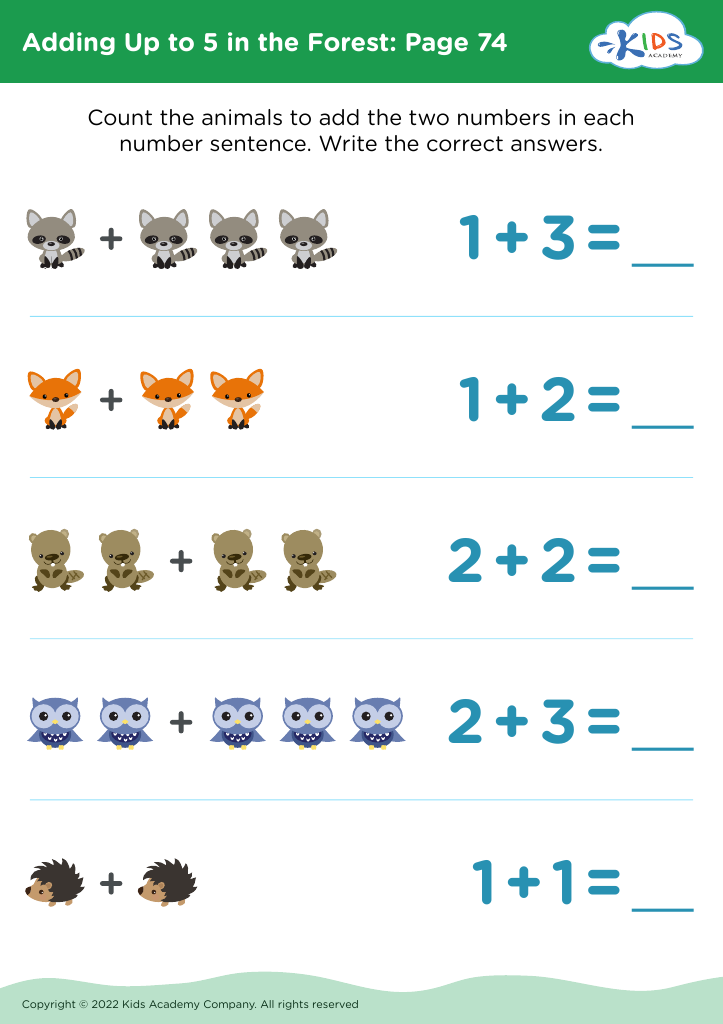
Adding Up to 5 in the Forest: Page 74
Worksheet
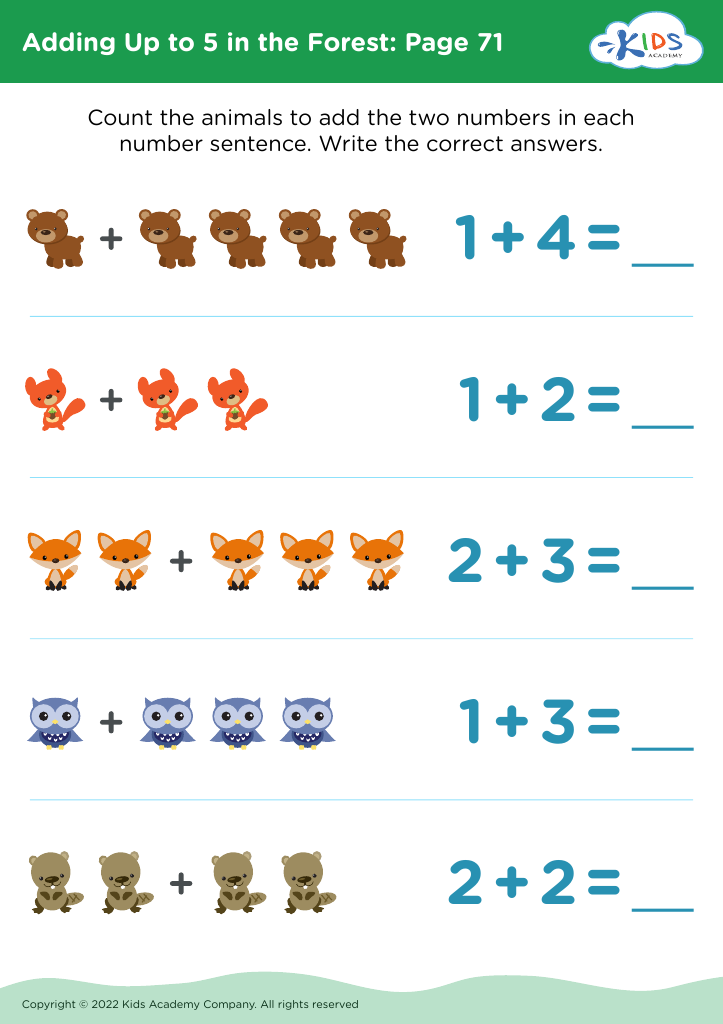
Adding Up to 5 in the Forest: Page 71
Worksheet
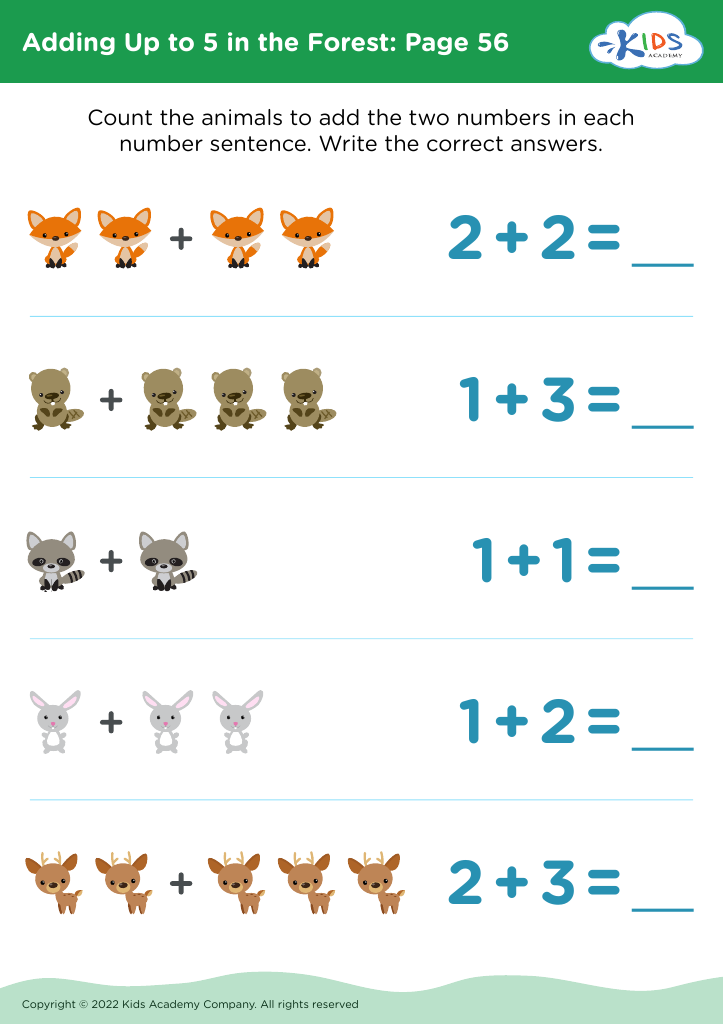
Adding Up to 5 in the Forest: Page 56
Worksheet
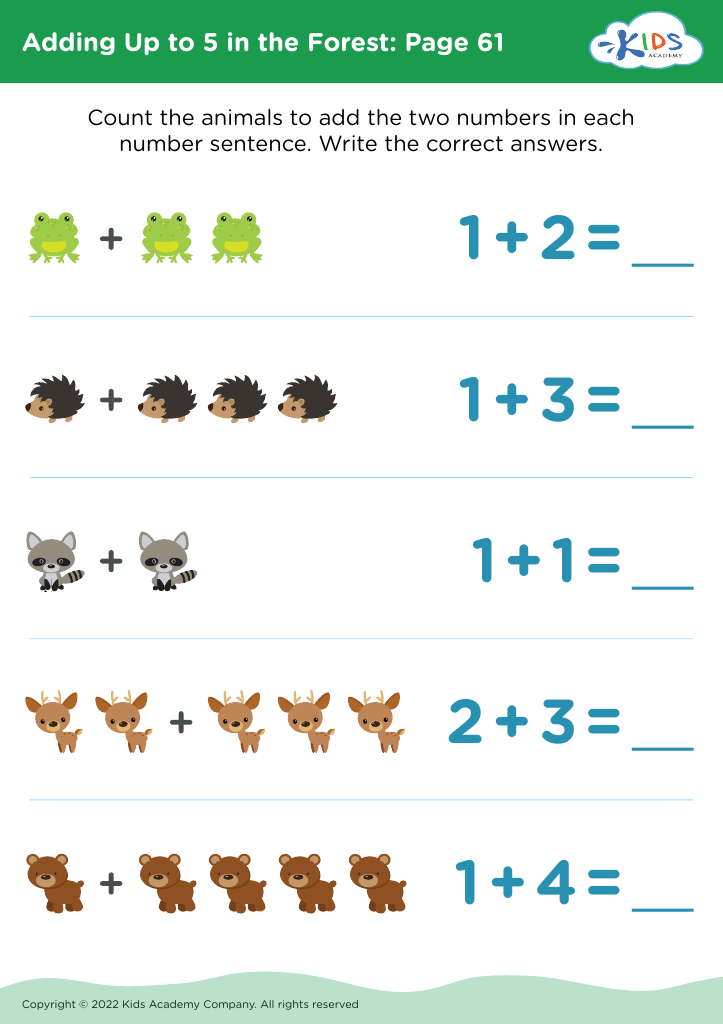
Adding Up to 5 in the Forest: Page 61
Worksheet
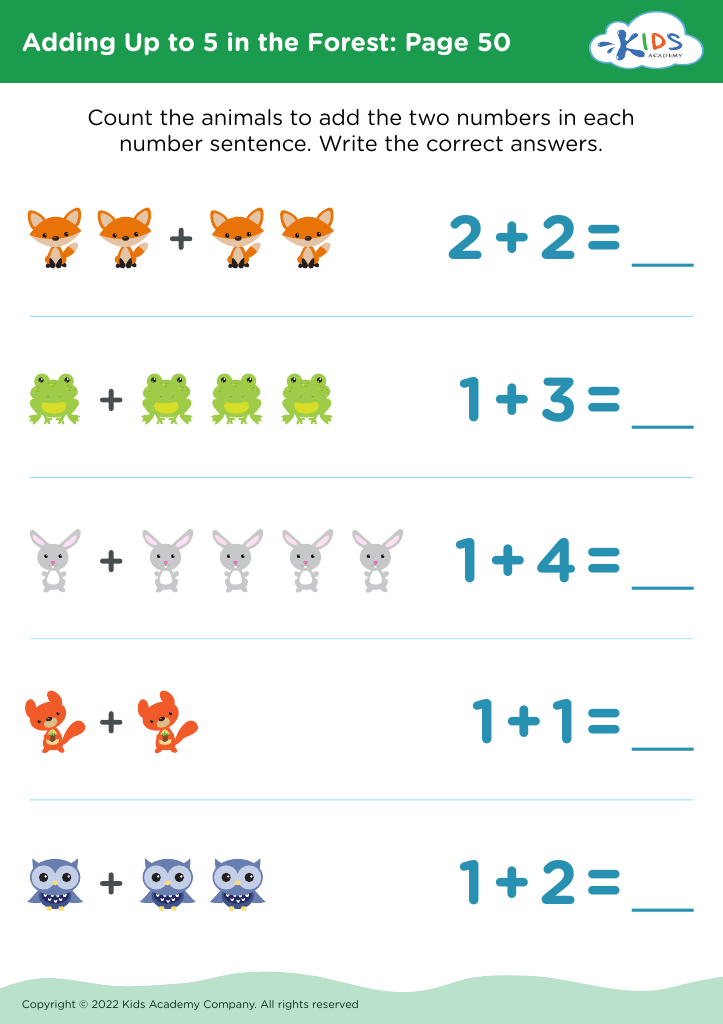
Adding Up to 5 in the Forest: Page 50
Worksheet
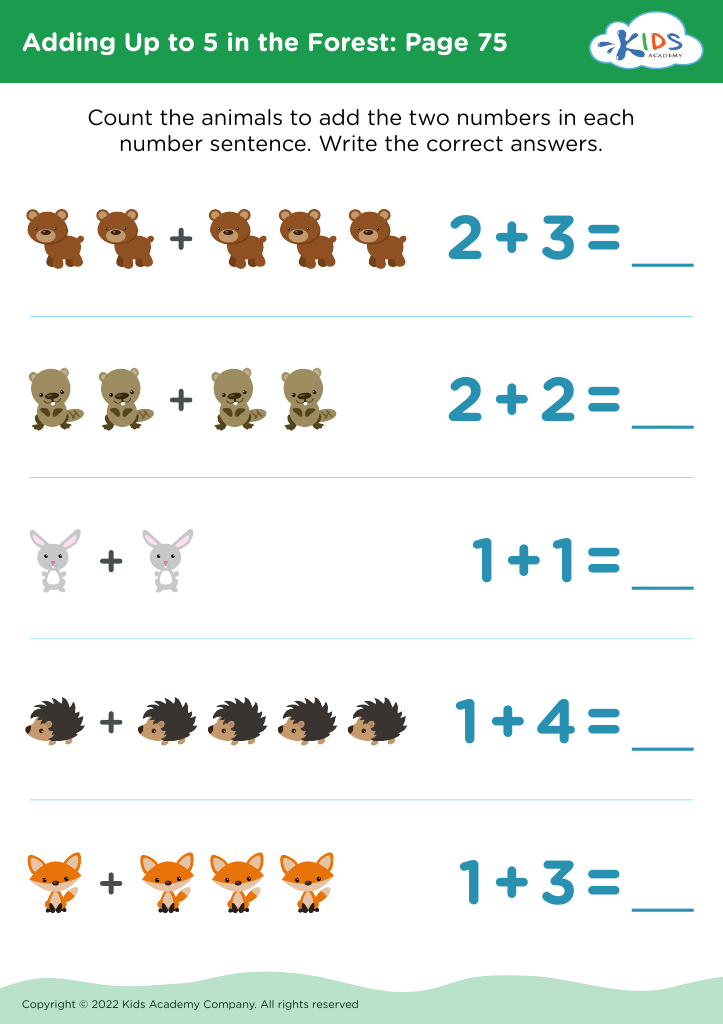
Adding Up to 5 in the Forest: Page 75
Worksheet
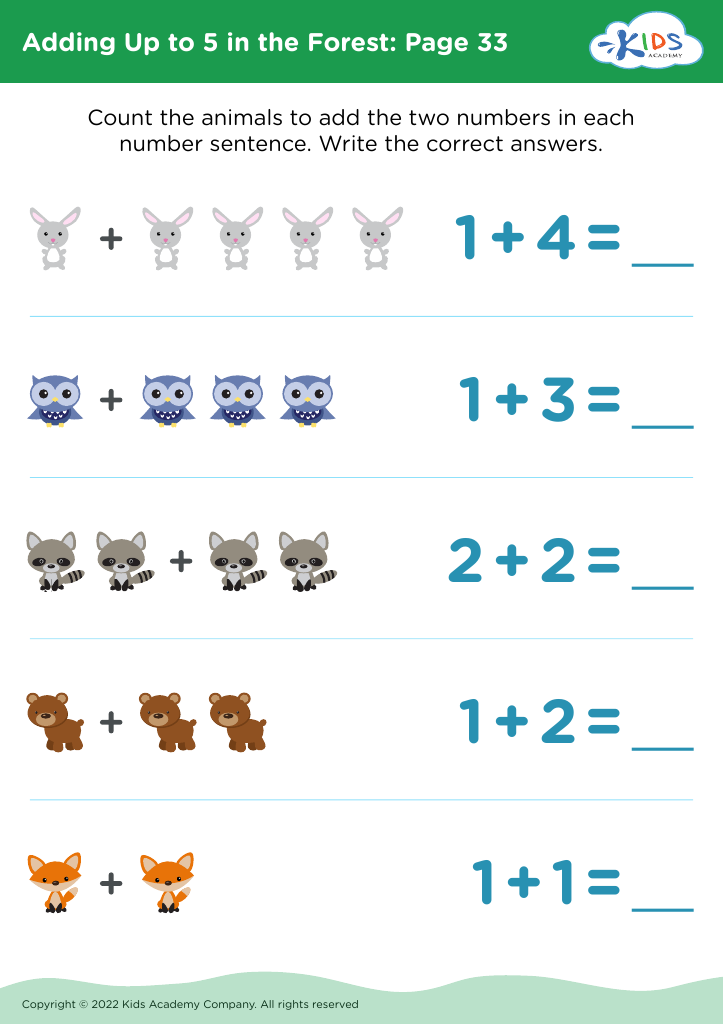
Adding Up to 5 in the Forest: Page 33
Worksheet
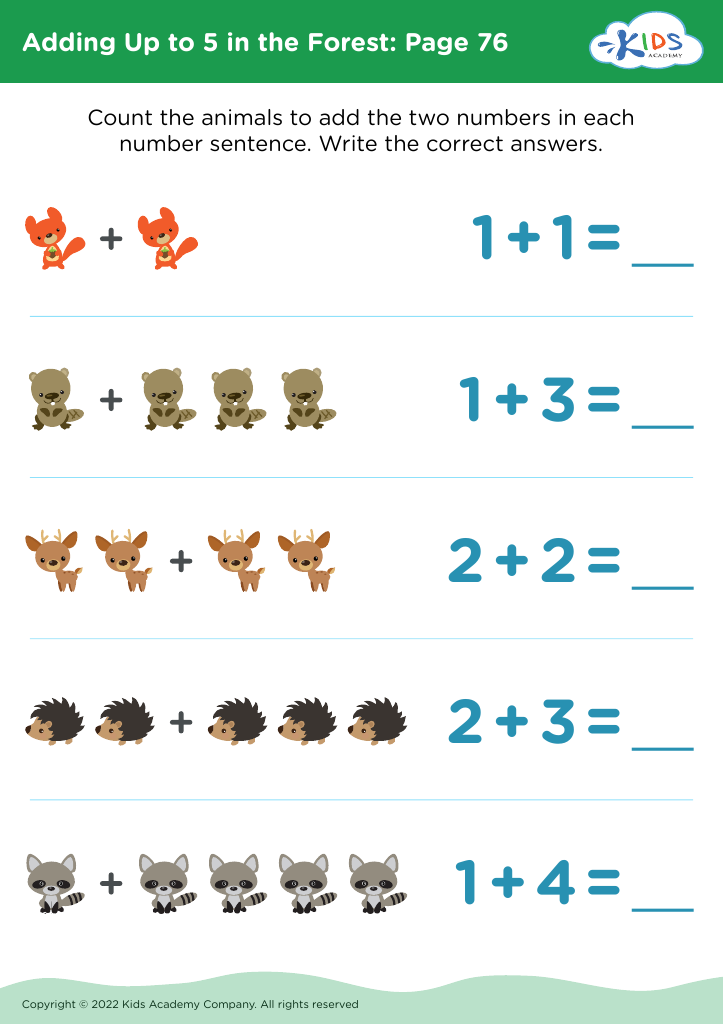
Adding Up to 5 in the Forest: Page 76
Worksheet
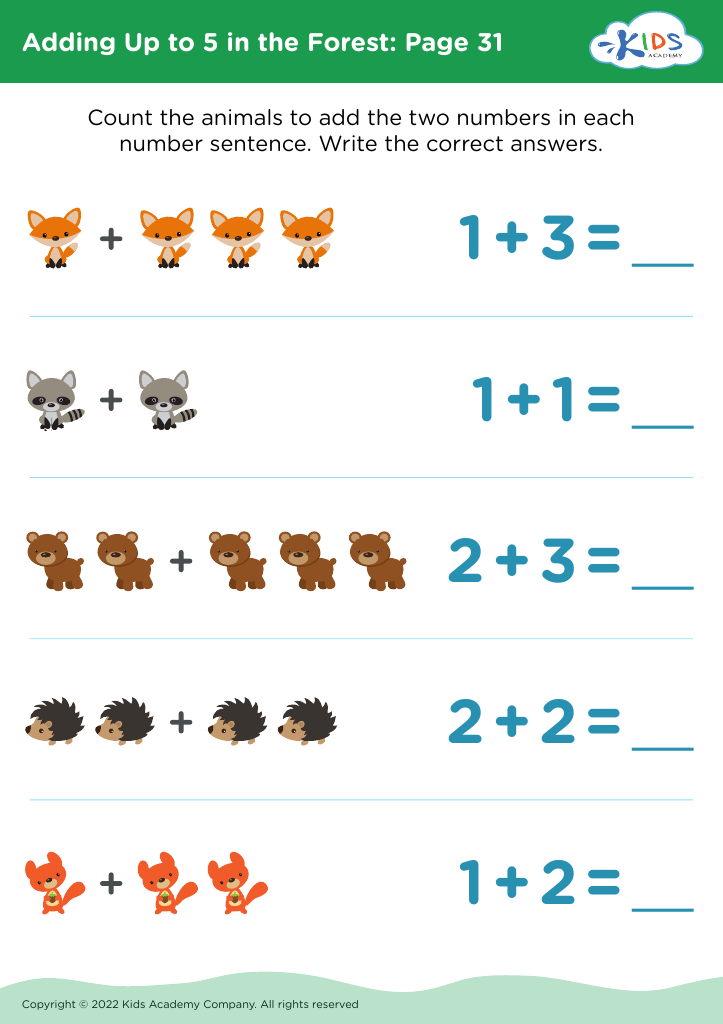
Adding Up to 5 in the Forest: Page 31
Worksheet
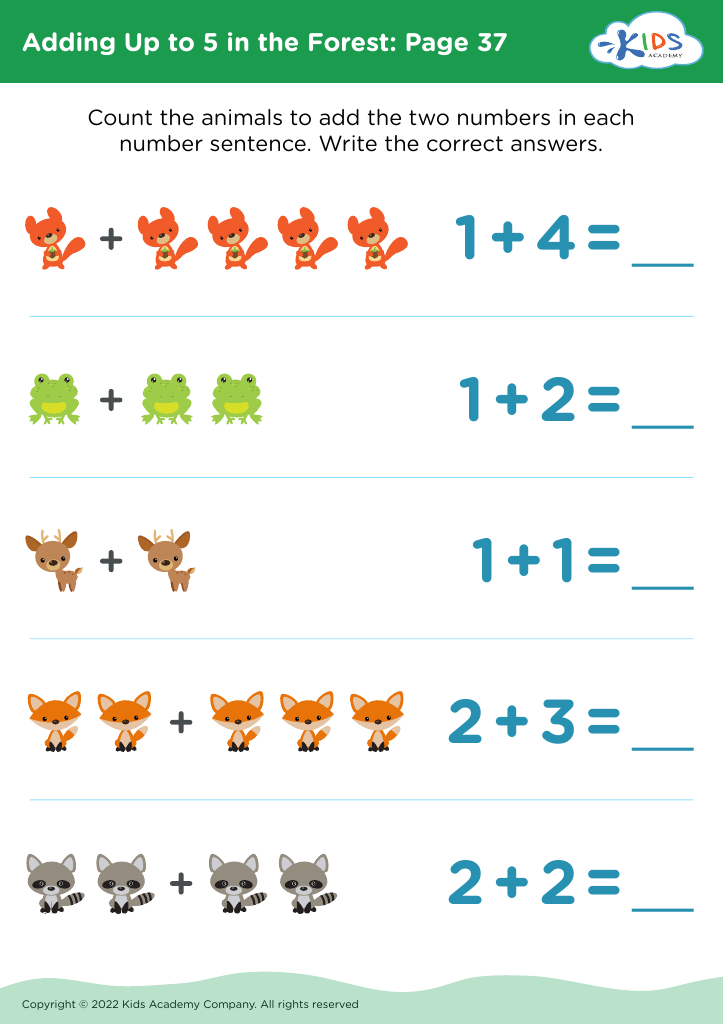
Adding Up to 5 in the Forest: Page 37
Worksheet
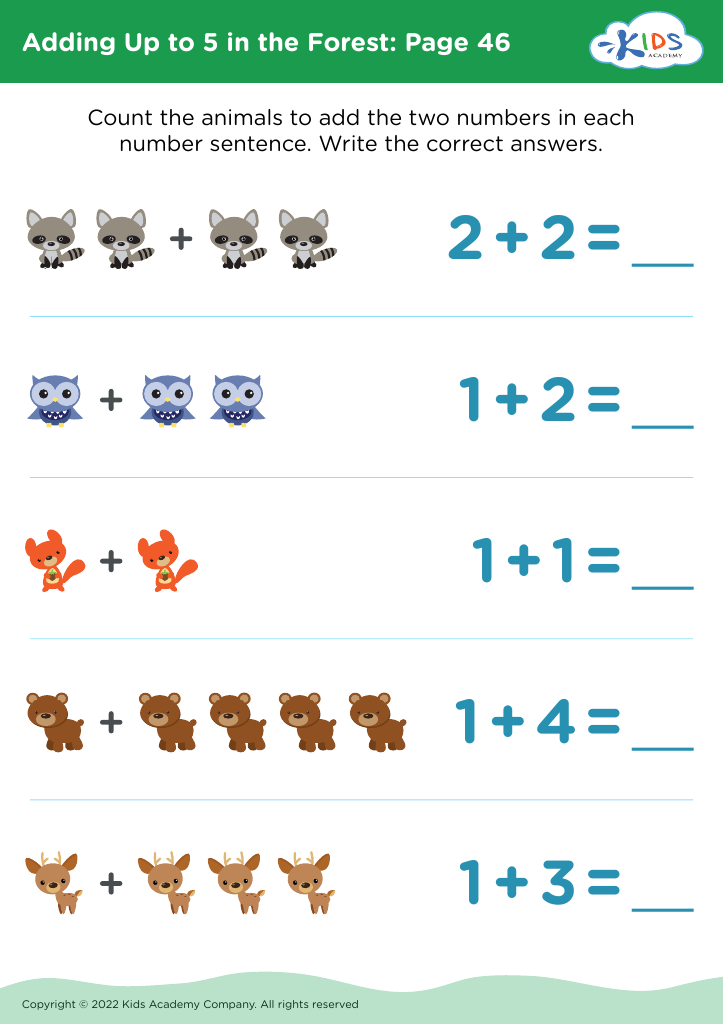
Adding Up to 5 in the Forest: Page 46
Worksheet
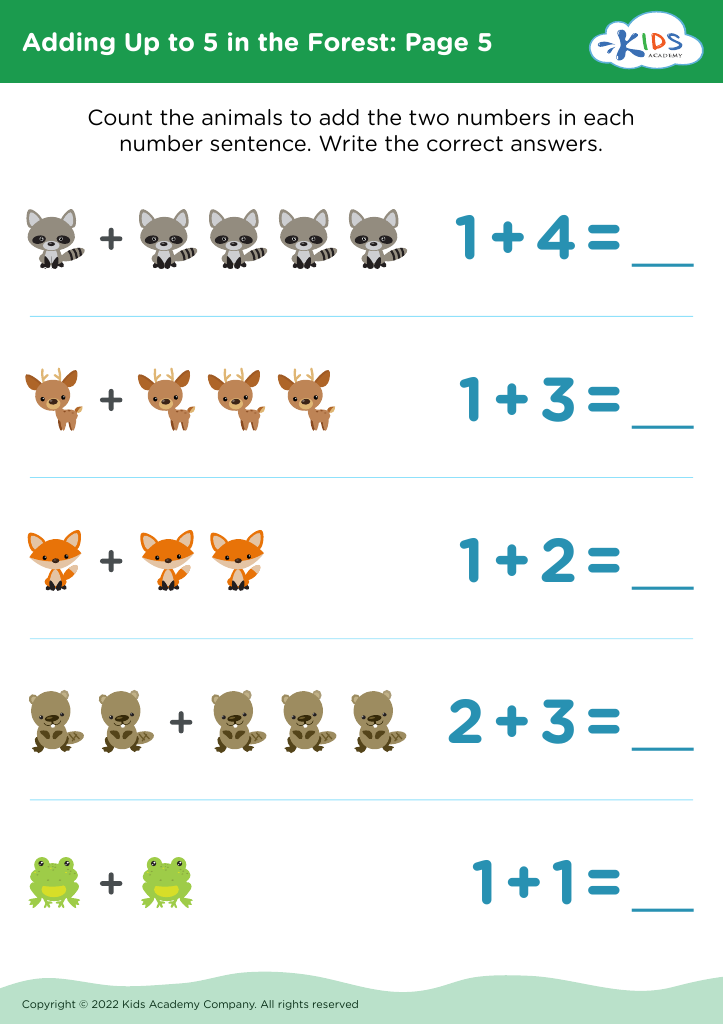
Adding Up to 5 in the Forest: Page 5
Worksheet
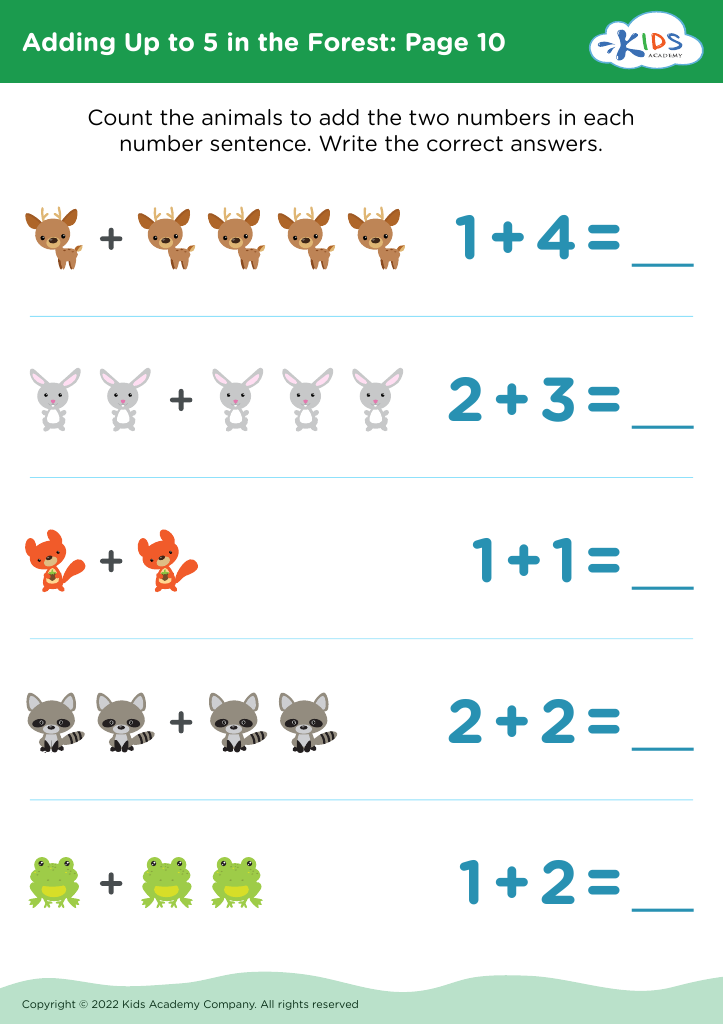
Adding Up to 5 in the Forest: Page 10
Worksheet
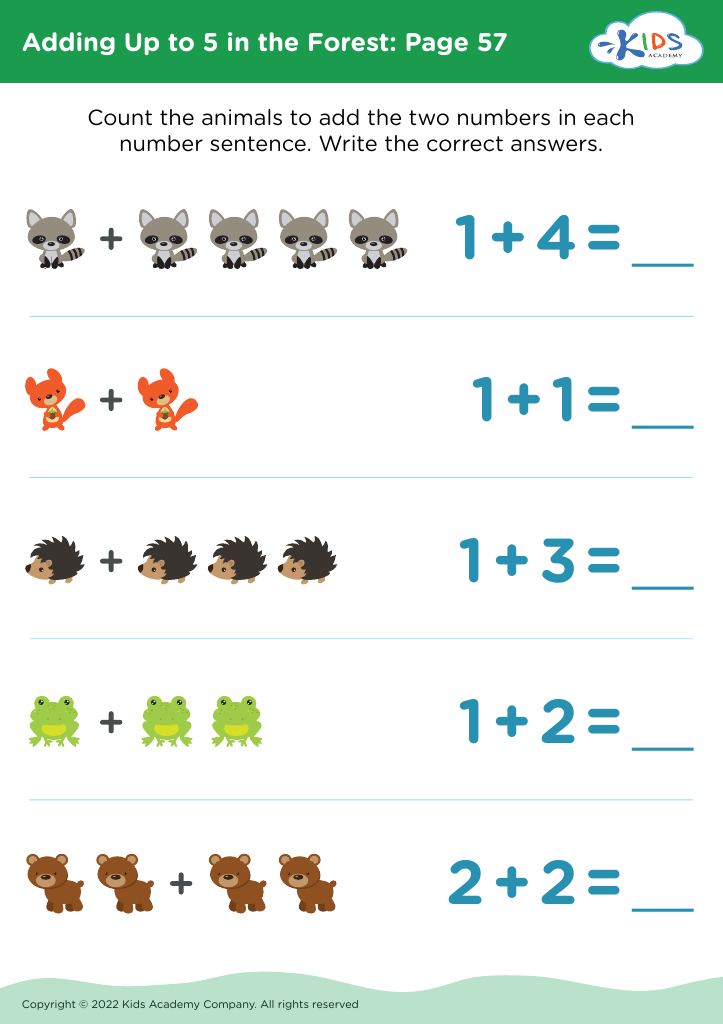
Adding Up to 5 in the Forest: Page 57
Worksheet


Counting skills are a crucial foundation for early mathematics learning, and programs like "Adding in the Forest" offer engaging ways to develop these abilities in four-year-olds. At this age, children are naturally curious about the world around them, and incorporating counting into everyday activities—like exploring nature—makes learning both fun and meaningful.

By participating in activities that involve counting forest-related items, children can connect abstract mathematical concepts to their immediate environment. This approach not only makes learning relatable but also fosters critical thinking and problem-solving skills. Parents and teachers should care about nurturing counting skills because these abilities are essential for later academic success—children who struggle with basic math concepts in early years tend to face challenges in higher grades.

Engaging with counting in a playful manner enhances a child’s cognitive development, making math feel less intimidating and more enjoyable. Furthermore, such activities promote social skills as children collaborate and share experiences in group settings. Emphasizing the importance of counting through thematic learning not only instills a joy for mathematics but also prepares children for future educational endeavors, ensuring they have the necessary tools to thrive.