Basic Math understanding Adding Up to 5 Worksheets for 4-Year-Olds
7 filtered results
-
From - To
Introduce your child to the exciting world of numbers with our "Basic Math Understanding: Adding Up to 5 Worksheets for 4-Year-Olds." These engaging, easy-to-follow printables are perfect for young learners just starting their math journey. With colorful visuals and fun activities, our worksheets help kids grasp the fundamental concept of addition up to 5 effortlessly. Designed with 4-year-olds in mind, these resources strengthen their counting skills, boost confidence, and foster a love for learning. Ideal for both classroom use and at-home practice, watch your little ones excel in math while enjoying every step!
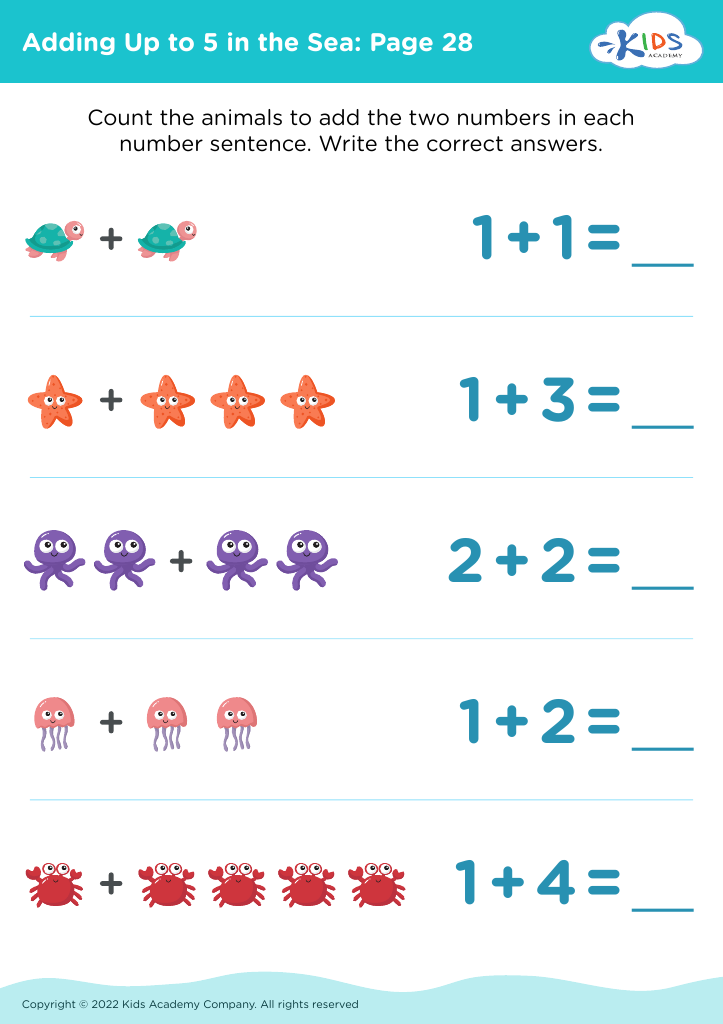
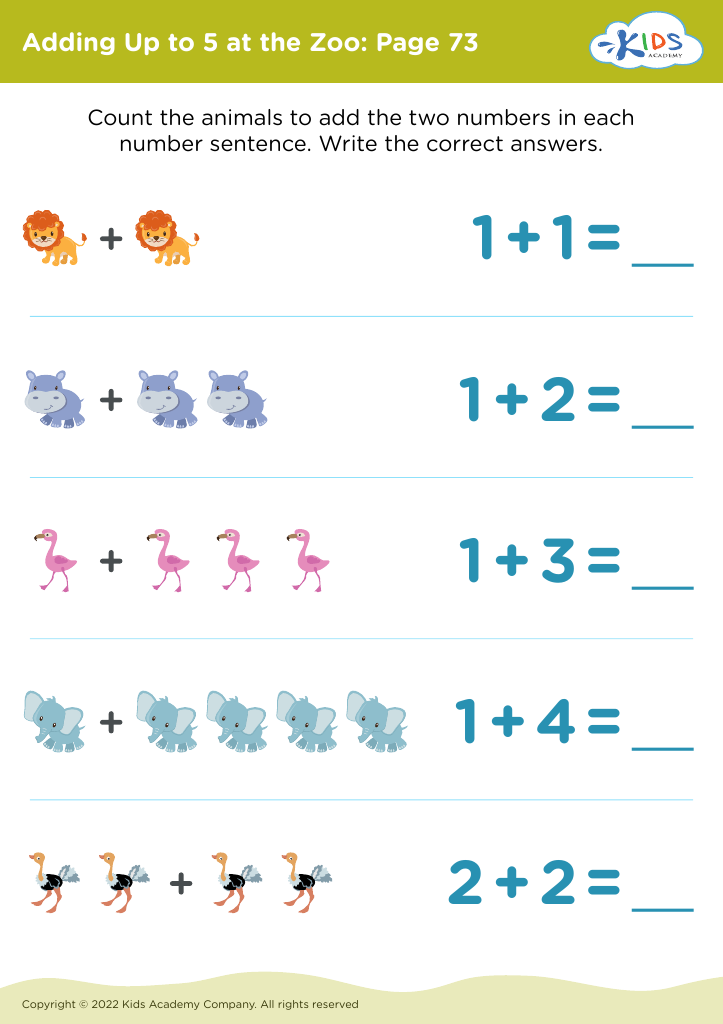
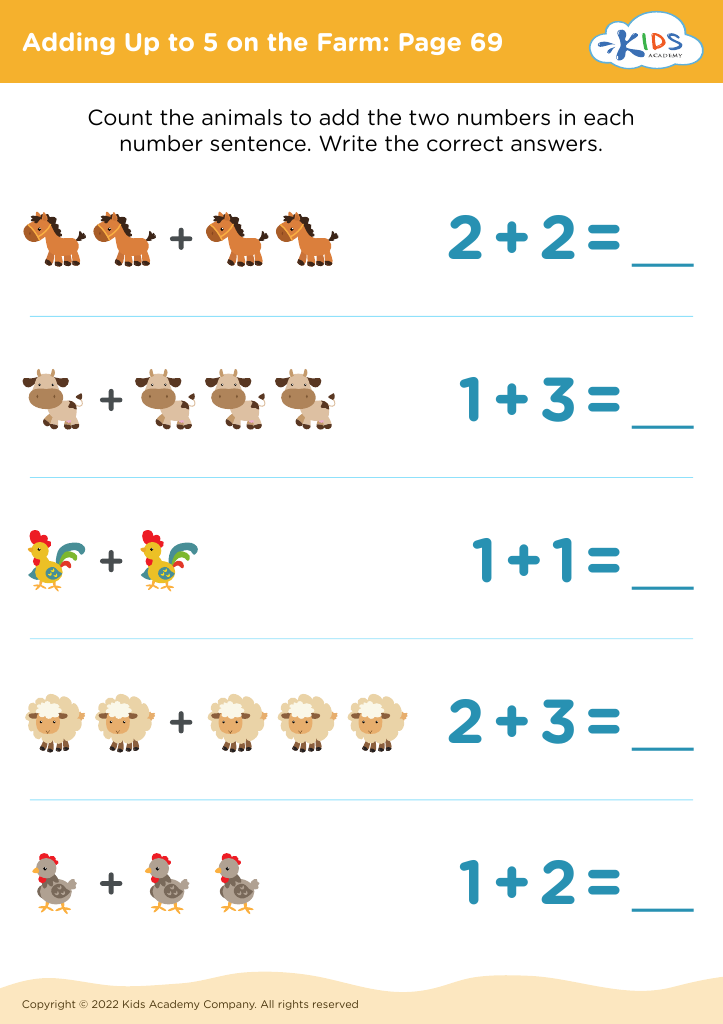
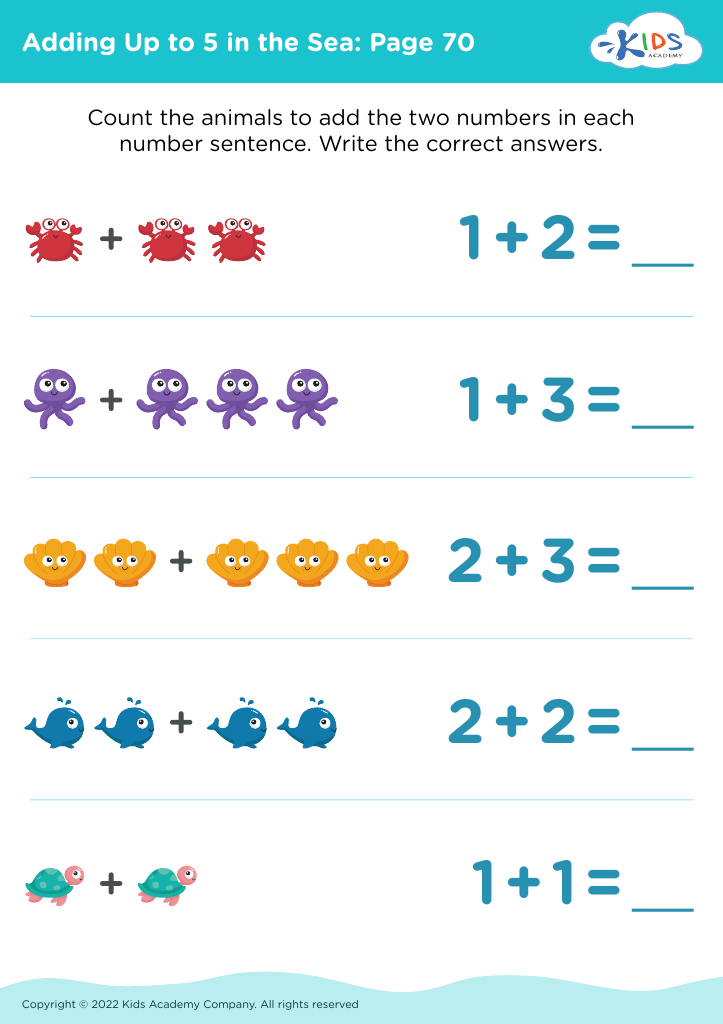
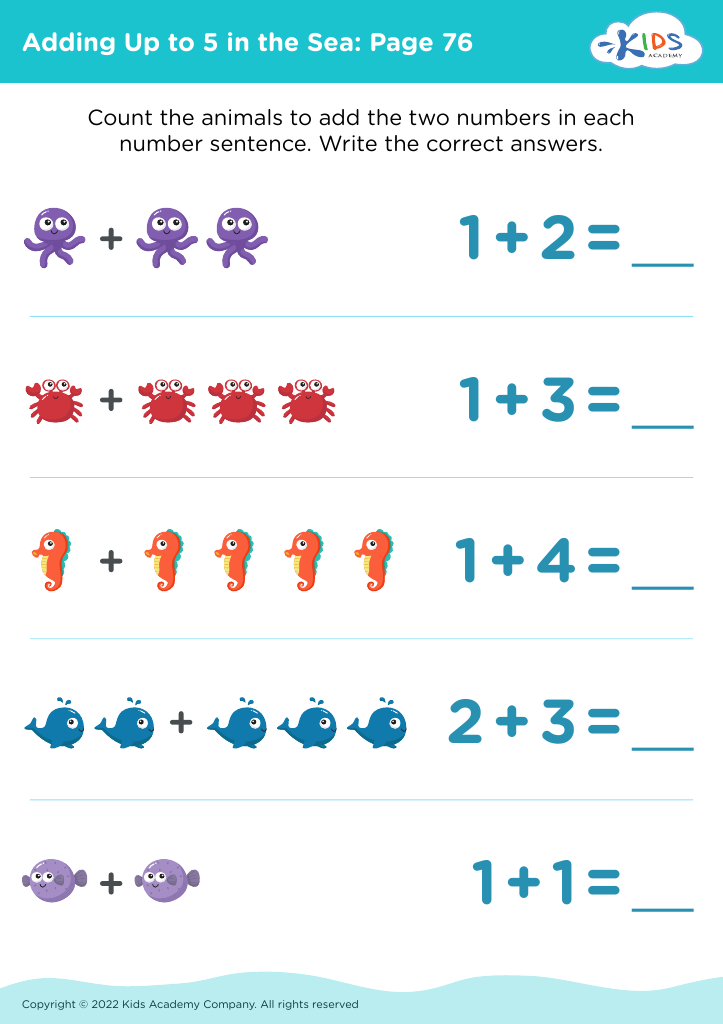
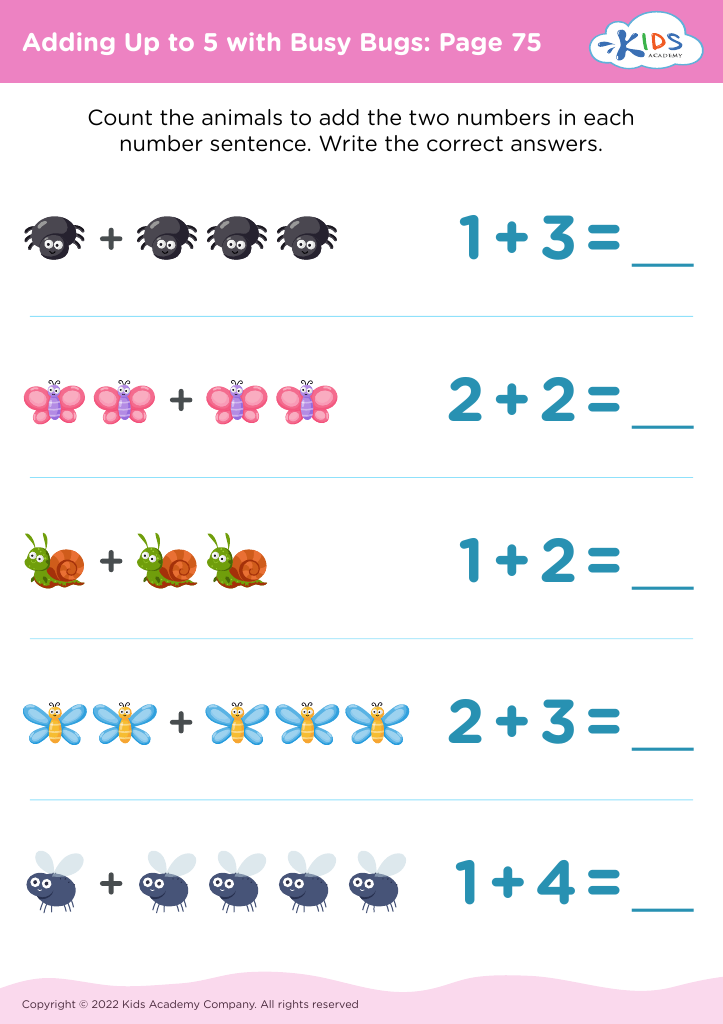
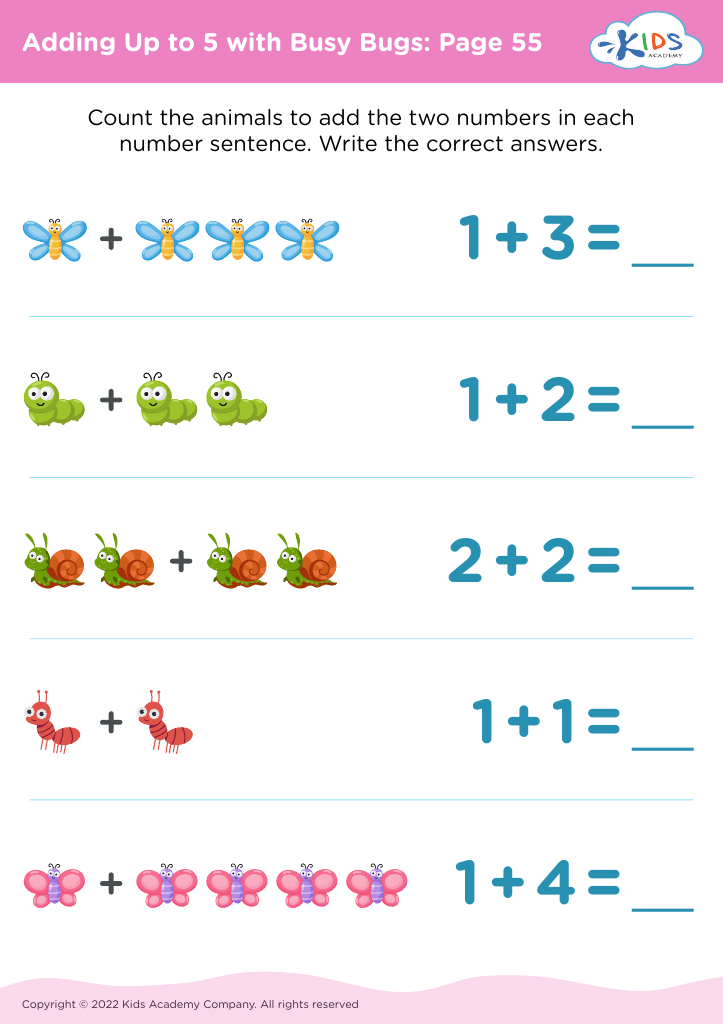








Parents and teachers play a crucial role in the early development of a child's math skills, and understanding basic math concepts such as adding up to 5 is an essential foundation for 4-year-olds. At this age, children are naturally curious and absorb new information rapidly, making it the ideal time to introduce basic arithmetic in a fun and engaging way.
Fostering an early understanding of addition helps develop critical thinking and problem-solving skills. These foundational skills are pivotal for their academic journey and future mathematical encounters. Being proficient in basic addition helps them build confidence and gives them a head start when they begin formal schooling.
Moreover, practicing simple addition lays the groundwork for more advanced math concepts. It encourages logical thinking, the ability to recognize patterns, and the skill of making connections between different ideas. These skills are transferable and are crucial in other subject areas and everyday tasks, such as counting objects or understanding time and money.
Coupled with the cognitive benefits, engaging in these activities can strengthen the parent-child and teacher-student bond. It transforms learning into a shared, joyous experience and reduces anxiety related to math in later years. Ultimately, early proficiency in basic math helps set the child up for long-term academic and personal success.








