Enhances concentration Adding Up to 5 Worksheets for 4-Year-Olds
4 filtered results
-
From - To
Boost your 4-year-old’s focus and concentration with our "Adding Up to 5 Worksheets." Specially designed for preschoolers, these engaging activities blend fun and learning to keep young minds stimulated. By featuring colorful visuals and simple addition tasks, these worksheets help children develop essential math skills while enhancing their ability to concentrate. Perfect for building foundational knowledge, they prepare little learners for future academic success. Ideal for both home and classroom settings, these worksheets make learning enjoyable and effective. Transform math time into a productive and rewarding experience with our concentration-boosting "Adding Up to 5 Worksheets" for 4-year-olds.
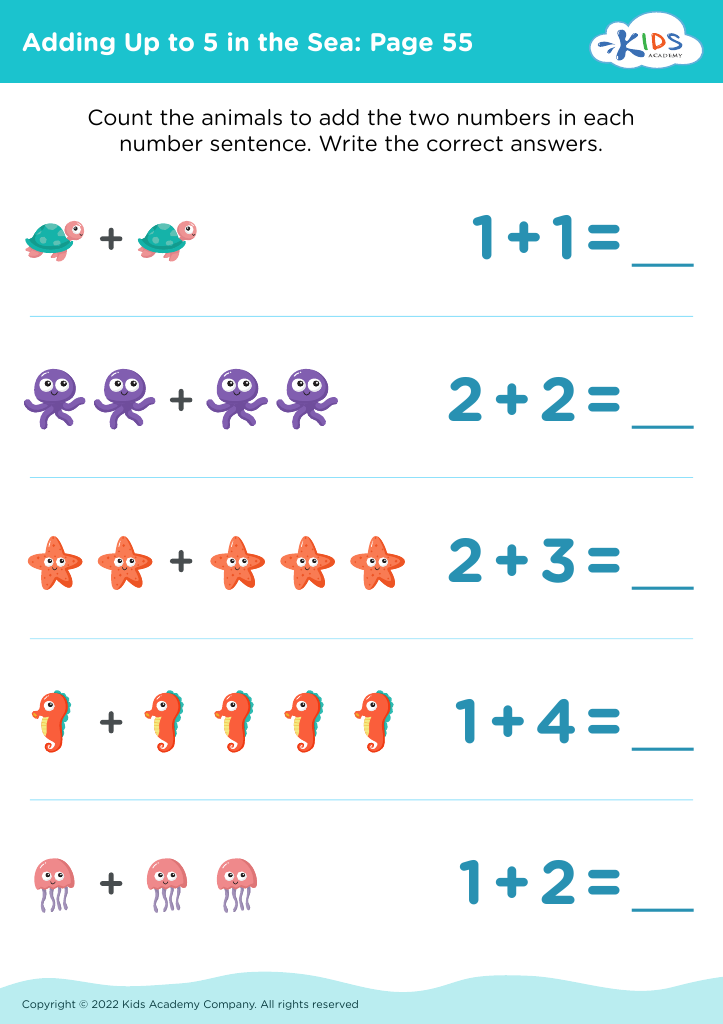
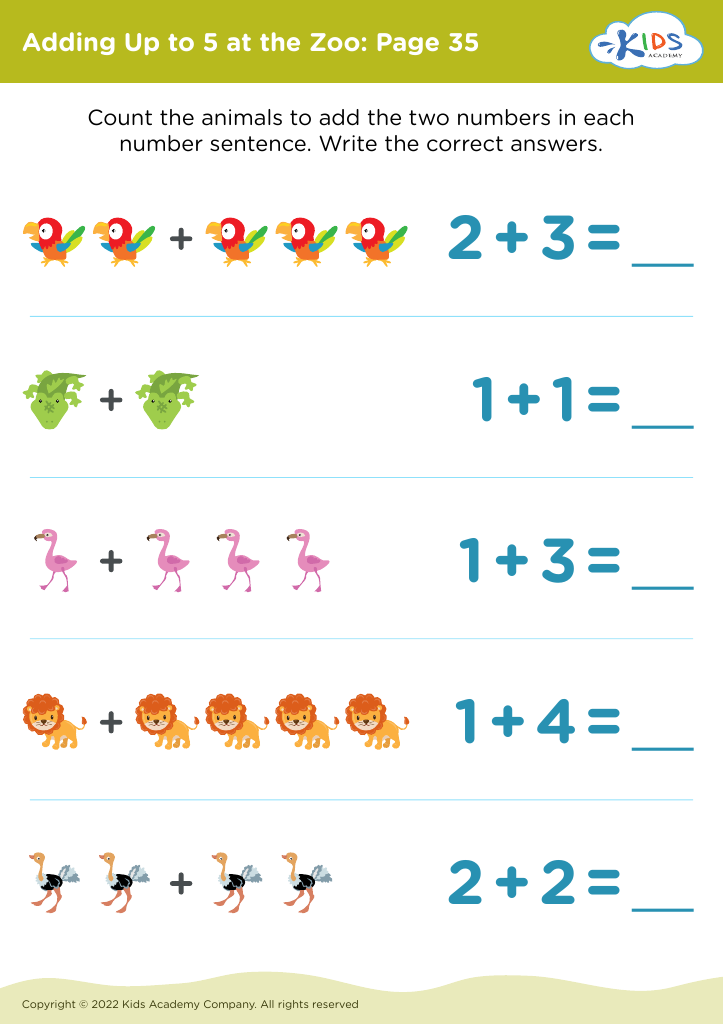
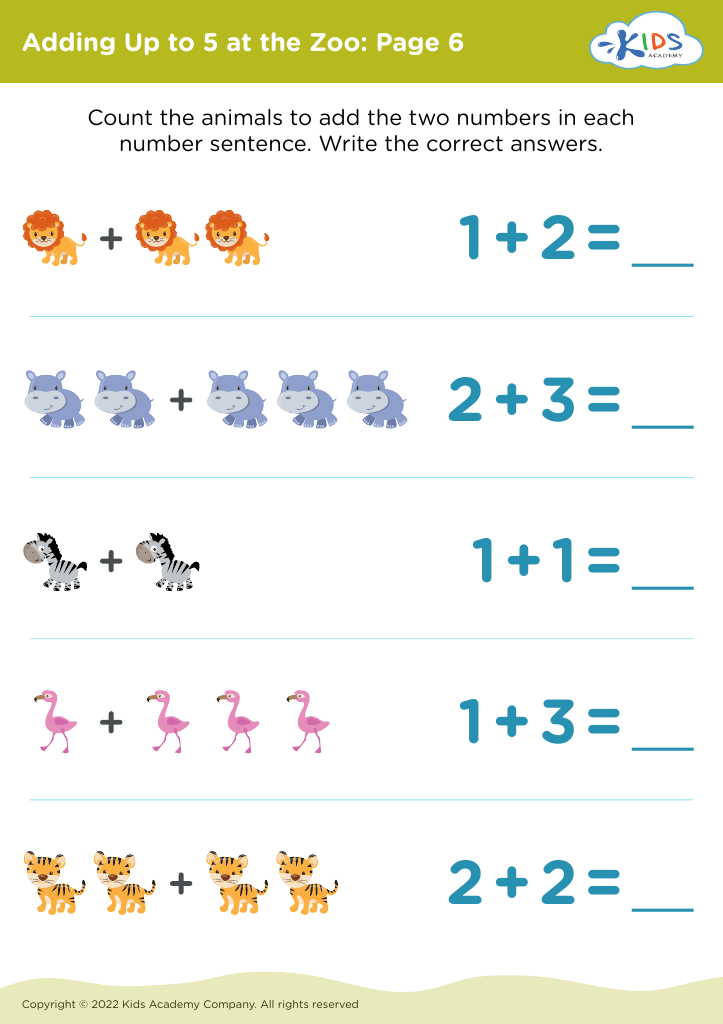
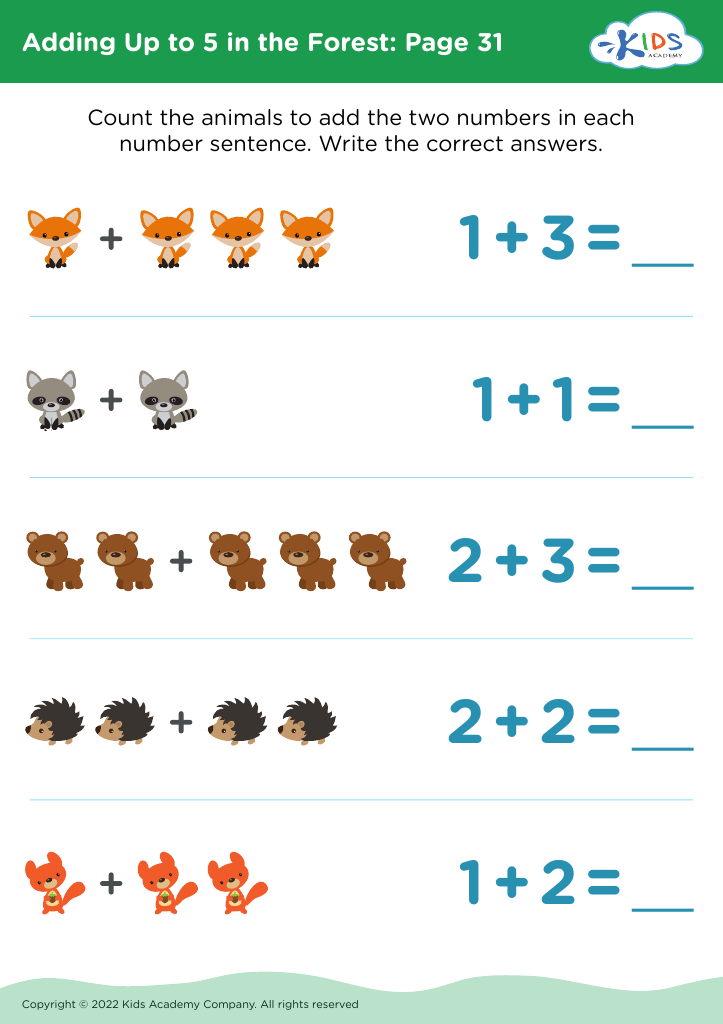








Enhancing concentration by teaching 4-year-olds to add up to 5 is fundamental for their early cognitive development and future academic success. At this age, children are at a critical stage of brain development, where establishing foundational skills can have enduring positive effects. Concentration is akin to a muscle; by engaging in focused activities, children build their ability to concentrate over longer periods.
Applying addition helps nurture their numerical literacy, giving them confidence with numbers—a core skill essential for future math learning. Early mastery of simple addition enhances their problem-solving abilities and critical thinking, allowing for a smoother transition into more complex subjects later on.
For parents, seeing their child succeed in early math fosters a positive, supportive learning environment at home. This involvement reinforces their child’s skills and stimulates curiosity and a love for learning. For teachers, focused activities such as adding up to 5 align with recognized curriculum standards and ensure students meet key learning milestones.
Additionally, breaking tasks into manageable chunks, like adding digits up to 5, prevents feelings of overwhelm and builds a child's self-esteem. This early boost in confidence can lead to a sustained interest and enthusiasm for learning, impacting their academic journey positively in the years to come.








