Visual learning enhancement Adding Up to 5 Worksheets for 4-Year-Olds
4 filtered results
-
From - To
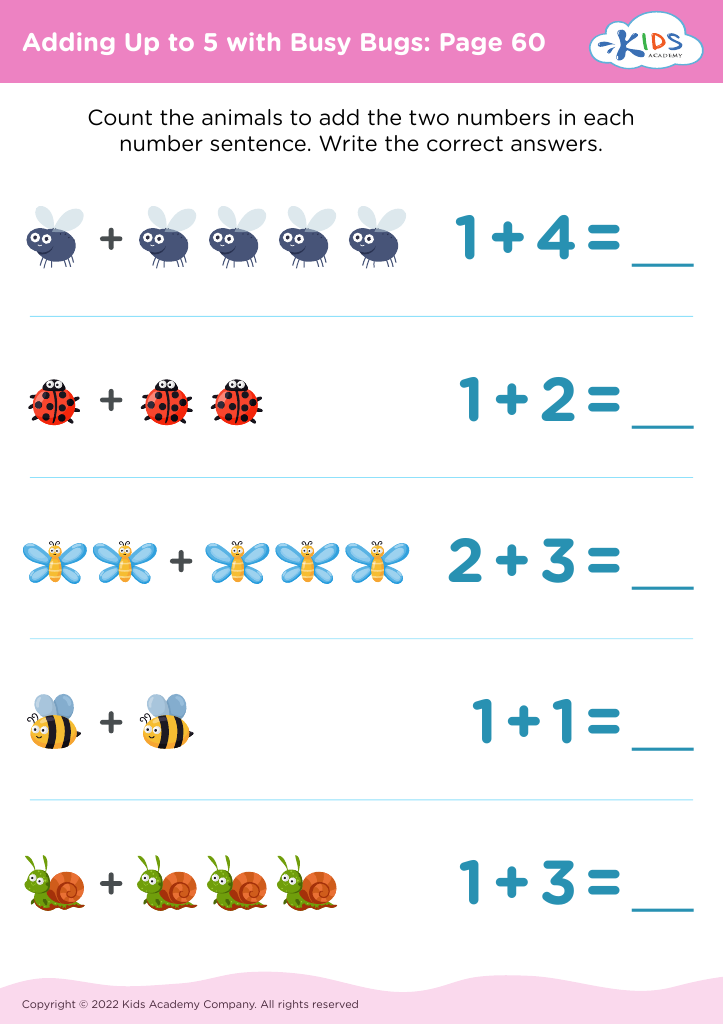
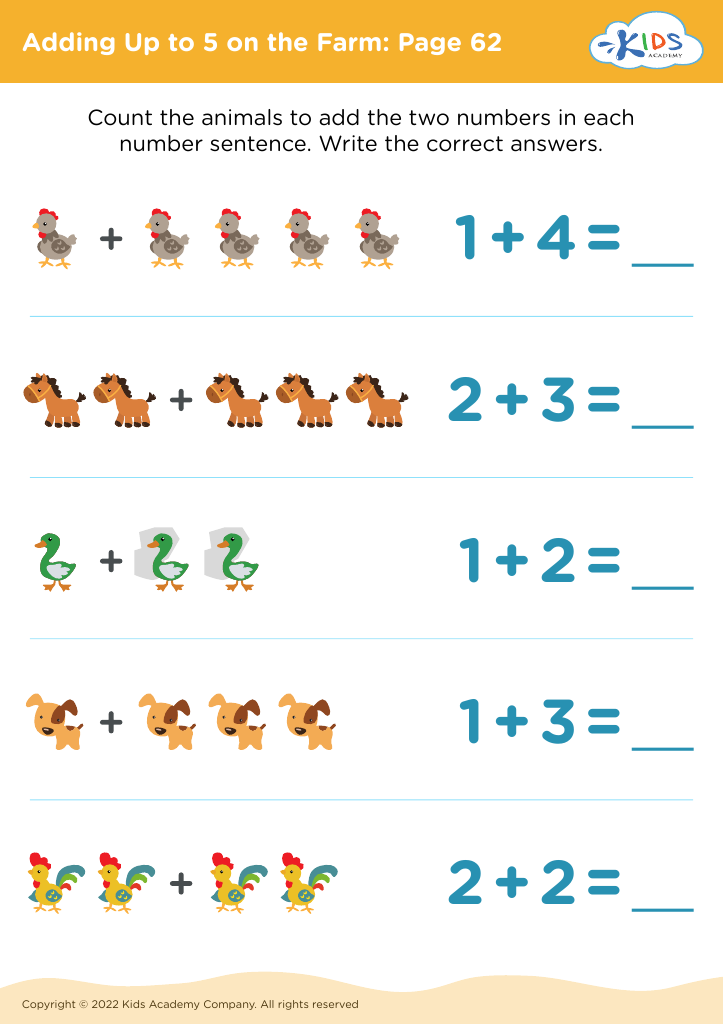
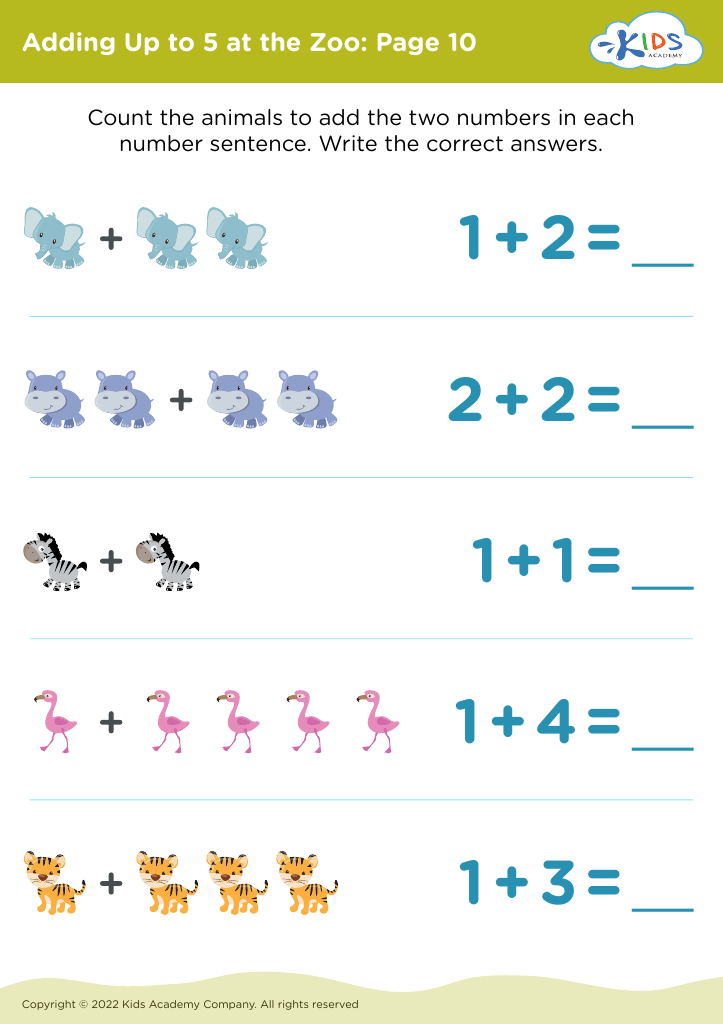
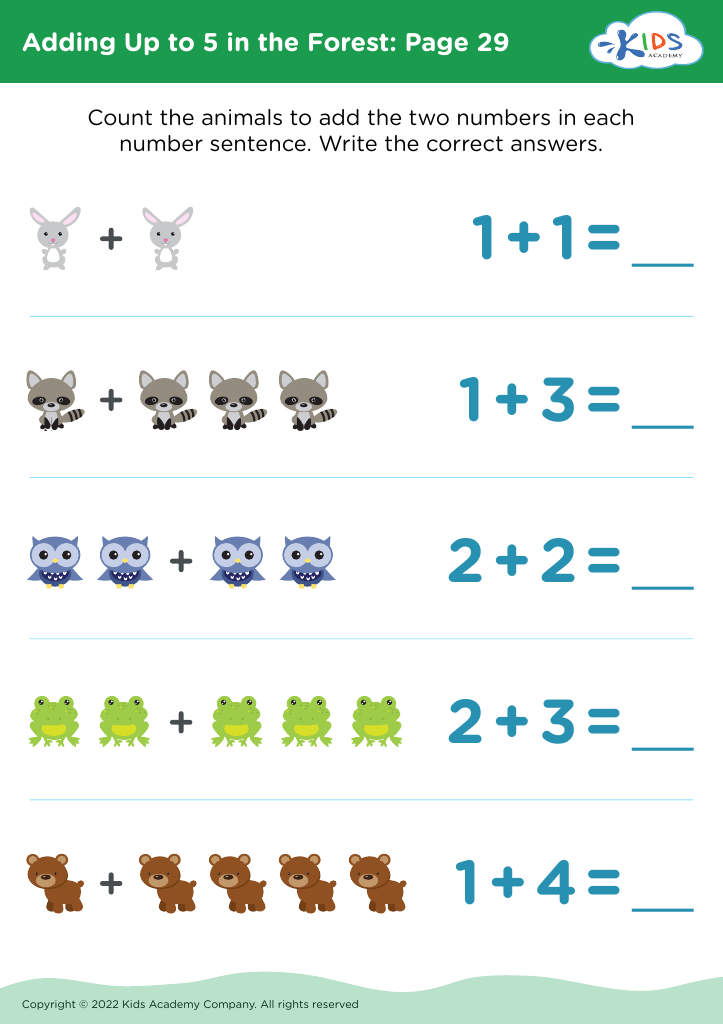
Introducing our "Visual Learning Enhancement Adding Up to 5 Worksheets for 4-Year-Olds," designed to make early math education engaging and effective. Our carefully crafted worksheets employ vibrant visuals and interactive activities to help young learners understand and master simple addition up to 5. These resources foster cognitive development, enhance visual learning skills, and build a solid math foundation. Ideal for preschoolers, each worksheet offers fun and educational exercises that captivate attention and stimulate learning. Lay the groundwork for future math success with our innovative worksheets designed for both classroom and at-home practice. Download now to boost your child's math confidence!




.jpg)



Parents and teachers should care about visual learning enhancement for adding up to 5 for 4-year-olds because it plays a crucial role in early cognitive development and foundational math skills. At this tender age, children's brains are highly receptive to visual stimuli, making it easier for them to grasp abstract concepts like numbers and basic arithmetic. Using visual aids such as colorful objects, number lines, or interactive apps turns abstract numbers into tangible concepts, thus simplifying the process of understanding addition.
Furthermore, visual learning keeps young children engaged and motivates them by making learning fun. Engaging images or playful visuals can hold a child's attention longer than verbal explanations, making it more likely they retain the information. This kind of active learning experience also allows for better memory recall and application of concepts in real-life scenarios.
Thirdly, teaching through visual methods caters to diverse learning styles. Not all children learn the same way; some are more visual learners and benefit greatly from seeing concepts mapped out visually. This creates a more inclusive learning environment, promoting confidence and self-esteem when children achieve success.
Ultimately, visual learning enhancement models quality early education, providing 4-year-olds with a strong mathematical foundation that will support their continued academic growth and problem-solving abilities into later years.








