Fine Motor Skills Addition & Subtraction Worksheets for 4-Year-Olds - Page 2
44 filtered results
-
From - To
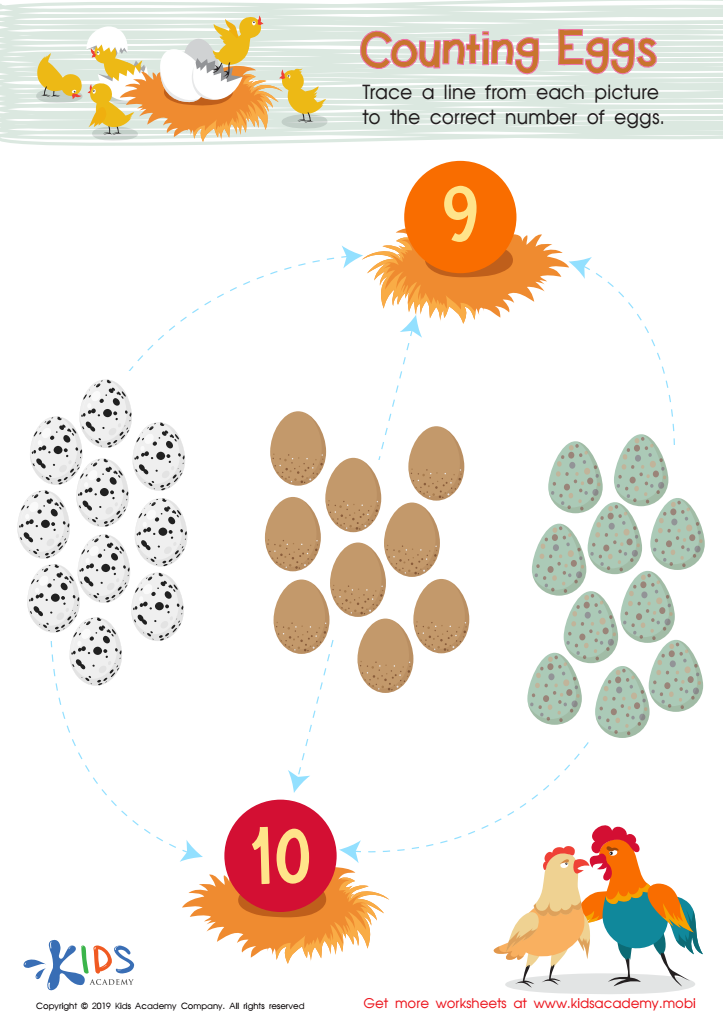
Counting Eggs Worksheet
 Assign to My Students
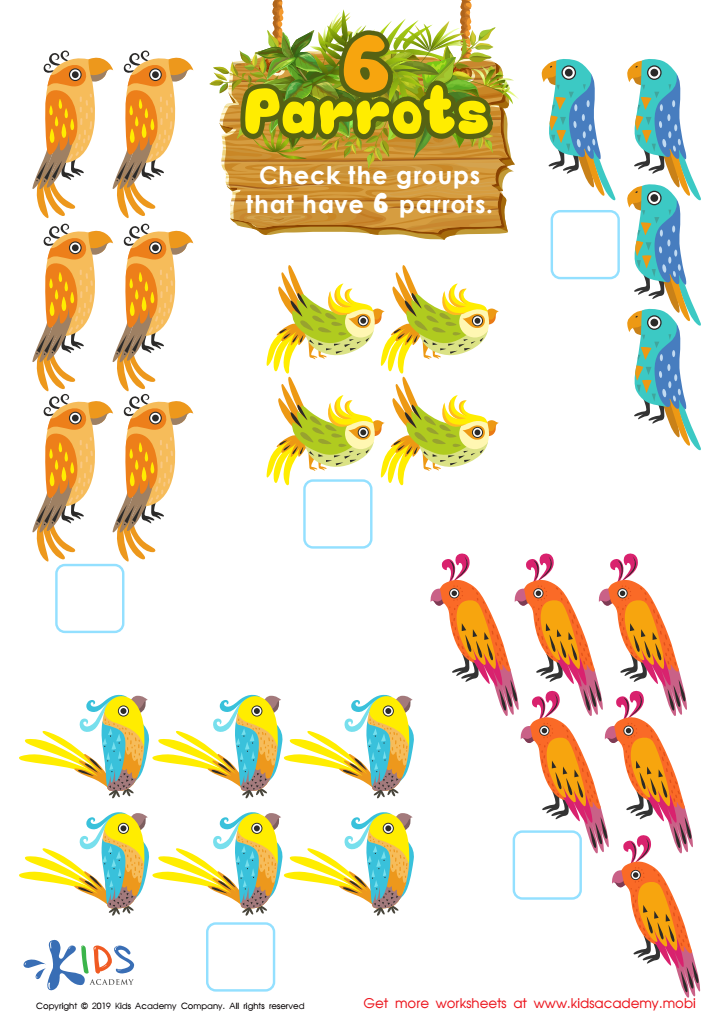
6 Parrots Worksheet
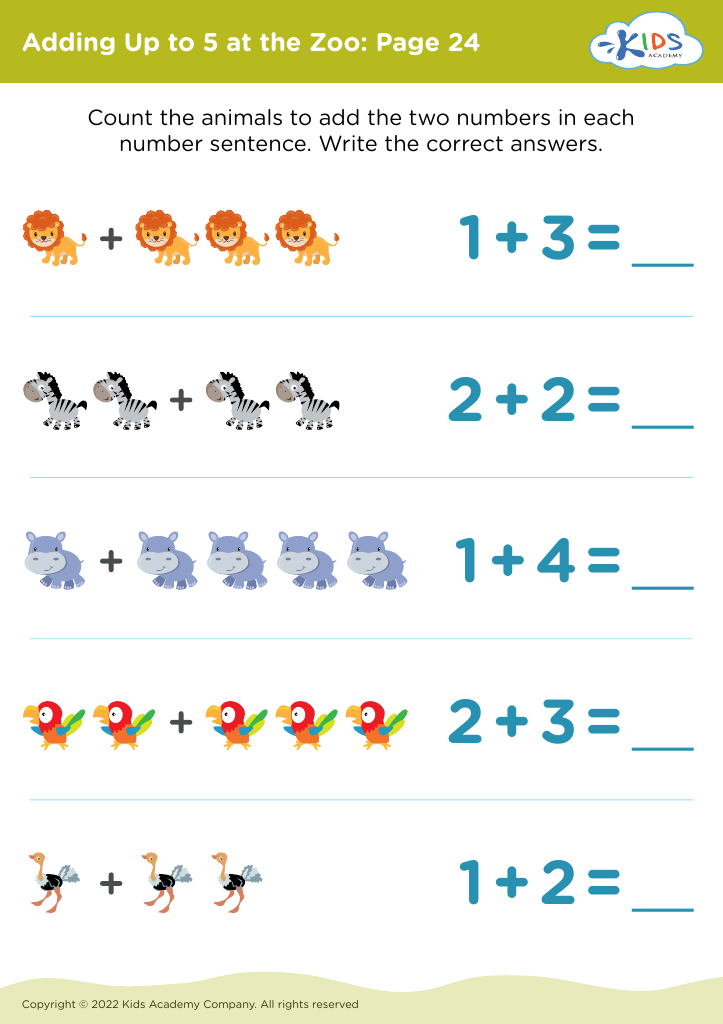
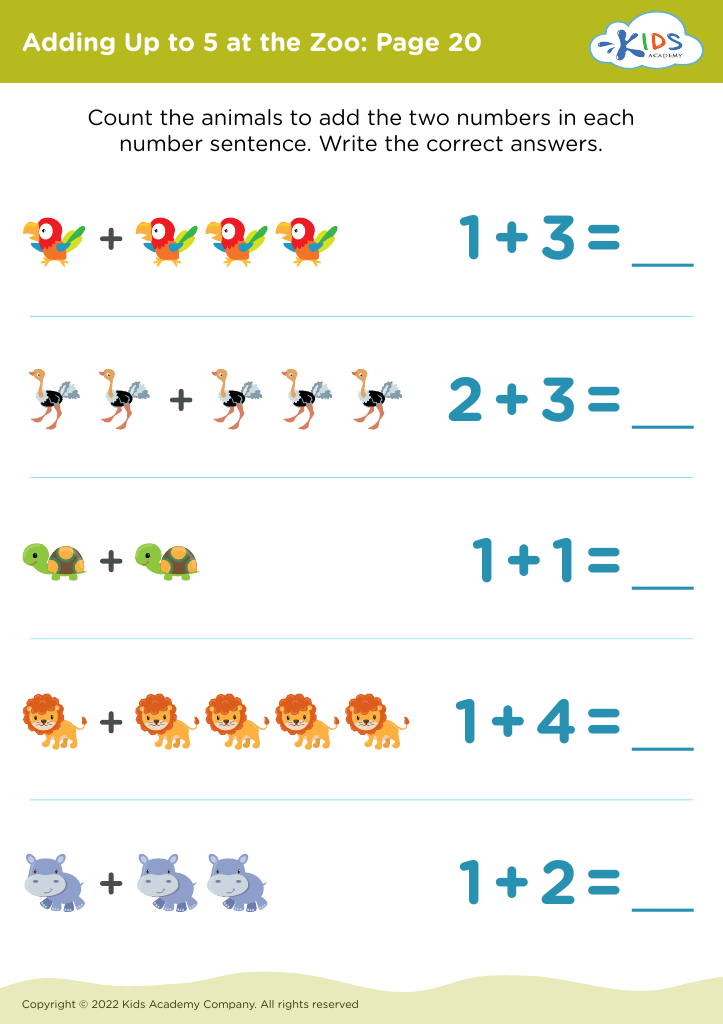
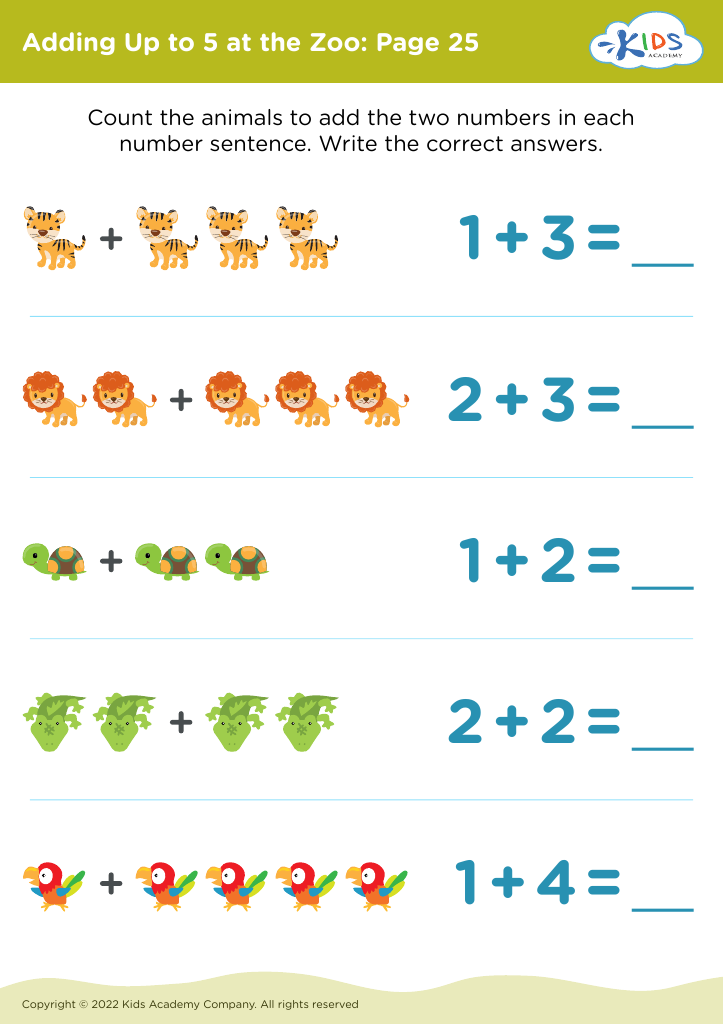

Math Matching Game: Monsterв's Socks Worksheet

Line up the Tigers Worksheet
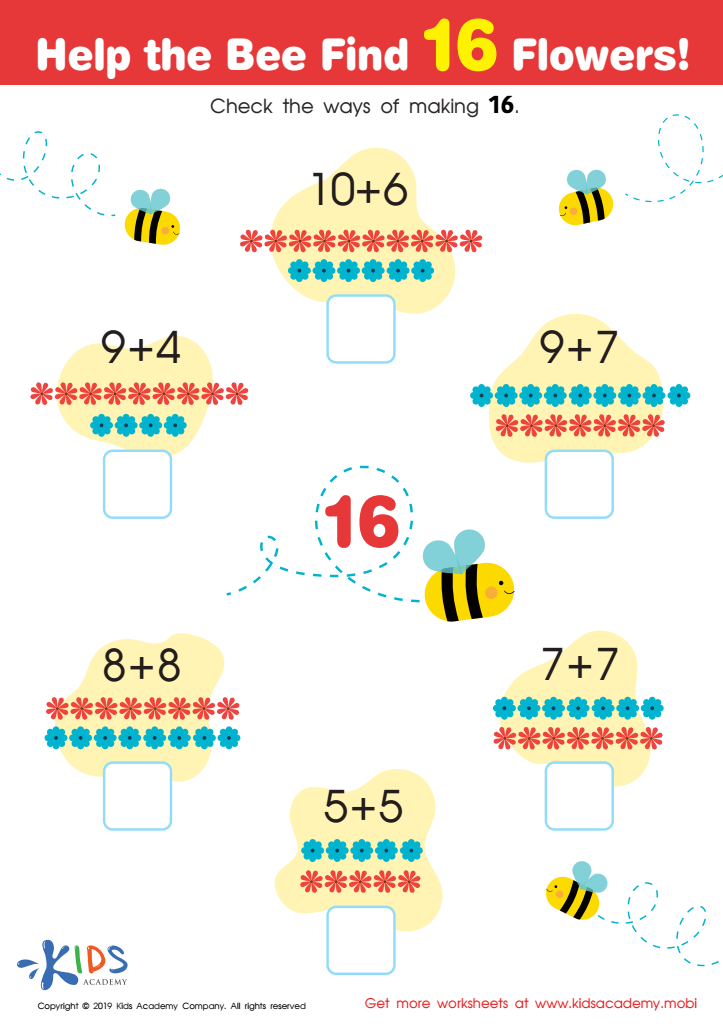
Help the Bee Find 16 Flowers Worksheet
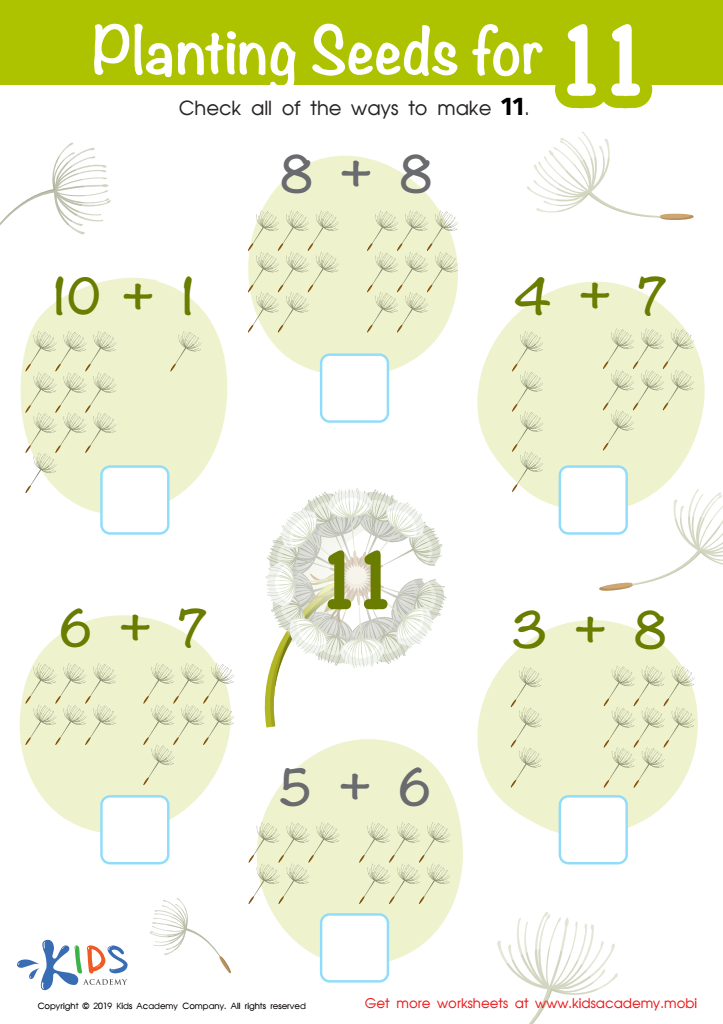
Planting Seeds for 11 Worksheet
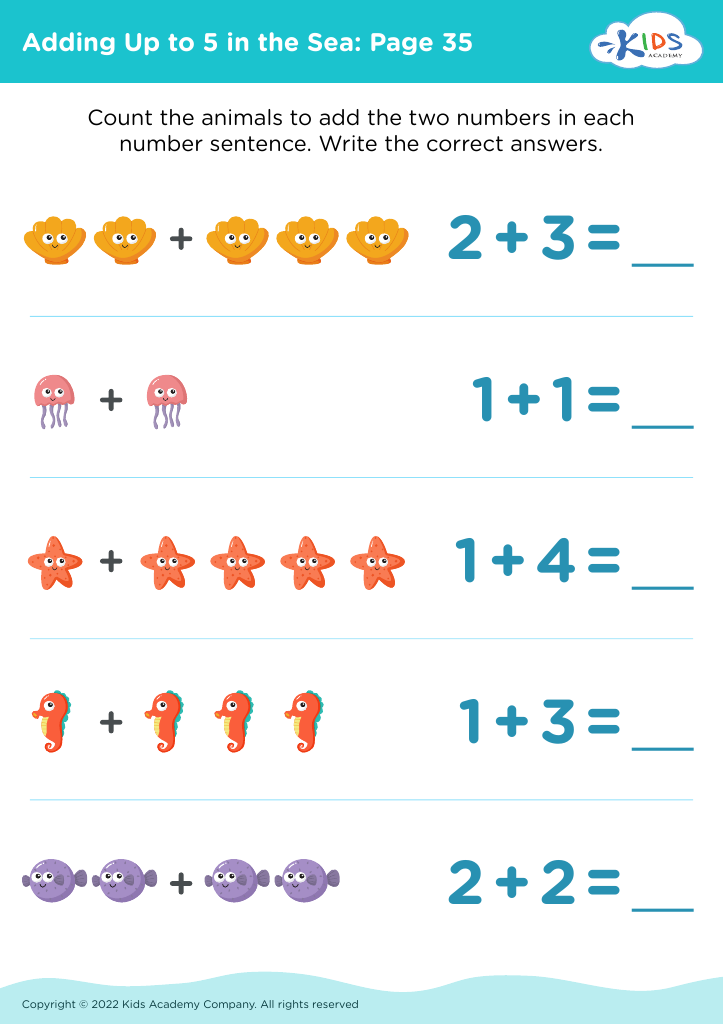
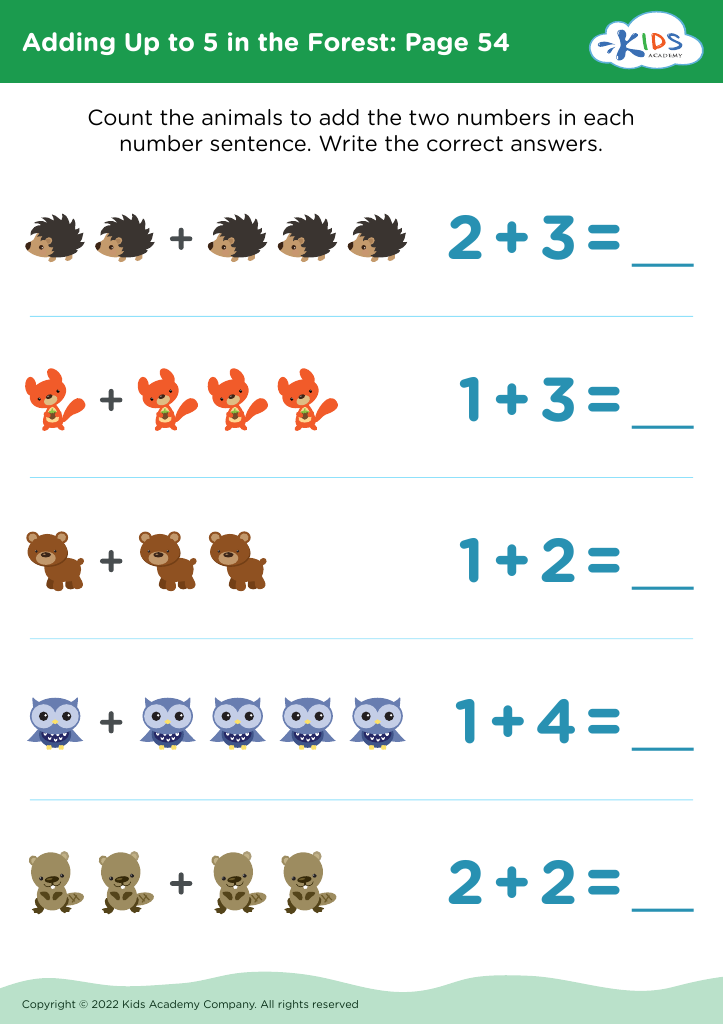

Adding in the Arctic Worksheet

Math Matching Pairs Game: Monsterв's Socks Worksheet








Fine motor skills are essential for a child's overall development, particularly at the age of four when foundational learning occurs. These skills involve the use of small muscles in the hands and fingers, enabling children to perform precise tasks. As parents and teachers, fostering fine motor skills is crucial because they directly impact a child's ability to perform basic mathematical functions, such as addition and subtraction.
At this age, activities that enhance fine motor skills—like manipulating small beads for counting or using tweezers to sort shapes—help develop hand-eye coordination and encourage focus. When children engage in these activities, they not only learn to count and recognize numbers, but they also practice the physical movements required for written numerals, which sets the stage for future academic success.
Furthermore, mastering fine motor skills promotes greater independence and confidence in young children, allowing them to tackle increasingly complex tasks. Creating a fun and stimulating learning environment through games, crafts, or hands-on activities that integrate math concepts can make learning effortless and enjoyable. By caring about the development of fine motor skills, parents and teachers can ensure that children build a strong mathematical foundation while also enhancing their social-emotional development.








