Understanding number values Addition & Subtraction Worksheets for 4-Year-Olds
3 filtered results
-
From - To
Discover our engaging "Understanding Number Values Addition & Subtraction Worksheets" designed specifically for 4-year-olds! These worksheets introduce young learners to fundamental math concepts by helping them grasp the meanings of numbers and their relationships through addition and subtraction. Each activity incorporates colorful visuals and age-appropriate exercises that make math fun and meaningful. Perfect for both classroom and home learning, our worksheets foster early arithmetic skills while promoting critical thinking and problem-solving. Support your child’s mathematical journey and cultivate a strong foundation in numbers with our interactive resources! Let’s make learning numbers exciting together!
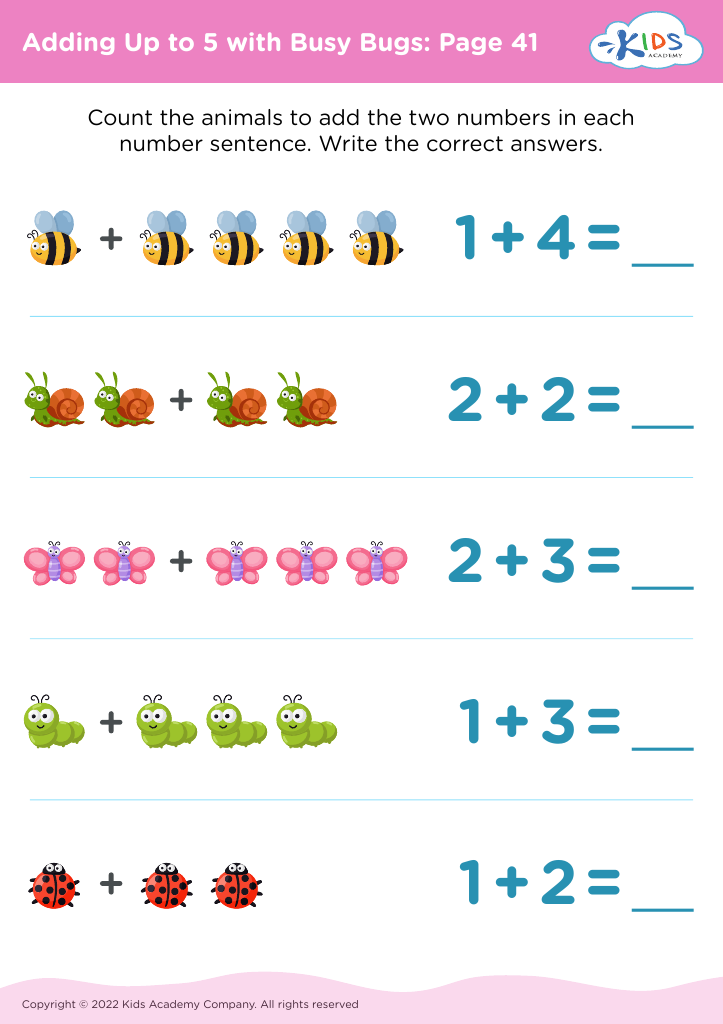
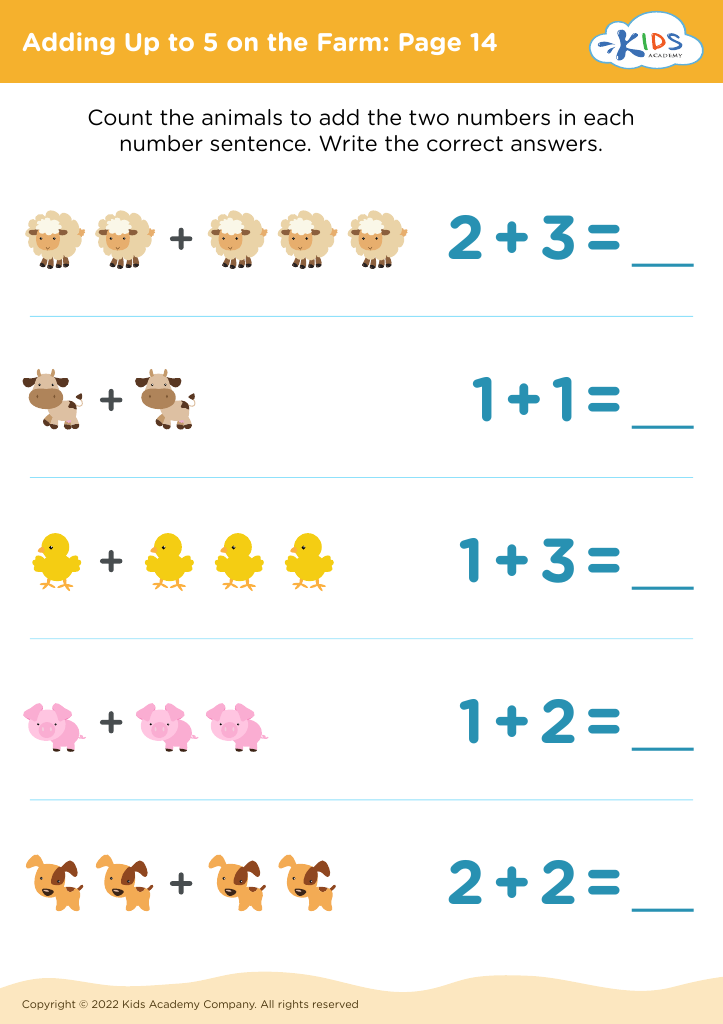
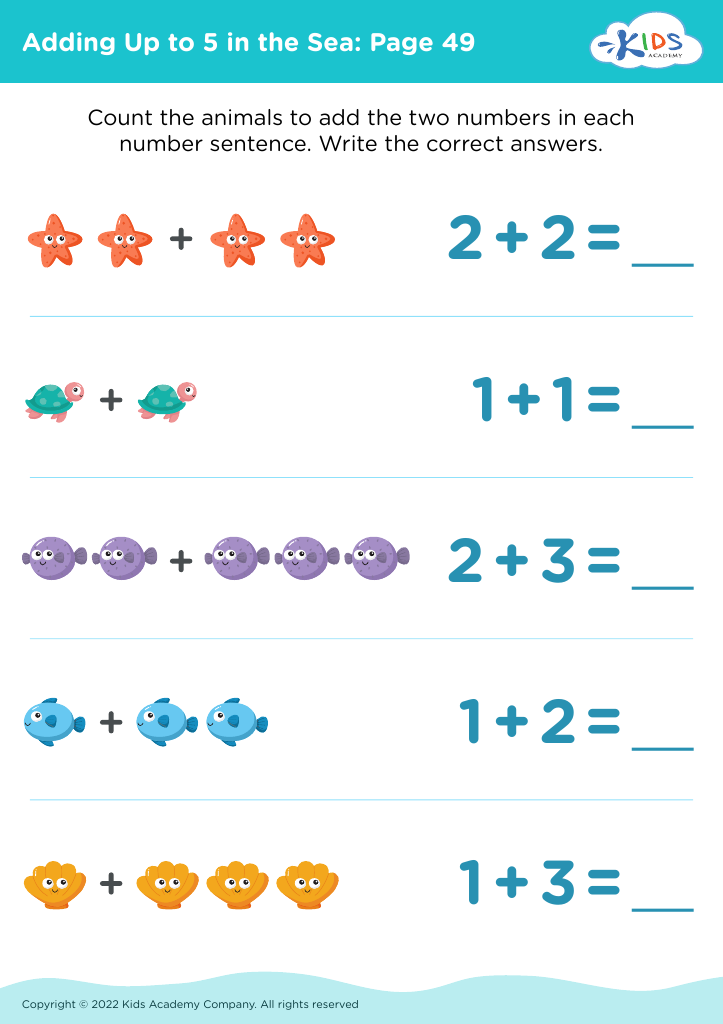








Understanding number values, addition, and subtraction is crucial for 4-year-olds as it lays the foundation for future mathematical learning. At this age, children are naturally curious and eager to engage with numbers. Parents and teachers play a vital role in harnessing this curiosity to promote cognitive development.
When young children understand number values, they start to comprehend how quantities relate to one another, which fosters critical thinking skills. Early exposure to addition and subtraction helps them develop problem-solving abilities, making complex math concepts easier to grasp later on. These skills are not just academic; they encourage logical reasoning and decision-making in daily life.
Moreover, activities centered around numbers can enhance language and communication skills, as children learn to articulate mathematical concepts and share their thought processes. Engaging in simple games or hands-on activities also cultivates a positive attitude toward learning and reduces anxiety surrounding mathematics in the future.
By prioritizing these early mathematical experiences, parents and teachers create a supportive environment where children can thrive and build essential skills that will benefit them throughout their educational journey and into adulthood. This early focus on number values and basic operations fosters a lifelong love of learning.








