Filters

94 filtered results

Clear all filters
Favorites
With answer key
Interactive

94 filtered results

Difficulty Level

Grade


Check out this FREE Trial Lesson on Addition for age 4!

Z

Favorites
With answer key
Interactive
  • 4
  • Animal recognition
  • Addition
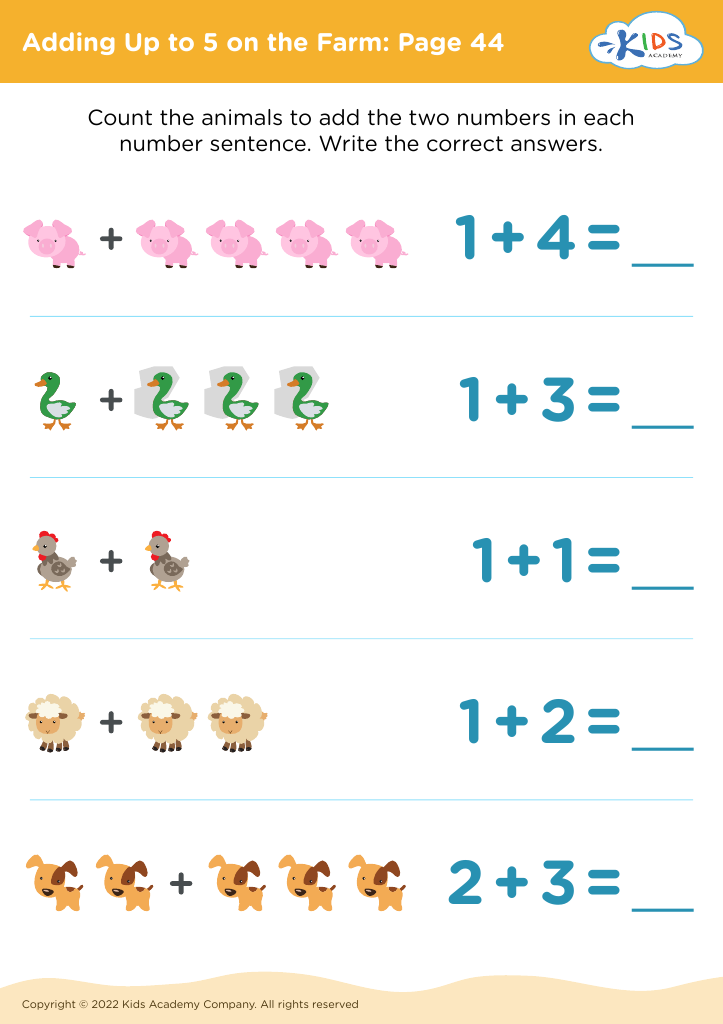
Adding Up to 5 on the Farm: Page 44
Worksheet
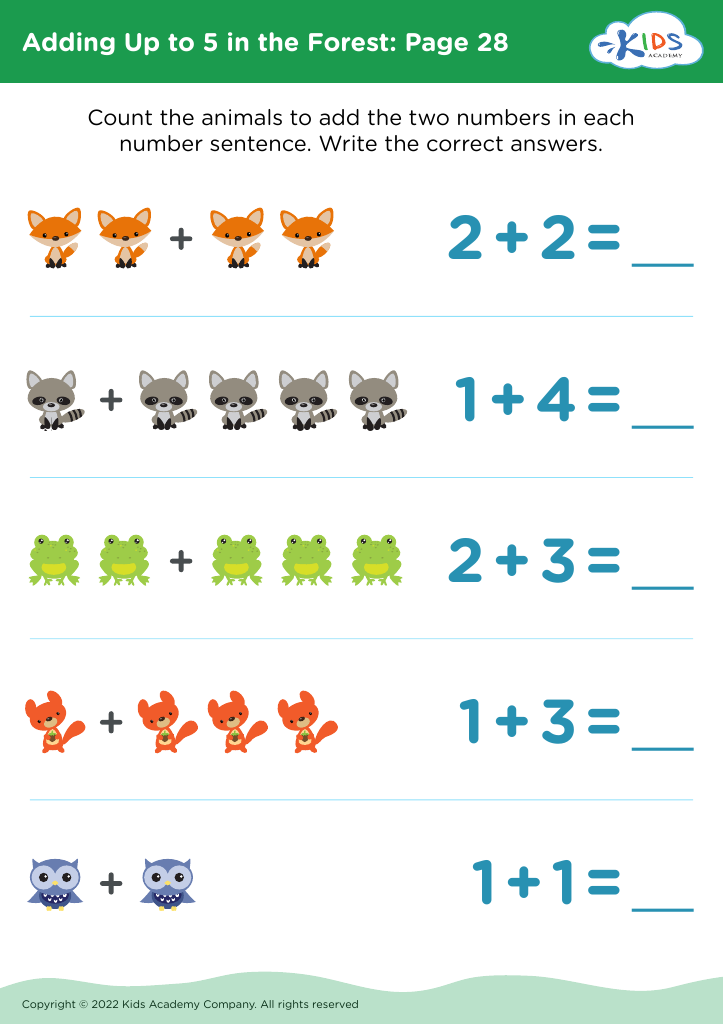
Adding Up to 5 in the Forest: Page 28
Worksheet
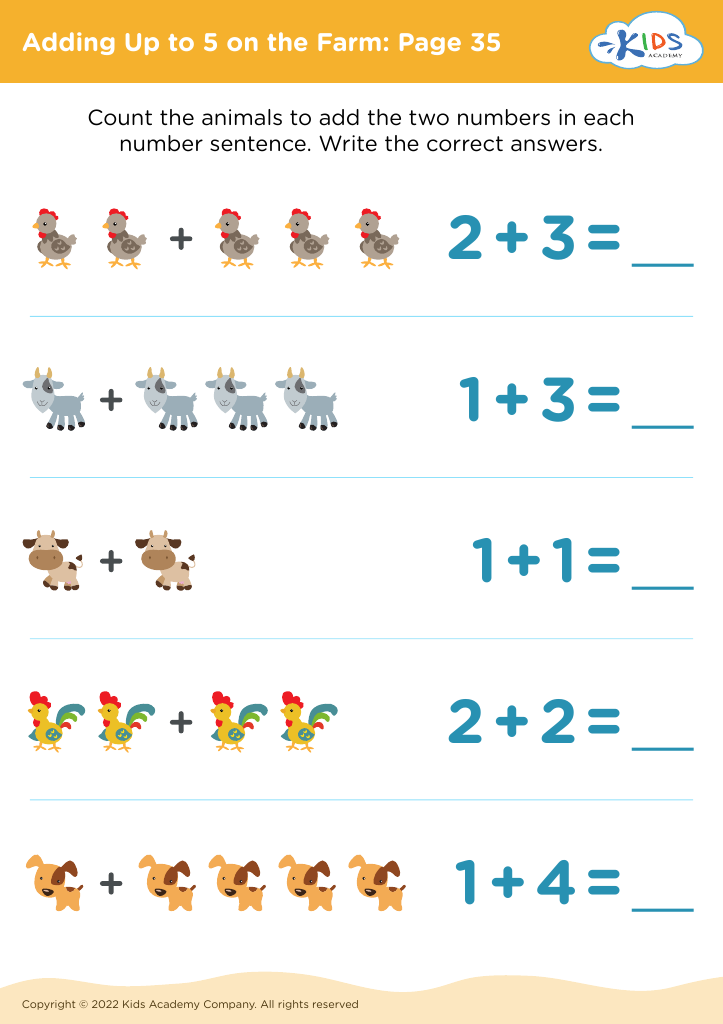
Adding Up to 5 on the Farm: Page 35
Worksheet
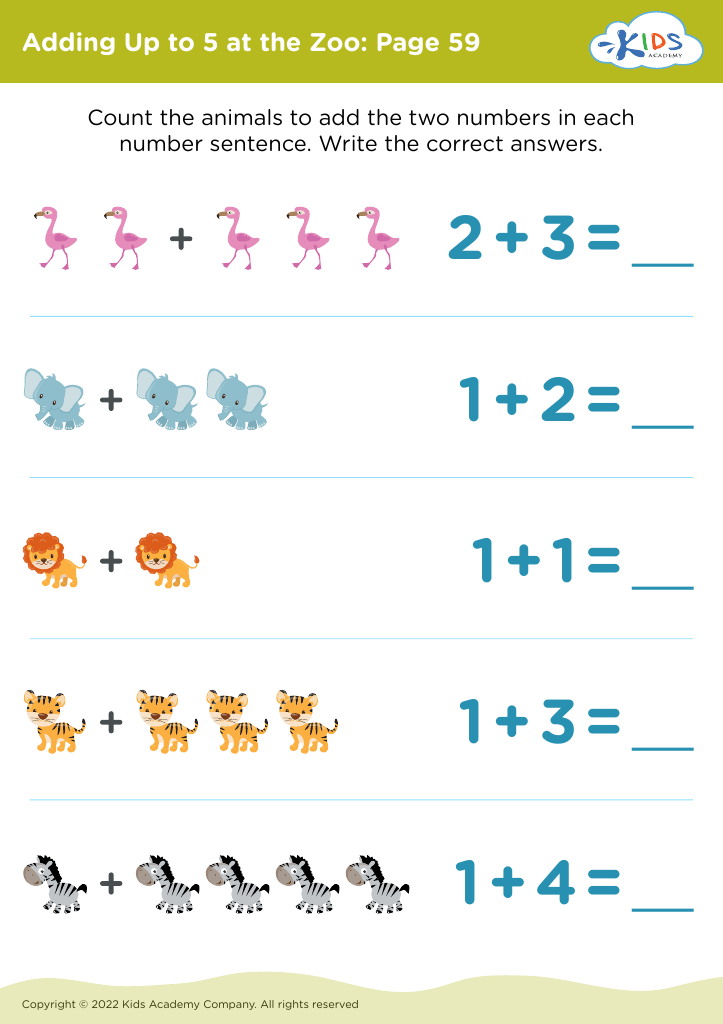
Adding Up to 5 at the Zoo: Page 59
Worksheet
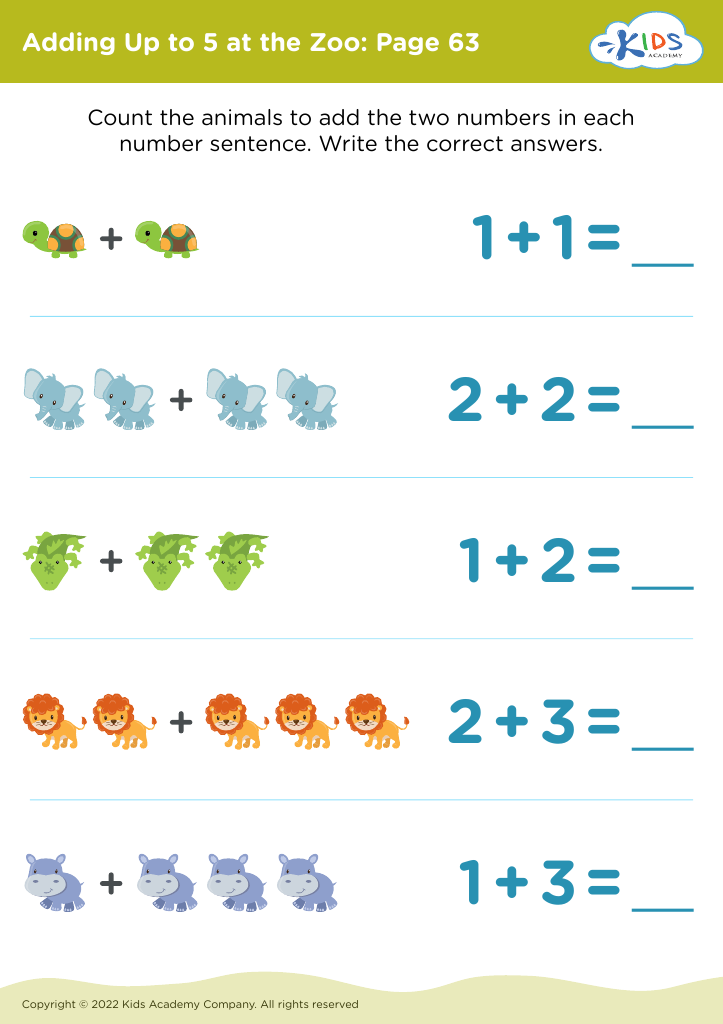
Adding Up to 5 at the Zoo: Page 63
Worksheet
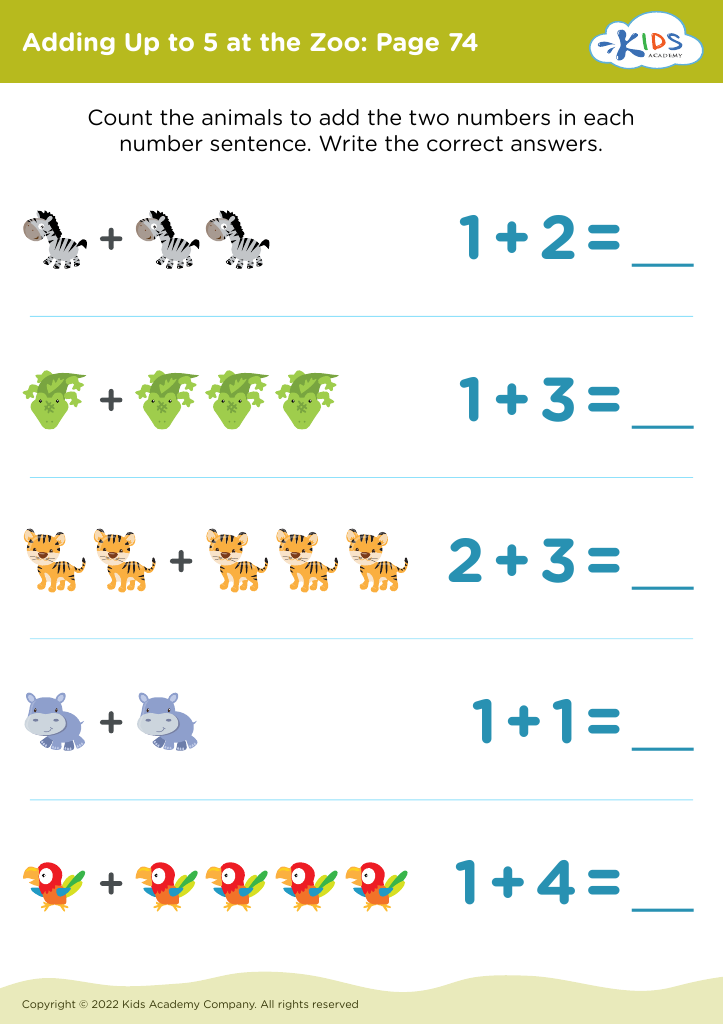
Adding Up to 5 at the Zoo: Page 74
Worksheet
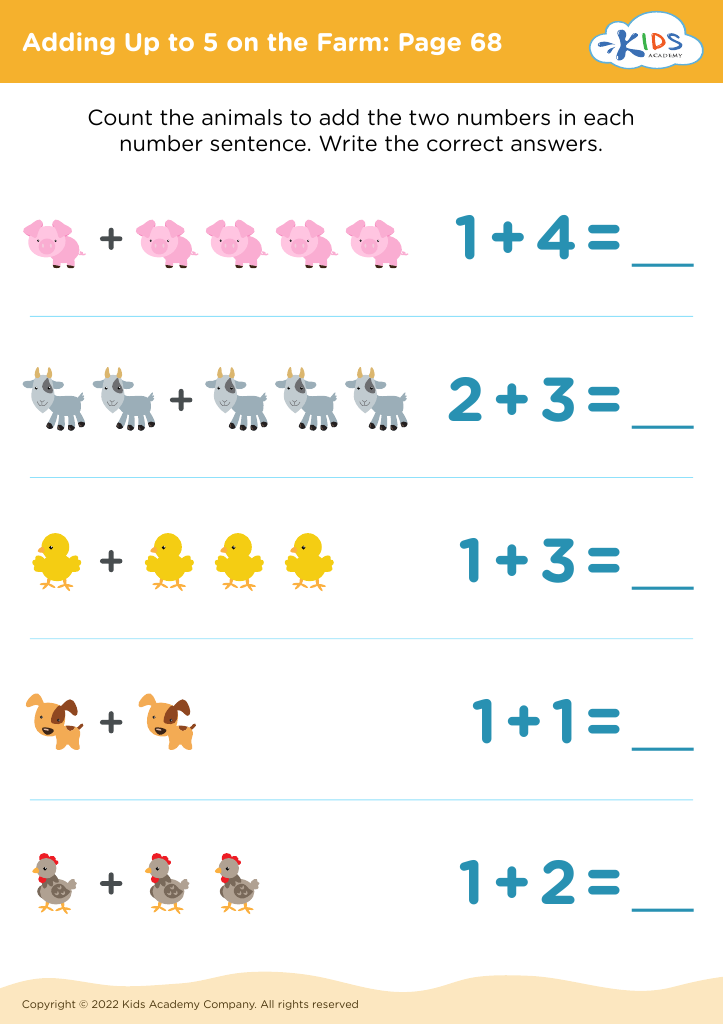
Adding Up to 5 on the Farm: Page 68
Worksheet
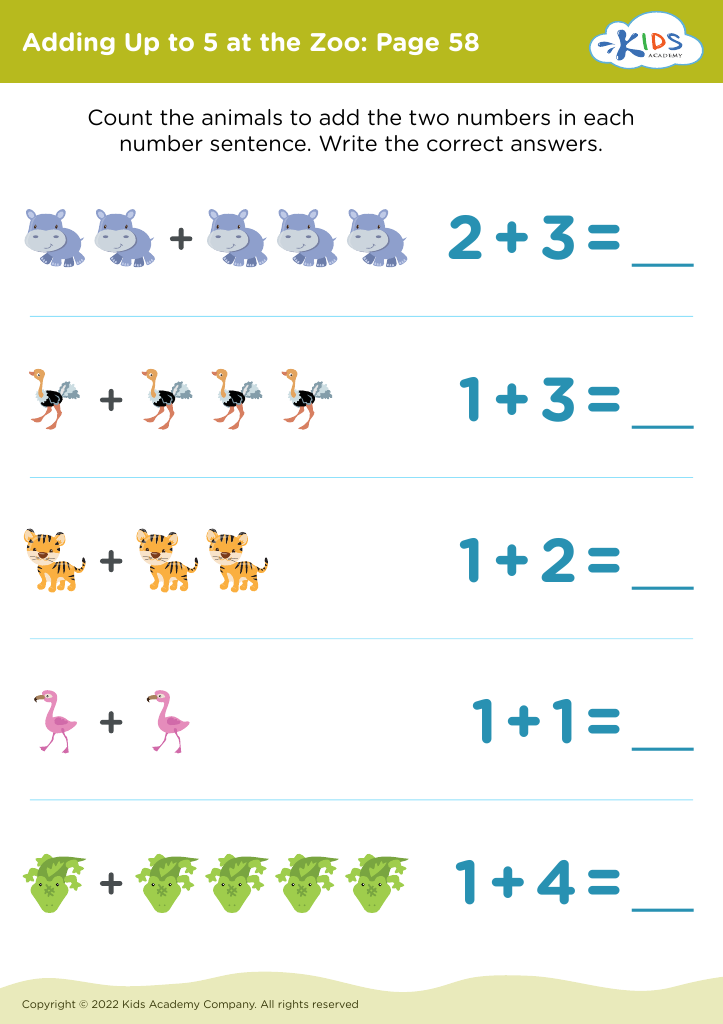
Adding Up to 5 at the Zoo: Page 58
Worksheet
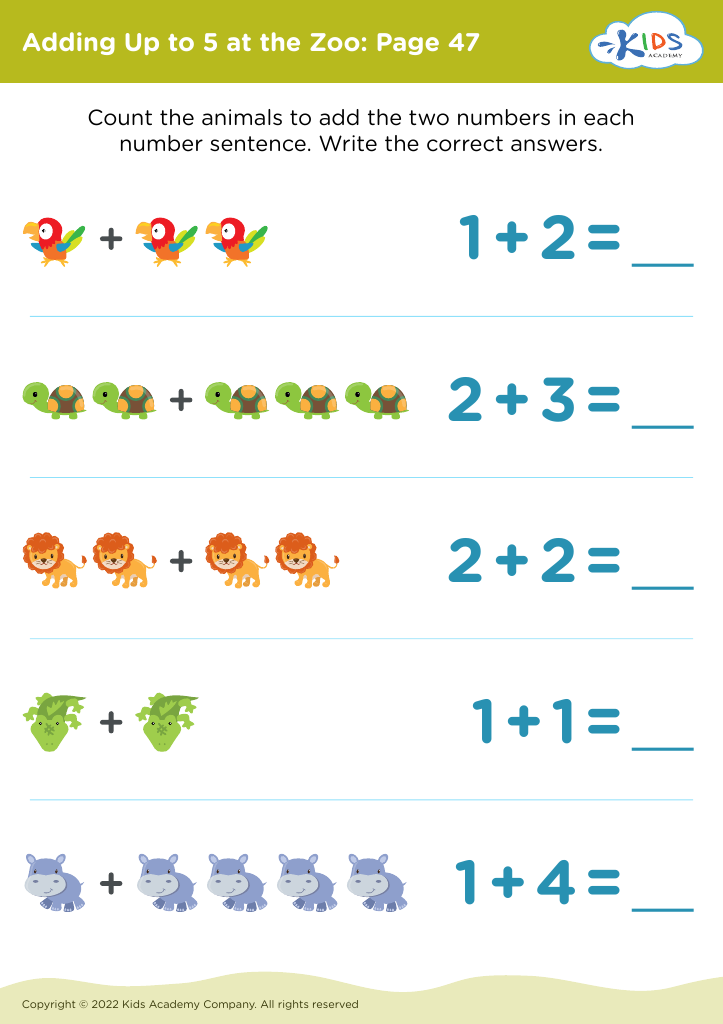
Adding Up to 5 at the Zoo: Page 47
Worksheet
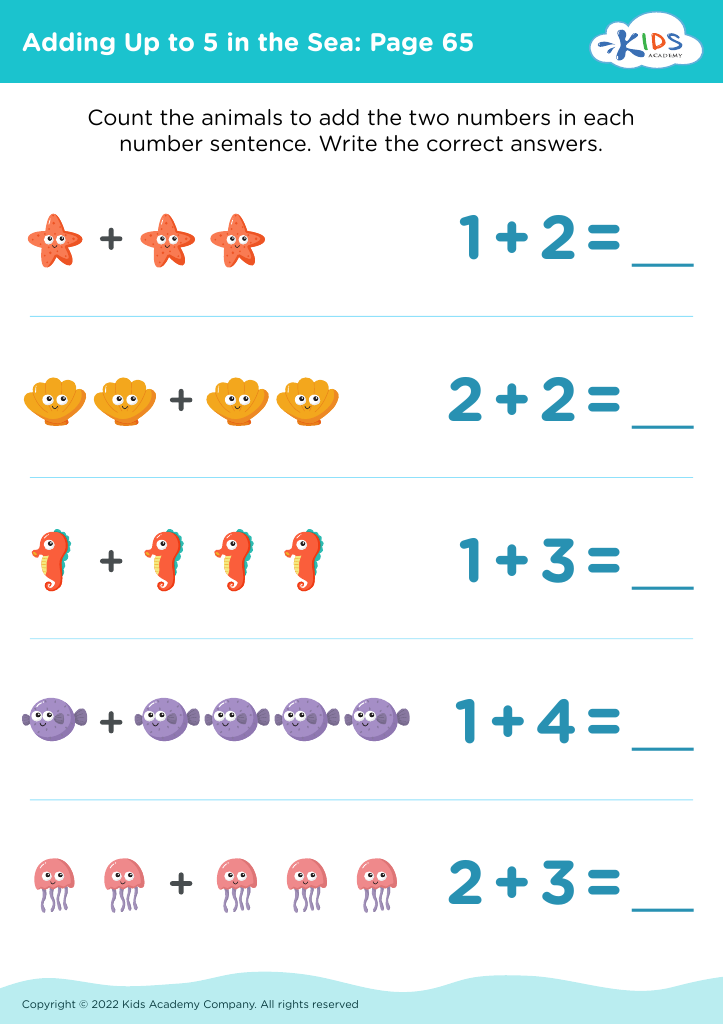
Adding Up to 5 in the Sea: Page 65
Worksheet
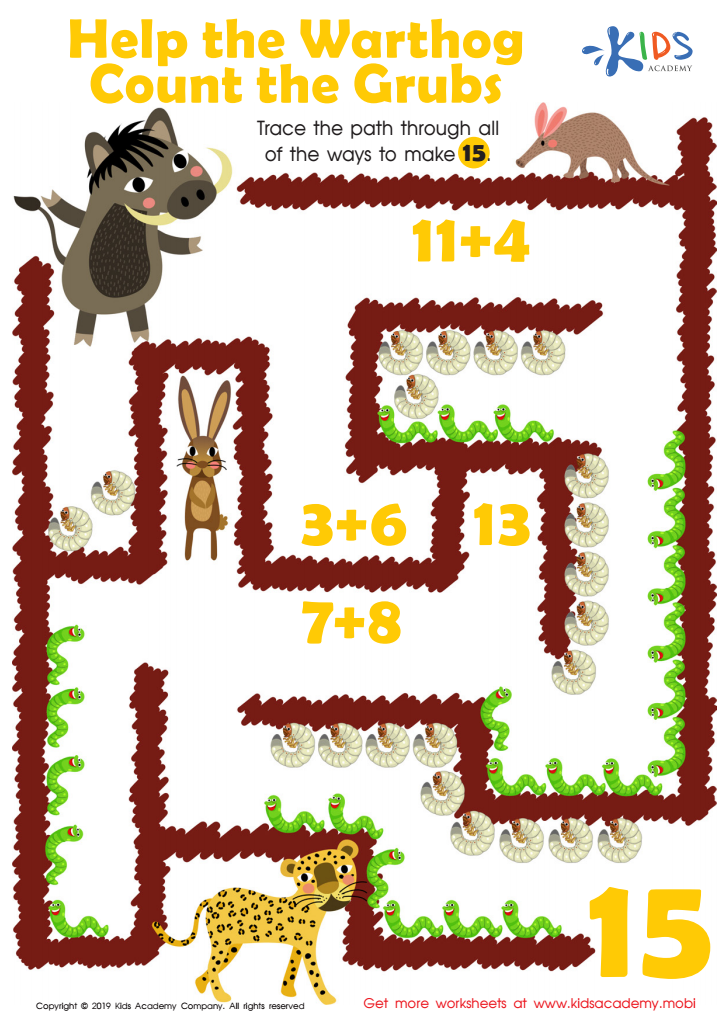
Help the Warthog Count the Grubs Worksheet

Help the Warthog Count the Grubs Worksheet

Test your kids' knowledge of wild animals. Ask them to name some they know, then have them identify the animals on this worksheet. If they can't, take the time to tell them the names. Finally, trace the warthog's path through the maze by solving the equations and going through paths that make 15.
Help the Warthog Count the Grubs Worksheet
Worksheet
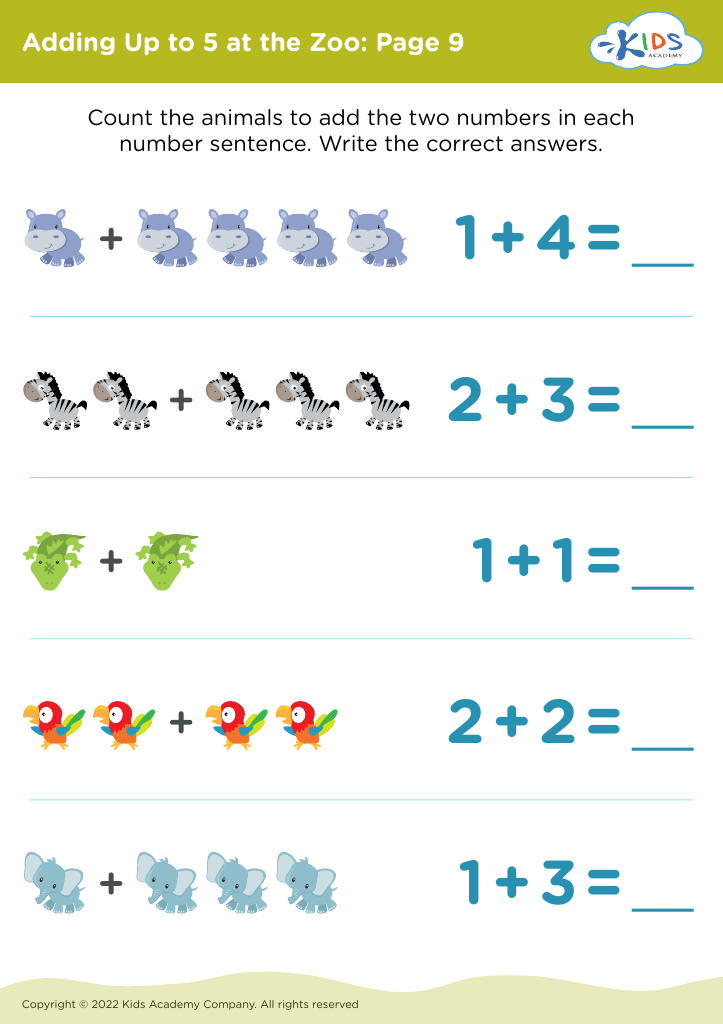
Adding Up to 5 at the Zoo: Page 9

Adding Up to 5 at the Zoo: Page 9

Adding Up to 5 at the Zoo: Page 9
Worksheet
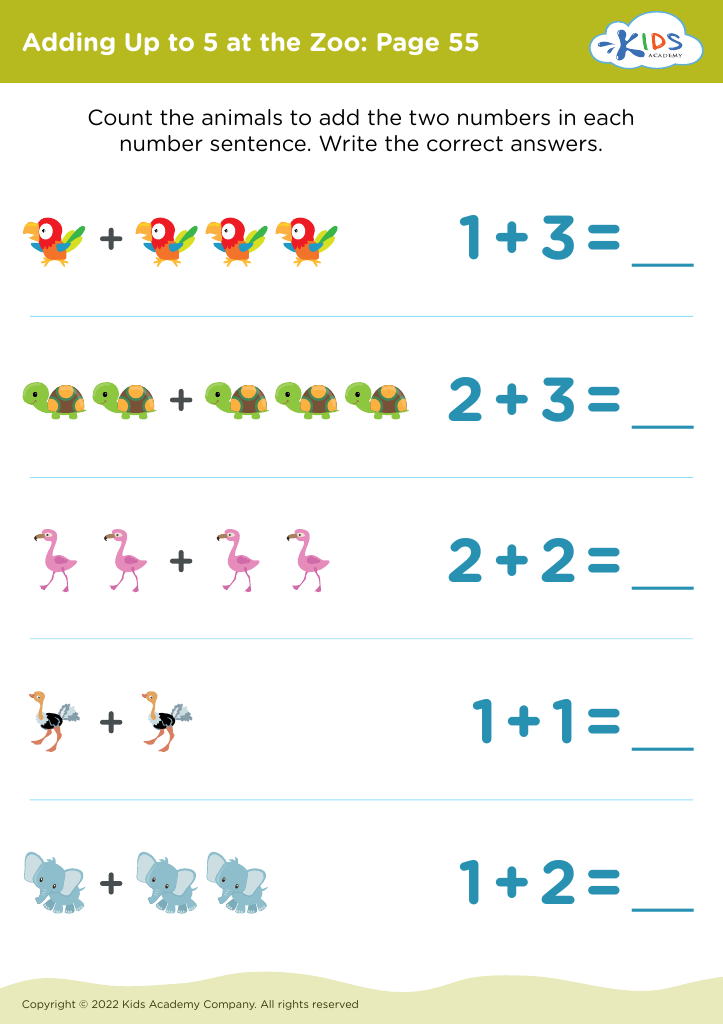
Adding Up to 5 at the Zoo: Page 55
Worksheet
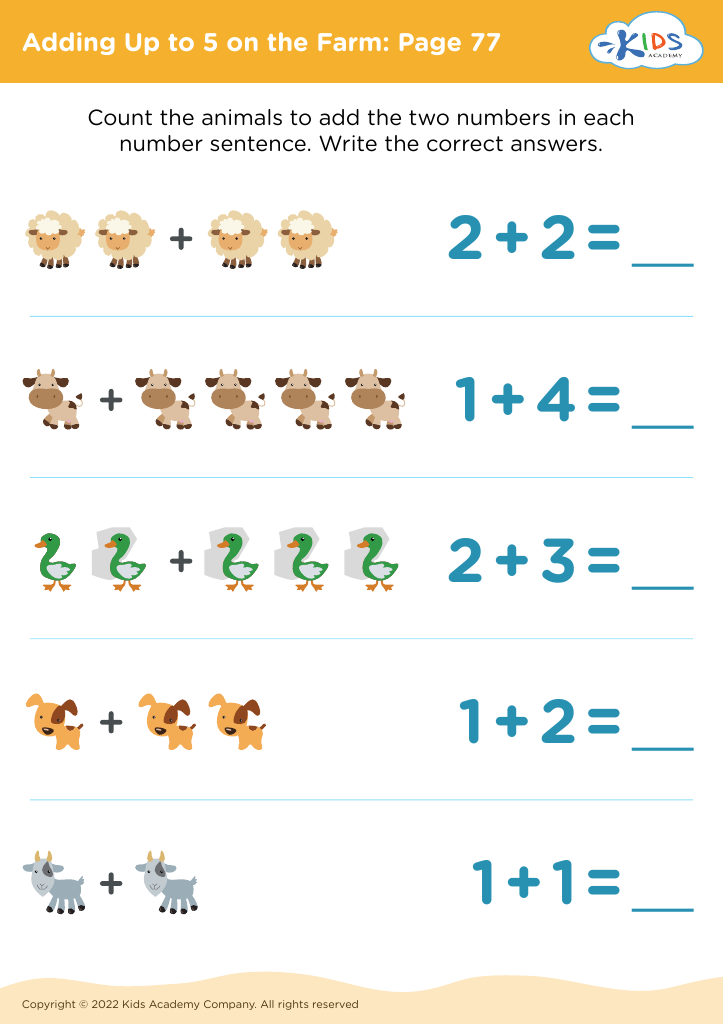
Adding Up to 5 on the Farm: Page 77
Worksheet
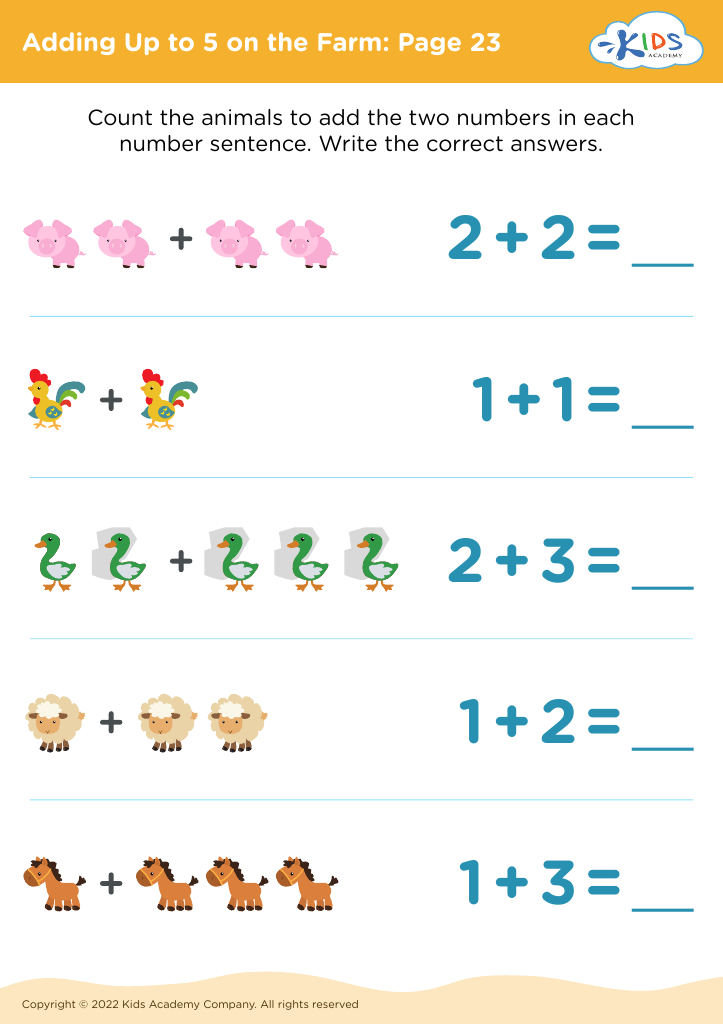
Adding Up to 5 on the Farm: Page 23
Worksheet
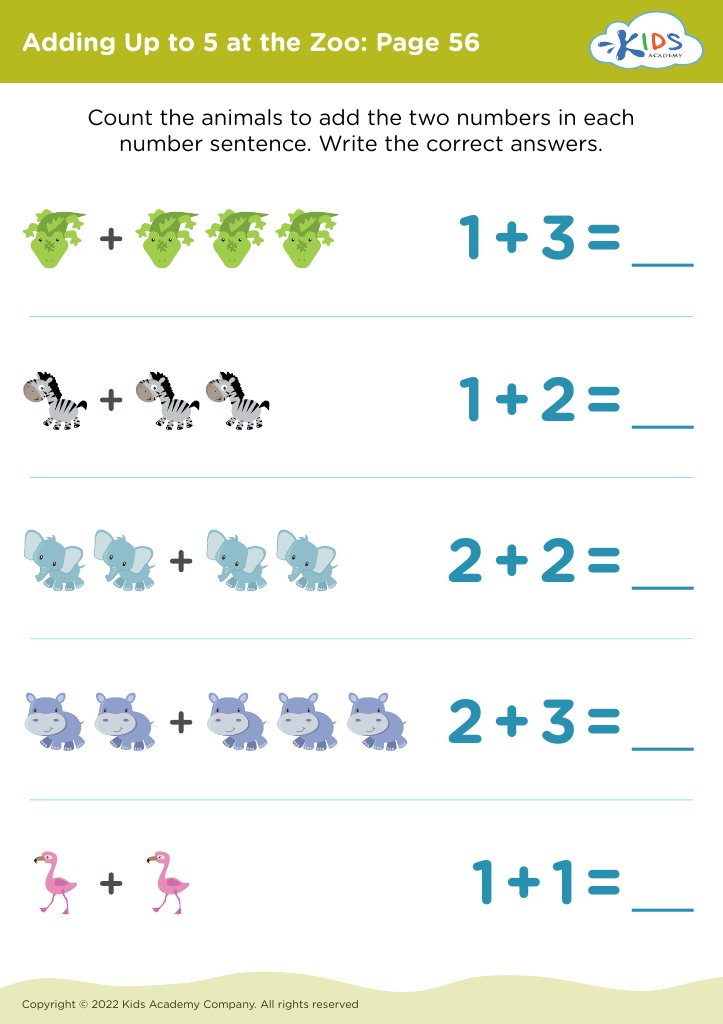
Adding Up to 5 at the Zoo: Page 56
Worksheet
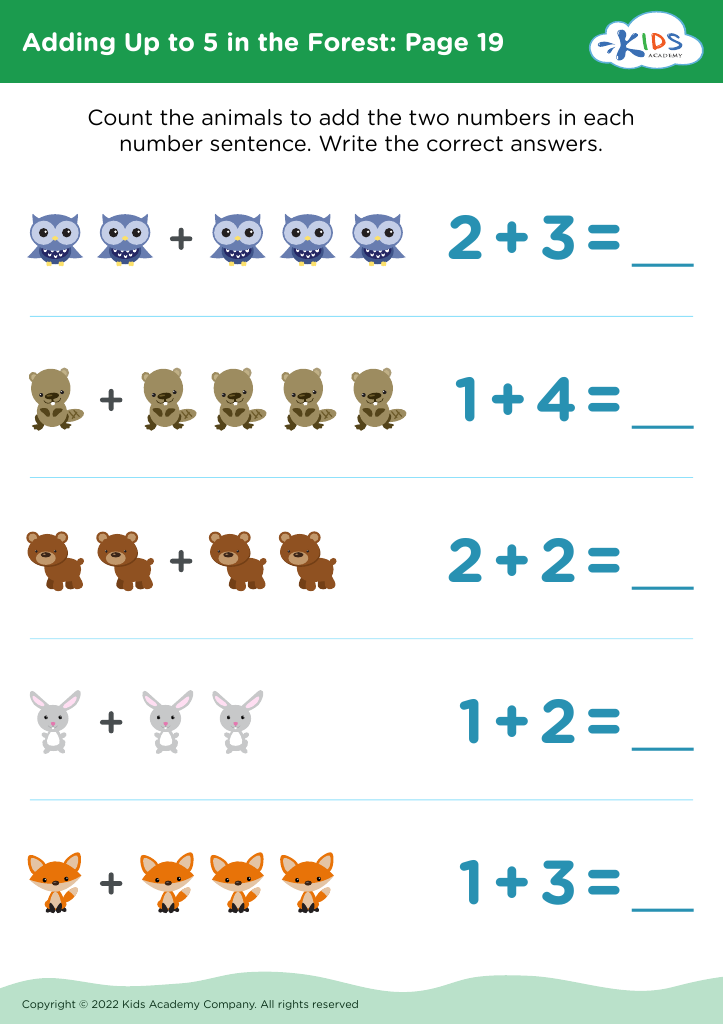
Adding Up to 5 in the Forest: Page 19
Worksheet
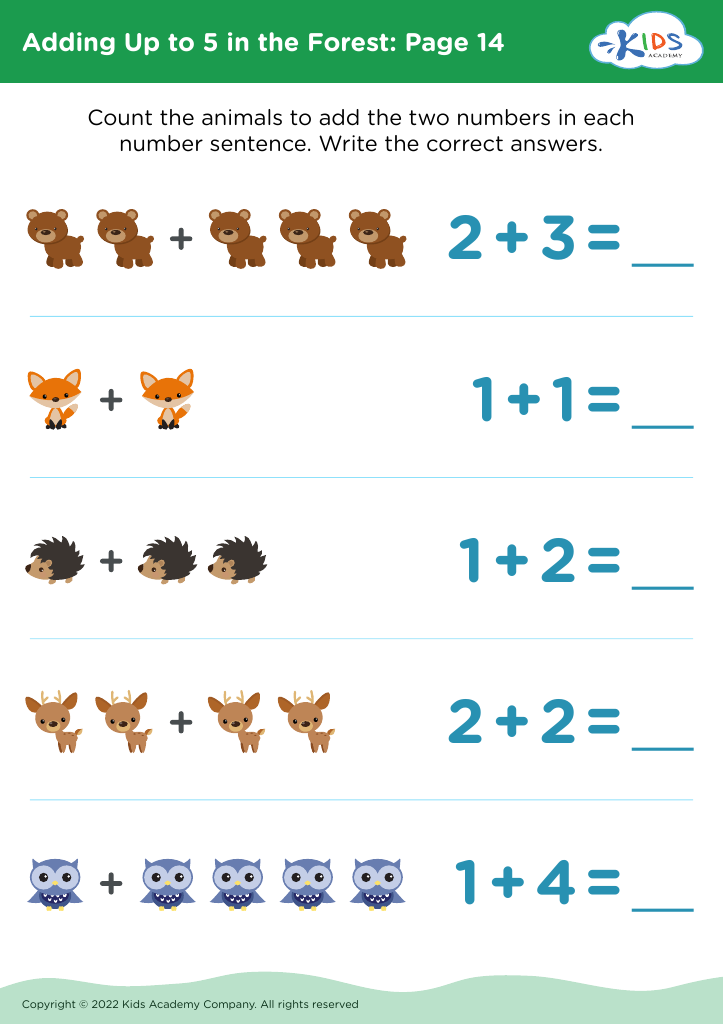
Adding Up to 5 in the Forest: Page 14
Worksheet
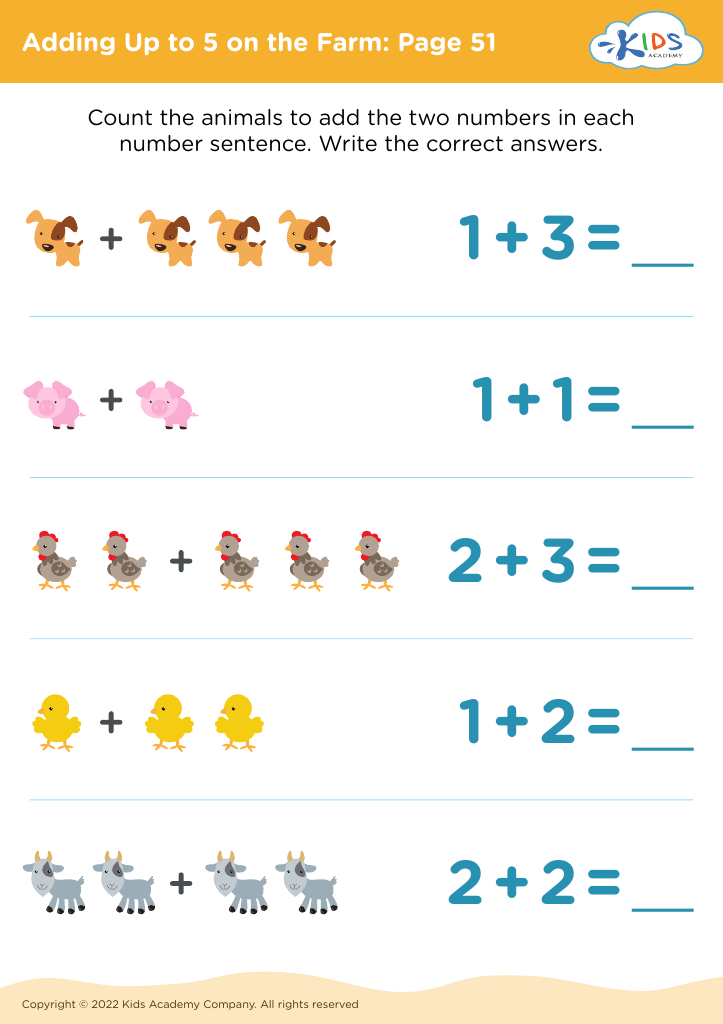
Adding Up to 5 on the Farm: Page 51
Worksheet
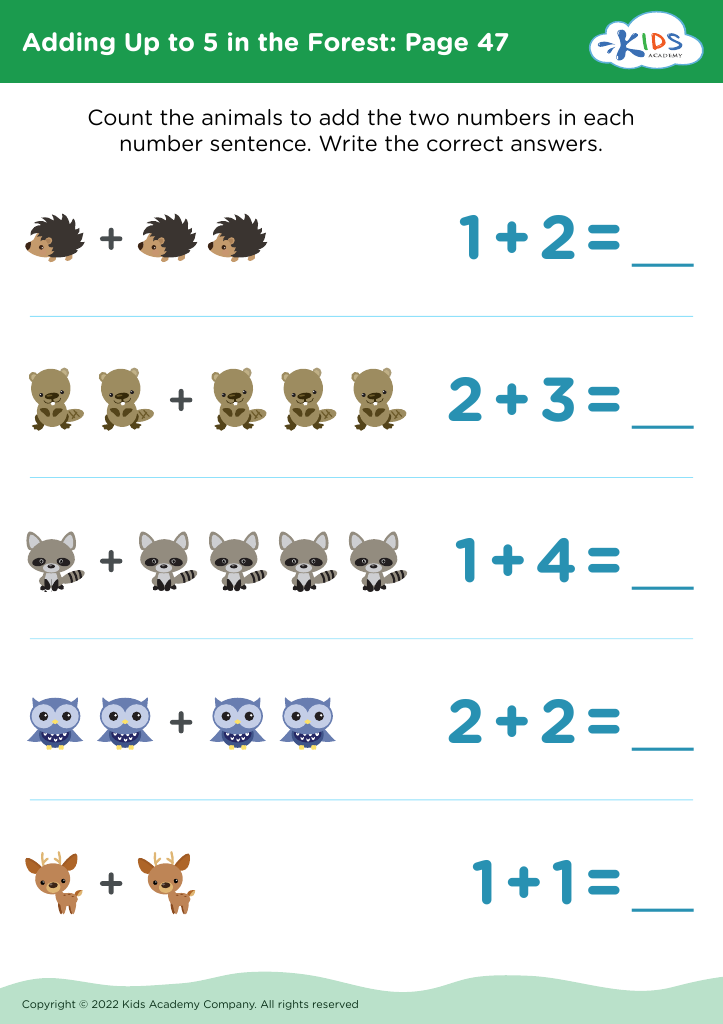
Adding Up to 5 in the Forest: Page 47
Worksheet
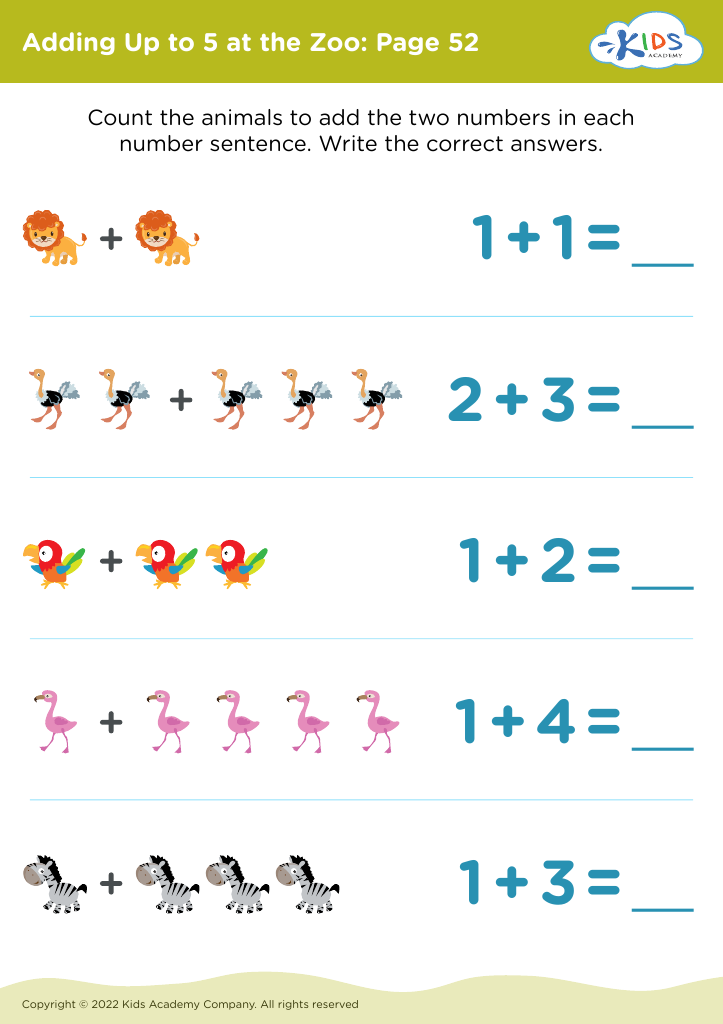
Adding Up to 5 at the Zoo: Page 52
Worksheet
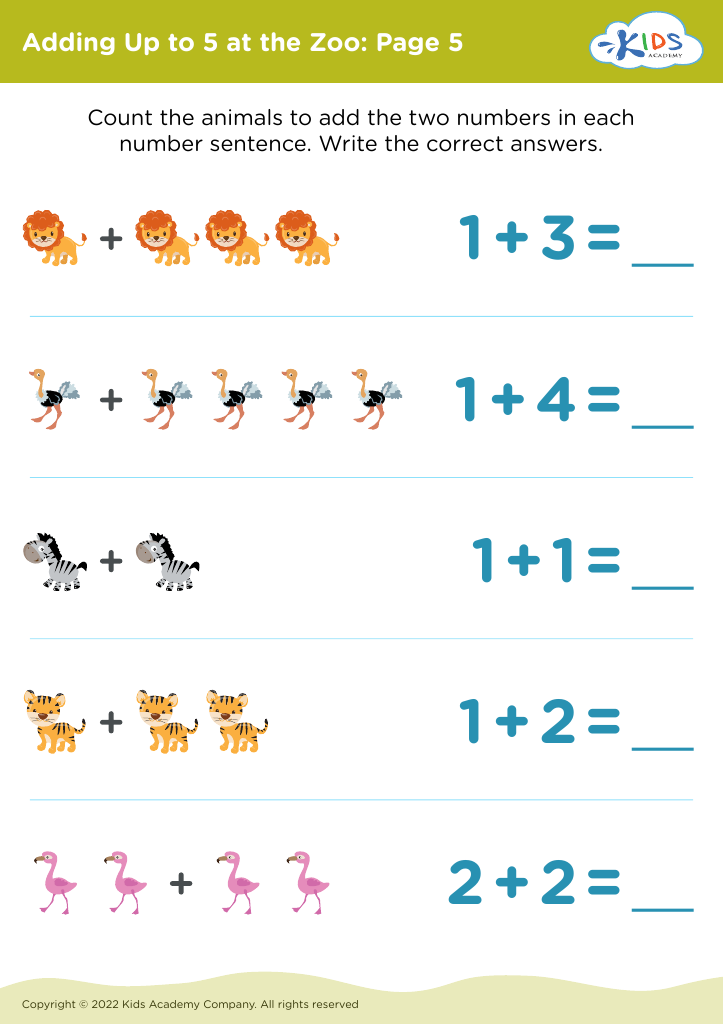
Adding Up to 5 at the Zoo: Page 5

Adding Up to 5 at the Zoo: Page 5

Adding Up to 5 at the Zoo: Page 5
Worksheet
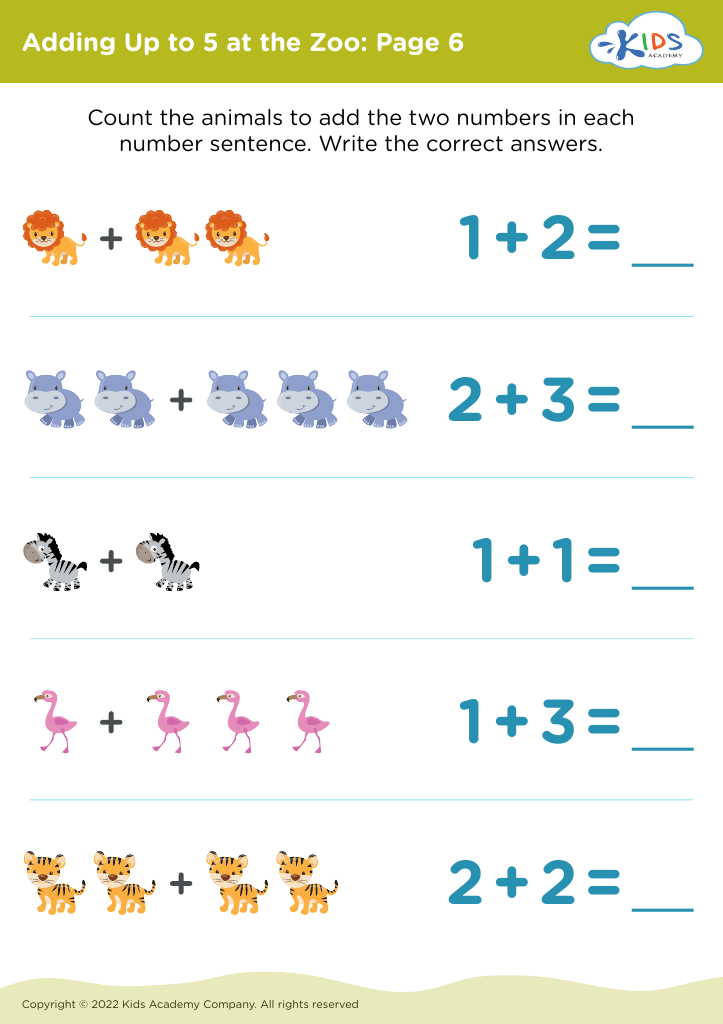
Adding Up to 5 at the Zoo: Page 6

Adding Up to 5 at the Zoo: Page 6

Adding Up to 5 at the Zoo: Page 6
Worksheet
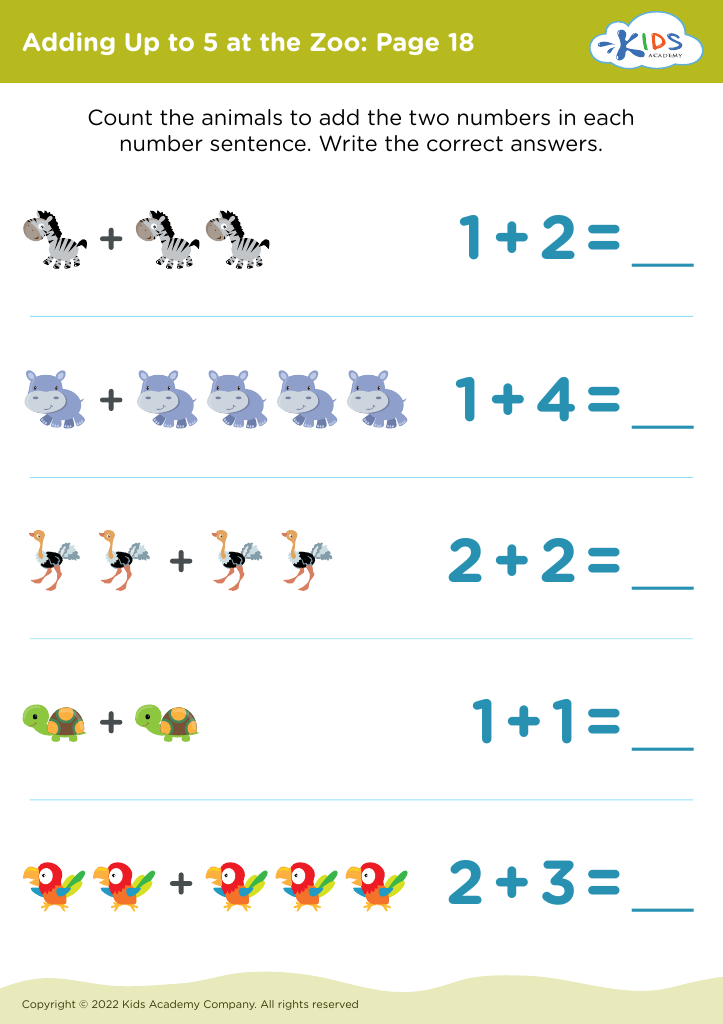
Adding Up to 5 at the Zoo: Page 18
Worksheet


Animal recognition addition is an engaging and playful way to introduce young children, particularly 4-year-olds, to basic math concepts. Parents and teachers should care about this approach because it combines learning with elements of fun that capture a child’s curiosity and creativity.

At this age, children are developing key cognitive skills, and using familiar and beloved subjects like animals can make math less intimidating. Incorporating animal recognition not only fosters an appreciation for wildlife and nature but also enhances vocabulary and can stimulate conversation about different species. Moreover, using tangible objects or illustrations—like counting teddy bears, zoo animals, or pets—gives children a visual and tactile method for grasping addition.

Furthermore, this playful form of learning supports social development, as kids can engage in group activities, promoting teamwork and cooperation. It may also instill a positive attitude toward learning math early on, setting the stage for future success in more complex subjects.

Ultimately, caring about animal recognition addition means recognizing the holistic benefits of combining play and academics, ensuring that learning is a joyful experience, while also appropriately preparing children for the educational paths ahead.