Fine motor development Addition Worksheets for 4-Year-Olds
3 filtered results
-
From - To
Enhance your 4-year-old's learning experience with our engaging Fine Motor Development Addition Worksheets! These thoughtfully designed worksheets combine fun and educational elements to strengthen fine motor skills while introducing early math concepts. Your child will enjoy tracing, coloring, and counting through various interactive activities, all aimed at making addition exciting. Each worksheet fosters hand-eye coordination and dexterity essential for writing and everyday tasks. With vibrant illustrations and age-appropriate challenges, our resources are ideal for both home and classroom use. Explore our collection of addition worksheets and watch your little one flourish in fine motor skills and early mathematics!
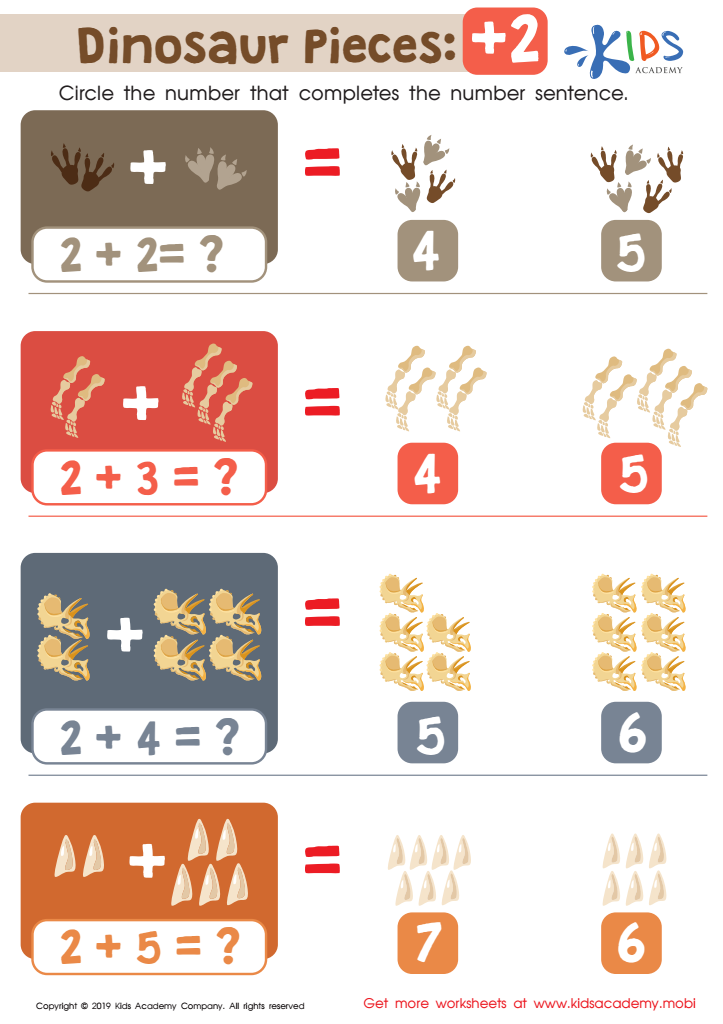
Dinosaur Pieces: +2 Worksheet
 Assign to My Students








Fine motor development is essential for 4-year-olds, as it lays the foundation for many daily life skills. Fine motor skills involve the coordination of small muscles, particularly in the hands and fingers, which are crucial for tasks such as writing, drawing, buttoning clothes, and using utensils.
Parents and teachers should care about fine motor development because these skills directly impact a child's ability to navigate both academic and social environments. For instance, as children become more adept at holding crayons or scissors, they gain confidence in expressing themselves creatively. Furthermore, strong fine motor skills enhance a child's readiness for school-related tasks like coloring within lines or writing letters.
Supporting fine motor development also promotes problem-solving and critical thinking. Engaging children in activities such as puzzles, building blocks, or arts and crafts not only sharpens their dexterity, but also fosters cognitive development through planning and execution.
Additionally, fine motor skills are linked to emotional development. Mastering these abilities can lead to a sense of achievement, which boosts self-esteem. Involving parents and teachers in reinforcing fine motor activities creates a supportive environment that nurtures essential skills, ultimately benefiting children as they grow.








