
Fine motor skills (drawing lines) Addition Worksheets for 4-Year-Olds
3 filtered results
Difficulty Level
Grade
Age
-
From - To
Subject
Activity
Standards
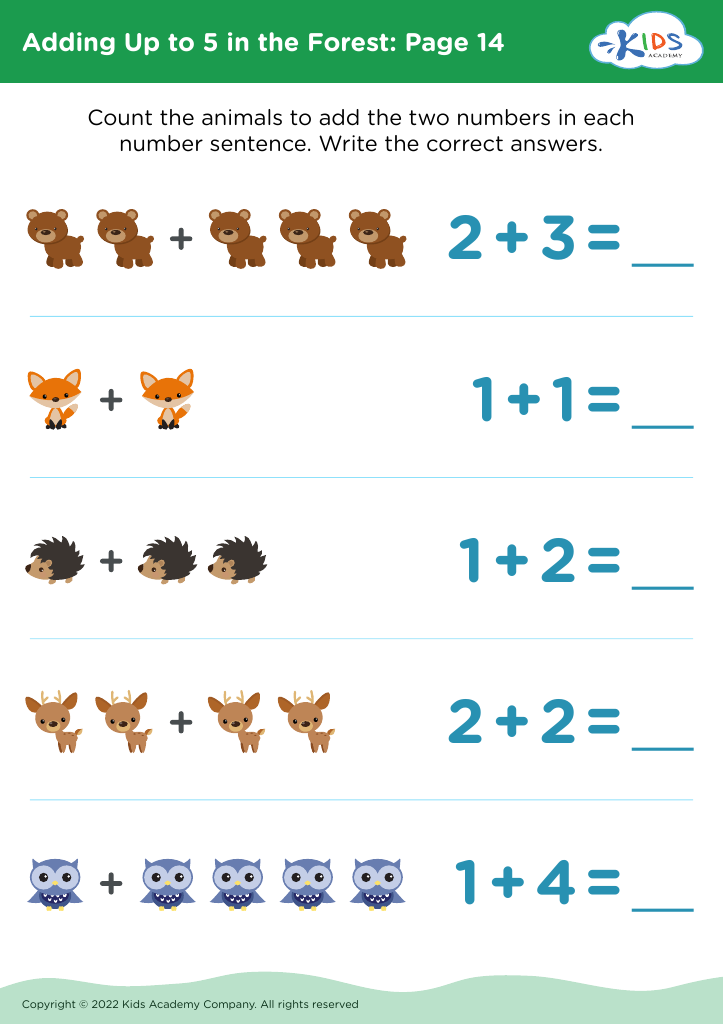
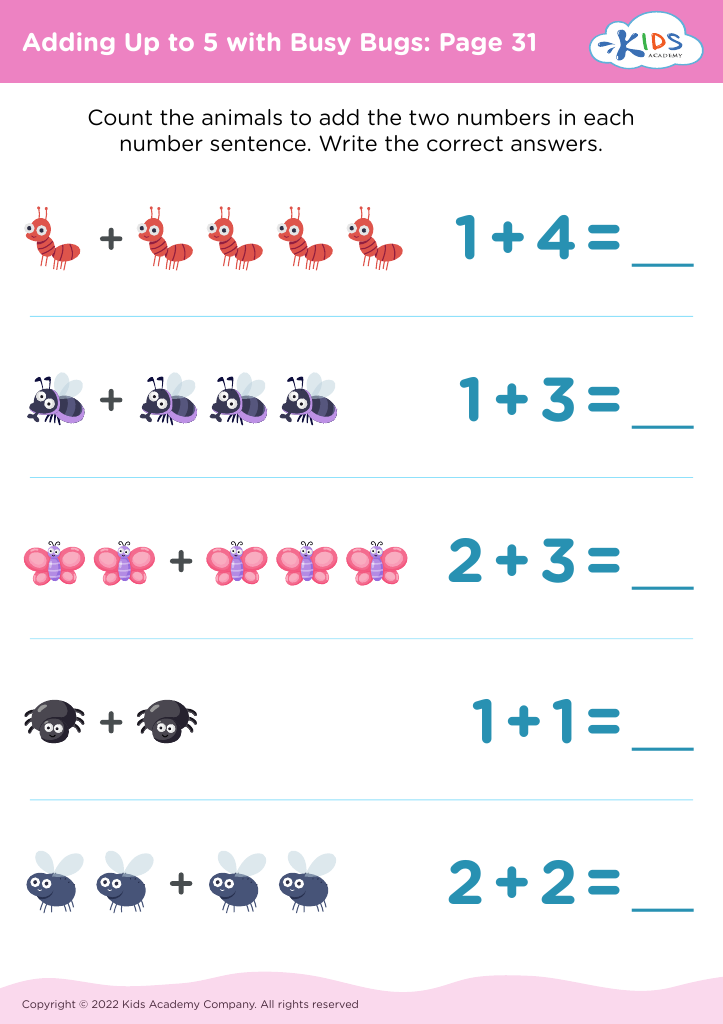
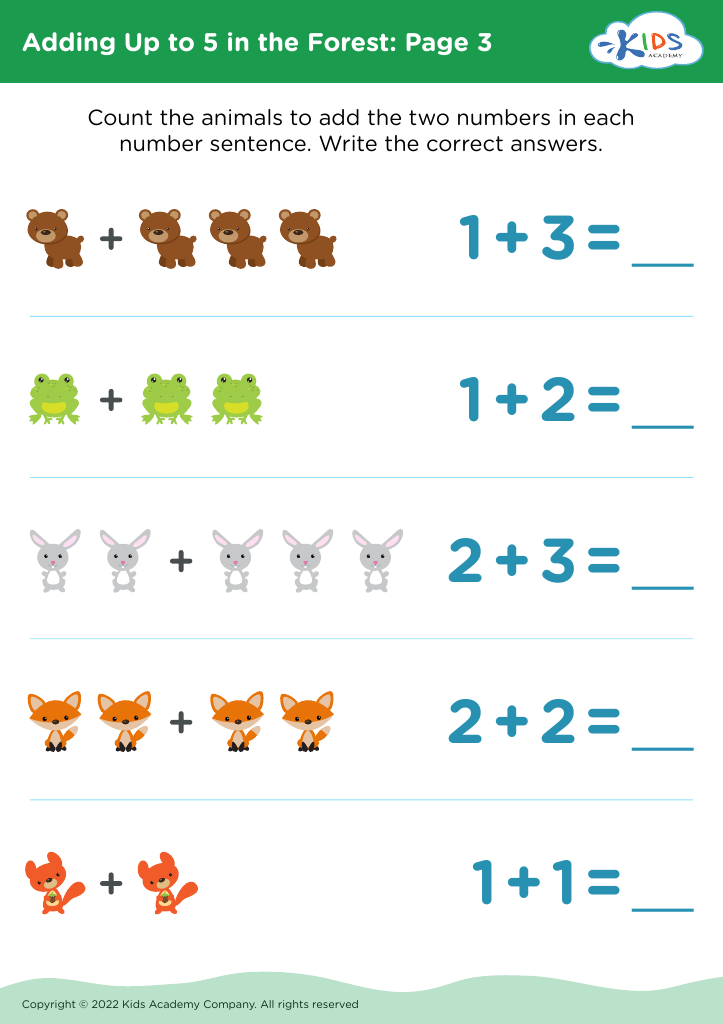
Our "Fine Motor Skills (Drawing Lines) Addition Worksheets for 4-Year-Olds" are specially designed to enhance young learners' math abilities while improving their fine motor skills. These engaging worksheets combine fun, colorful line-drawing activities with basic addition problems, helping children develop hand-eye coordination, control, and precision. Perfectly suited for preschoolers, each worksheet encourages practice through interactive and educational exercises that make learning enjoyable. Boost your child’s confidence and support their early math and fine motor skill development with these expertly crafted worksheets, suitable for both classroom and home use. Unlock your child's potential and watch their skills grow!
Favorites
With answer key
Interactive
Join Kids Academy for Free
Who is primarily going to use this learning content?







.jpg)
Parents and teachers should care about fine motor skills, such as drawing lines, in addition to basic addition for 4-year-olds because these skills are foundational for a child's overall development and future academic success. Fine motor skills involve the coordination of small muscles in the hands and fingers, which are crucial for everyday tasks such as writing, buttoning clothes, and using utensils. By practicing drawing lines, children enhance their hand-eye coordination and muscle control, which directly benefits their ability to write letters and numbers accurately.
Moreover, early exposure to addition helps children develop their mathematical thinking and problem-solving abilities. At this age, children are highly receptive to new information, and introducing basic math skills can foster a positive attitude towards learning. Combining fine motor practice with simple addition tasks makes learning more engaging and holistic. For example, drawing objects and counting them for addition exercises simultaneously improves both sets of skills.
Investing time and effort in developing fine motor skills and basic arithmetic in young children sets a strong foundation for essential academic competencies. This dual focus ensures that children enter school better prepared, confident, and equipped to tackle more complex skills and concepts as they grow older.








