Sea creatures identification Addition Worksheets for 4-Year-Olds
3 filtered results
-
From - To
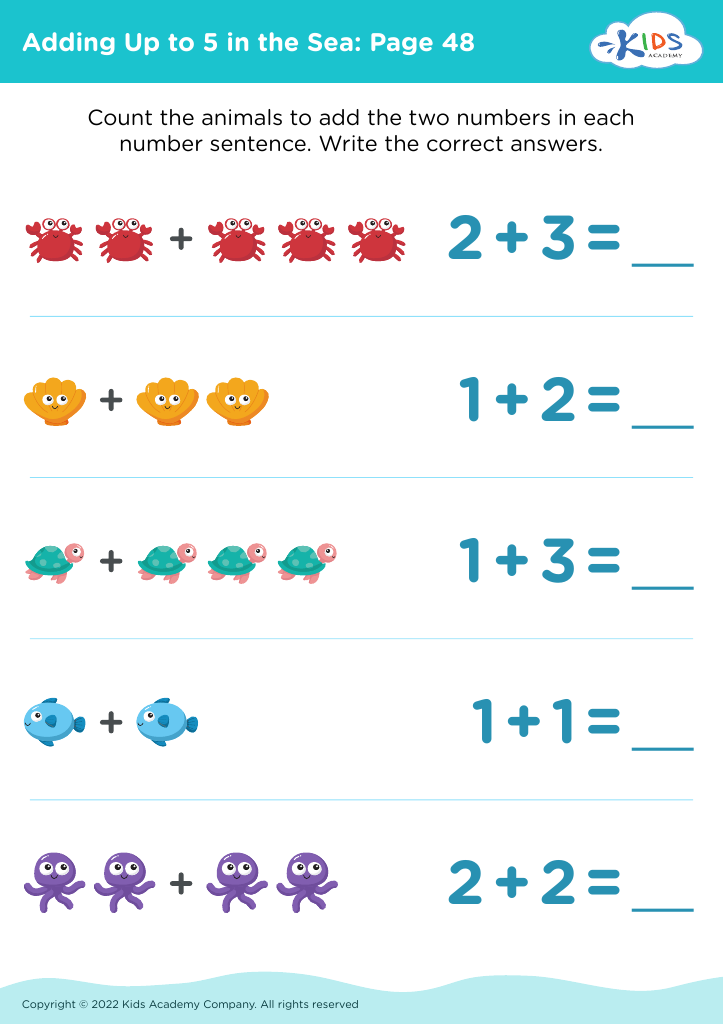
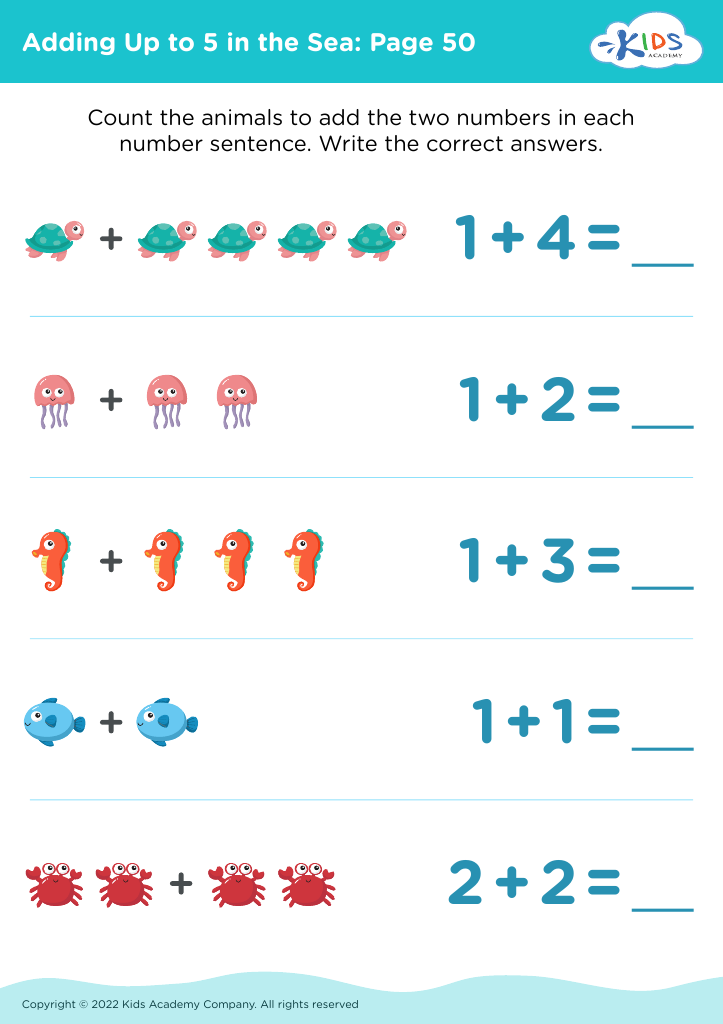
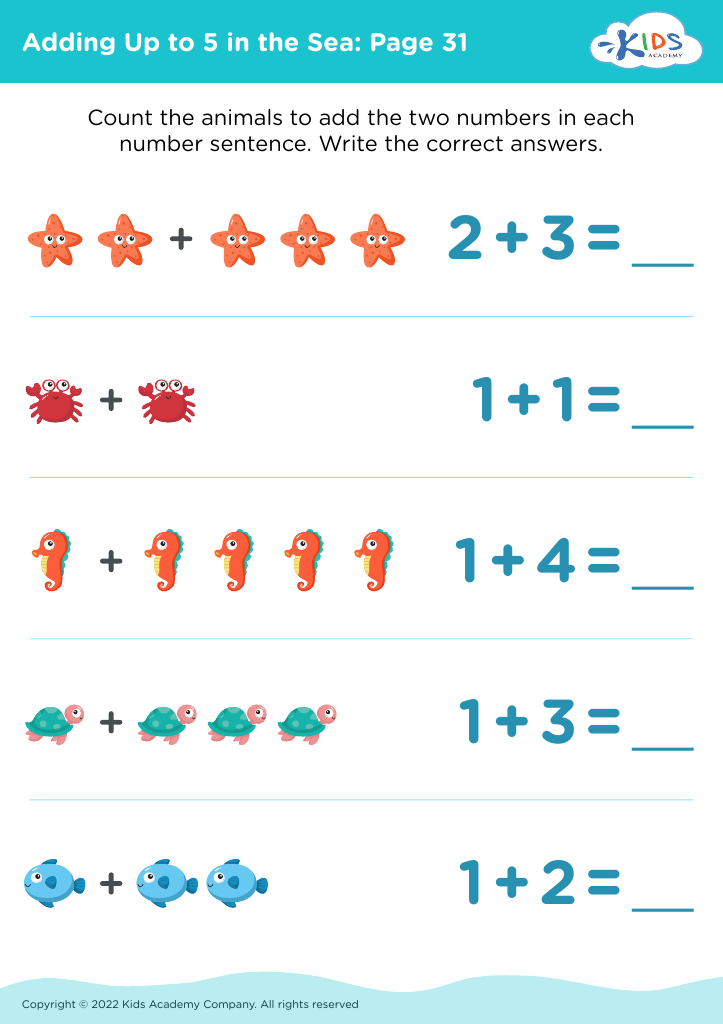
Explore the enchanting world of sea creatures with our Sea Creatures Identification Addition Worksheets for 4-year-olds! These vibrant, engaging worksheets are designed to help young learners combine fun with foundational math skills. Through colorful illustrations of fish, dolphins, and starfish, children will practice addition while developing their knowledge of various sea animals. Each worksheet encourages counting, problem-solving, and critical thinking, making learning both enjoyable and effective. Perfect for parents and educators alike, our worksheets provide a playful approach to math, fostering a love for numbers and nature. Dive into this educational adventure and watch your child's skills flourish!







.jpg)
Teaching 4-year-olds about sea creature identification has numerous benefits for both parents and teachers. First, it fosters a child’s natural curiosity and instinct for exploration. Learning about different sea creatures like fish, dolphins, and octopuses stimulates their interest in the world around them, making science fun and engaging. This kind of learning helps develop critical thinking skills as children classify and differentiate between various species.
Moreover, understanding sea creatures promotes environmental awareness. By introducing young children to marine life, parents and teachers can cultivate a sense of responsibility for the ocean and its ecosystems. This early conservation education lays the groundwork for future stewardship of the environment.
Additionally, this topic enhances language development. Identifying and naming sea creatures improves vocabulary and communicative skills, as children learn terms specific to different species and their characteristics.
Furthermore, incorporating activities like coloring, storytelling, or interactive games about sea creatures encourages creativity and social skills, as children often work in groups or pairs. Ultimately, when parents and teachers prioritize sea creature identification, they enrich the educational experience and help nurture well-rounded, environmentally conscious, and curious learners.








