Basic math abilities Math Worksheets for 4-Year-Olds
3 filtered results
-
From - To
Explore our engaging Basic Math Abilities Worksheets for 4-year-olds, designed to introduce young learners to foundational math concepts in a fun and interactive way. Our worksheets focus on essential skills such as counting, number recognition, simple addition and subtraction, and pattern identification. Engaging illustrations and activities keep kids motivated while fostering a strong mathematical foundation. Perfect for home or classroom use, these worksheets encourage children to develop critical thinking and problem-solving skills. Boost your child's confidence in math and make learning enjoyable with our expertly crafted resources. Start your child's math journey today with our printable worksheets!
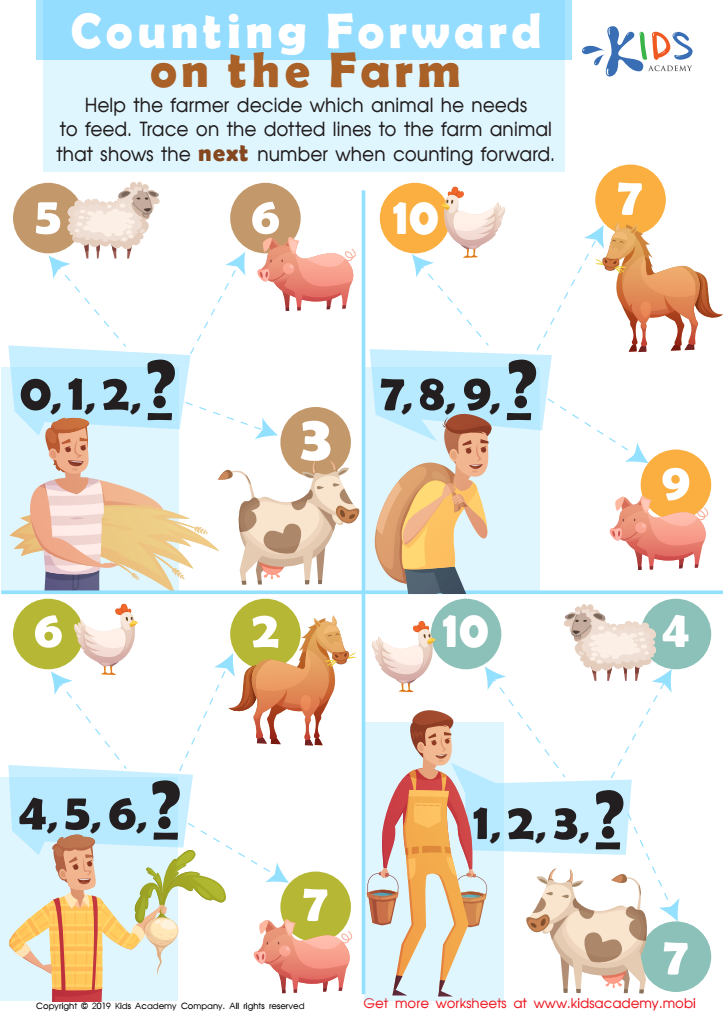
Counting Forward On the Farm Worksheet
 Assign to My Students
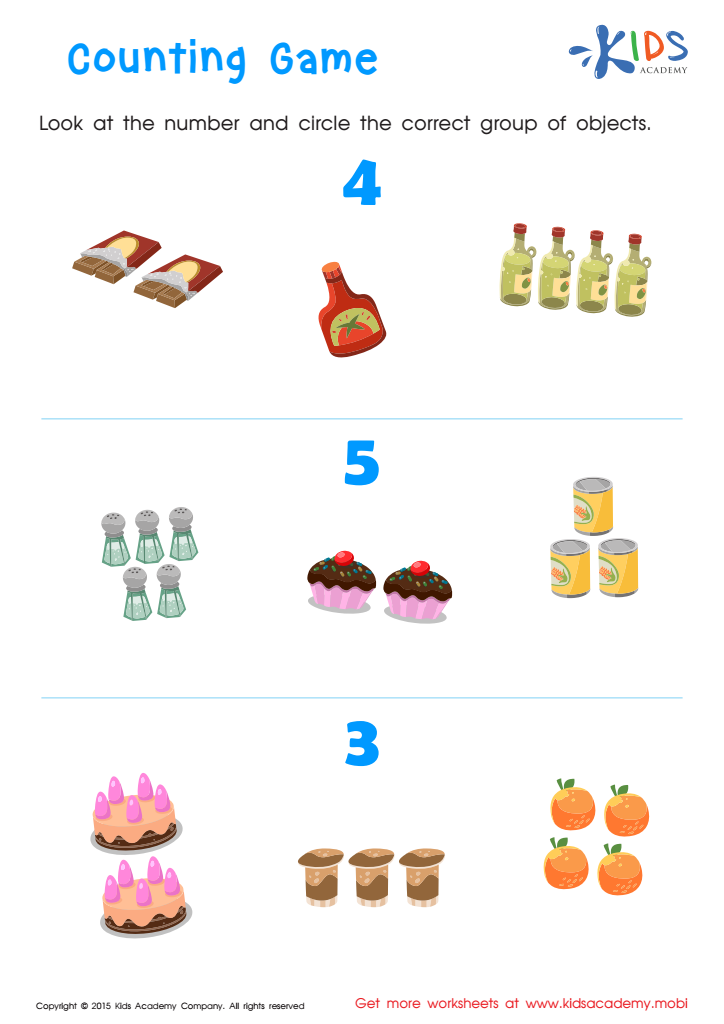
Counting Worksheet








Basic math abilities in 4-year-olds lay the groundwork for future academic success and everyday problem-solving skills. At this age, children begin to grasp foundational concepts like counting, number recognition, and basic addition and subtraction, often through engaging activities such as games, songs, and hands-on manipulatives. These early experiences foster a love for math by associating learning with enjoyment, which is critical at this formative stage.
Parents and teachers should care because these foundational skills promote cognitive development and enhance a child's ability to think critically. Early math skills are linked to improved performance in higher grades, indicating that early intervention can potentially prevent difficulties later on. Furthermore, mathematics is integral not just in academics but in everyday life, impacting areas such as budgeting, cooking, and time management.
Moreover, engaging children in basic math develops their language skills, as they learn to articulate quantities and comparisons. This multidimensional approach to learning nurtures a holistic educational experience. Ultimately, instilling strong math abilities in preschoolers empowers them with essential tools for exploring their world, building confidence, and setting the stage for lifelong learning. Investing time and attention to these early math experiences is crucial for every child’s development.








