Categorization skills Numbers 0–10 Worksheets for 4-Year-Olds
3 filtered results
Difficulty Level
Grade
Age
-
From - To
Subject
Activity
Standards
Discover our engaging "Categorization Skills Numbers 0–10 Worksheets for 4-Year-Olds" designed to bolster your child's early math abilities. Perfectly tailored for preschoolers, these interactive worksheets help children learn to categorize and recognize numbers from 0 to 10 through enjoyable activities. By sorting, matching, and identifying numbers in various contexts, kids develop critical thinking and problem-solving skills. These worksheets foster a strong mathematical foundation, setting the stage for future success. Ideal for both classroom settings and at-home learning, our unique exercises combine fun and learning to make early childhood education a rewarding experience. Download today and watch your child thrive!
Favorites
With answer key
Interactive
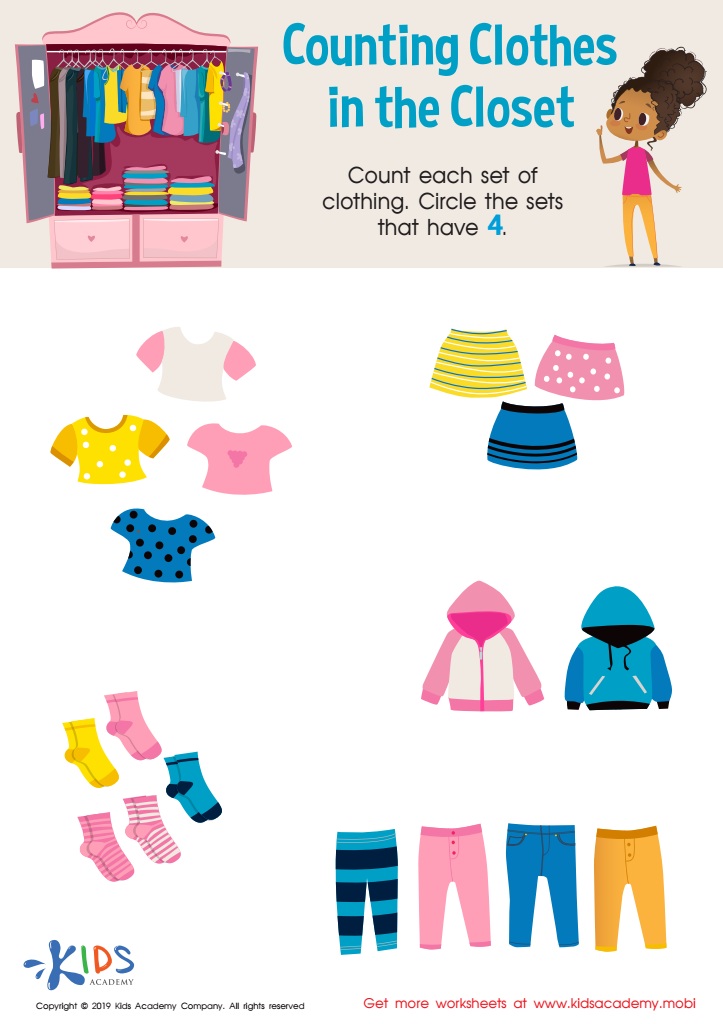
Counting Clothes Worksheet
Help your kids become better counters with fun exercises and objects they can relate to. Print out this worksheet and assist your kid in counting 5 sets of clothing. Have them circle the sets that have 4 so they can master counting small numbers. Strengthen their math skills with your help.
 Assign to My Students
Counting Clothes Worksheet
Worksheet
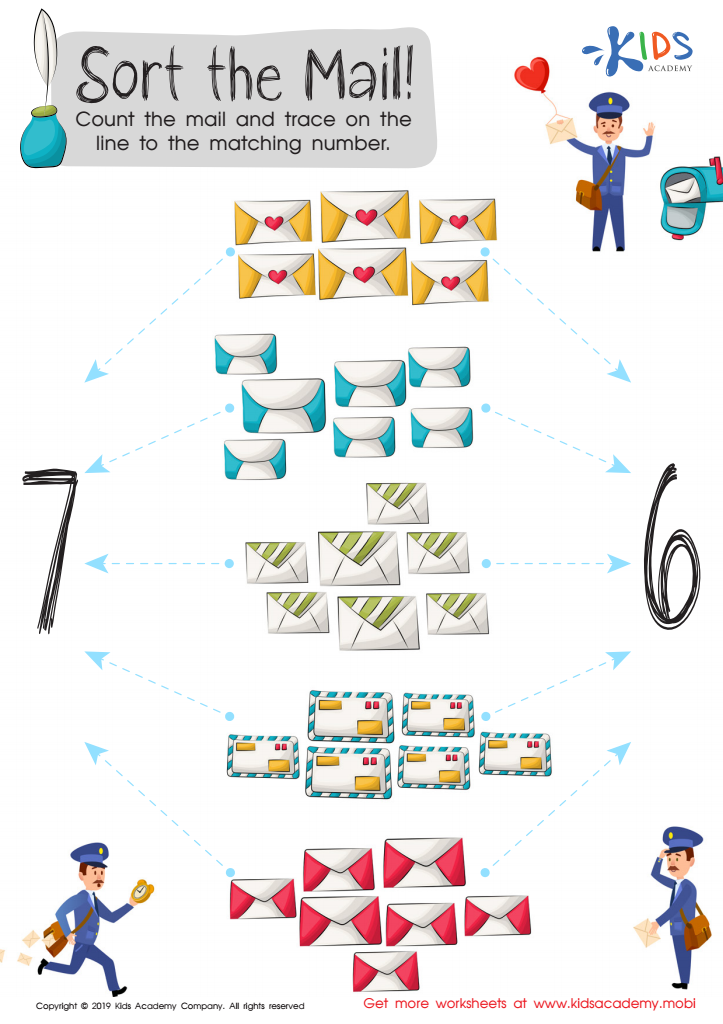
Sort the Mail Worksheet
Kids can learn number sense with one-to-one representation! This worksheet helps them connect groups of letters with the correct numbers by tracing the lines. They'll count and decide whether each group has 6 or 7 envelopes. This exercise gives children a better understanding of numerical representation.
Sort the Mail Worksheet
Worksheet
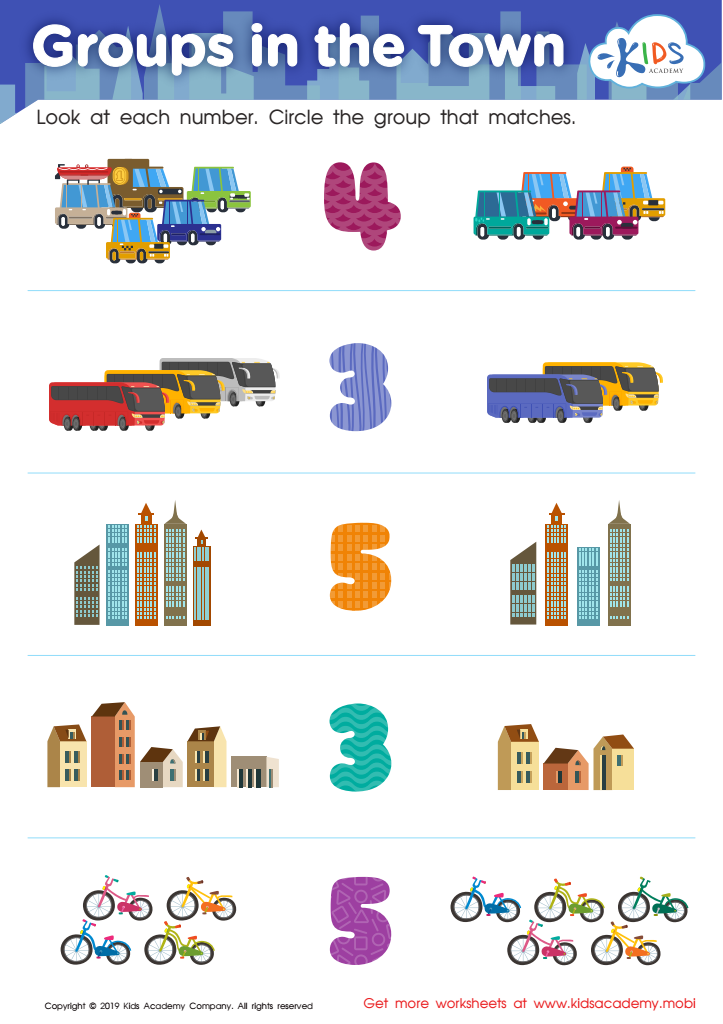
Groups in the Town Worksheet
Help your kids learn to count with this worksheet! Look at each number of objects and circle the group that matches. This simple activity can give them extra practice to support what they learn in school. Learning doesn't have to be a struggle; make it fun and interactive with this worksheet.
Groups in the Town Worksheet
Worksheet
Join Kids Academy for Free
Who is primarily going to use this learning content?








Parents and teachers should prioritize the development of categorization skills and number recognition (0–10) in 4-year-olds because these foundational abilities form the basis for more advanced mathematical and cognitive skills. Categorization helps children organize their world, enhancing their ability to make sense of new information by grouping objects based on common characteristics. This practice not only advances their analytical skills but also boosts memory and learning efficiency.
Understanding numbers 0-10 is equally crucial as it introduces children to the fundamentals of mathematics. Early number recognition is associated with basic counting, which is key for performing more complex arithmetic operations in the future. Recognizing numbers helps children understand quantity and scale, laying the groundwork for everyday tasks such as counting objects, measuring, and judging amounts.
Moreover, both categorization and number skills foster problem-solving abilities and logical thinking. Activities involving sorting and counting, such as grouping toys by color or counting snacks, naturally integrate learning into play. By encouraging these activities, parents and teachers can make learning fun and engaging, thereby promoting a positive attitude toward mathematics and cognitive tasks from an early age. This early stimulation supports academic success and confidence as children progress through their education.