Shape Recognition Numbers up to 100 Worksheets for 4-Year-Olds
3 filtered results
-
From - To
Introduce your little learner to the world of numbers and shapes with our "Shape Recognition Numbers up to 100 Worksheets for 4-Year-Olds." Designed specifically for young minds, these engaging worksheets help children identify and enjoy recognizing various shapes while learning numbers up to 100. Each activity is crafted to enhance their cognitive development and fine motor skills. With bright illustrations and fun exercises, kids will have a blast while mastering essential math concepts, setting a strong foundation for future learning. Help your child develop confidence and a love for learning with our delightful educational resources.
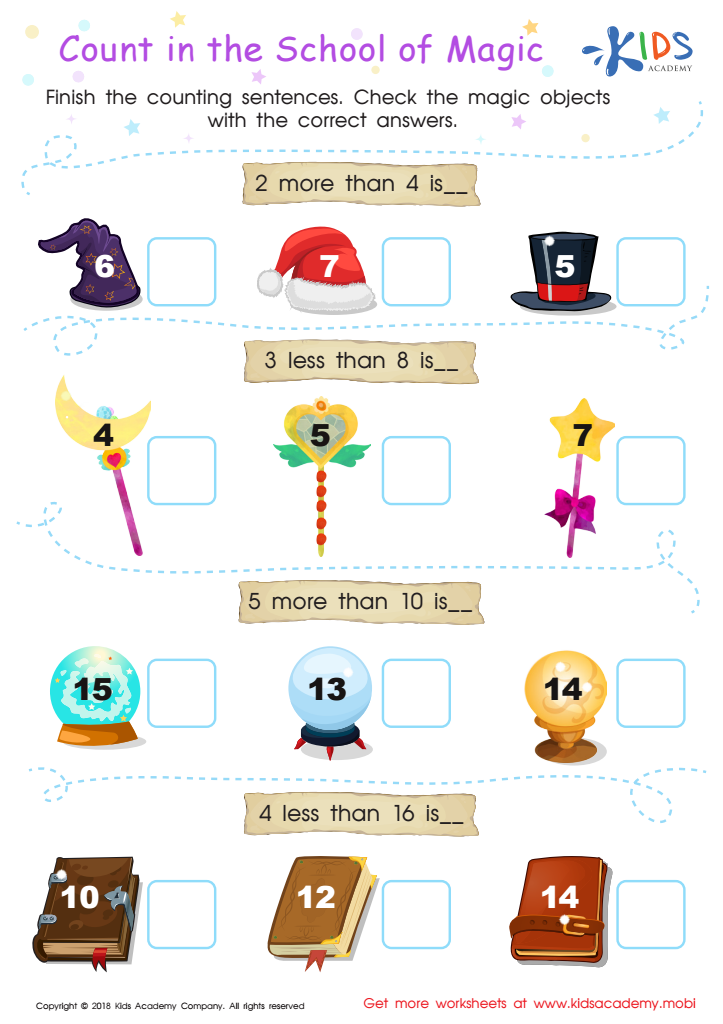
Count in the School of Magic Worksheet
 Assign to My Students
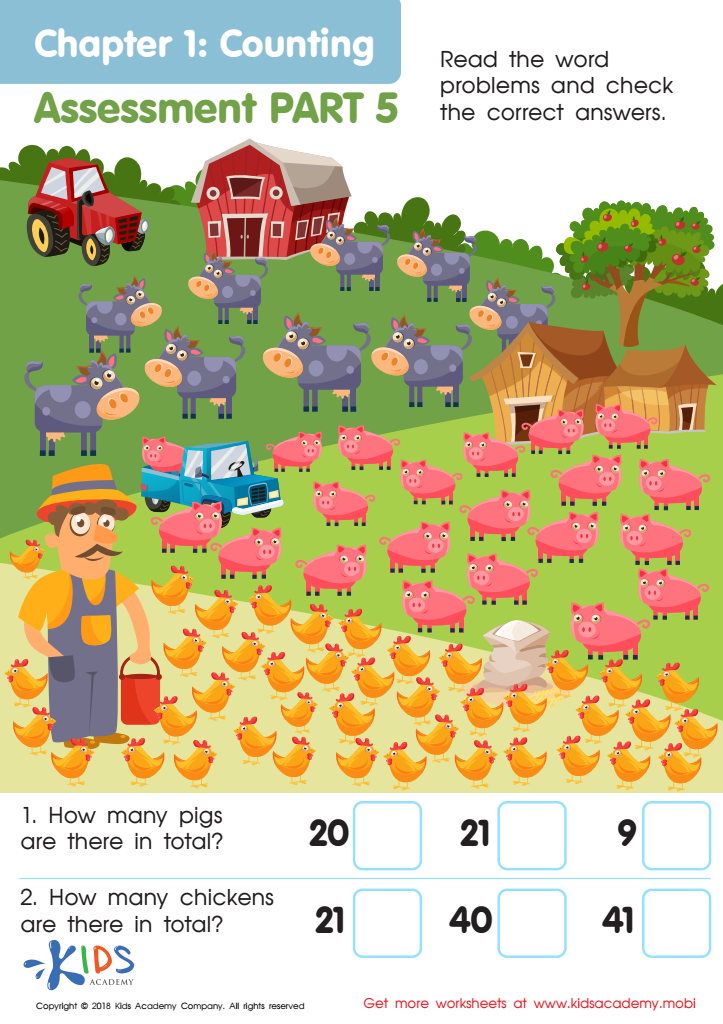
Counting: Assessment 5 Worksheet
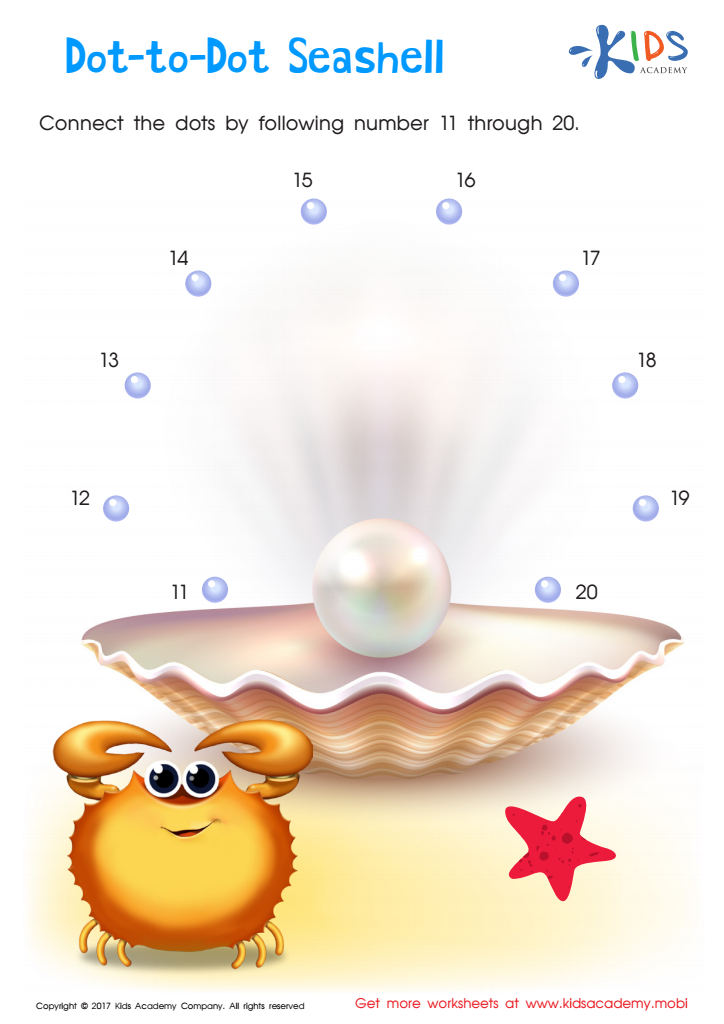
Ordering 11–20: Dot–to–dot Seashell Printable








Shape recognition and understanding numbers up to 100 are foundational skills crucial for a child's early development. Parents and teachers should prioritize these skills because they lay the groundwork for future mathematical learning and cognitive development.
Shape recognition helps children distinguish between different geometric figures like circles, squares, and triangles, aiding in their visual and spatial reasoning. These skills are not only essential in mathematics but also applicable in everyday life, from recognizing symbols and signs to understanding more complex spatial relationships.
Understanding numbers up to 100 equips children with a strong numerical foundation. At age four, recognizing numbers helps with basic counting, sorting, and comparing quantities, which are vital skills in early arithmetic. This familiarity also aids in developing a sense of number sequences, fostering a natural transition to more elaborate mathematical concepts like addition and subtraction when they begin formal schooling.
Both these skills—shape recognition and numerical acuity—enhance cognitive abilities such as attention to detail, pattern recognition, and logical thinking. Early proficiency in these areas boosts confidence and curiosity, encouraging lifelong learning and academic success. Therefore, investing time in teaching these concepts to 4-year-olds not only supports their immediate educational needs but also prepares them for future challenges.








