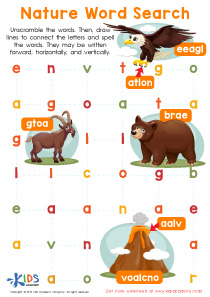
Multiplication practice Sight Words Worksheets for 4-Year-Olds
3 filtered results
-
From - To
Enhance your child's early learning experience with our engaging Multiplication Practice Sight Words Worksheets for 4-year-olds! These printable resources seamlessly combine sight word recognition and basic multiplication skills, making math fun and accessible. Each worksheet is designed to reinforce essential skills through colorful visuals and age-appropriate activities. Kids will practice identifying common sight words while applying simple multiplication concepts, helping to build their confidence in both reading and math. Perfect for at-home learning or classroom activities, these worksheets are a great way to introduce foundational math skills, promote literacy, and keep your young learners excited about education. Start exploring today!
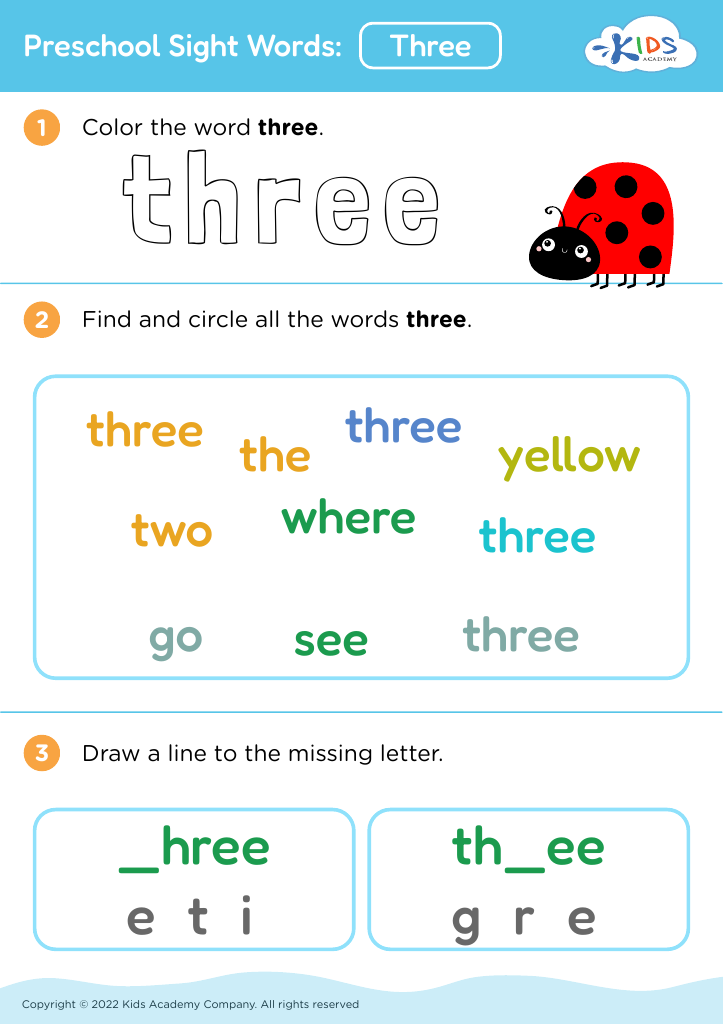









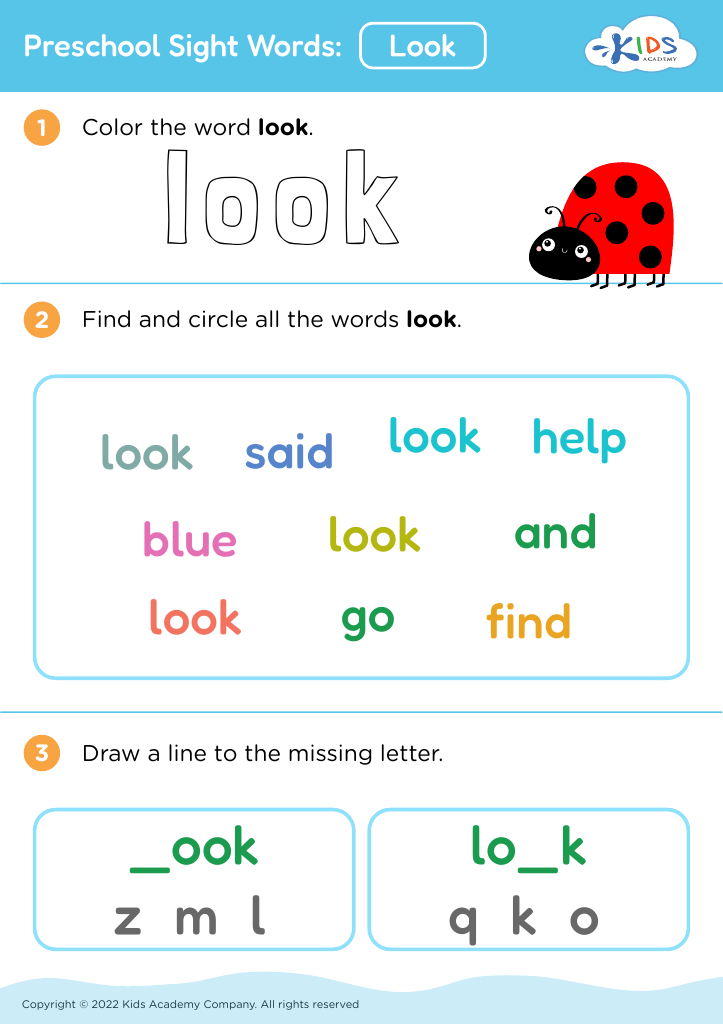
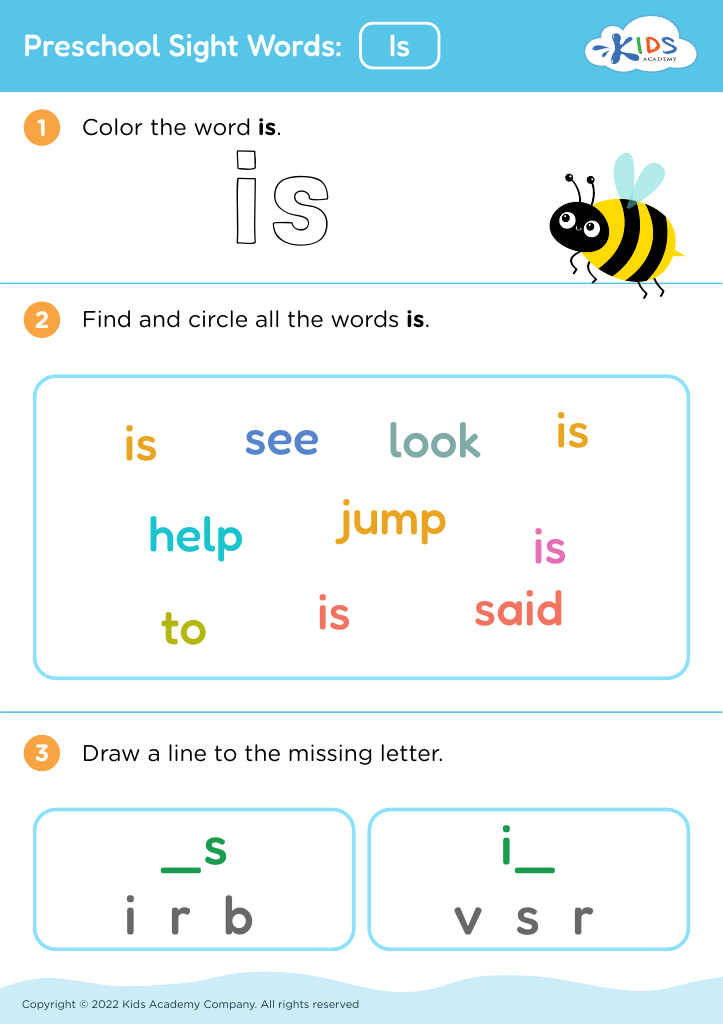








Parents and teachers should care about Multiplication practice Sight Words for 4-year-olds because early exposure to both math and literacy enhances foundational skills critical for future learning. While multiplication might seem advanced, building a basic understanding of numbers and operations through fun and engaging methods can pave the way for a strong mathematical foundation. Incorporating sight words, which are frequently used in reading, reinforces language development, aiding in comprehension and communication.
Engaging children with multiplication concepts musically or through games fosters an enjoyable learning environment. This approach not only makes math approachable but also instills a love for learning in young minds. Similarly, recognizing sight words boosts reading fluency, enabling children to connect words to meaning quicker, thus fueling their confidence in reading.
Furthermore, combining these activities boosts memory and cognitive skills, such as pattern recognition and sequencing, which are essential for both math and literacy. Engaging 4-year-olds through simple multiplication games and sight word activities supports a well-rounded developmental skill set. By encouraging early interactions with both subjects, parents and teachers set a solid groundwork for academic success and lifelong learning, ensuring children are equipped for the complexities of future educational challenges.