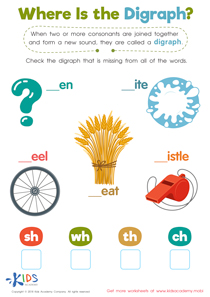
Vocabulary expansion Beginning Consonants Worksheets for Ages 5-6
4 filtered results
-
From - To
Boost your child's vocabulary with our engaging Beginning Consonants Worksheets designed for ages 5-6. These fun and educational worksheets help young learners master initial consonants, fostering early reading and spelling skills. Each activity is tailored to keep kids excited and motivated as they explore new words. Our age-appropriate exercises enhance phonics awareness and build a strong foundation for future literacy development. Perfect for classroom use or at-home practice, these worksheets support early learners in expanding their vocabulary, improving language skills, and gaining confidence in reading. Watch your child flourish with these expert-crafted, educational resources!
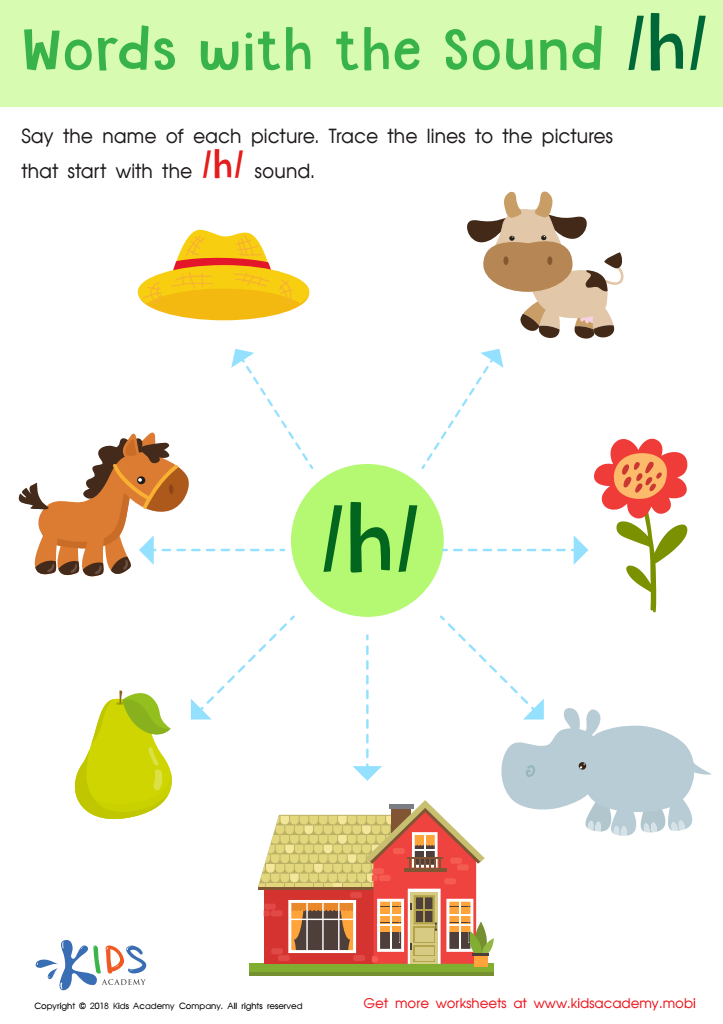
Words with sound h Reading Worksheet
 Assign to My Students
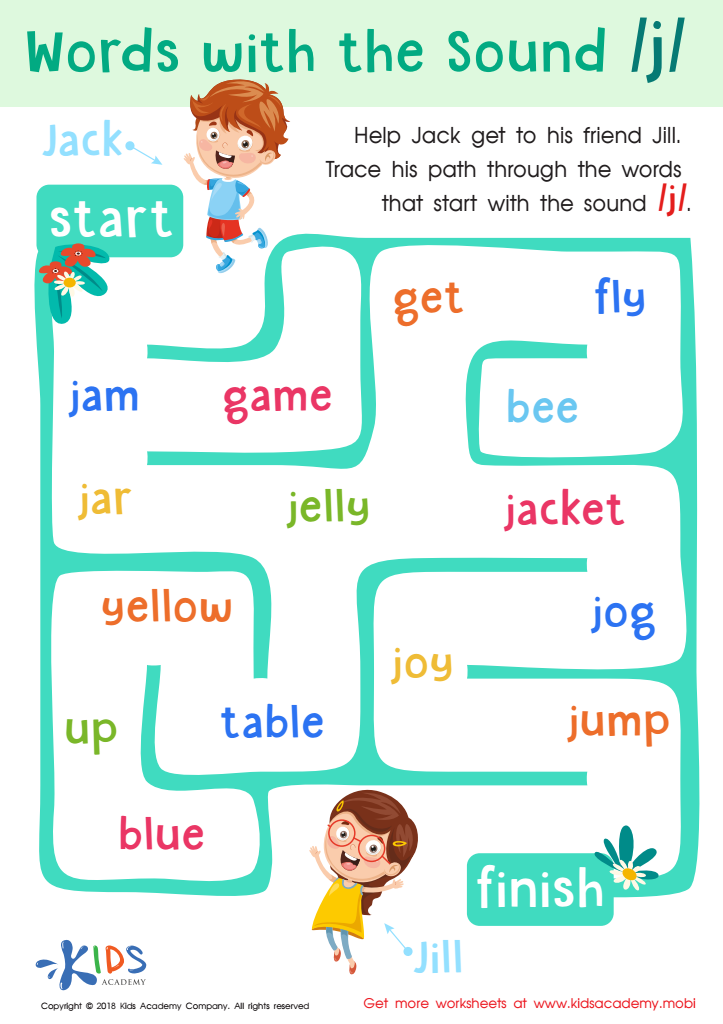
Words with sound j Reading Worksheet
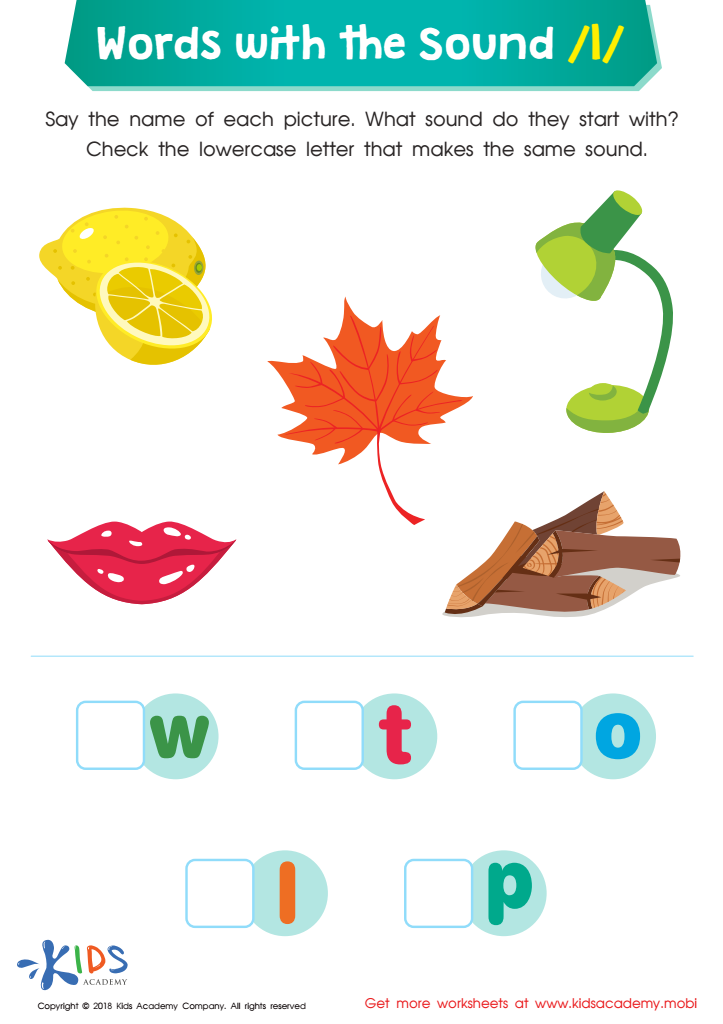
Words with Sound L Reading Worksheet
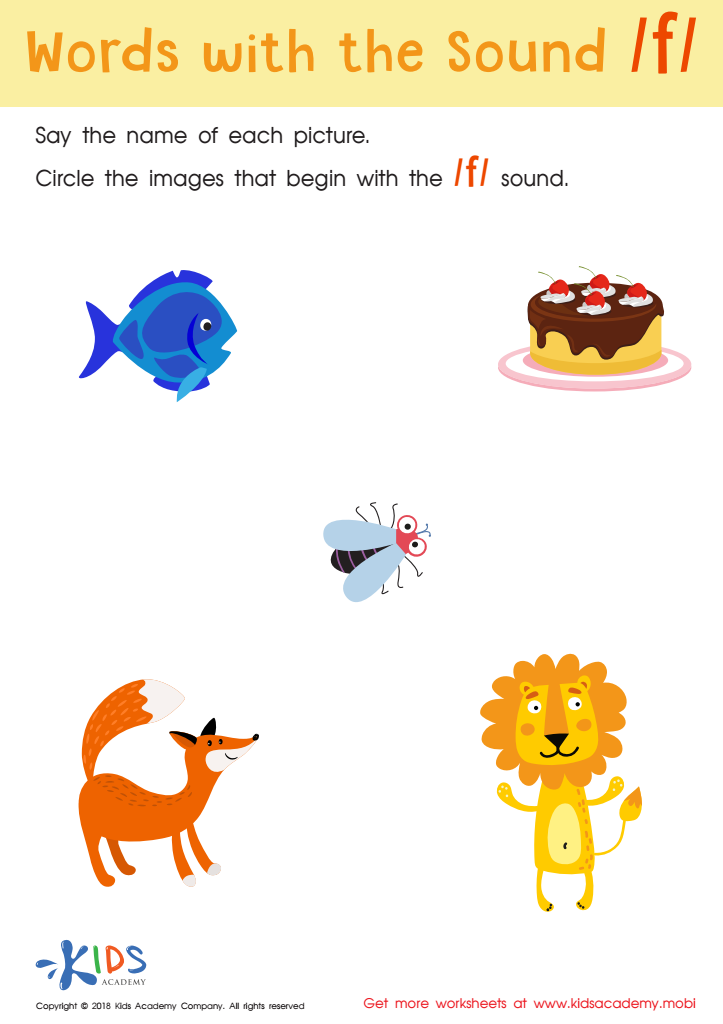
Words with sound f Reading Worksheet


Parents and teachers should care deeply about vocabulary expansion, particularly regarding beginning consonants, for children aged 5-6, because this foundational skill lays the groundwork for future academic success and effective communication. At this critical developmental stage, children are rapidly acquiring language and cognitive skills. Knowledge of beginning consonants helps them decipher the sounds in words, a key component in phonemic awareness.
Phonemic awareness—the ability to hear, identify, and manipulate phonemes—is a vital precursor to reading proficiency. When children understand beginning consonants, they can start connecting sounds to letters, improving their spelling and reading capabilities. This early linguistic competence enhances their ability to comprehend text, paving the way for more advanced literacy skills.
Moreover, a strong vocabulary is closely tied to overall cognitive development. It enables children to express themselves more clearly and accurately, fostering better social interactions and self-confidence. It also facilitates more complex thought processes, as a richer vocabulary allows for more nuanced understanding and communication.
By focusing on beginning consonants, parents and teachers can support a structured approach to language learning that builds on a child’s natural curiosity and enthusiasm for words. This attention to early vocabulary skills ensures a solid foundation for reading, writing, and overall academic achievement.