Sound Association Beginning Sounds Worksheets for Ages 5-6
3 filtered results
-
From - To
Welcome to our Sound Association Beginning Sounds Worksheets, specifically designed for children aged 5-6! These engaging worksheets help young learners reinforce their understanding of beginning sounds through fun and interactive activities. By matching letters with images, kids enhance their phonemic awareness, build vocabulary skills, and improve spelling. Our worksheets are thoughtfully crafted to align with early literacy standards, making them perfect for homeschooling or supplemental practice at school. Each worksheet offers colorful illustrations to capture children's attention, ensuring learning is both effective and enjoyable. Download now and watch your child's reading confidence soar as they master beginning sounds!
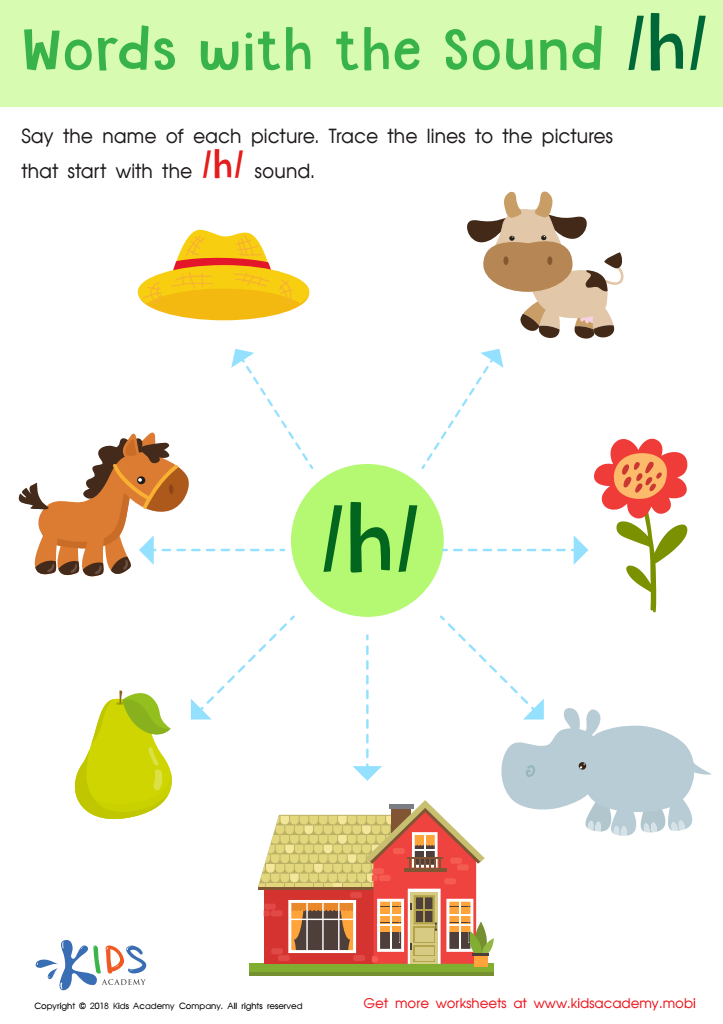
Words with sound h Reading Worksheet
 Assign to My Students
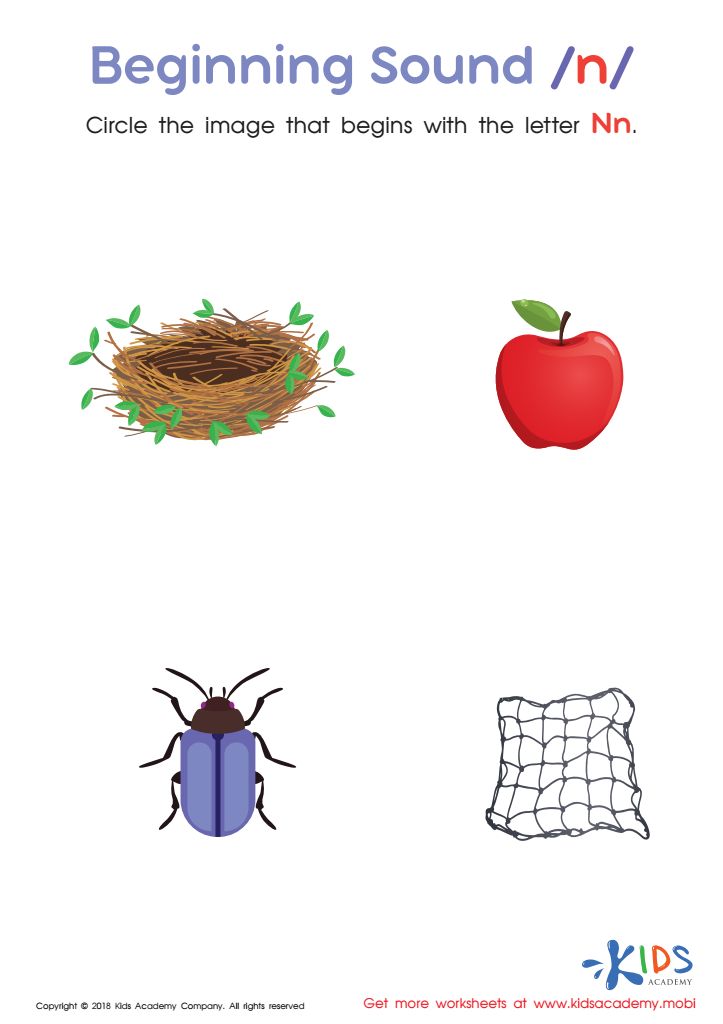
Beginning Sound «n» Worksheet
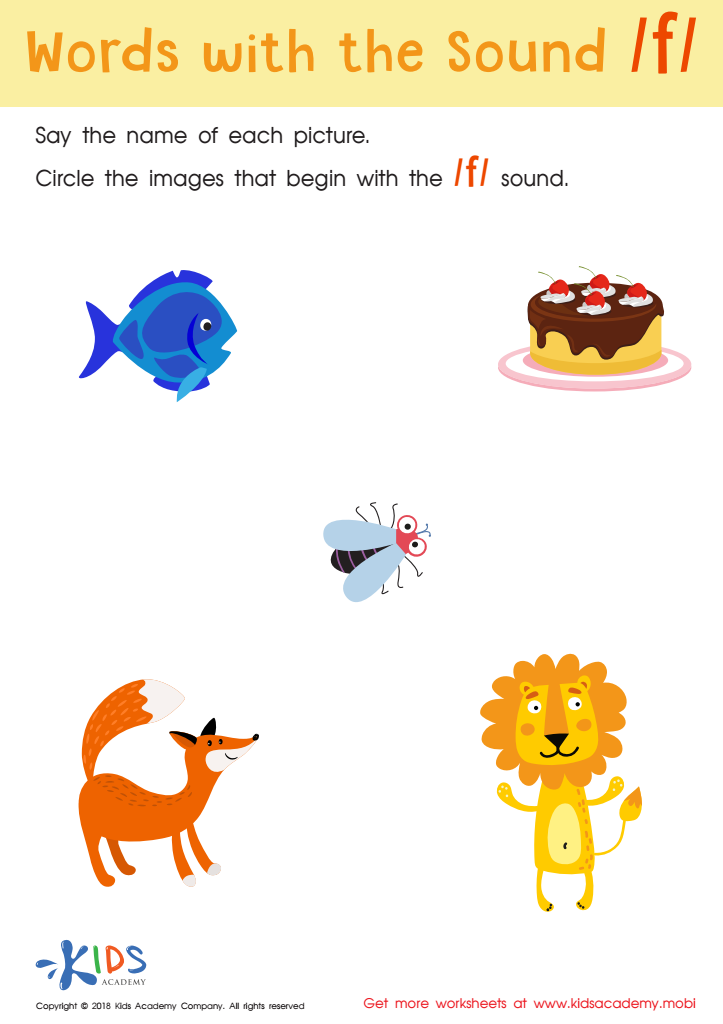
Words with sound f Reading Worksheet








Sound association with beginning sounds is crucial for children ages 5-6 as it lays the foundation for reading and language development. At this age, children are developing phonemic awareness, the ability to hear and manipulate the individual sounds in words. Understanding and recognizing beginning sounds can significantly enhance their decoding skills, facilitating easier reading experience as they progress.
When children learn to associate sounds with letters, they become more confident in their abilities to read and spell. Engaging with beginning sounds also supports vocabulary acquisition, as children learn to connect spoken language with written words.
Additionally, sound association activities, such as rhyming games and sound matching, foster active learning and critical thinking, making literacy enjoyable and engaging. Parents and teachers are pivotal in creating a stimulating environment where children can explore sound association through playful interactions.
These foundational skills not only promote literacy but also encourage communication and social interaction among peers, aiding overall development. As students transition from pre-reading to reading, mastering beginning sounds equips them with the tools they need to succeed academically, making it essential for parents and educators to prioritize these skills in early childhood education.







