Reading skills improvement Letter Sounds Worksheets for Ages 5-6
3 filtered results
-
From - To
Boost your child's reading foundation with our engaging Letter Sounds Worksheets for Ages 5-6. Specially designed to help young learners recognize and master phonetic sounds, these worksheets blend fun activities with essential skills practice. Perfect for early readers, each exercise encourages phonemic awareness and builds confidence in reading. Our diverse, kid-friendly worksheets cover a range of sounds and letters, offering vibrant visuals and interactive tasks to help reinforce learning. Ideal for classroom or home use, allow your child to thrive and advance in their reading journey with our expertly crafted resources. Start building strong, lifelong reading skills today!
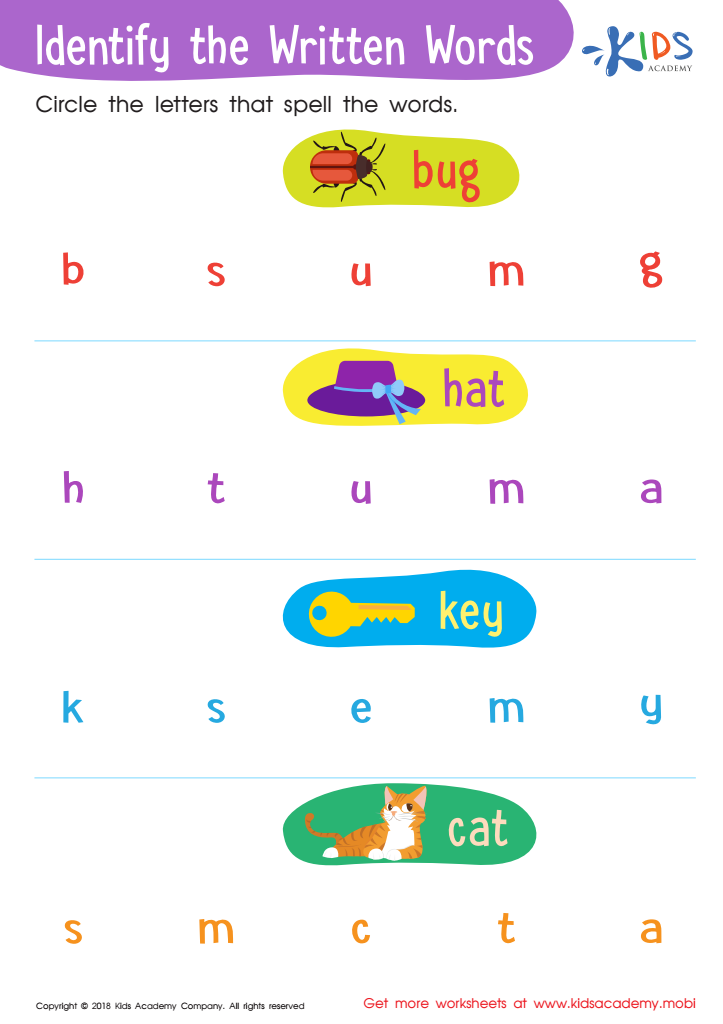
Identify the Written Words Worksheet
 Assign to My Students
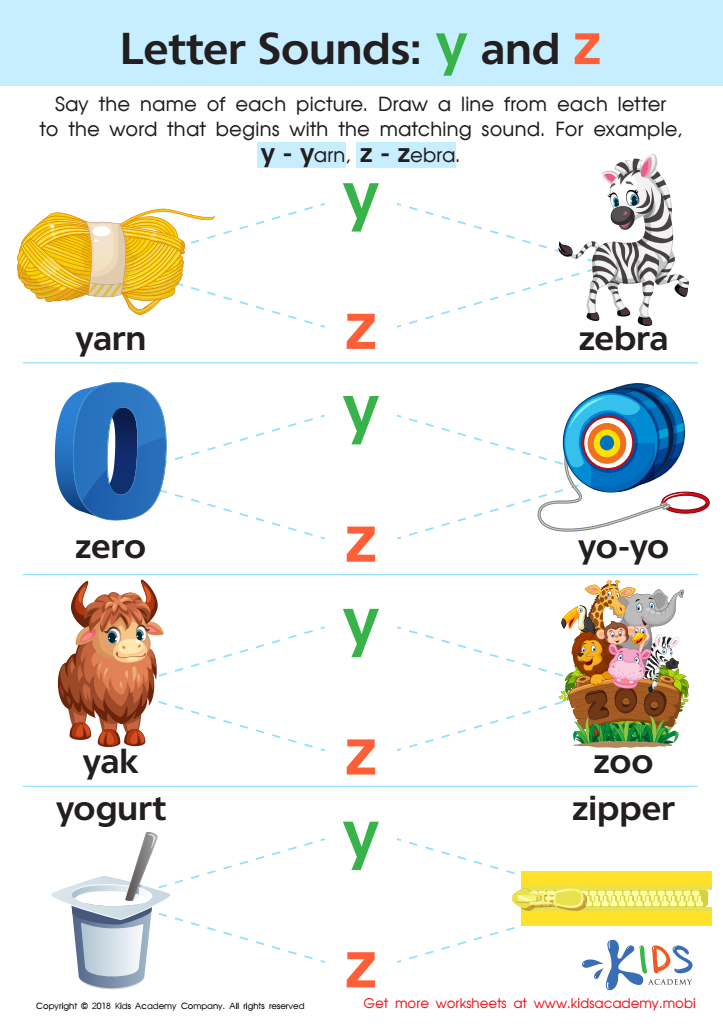
Letter Y and Z Sounds Worksheet
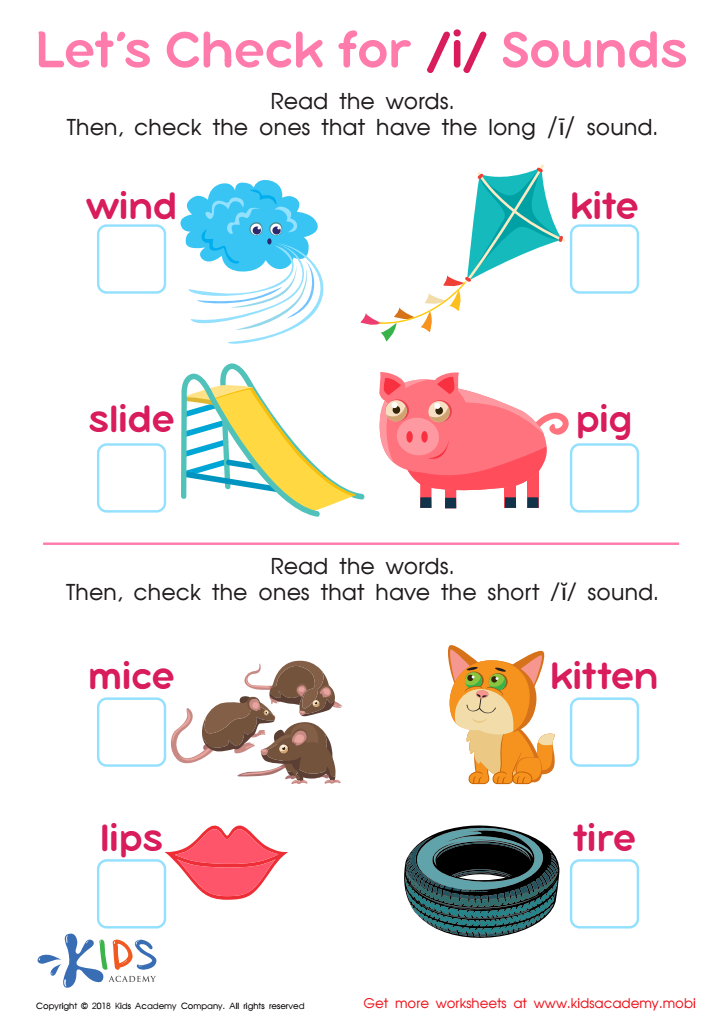
Let's Check for «i» Sounds Worksheet








Improving reading skills with a focus on letter sounds for children aged 5-6 is crucial for both parents and teachers because it lays the foundation for literacy development and future academic success. At this age, children are at a critical stage where their brains are primed for language acquisition. Understanding letter sounds, or phonemic awareness, enables children to decode words, making reading less challenging and more enjoyable.
Phonemic awareness is a key predictor of later reading achievement. When children grasp the relationship between letters and sounds, they can begin to blend these sounds to form words, a fundamental skill for reading proficiency. Mastery of letter sounds enhances vocabulary as children can sound out and recognize new words independently. This autonomy boosts their confidence and motivation to read more, further solidifying their learning.
For teachers, teaching letter sounds aligns with educational standards and curriculums that prioritize early literacy. Reliable reading skills impact students' performance across all subjects, as almost all learning activities require some level of reading comprehension. Parents’ involvement in reinforcing these skills at home helps create a coherent and supportive learning environment, ensuring that children receive consistent practice and encouragement.
Ultimately, strong letter sounds skills at this age set the stage for a love of reading, improved academic outcomes, and a lifelong capacity for learning. Investing time in this essential skill pays dividends throughout a child's educational journey.







