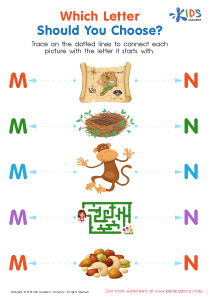
Handwriting practice Lowercase/Small Letters Worksheets for Ages 5-6
8 filtered results
-
From - To
Discover our engaging Handwriting Practice Worksheets for Lowercase/Small Letters, perfect for children aged 5-6! Tailored to support early learners, these worksheets help children develop their fine motor skills and improve their letter formation while having fun. Each worksheet features colorful illustrations and various activities designed to reinforce muscle memory, essential for writing. As kids trace and write small letters, they gain confidence and mastery over handwriting concepts. Our user-friendly format allows parents and educators to easily incorporate these resources into their teaching routines. Start fostering a love for writing at an early age with our beautifully crafted worksheets today!
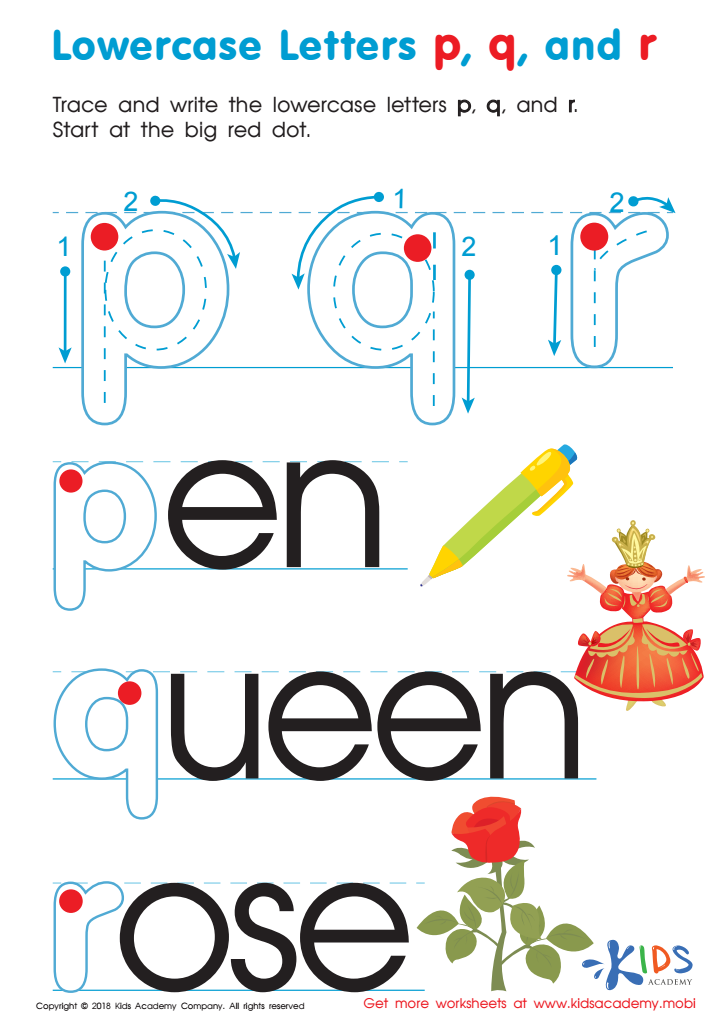
Lowercase Letters p q r Worksheet
 Assign to My Students
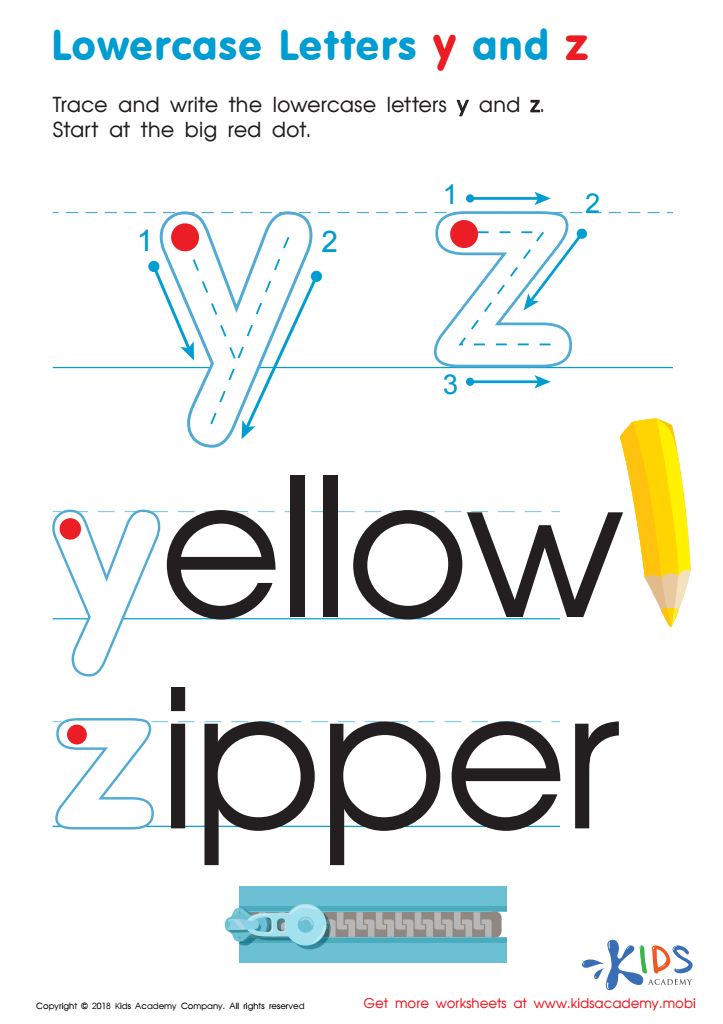
Lowercase Letters y z Worksheet
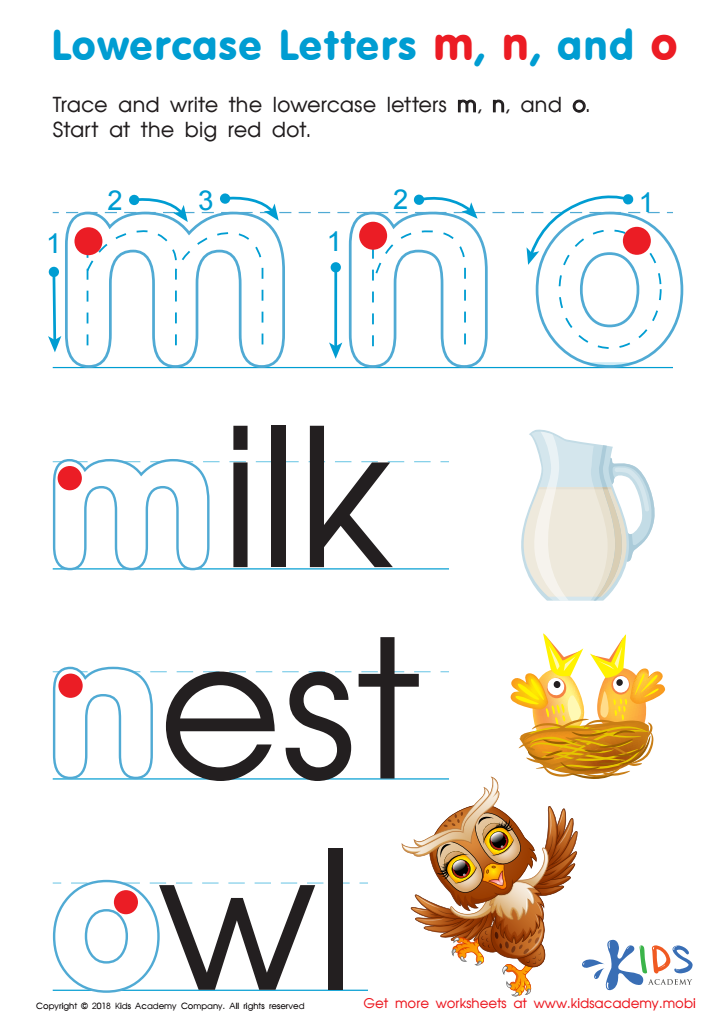
Lowercase Letters m n o Worksheet
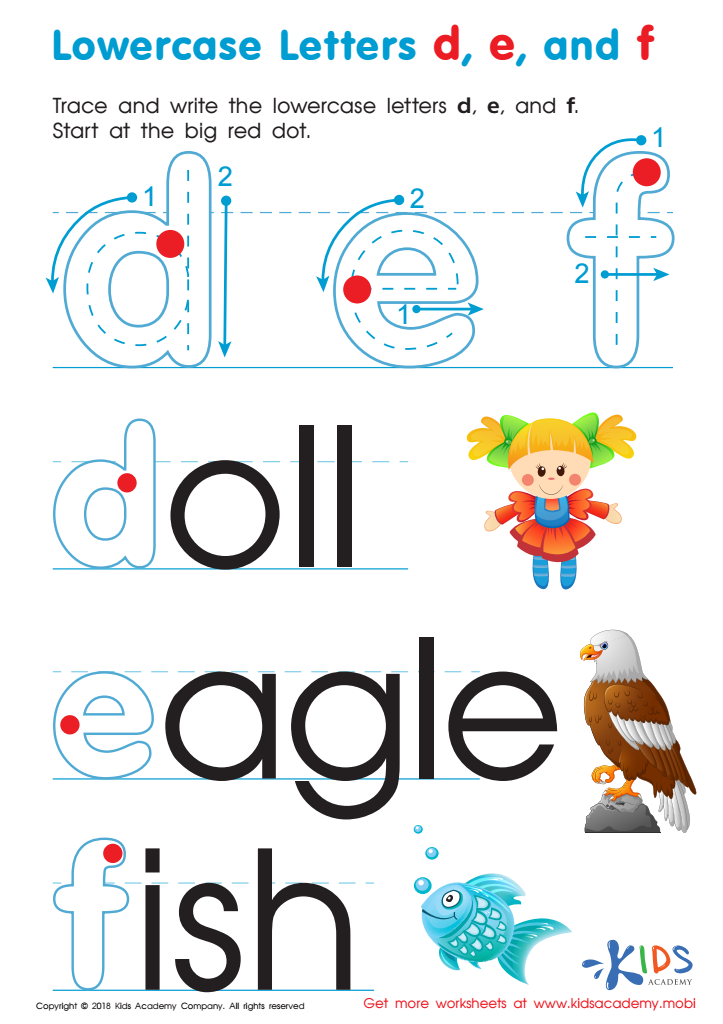
Lowercase Letters d e f Worksheet
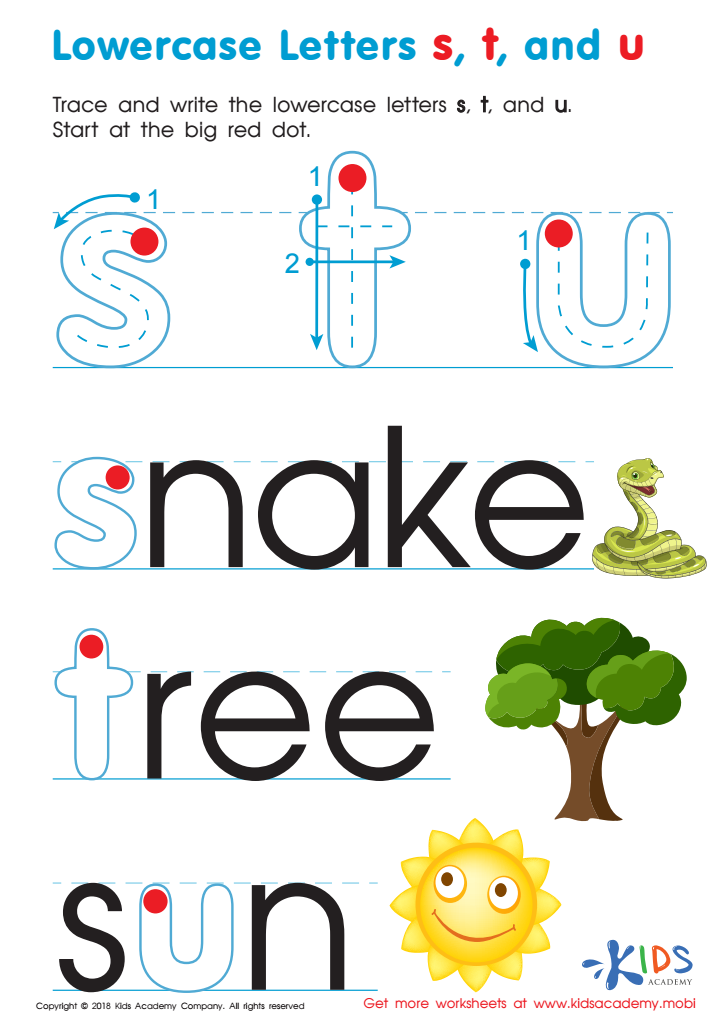
Lowercase Letters s t u Worksheet
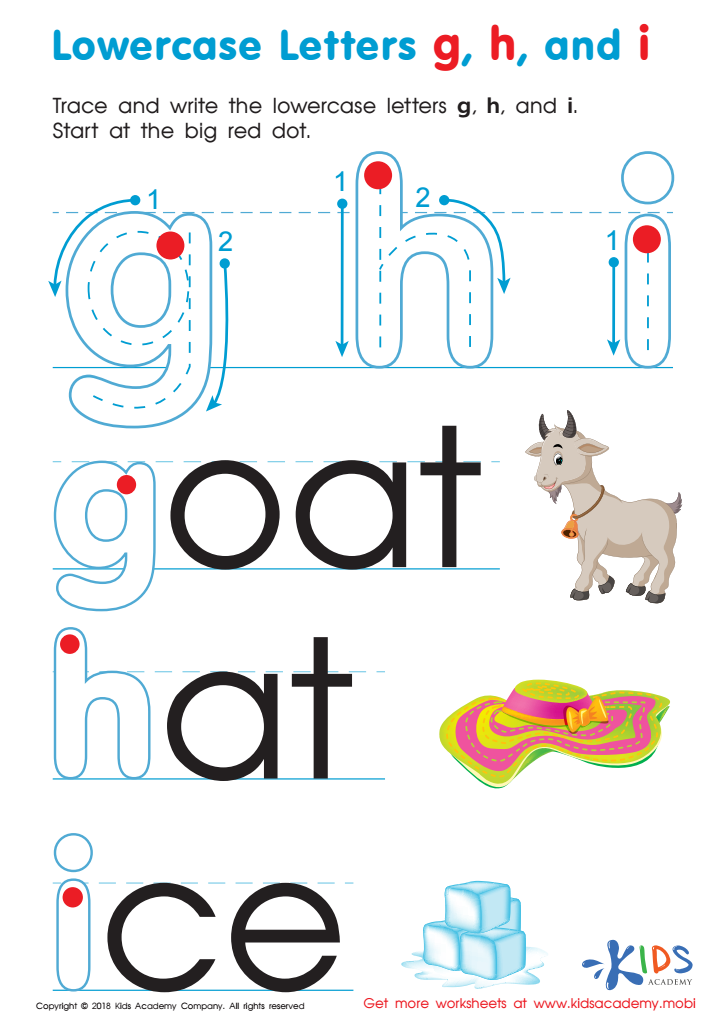
Lowercase Letters g h i Worksheet
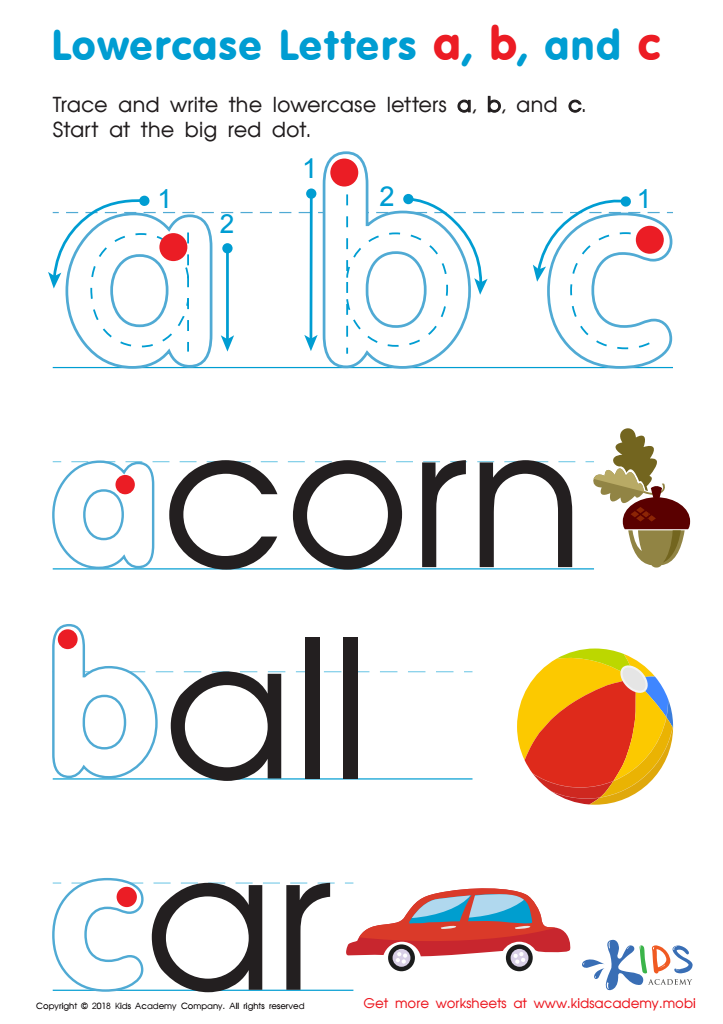
Lowercase Letters a b c Worksheet
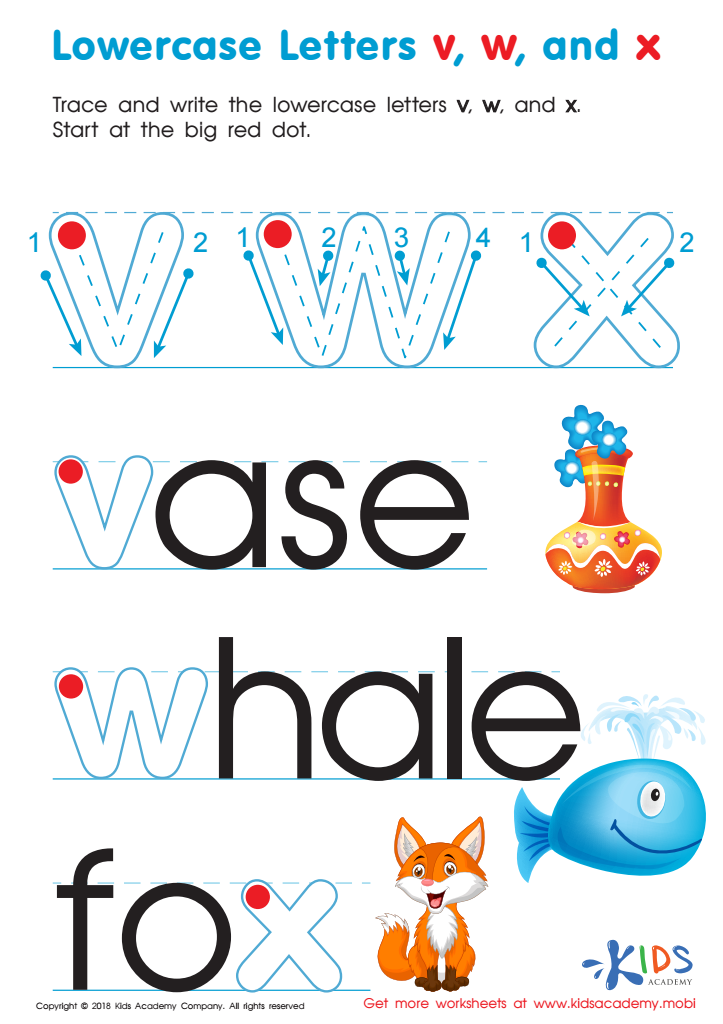
Lowercase Letters v w x Worksheet


Handwriting practice in lowercase letters is essential for children aged 5-6, as it lays the foundation for their literacy skills. During this developmental stage, children typically learn to differentiate between uppercase and lowercase letters. Practicing lowercase writing helps them build fine motor skills, enhancing hand-eye coordination and dexterity, which are crucial for various everyday tasks.
Additionally, mastering lowercase letters is important for reading and writing fluency. Most written communication primarily uses lowercase letters, and children must become comfortable recognizing and forming these letters to express their thoughts effectively. By engaging in handwriting practice, children boost their confidence in their writing abilities.
Moreover, consistent handwriting practice promotes cognitive development. It requires children to focus on the shapes and movements of each letter, reinforcing memory and recognition skills. This engagement aids in their overall academic progress.
In an era where typing is becoming standard, cultivating a solid foundation in handwriting still plays a significant role in helping children express themselves. Parents and teachers should prioritize handwriting practice with children, ensuring they develop critical skills that will support their future academic endeavors and personal communication. Investing time in this practice now will yield long-term benefits for their literacy journey.