Sight word recognition Three Letter Words Phonics Worksheets for Ages 5-6
3 filtered results
Difficulty Level
Grade
Age
-
From - To
Subject
Activity
Standards
Introducing our Sight Word Recognition Three Letter Words Phonics Worksheets for Ages 5-6! Specifically crafted for young learners, these engaging worksheets are designed to develop early reading skills by focusing on essential sight words and three-letter phonics. Each worksheet provides interactive and enjoyable activities that build foundational literacy abilities, perfect for preschoolers and kindergarteners. By practicing frequently, children enhance their word recognition, spelling, and phonetic understanding, setting a strong groundwork for future reading proficiency. Ideal for both classroom and home use, these worksheets ensure a captivating learning journey that keeps kids motivated and excited about reading.
Favorites
With answer key
Interactive
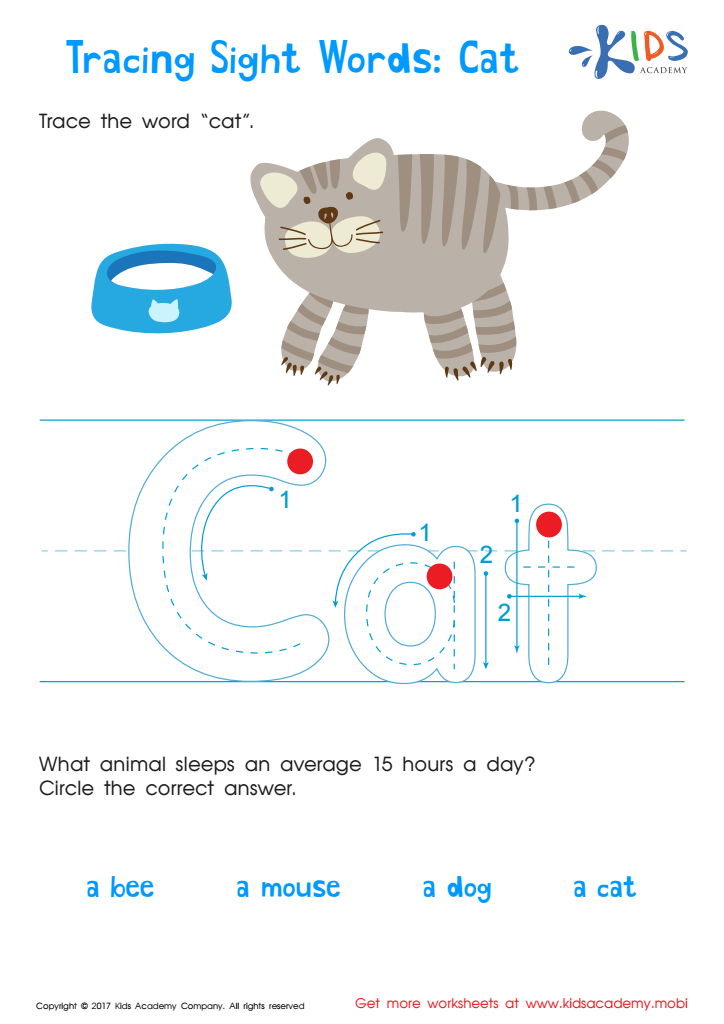
Cat Printable Sight Words Worksheet
Encourage your child's literacy with this fun sight words worksheet: cat PDF! It helps build a solid foundation for reading, featuring activities such as reading and tracing the word cat, and finding it amongst other sight words. With its cute cat, Kids Academy makes learning to read a delight!
Cat Printable Sight Words Worksheet
Worksheet
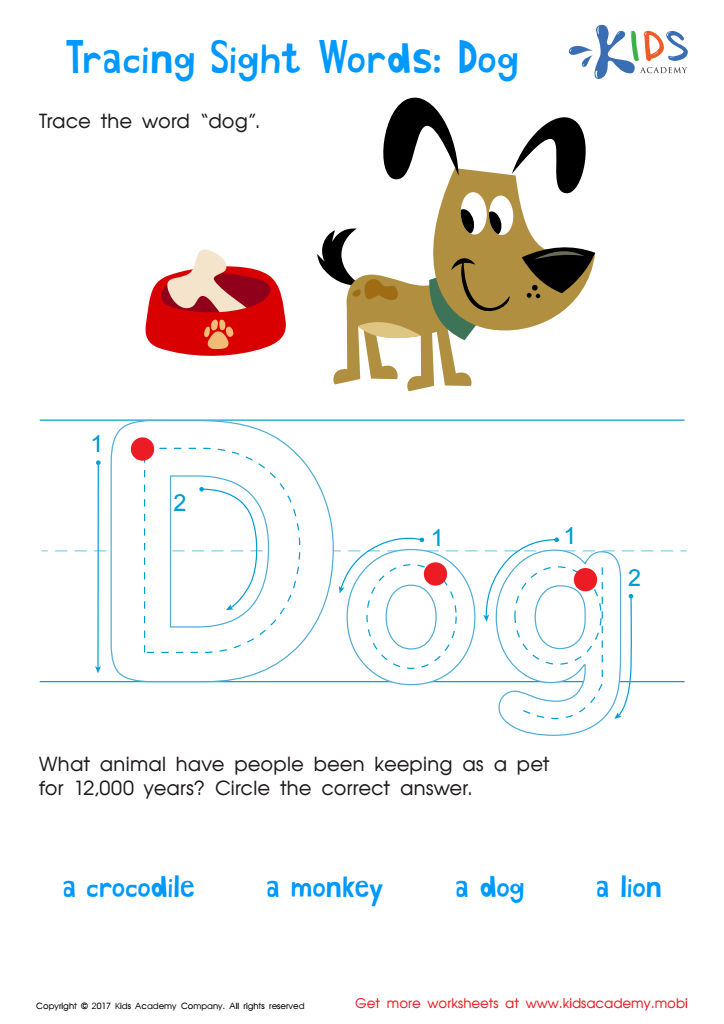
Dog Worksheet Sight Words Worksheet
Get your kids excited to read with our dog-themed sight words worksheet!
Excite your child to read with our sight words worksheet: dog edition! Featuring a lovable dog character to put a smile on any kid's face, this worksheet helps kids practice reading and writing the word "dog". Build a library of words they can read quickly and promote increasing literacy skills with early fluency! Get them ready for reading with our dog-themed sight words worksheet!
Dog Worksheet Sight Words Worksheet
Worksheet
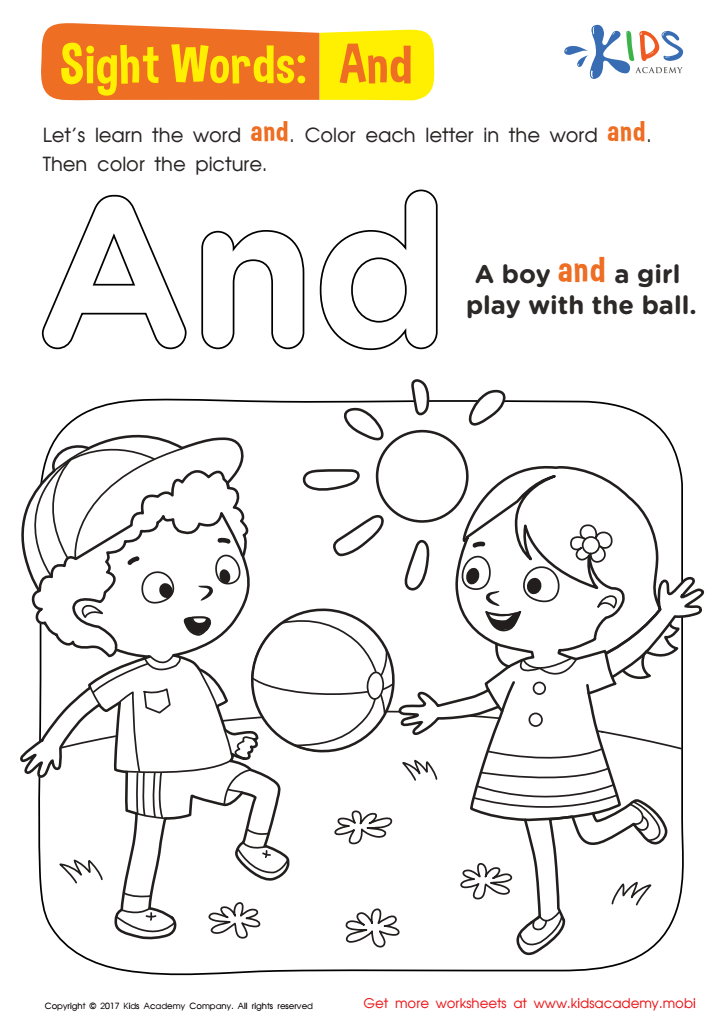
And Worksheet Sight Words Worksheet
Help your child get a jumpstart on reading with sight words! Print out this fun worksheet and get your child to read the sentence. Point out the word "and", then color the word and enjoy the rest of the scene! It's a great way to introduce sight words and get their early reading skills going!
Download (PDF)
 Assign to My Students
Assign to My Students
And Worksheet Sight Words Worksheet
Worksheet
Join Kids Academy for Free
Who is primarily going to use this learning content?




Sight word recognition and phonics instruction, especially focusing on three-letter words, are pivotal for children ages 5-6 as they lay the essential groundwork for literacy. At this age, children are in the pre-literate or emergent reading stage, where the capacity to effortlessly recognize common words can significantly boost their reading confidence and interest in books.
Sight words, frequently occurring in text but often non-decodable through simple phonics rules, help children read more fluently and with greater comprehension. They act as stepping stones, allowing young readers to anticipate and understand more complex sentences without getting bogged down by every unfamiliar word.
Phonics instruction, on the other hand, teaches the relationship between letters and sounds—a critical decoding skill. Concentrating on three-letter words (CVC—consonant-vowel-consonant patterns) helps solidify this understanding in a manageable, memorable format. It fosters phonemic awareness, enabling children to blend sounds smoothly, segment words, and progress to more complex reading and writing tasks.
Combining sight word recognition with phonics empowers young learners with a balanced approach, building both their ‘eye memory’ for high-frequency words and ‘ear memory’ for sound-letter correspondences. It’s this harmonious blend that transforms nascent readers into capable, enthusiastic ones, setting the stage for academic success and a lifelong love of reading.