
Fine Motor Skills Tracing Lines and Curves Worksheets for Ages 5-6
5 filtered results
Difficulty Level
Grade
Age
-
From - To
Subject
Activity
Standards
Enhance your child's fine motor skills with our engaging tracing lines and curves worksheets, specially designed for ages 5-6. These interactive activities help young learners develop essential hand-eye coordination and dexterity while having fun. By tracing various lines and curves, children build confidence in their writing abilities, preparing them for future academic success. Our worksheets incorporate playful designs and themes to keep kids excited about learning. Ideal for home or classroom use, these resources provide a safe and stimulating environment for children to master their fine motor skills and unleash their creativity. Start your child's journey to precise writing today!
Favorites
With answer key
Interactive
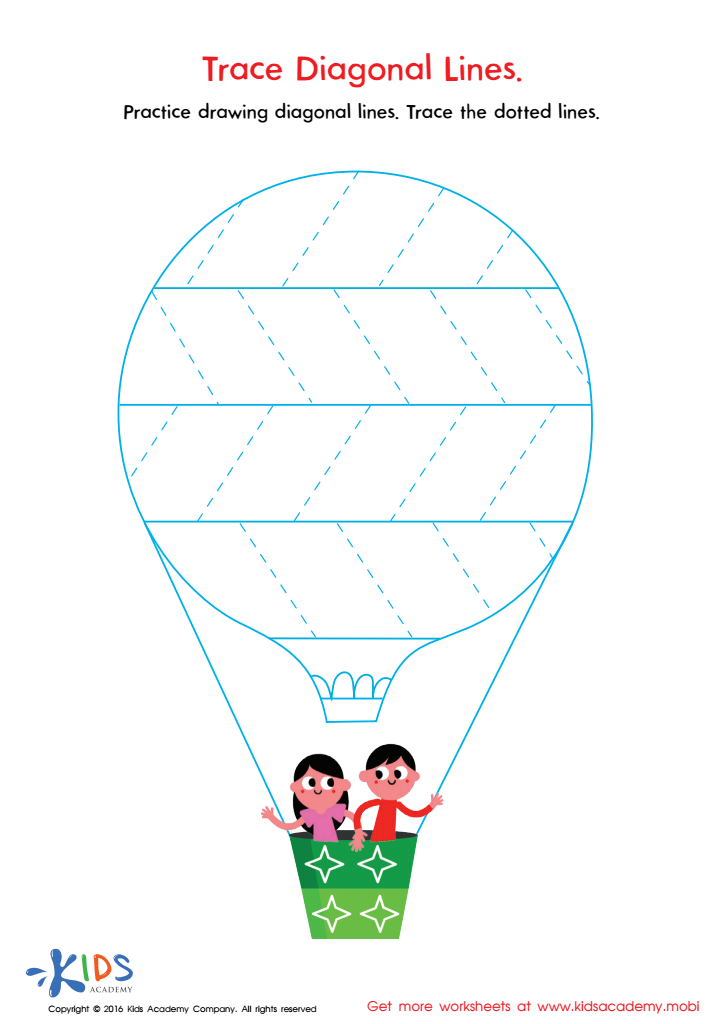
Trace Diagonal Lines Worksheet
This tracing diagonal lines worksheet offers preschoolers a great way to build fundamental skills in handwriting and drawing. Doing so helps them practice patterning, a key skill that will benefit them in writing, drawing, and math.
 Assign to My Students
Trace Diagonal Lines Worksheet
Worksheet
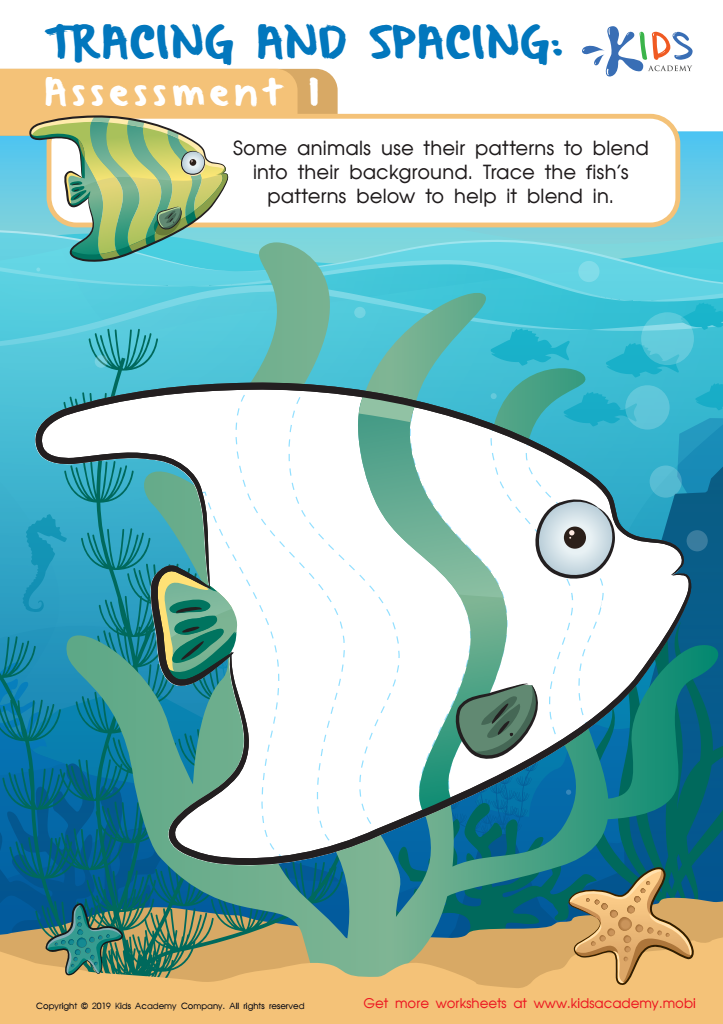
Tracing and Spacing: Assessment 1 Worksheet
Download this coloring page to help your child learn about animals' camouflage. Trace the pattern with a pencil, then use crayons or markers to color the fish like the example. Read the accompanying paragraph to learn why some animals blend in with their environment. Encourage your child to look closely and match details in the pattern.
Tracing and Spacing: Assessment 1 Worksheet
Worksheet
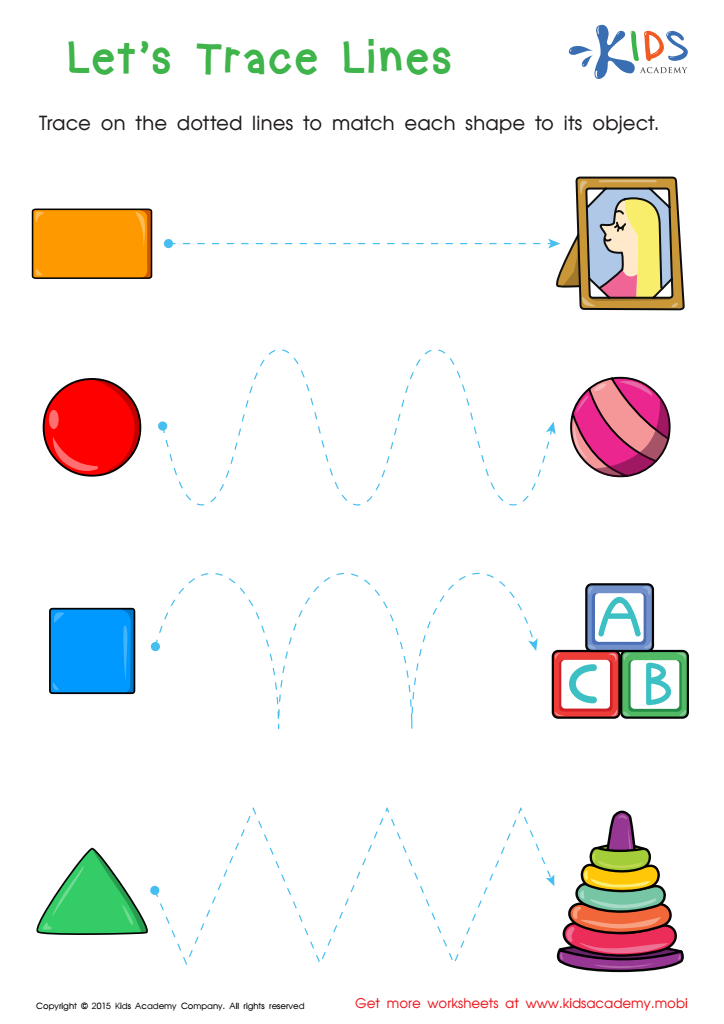
First Words: Let's Trace Lines Worksheet
Printable tracing lines for toddlers will provide your little one with the skills needed for future handwriting success. Proper grip, fine motor skills, and hand-to-eye coordination are key. Let's get their writing journey off to a great start!
First Words: Let's Trace Lines Worksheet
Worksheet
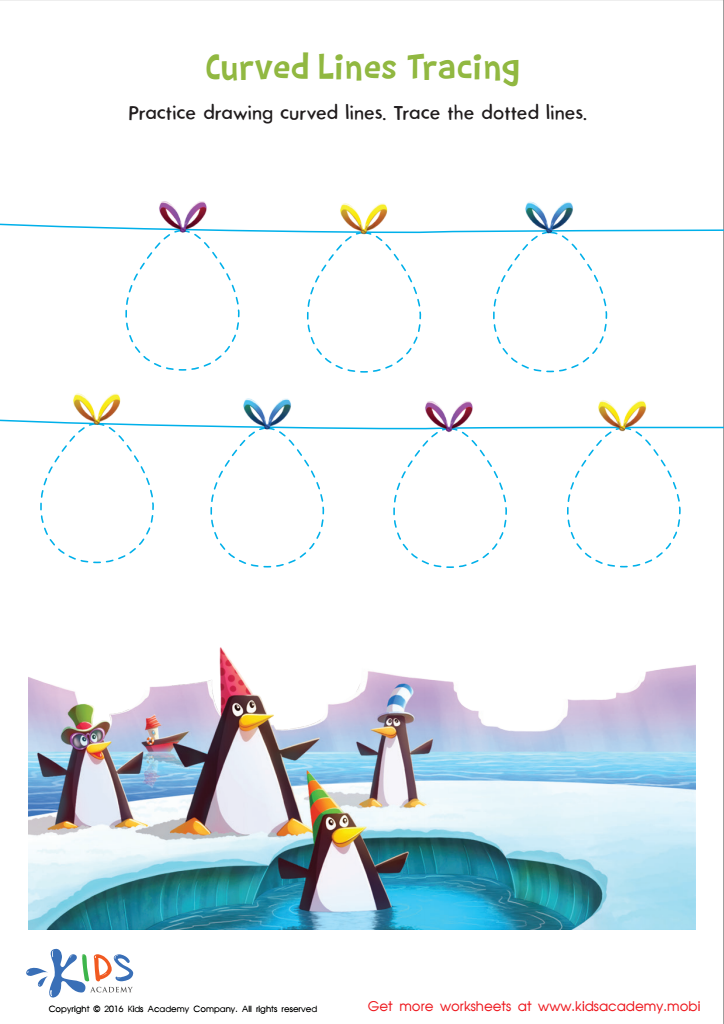
Curved Lines Tracing Worksheet
Tracing curved lines worksheets are a great way to help your child develop fine motor skills, form proper writing habits and sharpen hand-eye coordination. An adorable worksheet featuring characters from our popular app helps make practice fun! It also helps build focus, stamina and overall confidence in their writing ability. Offer your child meaningful tracing practice and give them a head start in life!
Curved Lines Tracing Worksheet
Worksheet
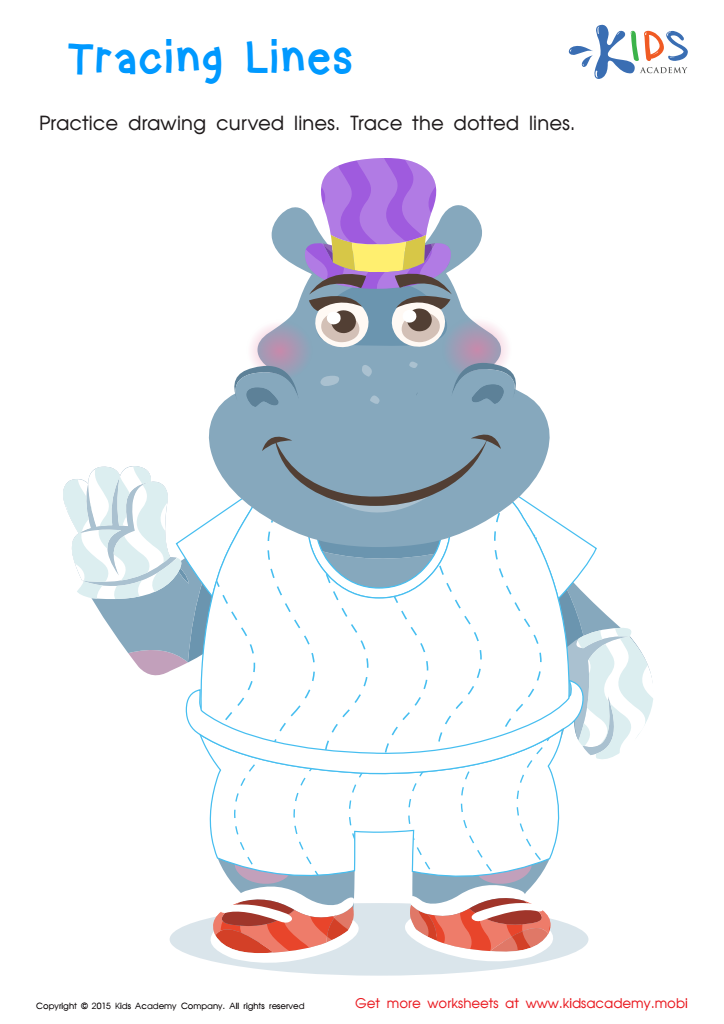
Tracing Lines Worksheet
Help your child nurture their writing and drawing skills with this cute tracing lines PDF worksheet. It improves pencil grip and hand-to-eye coordination, a key step in learning to write. Have fun and watch your child's confidence grow!
Tracing Lines Worksheet
Worksheet
Join Kids Academy for Free
Who is primarily going to use this learning content?




Fine motor skills, particularly tracing lines and curves, are crucial for children aged 5-6 as they lay the foundation for future learning and daily activities. At this age, children are refining hand-eye coordination and dexterity, which enhances their ability to perform tasks like writing, drawing, and cutting. Tracing helps strengthen the small muscles in their hands and fingers, building the necessary control and precision needed for more complex skills later on.
Parents and teachers should care about this developmental aspect because it directly impacts a child's academic readiness. Mastering fine motor skills can boost confidence, promoting a more positive attitude towards learning and school activities. Moreover, improved fine motor skills correlate with better classroom performance in subjects that require writing and drawing.
Engaging in tracing exercises can also provide opportunities for children to express their creativity and showcase their progress. As they successfully trace shapes and letters, they develop their cognitive and spatial awareness, which is essential for problem-solving and critical thinking. Ultimately, prioritizing fine motor skill development in young children equips them with the tools they need to succeed academically, socially, and in their everyday lives, making it a critical focus for parents and educators alike.








