Uppercase identification Uppercase Letters Worksheets for Ages 5-6
5 filtered results
-
From - To
Unlock the magic of effortless learning with our engaging Uppercase Letters Worksheets. Tailored for ages 5-6, these printable activities focus on uppercase letter identification, a fundamental skill for early readers. Kids will enjoy fun exercises that bolster their alphabet recognition and enhance their confidence. Whether at home or in the classroom, these worksheets transform learning into an exciting adventure. Designed by education experts, each page is a stepping stone toward literacy success. Get started today and watch your child's reading skills soar with these captivating printable uppercase letter identification worksheets from Kids Academy.
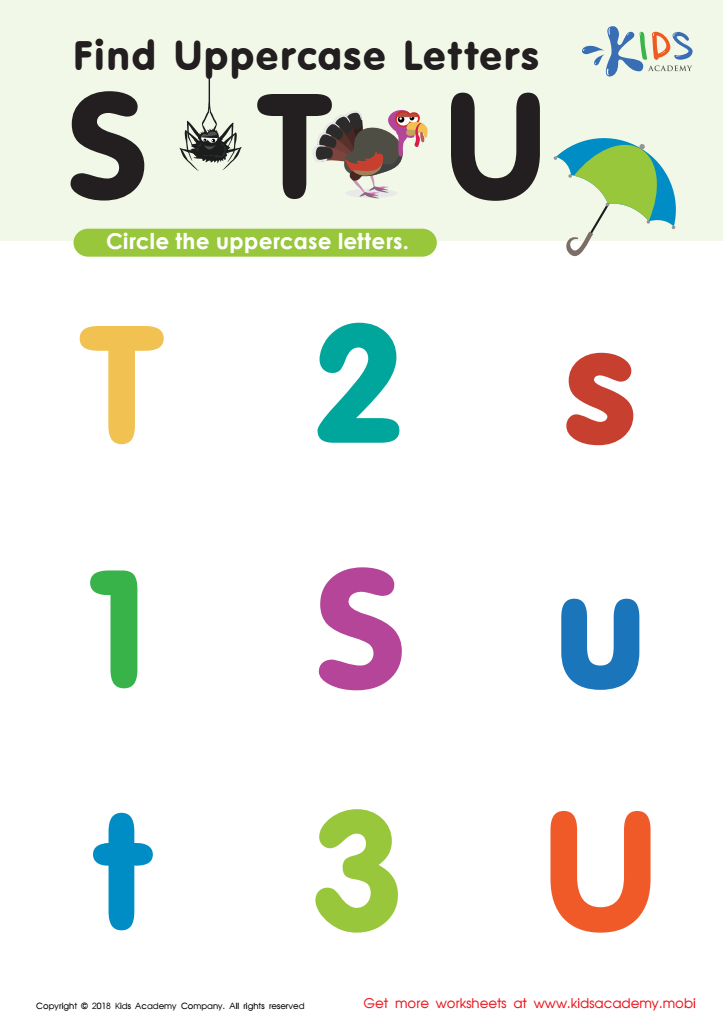
Find Uppercase Letters Worksheet
 Assign to My Students
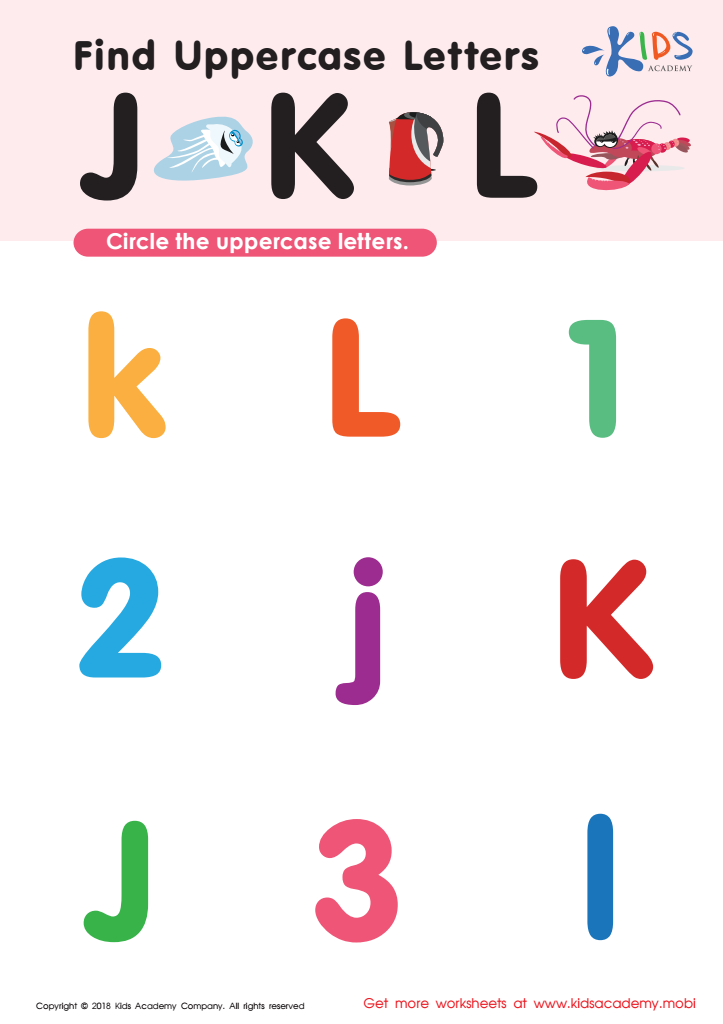
Find Uppercase Letters J, K, and L Worksheet
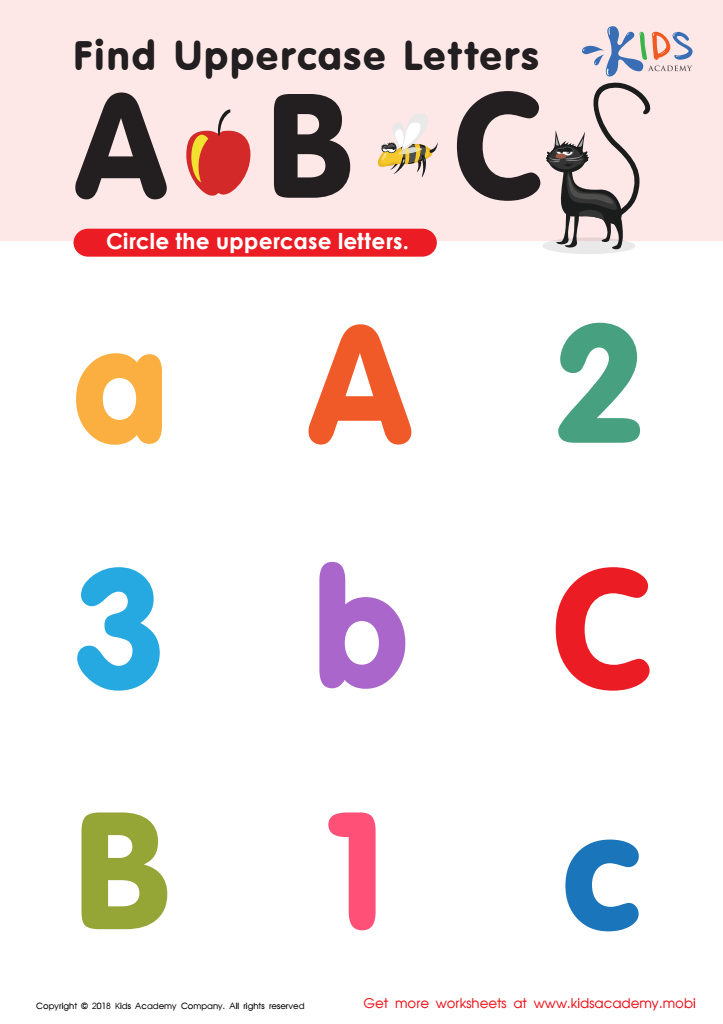
Find Uppercase Letters A, B, and C Worksheet
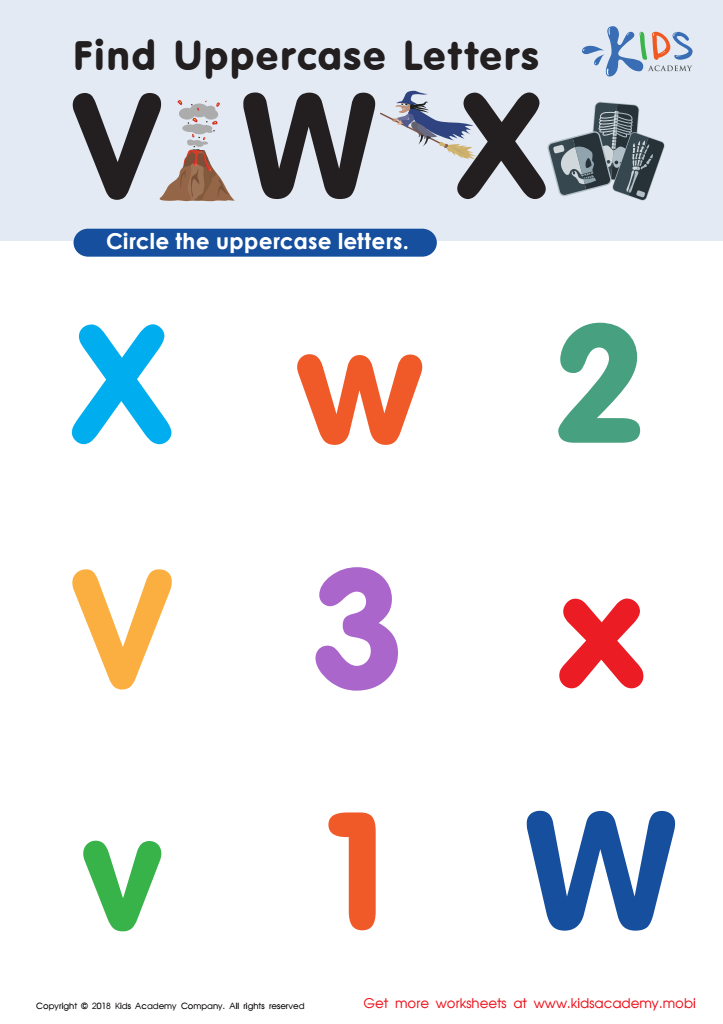
Find Uppercase Letters V, W, X Worksheet
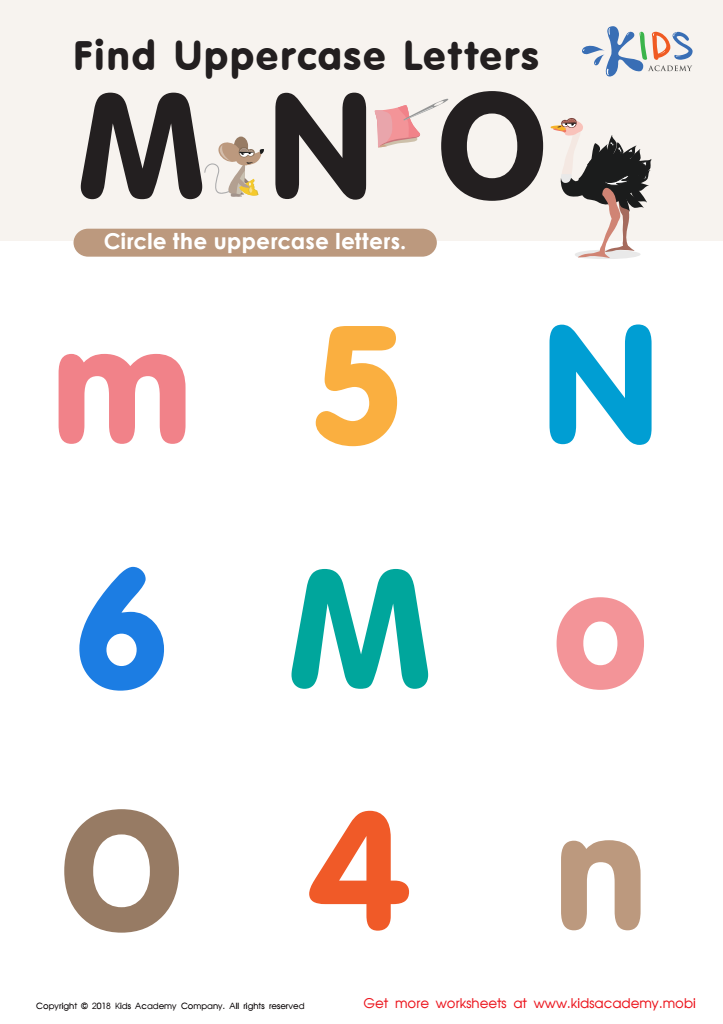
Find Uppercase Letters M, N, and O Worksheet








Uppercase letter identification is a crucial foundational skill for children aged 5-6, a period typically marked by the beginning of formal education such as kindergarten or first grade. Understanding uppercase letters is vital for several key reasons:
-
Literacy Development: Recognizing uppercase letters forms the basis of reading and writing. Young children usually encounter uppercase letters first in environmental print, such as signs, labels, and books. Proficiency in identifying these letters paves the way for recognizing and understanding their lowercase counterparts.
-
Enhances Phonemic Awareness: Uppercase identification goes hand-in-hand with learning alphabetic sounds. When children can confidently identify letters, they more readily grasp the phonemes associated with each one, promoting more fluent early reading skills.
-
Building Confidence: Mastery of uppercase letters offers a significant confidence boost. Children feel accomplished as they begin to decode simple texts, enabling them to move onto more complex literacy tasks without frustration.
-
Classroom Success: In school, children are often asked to recognize, write, and manipulate letters. Knowing uppercase letters allows them to follow instructions better and engage more fully in classroom activities, contributing positively to their overall educational experience.
Therefore, parents and teachers should focus on uppercase letter identification to support literacy development, phonemic awareness, confidence, and overall academic success in young learners.