
Chess piece identification Worksheets for Ages 5-6
3 filtered results
Difficulty Level
Grade
Age
-
From - To
Subject
Activity
Standards
Introduce your child to the exciting world of chess with our Chess Piece Identification Worksheets for Ages 5-6! Designed specifically for young learners, these engaging worksheets help children recognize and understand the different chess pieces through fun illustrations and easy-to-follow activities. Your little ones will develop important cognitive skills while enhancing their memory and visual discrimination. As they identify the pawn, knight, bishop, rook, queen, and king, they’ll gain a foundational understanding of this classic game. Perfect for classroom use or at-home learning, these worksheets make chess education enjoyable and interactive. Start your child's chess journey today!
Favorites
With answer key
Interactive
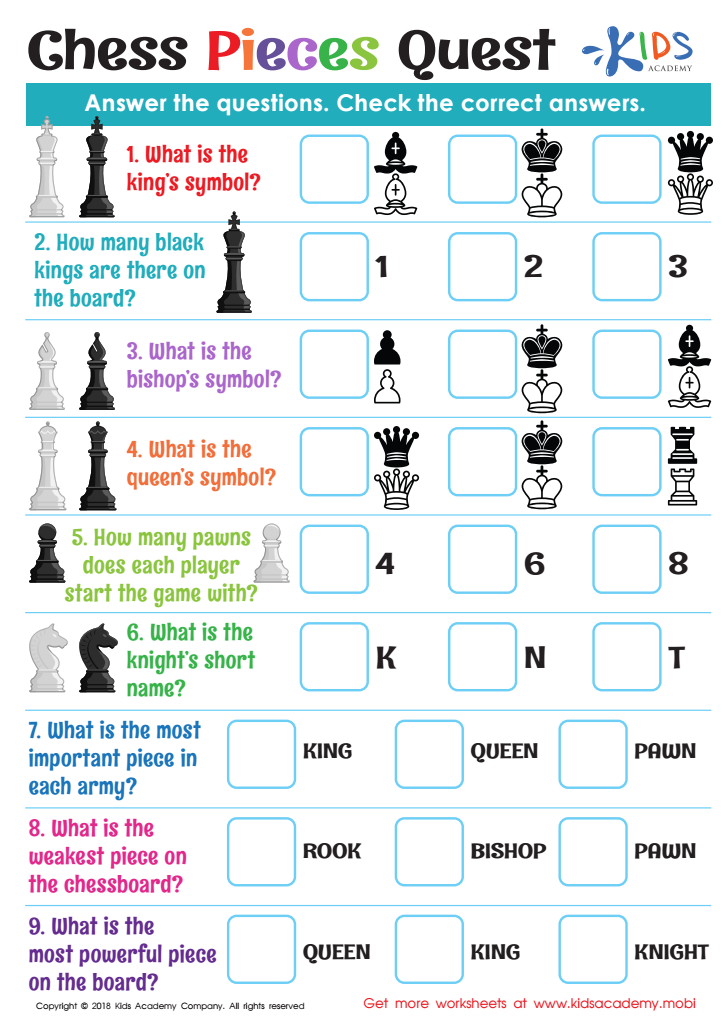
Chess Pieces Quest Worksheet
Help your child prepare for the chess quest by refreshing their knowledge of the symbols and characteristics of each chess piece. Then, have them try the 9 questions on this worksheet. These questions will assess their understanding of the symbols and how many pieces each player starts with.
 Assign to My Students
Chess Pieces Quest Worksheet
Worksheet
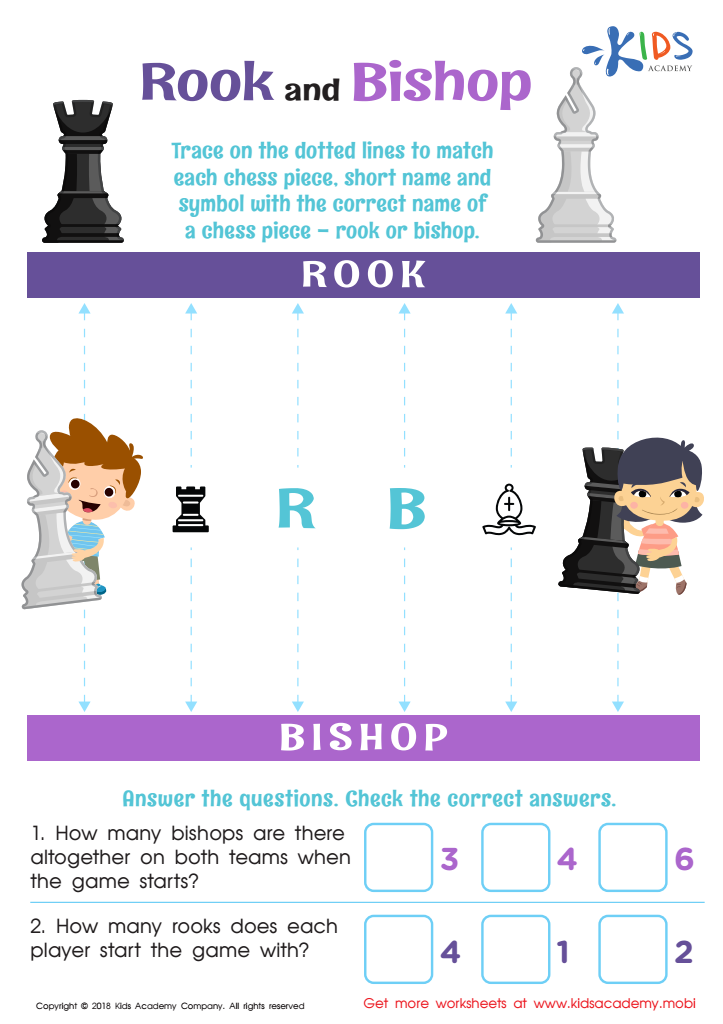
Rook and Bishop Worksheet
This tracing sheet helps your child learn chess pieces by matching each piece, short name and symbol to the correct name. After tracing, have them answer the questions and check their answers. It's a great way for them to become familiarized with chess.
Rook and Bishop Worksheet
Worksheet
Join Kids Academy for Free
Who is primarily going to use this learning content?







Chess piece identification is a pivotal learning activity for children aged 5-6, offering numerous cognitive and social benefits. Firstly, it introduces basic concepts of strategy and critical thinking. Understanding each chess piece's role fosters problem-solving skills, allowing children to think ahead and make informed decisions.
Secondly, chess piece identification enhances memory and concentration. Kids must remember the distinct features and movements of six different pieces, which aids in developing focus—a valuable skill that extends beyond the chessboard and impacts their academic performance.
Furthermore, the game promotes patience and perseverance. In learning to recognize pieces and their functions, children also learn to navigate challenges and setbacks inherent in the game. Engaging with chess provides opportunities for social interaction and collaboration, as children play against family or peers, fostering sportsmanship and communication skills.
Ultimately, chess piece identification is not merely about playing a game; it’s about building a foundation for lifelong learning. As children learn to identify and understand chess pieces, they are simultaneously enhancing their cognitive abilities, emotional intelligence, and social skills. Therefore, parents and teachers should actively support this enriching activity, recognizing its long-term benefits for children’s overall development.








