Boost your child’s learning with our engaging "Classification Skills Worksheets for Ages 5-6". Designed to enhance critical thinking, these worksheets help children identify and categorize objects, fostering essential cognitive skills. Through colorful illustrations and interactive activities, kids will learn to group items based on similarities and differences, setting a solid foundation for future problem-solving tasks. Our resources are age-appropriate, ensuring that each worksheet is both educational and entertaining. Perfect for homeschooling or classroom use, these classification worksheets create a fun learning environment that motivates young learners. Explore our collection today and watch your child's classification skills flourish!

Check out this FREE "Classification skills" Trial Lesson for age 5-6!

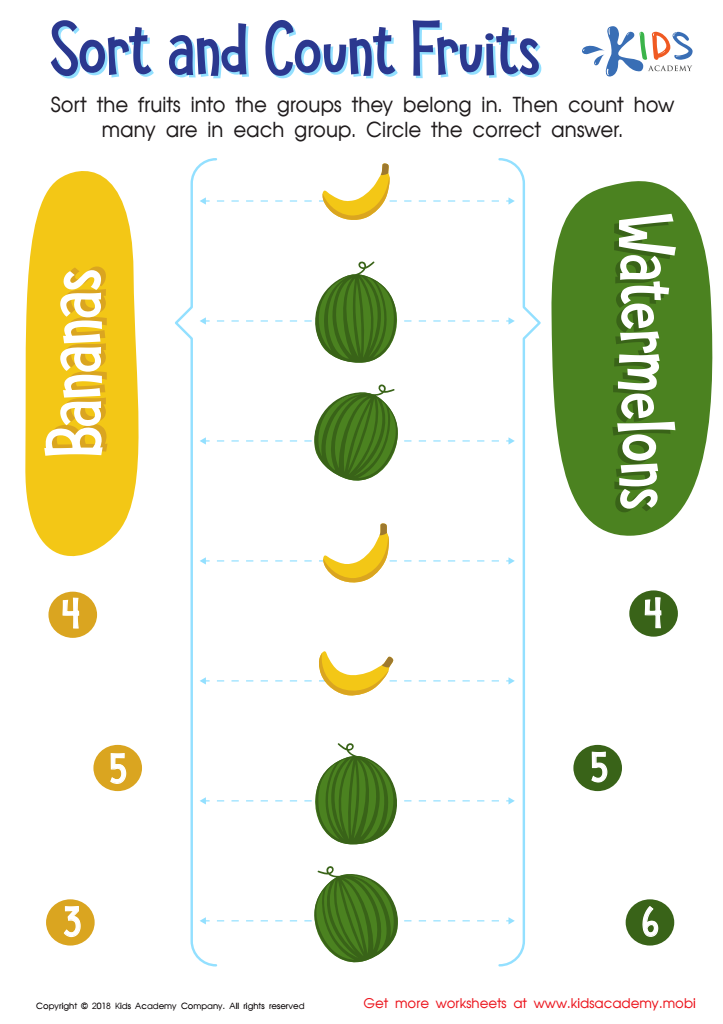
Classifying Objects and Count the Number of Objects in Each Category CCSS.Math.Content

Favorites
With answer key
Interactive
  • 5-6
  • Classification skills
Sort and Count Fruits Worksheet

Sort and Count Fruits Worksheet

Allow your children to hone their critical thinking and number reasoning skills with this free worksheet. They'll sort, count, and trace fruits while learning basic number sense. A fun, delicious learning experience with familiar pictures they'll love.
Sort and Count Fruits Worksheet
Worksheet
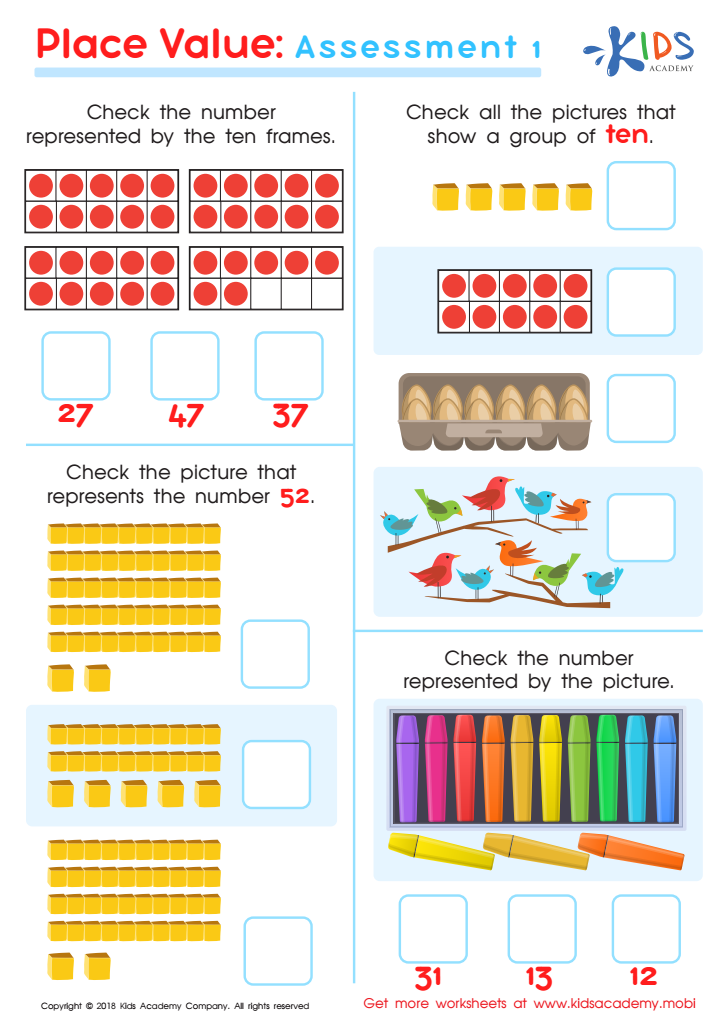
Place Value: Assessment 1 Worksheet

Place Value: Assessment 1 Worksheet

Assess your child's place value and number representation with this PDF worksheet. It lets them count and compare numbers and practice chiseling numbers into groups of ten. It's a great way to identify any concepts that need to be reinforced.
Place Value: Assessment 1 Worksheet
Worksheet
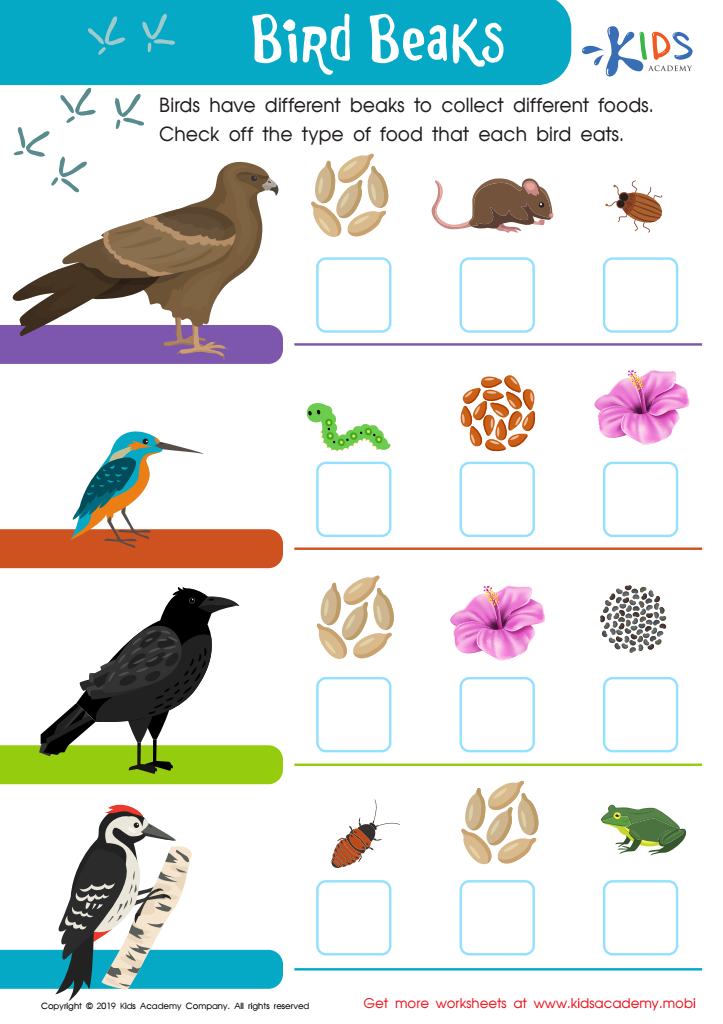
Bird Beaks Worksheet

Bird Beaks Worksheet

Birds have beaks to eat different types of food. Let your little nature lover explore why with this free worksheet! They'll learn about different beak shapes and match them to the food that's best for them. Be an adorable bird watcher together!
Bird Beaks Worksheet
Worksheet
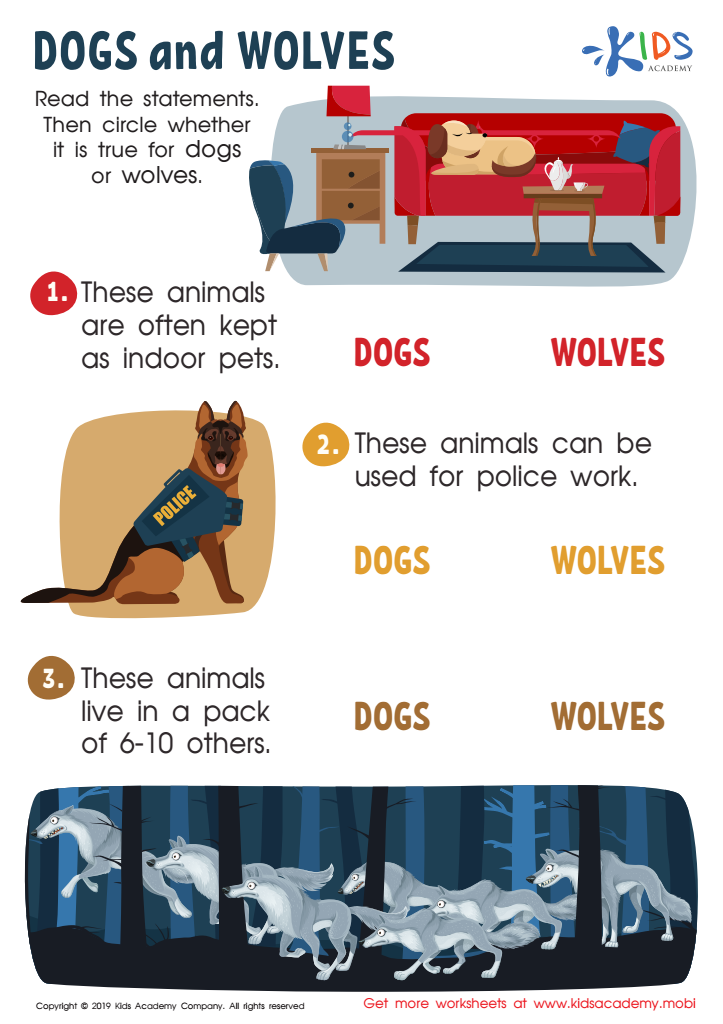
Dogs and Wolves Worksheet

Dogs and Wolves Worksheet

Kids love dogs and wolves, so engaging them with text about them is key. This free, downloadable worksheet allows kids to read statements about dogs and wolves and use picture clues and prior knowledge to decide if the statements are true or false, strengthening their reading comprehension.
Dogs and Wolves Worksheet
Worksheet
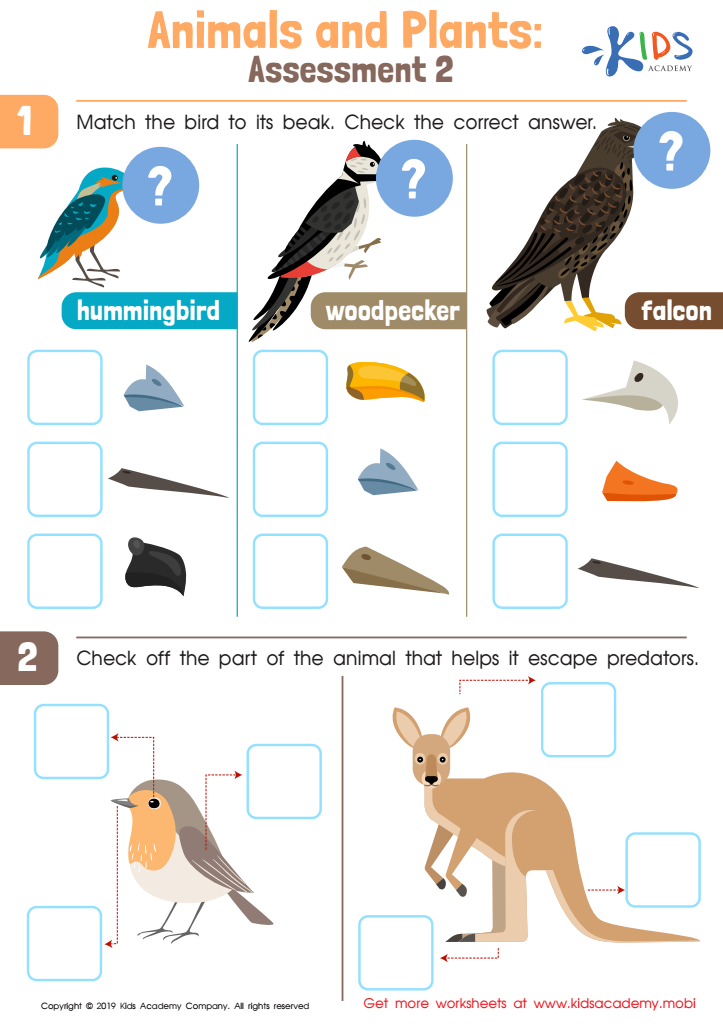
Animals and Plants: Assesment 2 Worksheet

Animals and Plants: Assessment 2 Worksheet
This free PDF is ideal to quickly test your child's knowledge of animal adaptations. They'll select the right beak patterns for hummingbird, woodpecker and falcon, and identify which parts of animals help them escape predators. It's easy to assess your kid's understanding.
Animals and Plants: Assessment 2 Worksheet
Worksheet
Space: Assessment 2 Worksheet

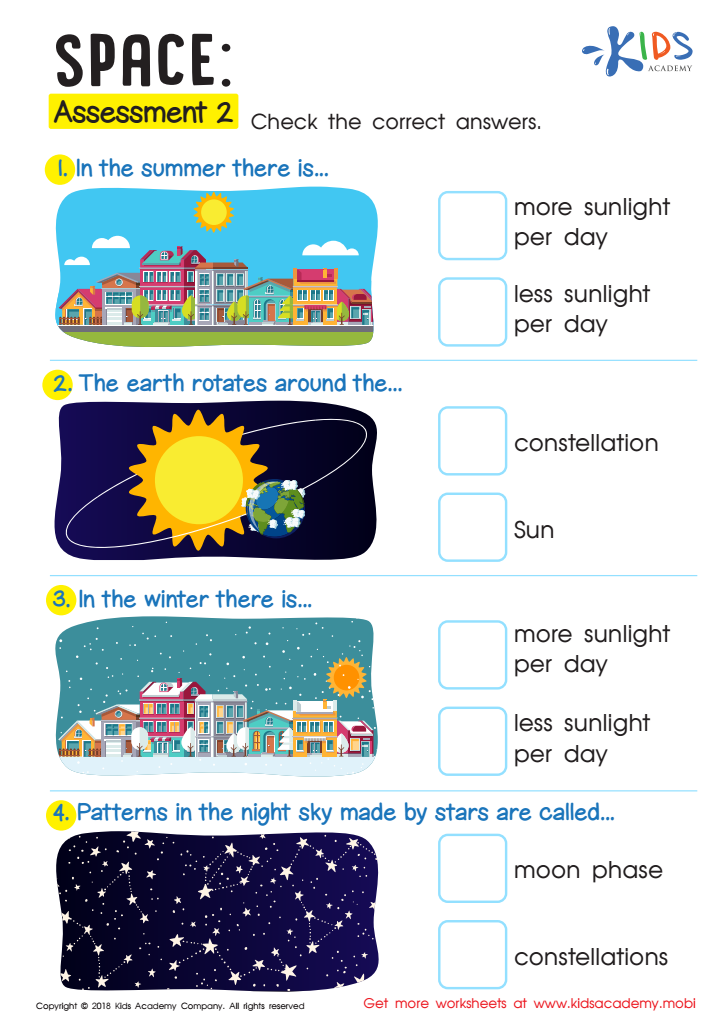
Space: Assessment 2 Worksheet

Test your kids' knowledge of the weather, constellations and Earth with this worksheet. Show them the 4 images and ask what's happening; then read the questions and options and help them pick the right answers. This printout is a helpful and fun way to learn!
Space: Assessment 2 Worksheet
Worksheet
Sorting Shapes - Part 2 Worksheet


Sorting Shapes - Part 2 Worksheet
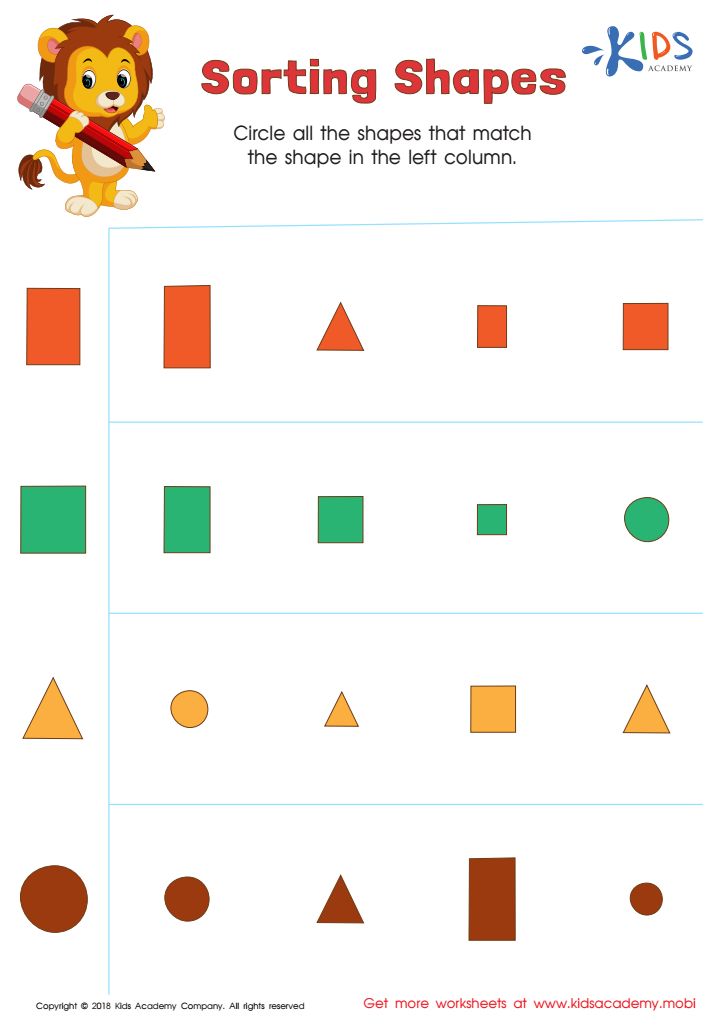
Tired of dull worksheets? Look no further than Kids Academy's colorful shape-sorting worksheet! It's perfect for challenging your toddler's problem-solving skills. Print the free PDF page and let your child practice the basics of geometry. Have them work down the left column, circling the shapes on the right that match. It's a great way to form a strong foundation in early learning.
Sorting Shapes - Part 2 Worksheet

Worksheet


Classification skills are crucial for children aged 5-6, laying the foundation for essential cognitive and academic development. At this age, children are naturally curious and begin to make sense of the world around them. By learning to classify objects, they not only understand categories like colors, shapes, and sizes but also enhance their critical thinking and problem-solving skills.

For parents and teachers, fostering classification skills can support other areas of learning. Children develop language skills as they learn to articulate and describe their classifications. Engaging in classification activities also promotes social skills as children collaborate, discuss, and share their findings with peers.

Moreover, classification is a key aspect of early STEM education. Understanding how to group elements based on shared characteristics encourages analytical thinking, which is essential for future learning in science and math. Recognizing patterns and relationships inherent in classification lays groundwork for more advanced concepts such as sorting algorithms and ecological systems.

In short, prioritizing classification skills in early education not only enhances cognitive functions but also cultivates a love for learning, preparing children for future academic success and helping them navigate their ever-changing environment. This makes it a valuable focus for both parents and educators alike.