
Differentiating push/pull Worksheets for Ages 5-6
3 filtered results
Difficulty Level
Grade
Age
-
From - To
Subject
Activity
Standards
Engage and educate young learners with our "Differentiating Push/Pull Worksheets for Ages 5-6." Designed to foster a foundational understanding of forces, these fun and interactive worksheets are perfect for introducing the basic concepts of physics in an age-appropriate manner. Each activity challenges children to distinguish between pushing and pulling actions through captivating illustrations and scenarios. Boost your child's critical thinking and observational skills while seamlessly integrating STEM learning into their daily routine. Ideal for both classroom and at-home learning, these worksheets make learning about forces an exciting adventure for young minds. Get started on a path to scientific discovery today!
Favorites
With answer key
Interactive
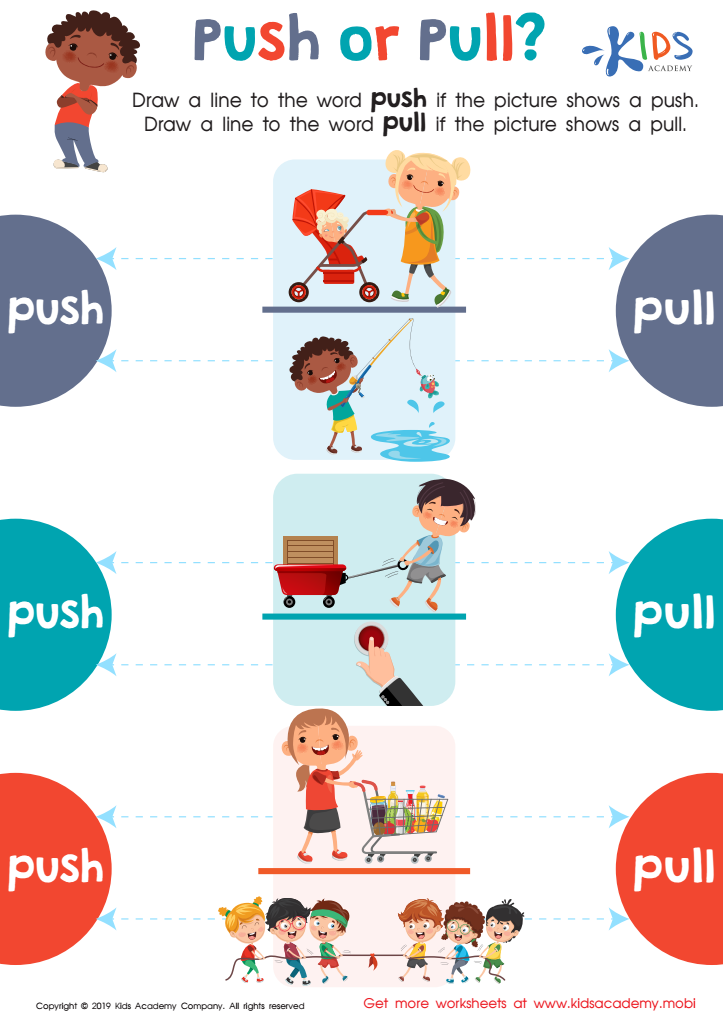
Push or Pull? Worksheet
Young kids may struggle to differentiate push and pull. When they start writing, they may use them interchangeably and wrongly. This worksheet clarifies the concepts: pushing means moving something away, pulling means bringing something closer. It provides pictures and traceable lines for kids to connect each image to the correct word. This helps them understand and remember the difference for future writing and reading.
 Assign to My Students
Push or Pull? Worksheet
Worksheet
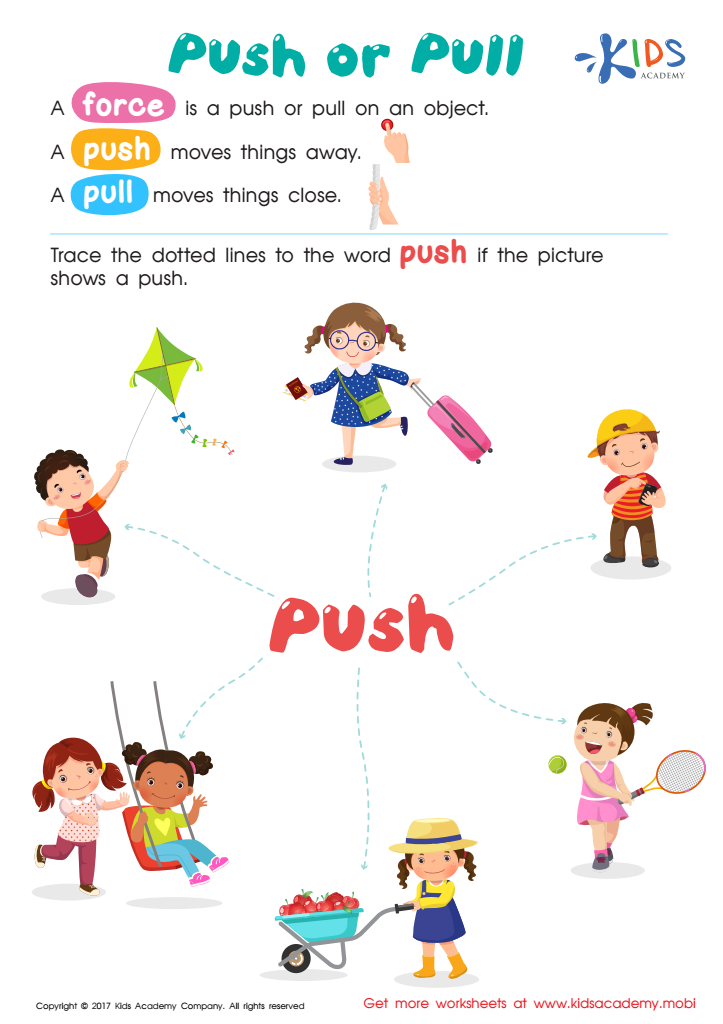
Push or Pull Worksheet
and which involve pulling! With this fun worksheet, your child will learn about force and its simple application in everyday activities. Get them started with Push or Pull! (80 words)
Push or Pull Worksheet
Worksheet
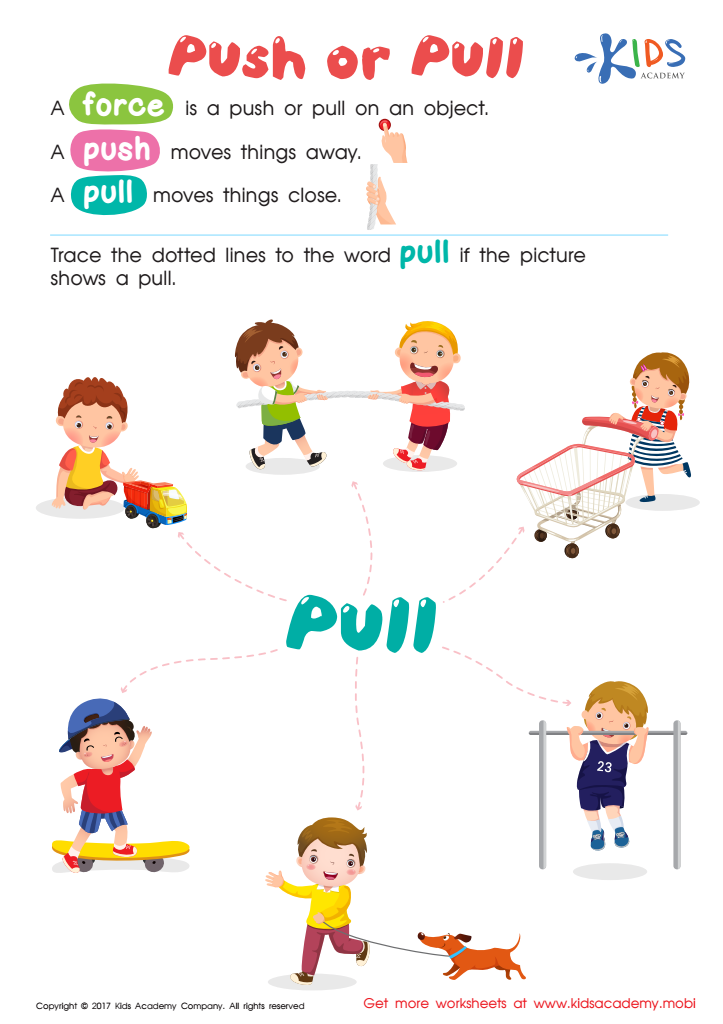
Pull or Push Worksheet
With this fun worksheet, they'll explore physics by sorting objects into categories according to their mode of motion. It's a great way to get them interested in science.
Pull or Push Worksheet
Worksheet
Join Kids Academy for Free
Who is primarily going to use this learning content?


.jpg)
.jpg)



.jpg)
Understanding the concepts of push and pull is essential for young learners as it lays the foundation for primary scientific knowledge and cognitive development. For children ages 5-6, comprehending these basic principles of force can spark curiosity and foster a love for science. Teachers and parents should care because this period is crucial for developing critical thinking and problem-solving skills.
Teaching children about push and pull in an interactive and meaningful way helps enhance their observational skills. For example, everyday activities like pushing a swing or pulling a door offer practical examples that they can relate to, making abstract scientific concepts more concrete. Engaging in experiments or stories that involve pushing and pulling can also strengthen language and literacy skills, as children describe and discuss their actions.
This early exposure cultivates a scientific mindset and aligns with many educational standards aimed at developing inquiry-based learning. It also encourages physical activity and fine motor skill development as children manipulate objects. Fostering an environment where questioning and exploration are valued, guides children in understanding how the world works, setting a positive trajectory for their academic journey. Investing time in teaching these fundamental forces enhances both the educational experience and personal growth of young children.








