Pattern recognition Worksheets for Ages 5-6 - Page 2
25 filtered results
-
From - To
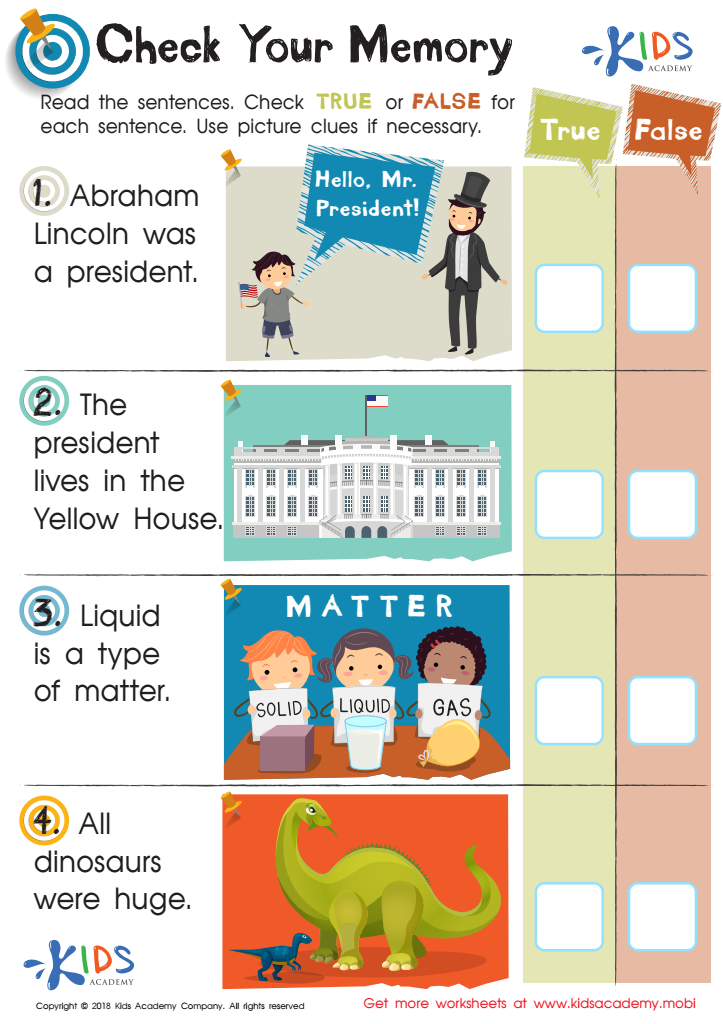
Check Memory Worksheet
 Assign to My Students


.jpg)



.jpg)
Pattern recognition is a fundamental skill that parents and teachers should particularly focus on for children aged 5-6. At this developmental stage, kids are incredibly receptive to learning new concepts and routines, making it the perfect time to introduce them to this essential skill.
Pattern recognition helps improve critical thinking and problem-solving abilities. When children identify patterns, they learn to predict what comes next, enhancing their logical reasoning. This method of thinking translates to other academic areas such as math, where recognizing numerical patterns is foundational for understanding concepts like addition, subtraction, and multiplication.
Additionally, pattern recognition benefits literacy. Recognizing alphabetic patterns aids in phonics, an essential skill in learning to read and write. Rhyming patterns in songs and poems can make language learning more engaging and memorable.
Socially, recognizing routines and patterns in day-to-day activities helps children feel more secure. Understanding sequences—like the steps involved in getting ready for school or the order of events in a story—provides a sense of structure, boosting their confidence and independence.
Ultimately, fostering pattern recognition in young children lays a strong foundation for academic success and life skills. Making this skill a priority helps equip them with the tools needed for more complex thinking and learning in their future education.








