Reading thermometers Worksheets for Ages 5-6
3 filtered results
-
From - To
Discover fun and engaging Reading Thermometers Worksheets tailored for ages 5-6! Our carefully designed worksheets introduce young learners to the basics of thermometers and temperature measurement. With colorful visuals and interactive activities, kids will enhance their comprehension skills while learning to read thermometer scales. These worksheets aim to develop critical thinking and improve fine motor skills as children trace and color illustrations. Perfect for classroom use or at-home learning, our resources make temperature concepts enjoyable and accessible. Dive into the world of thermometers and watch your child learn and grow with our exciting educational materials!
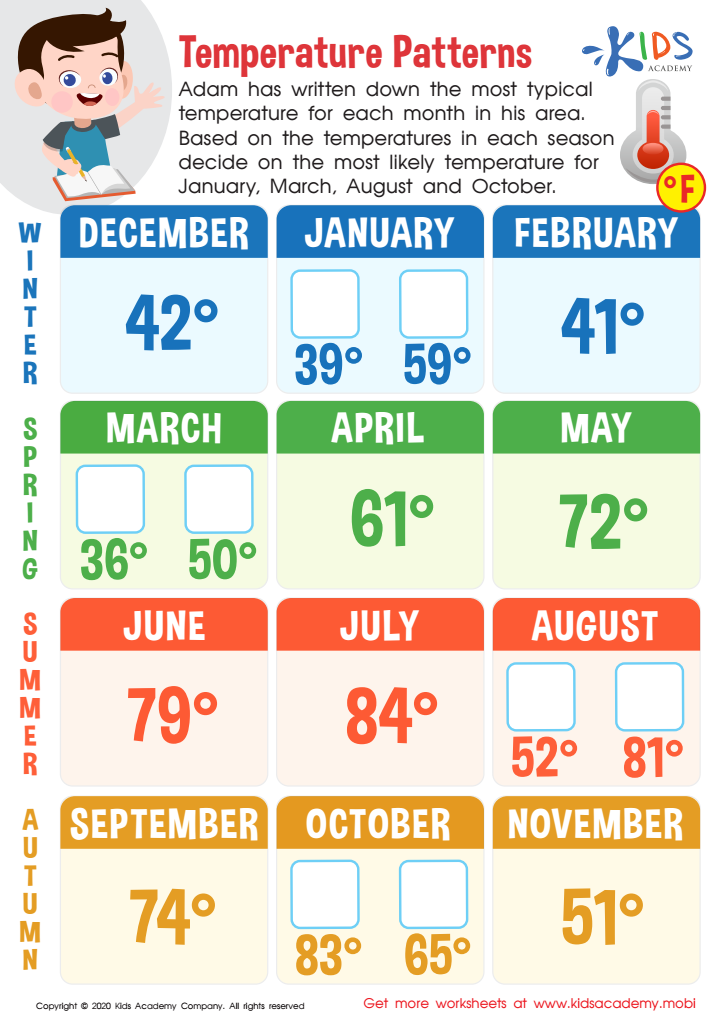
Temperature Patterns Worksheet
 Assign to My Students
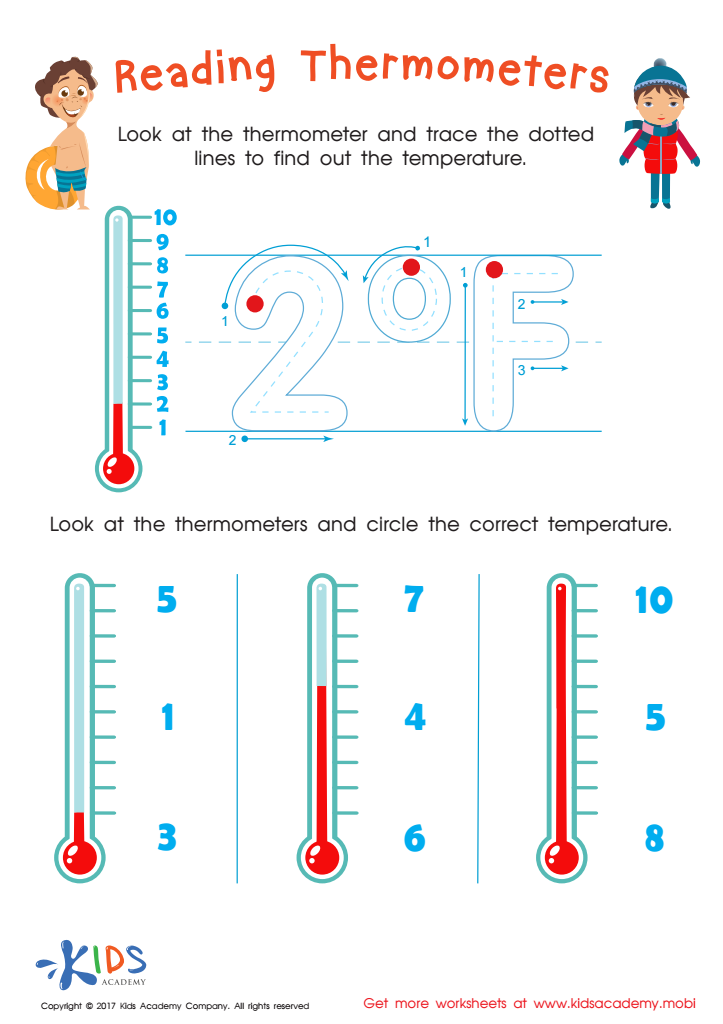
Reading Thermometers Printable








Reading thermometers is a vital skill that aids in children's understanding of basic science concepts and everyday life applications. For parents and teachers of children ages 5-6, fostering this skill is crucial for several reasons.
First, reading thermometers introduces young learners to measurement and numeracy, foundational concepts in math and science education. This hands-on experience encourages curiosity about temperature, weather patterns, and even health monitoring when assessing fevers.
Additionally, understanding how to read a thermometer cultivates critical thinking and problem-solving skills. Children learn to interpret numerical data and visualize abstract concepts, creating a connection between numbers and real-world phenomena. This experience builds confidence in their abilities to solve similar problems in the future.
Moreover, engaging with thermometers can spark conversations about environmental science, encouraging children to observe seasonal changes and discuss their effects. It also fosters an early appreciation for scientific inquiry, prompting them to ask questions and explore the world around them.
Ultimately, teaching children to read thermometers lays a solid groundwork for literacy in science and mathematics, nurturing future scholars who are informed, inquisitive, and capable. By prioritizing this educational experience, parents and educators equip children with the essential skills they need to thrive.








