Recognizing shapes Worksheets for Ages 5-6
13 filtered results
-
From - To
Enhance your child's understanding of basic geometry with our "Recognizing Shapes Worksheets for Ages 5-6." Each printable worksheet is meticulously designed to make learning fun and interactive. These hands-on activities will help your child identify and differentiate circles, squares, triangles, and more while improving their fine motor skills and spatial awareness. Perfect for young learners, our worksheets bring important early learning skills into focus through engaging exercises. The vivid illustrations capture children's interest, making math both enjoyable and educational. Visit us to explore our collection and give your child the perfect start in their math journey!
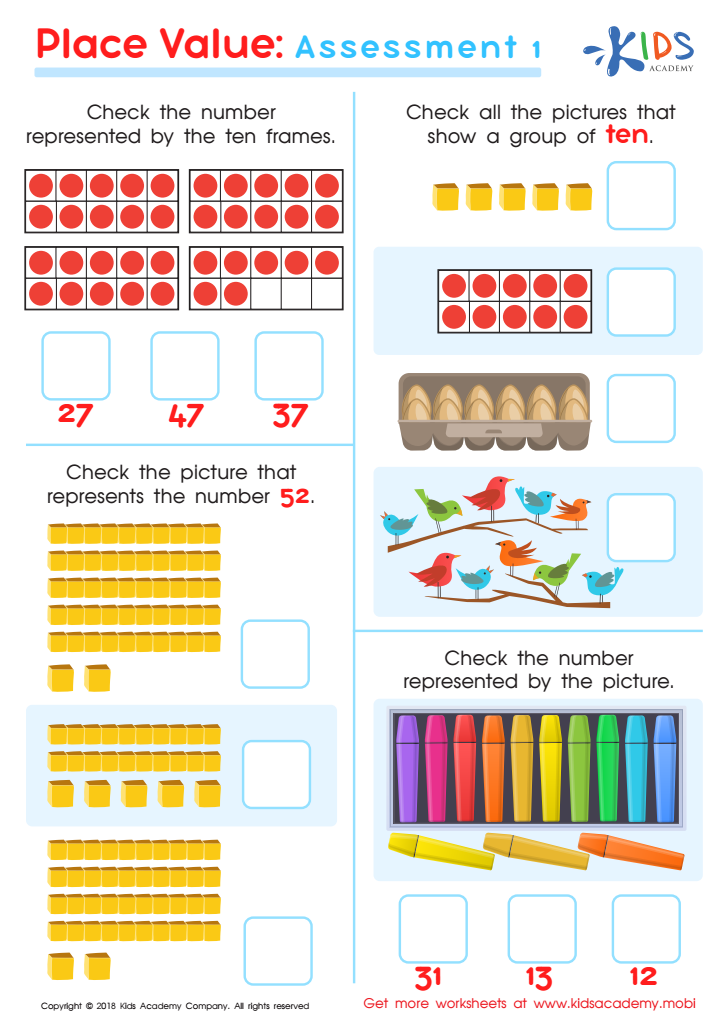
Place Value: Assessment 1 Worksheet
 Assign to My Students
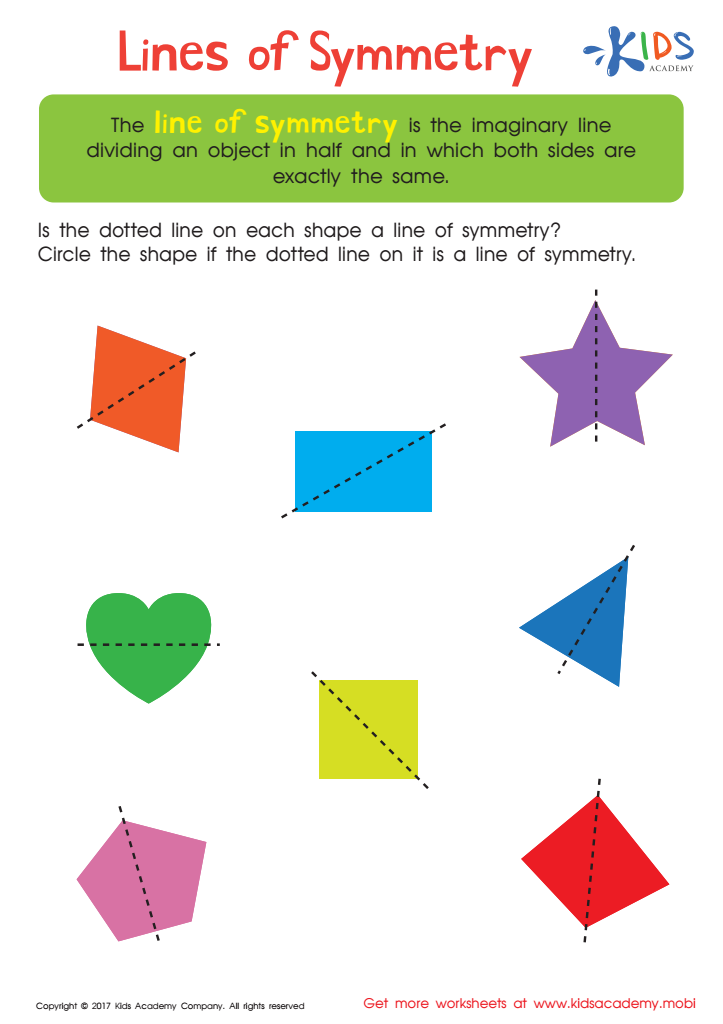
Lines of Symmetry Printable
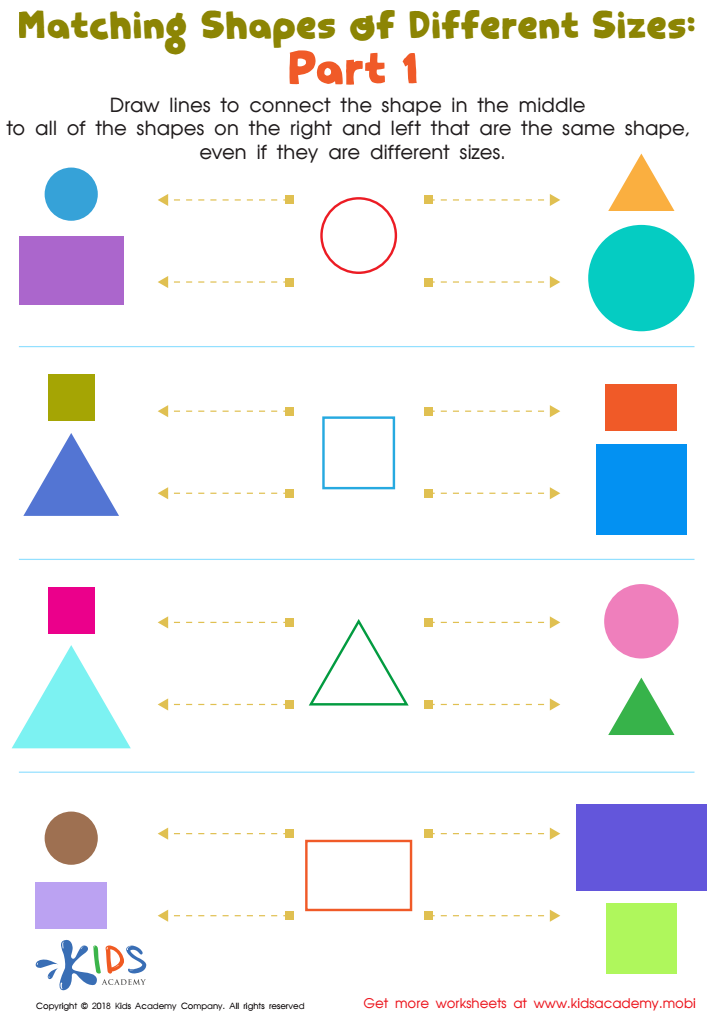
Geometry: part 1 Worksheet
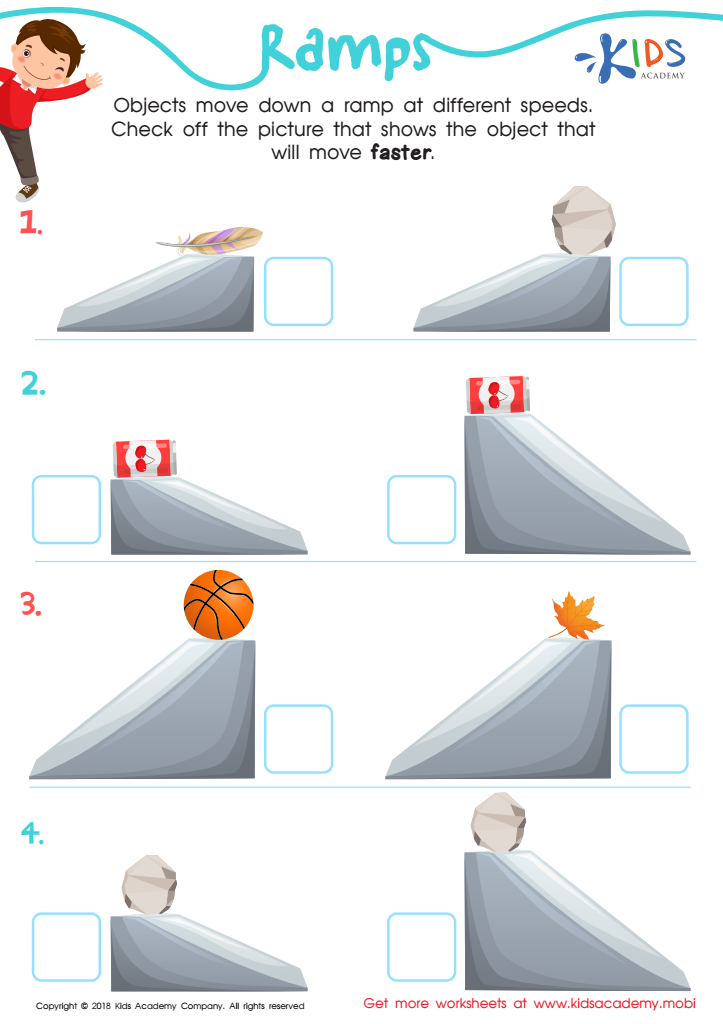
Ramps Worksheet
Easter Word Search Worksheet
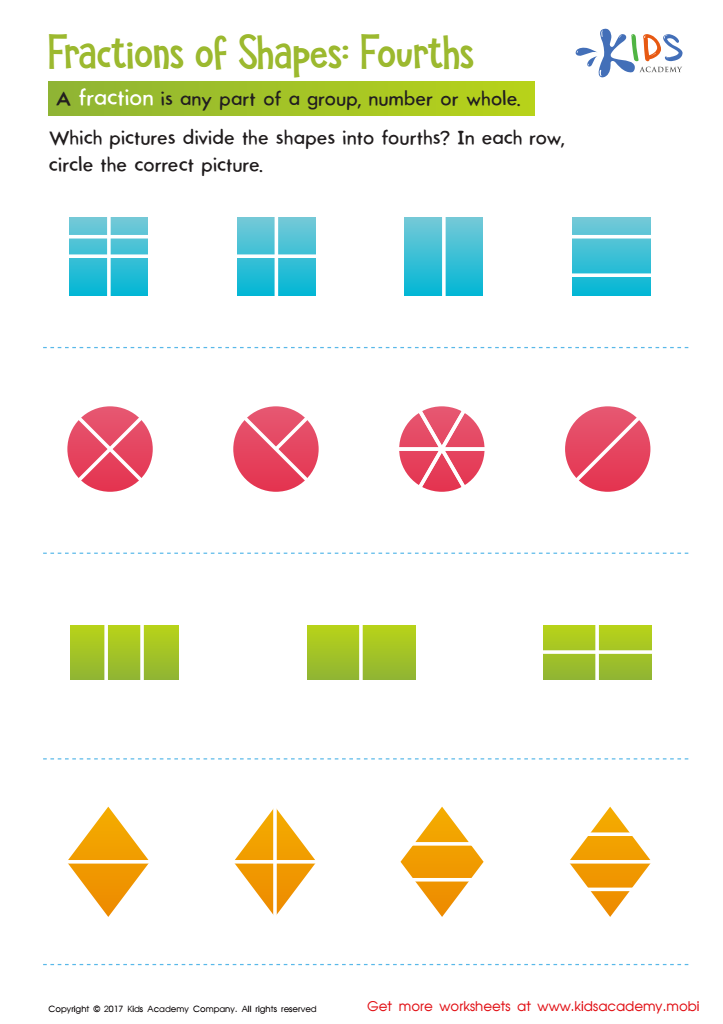
Fractions of Shapes Worksheet








Recognizing shapes at ages 5-6 is crucial for several developmental reasons, making it essential for parents and teachers to pay attention to this skill.
First, identifying basic shapes like circles, squares, and triangles is foundational for early mathematics. It enhances children's ability to understand geometry, measurement, and spatial relationships, which are important components of the math curriculum as they progress in school.
Second, shape recognition plays a significant role in cognitive development. It helps in developing categorization skills, as children learn to group objects based on their shapes. This categorization process also enhances memory and problem-solving abilities, as children start applying what they learn about shapes to other areas.
Third, it aids in literacy skills. Recognizing shapes can improve pre-reading skills—many letters and numbers are composed of basic shapes, so familiarity with shapes lays the groundwork for letter and number recognition.
Moreover, understanding shapes supports fine motor skills. Activities like drawing or tracing shapes improve hand-eye coordination and dexterity, which are critical for writing.
Lastly, shape recognition is fundamental to everyday life. From understanding road signs to organizing objects, the ability to identify and differentiate shapes helps children navigate and make sense of the world around them.
By facilitating shape recognition, parents and teachers set the stage for comprehensive growth in academic and practical life skills.








