Enhance your child's reading and comprehension skills with our engaging Story Analysis Worksheets designed specifically for ages 5-6. These worksheets help young readers think critically about stories by identifying key elements such as characters, setting, and plot. Each worksheet encourages children to reflect on what they’ve read by answering simple questions and completing activities that reinforce comprehension and analytical thinking. Perfect for both classroom and home learning, our Story Analysis Worksheets provide a fun and interactive way for young learners to develop essential literacy skills, setting a strong foundation for more advanced reading in the future.

Check out this FREE "Story analysis" Trial Lesson for age 5-6!

Review

Favorites
With answer key
Interactive
  • 5-6
  • Story analysis
Hansel and Gretel Geometry Maze Worksheet

Hansel and Gretel Geometry Maze Worksheet

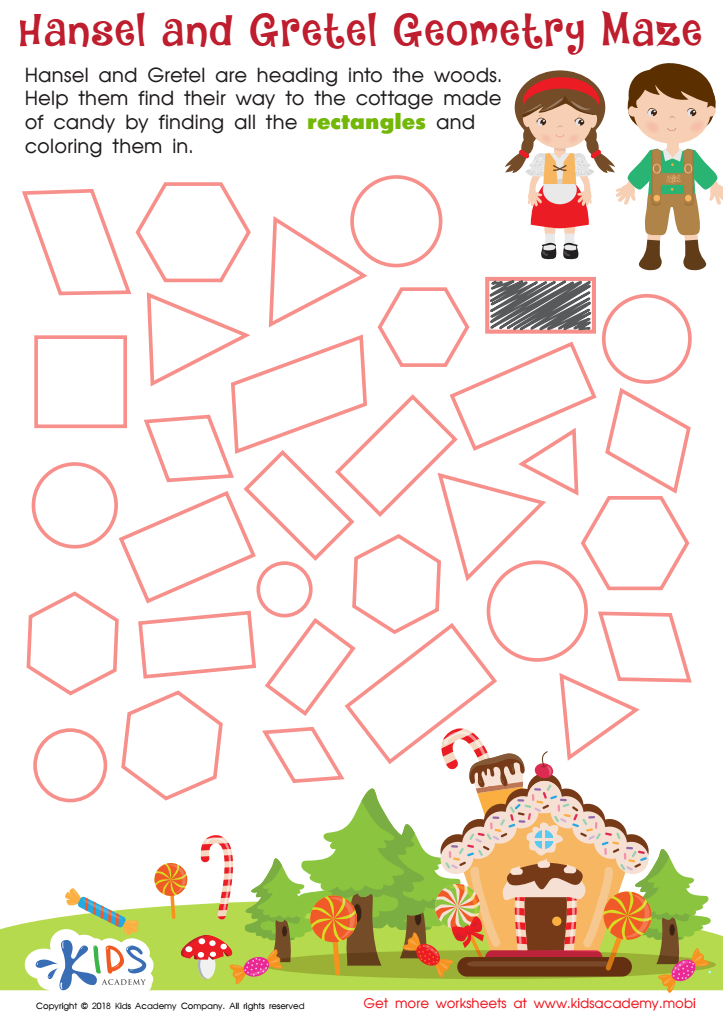
Your kids will have fun helping Hansel and Gretel get through a colorful forest of shapes! This free PDF reinforces the properties of rectangles, building skills in visual discernment and laying the foundations for geometry. They'll be too busy enjoying the story to realize they're learning!
Hansel and Gretel Geometry Maze Worksheet
Worksheet
Uppercase and Lowercase Letters: Assessment Worksheet

Uppercase and Lowercase Letters: Assessment Worksheet

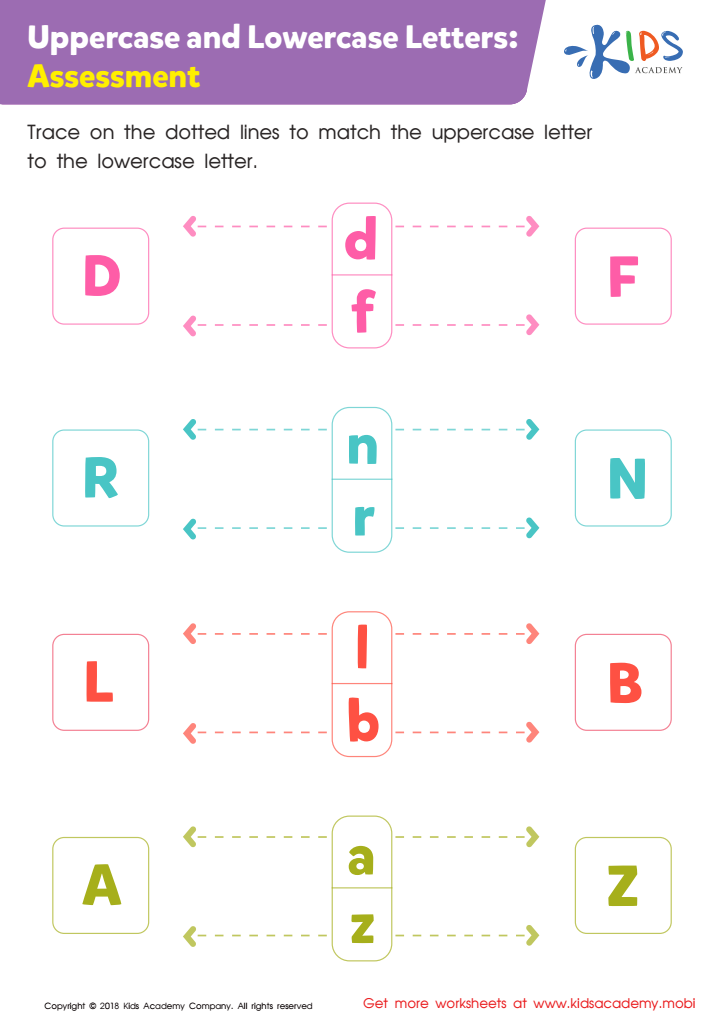
Assess your child's knowledge of upper- and lowercase letters with this worksheet. Have them trace the dotted lines to match the lowercase letters with their uppercase counterparts. This is a great way to gauge their progress and identify any areas of difficulty. Get a better understanding of your child's capabilities and encourage their development!
Uppercase and Lowercase Letters: Assessment Worksheet
Worksheet
Key Details from the Princess and the Pea Worksheet

Key Details from the Princess and the Pea Worksheet

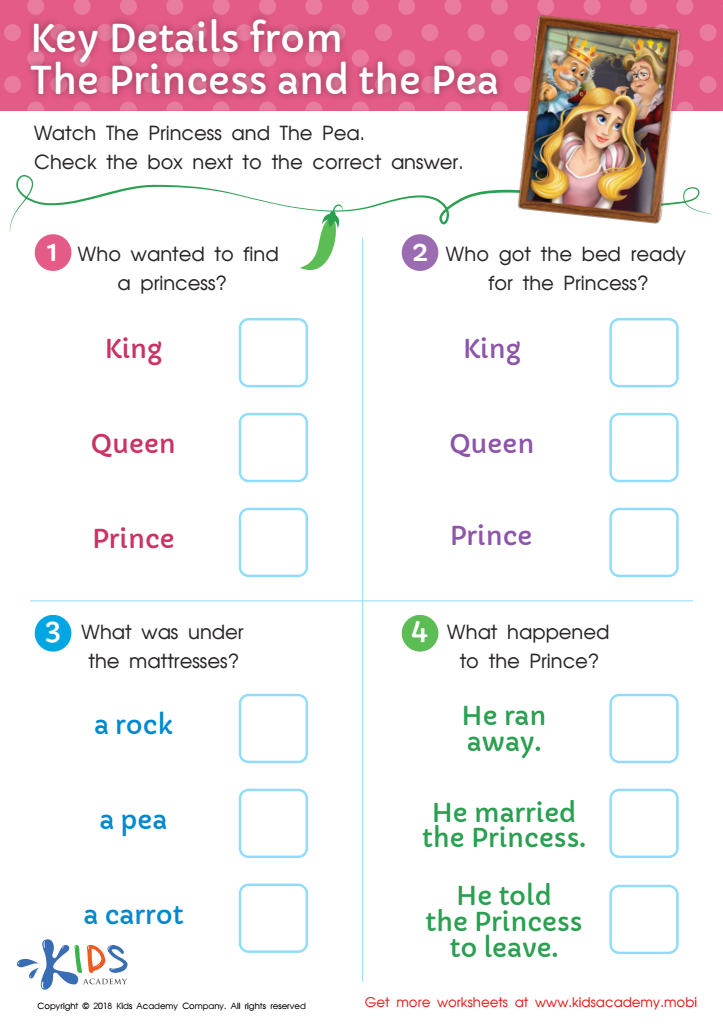
After reading The Princess and the Pea, ask your students questions to assess their comprehension of the story. Check their knowledge of key details. This printable can be used to help evaluate their understanding. Encouraging the recall of story events helps build important reading skills.
Key Details from the Princess and the Pea Worksheet
Worksheet
Questions About Stories: Assessment 3 Worksheet

Questions About Stories: Assessment 3 Worksheet

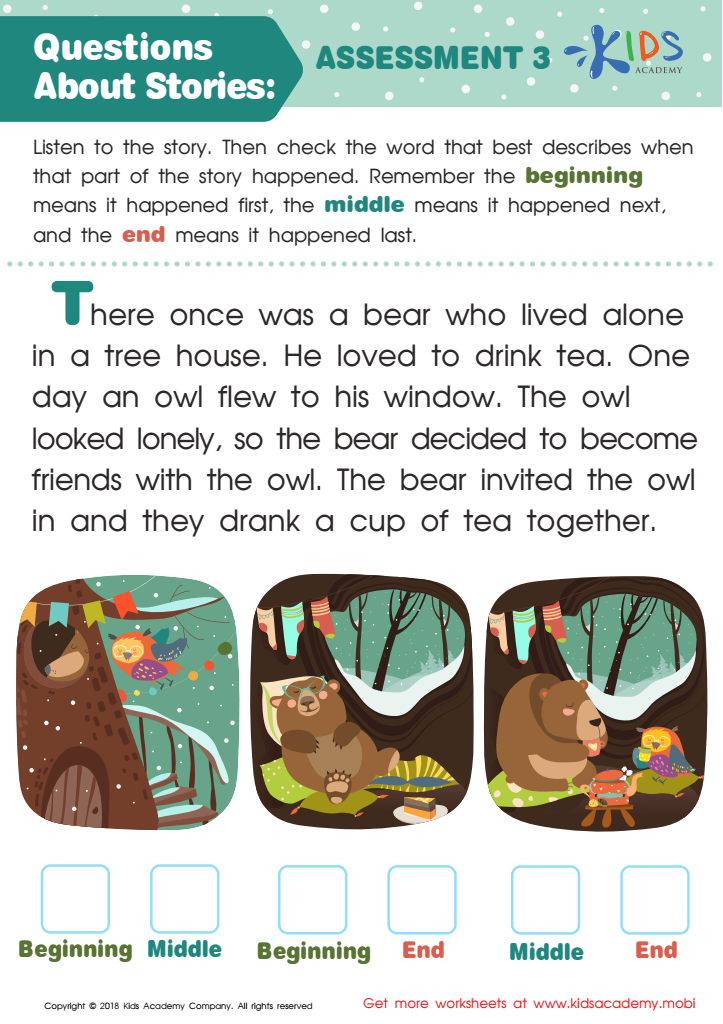
Help kids understand stories by having them listen to a story and check boxes for the beginning, middle, and end. This worksheet makes it fun for even the youngest learners to recall story elements and sequence of events. Let them listen to the story from start to finish, then look at the pictures to check which part of the story they depict.
Questions About Stories: Assessment 3 Worksheet
Worksheet
Craft and Structure of Stories: Assessment 2 Worksheet

Craft and Structure of Stories: Assessment 2 Worksheet

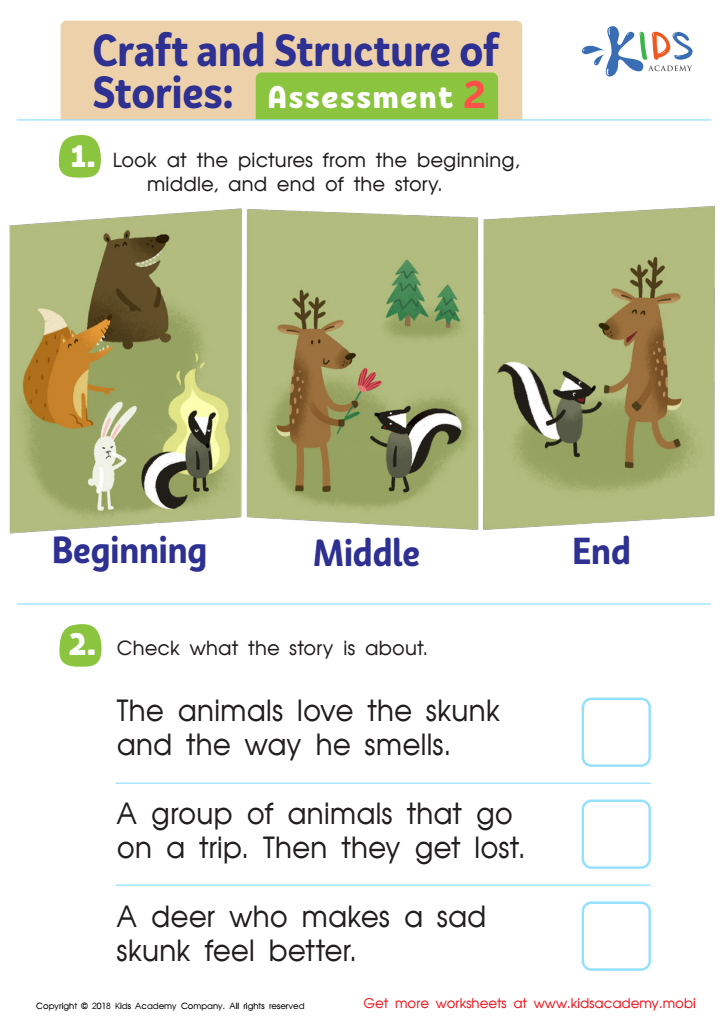
Help your child assess their story sequencing and reading comprehension skills using this cute worksheet! It encourages them to look at the three pictures on the page, each representing a scene from the beginning, middle and end. Ask them what the story is about, then let them check the box next to the correct answer. This is a great way to ensure they understand the main events of a story.
Craft and Structure of Stories: Assessment 2 Worksheet
Worksheet
Picture Books Worksheet

Picture Books Worksheet

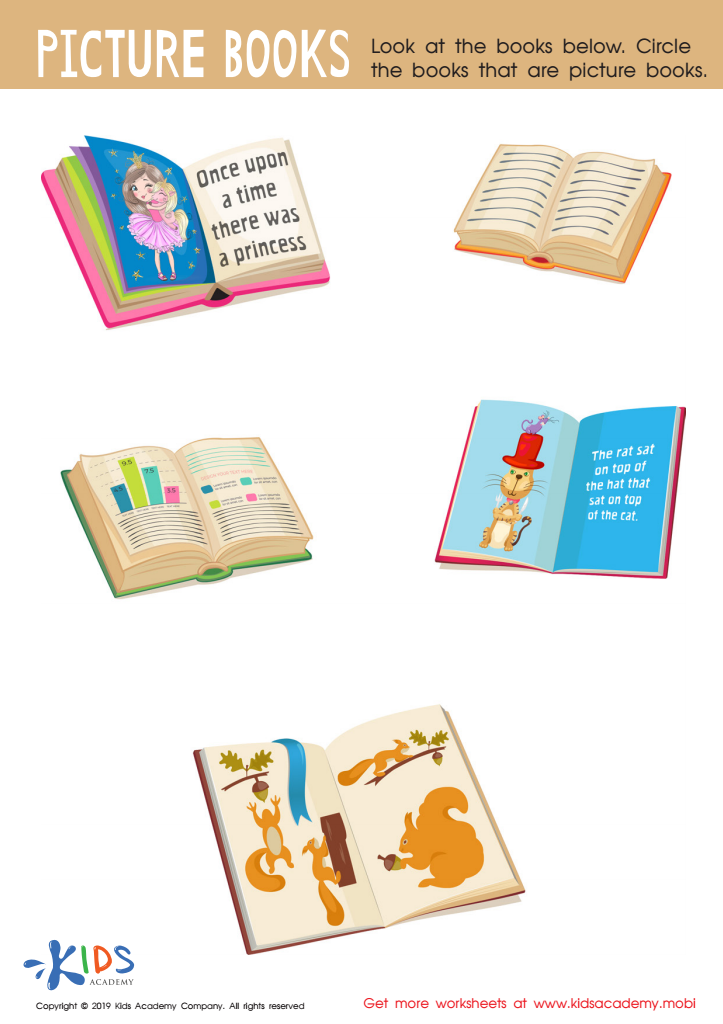
Kids will love this exercise! Get their imaginations going with five colorful picture books. Ask them to circle the books that are picture books and have them enjoy the exciting stories, along with the colorful images. Reading can become that much more enjoyable!
Picture Books Worksheet
Worksheet
Books For Kids PDF Worksheets: The Three Little Pigs

The Three Little Pigs Worksheet

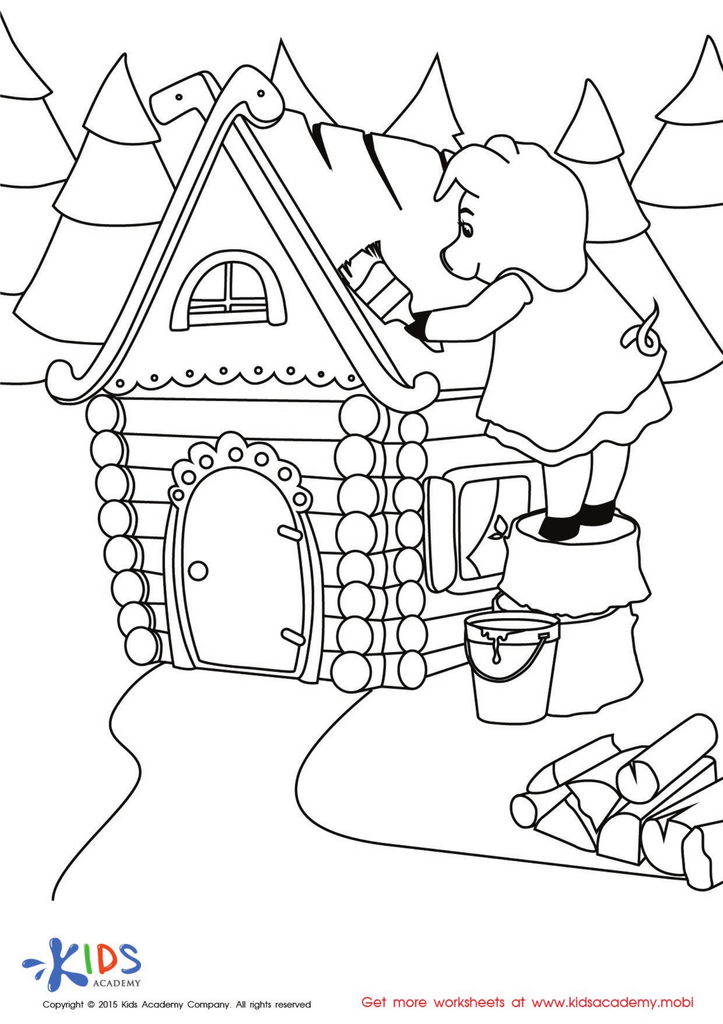
Print out this fun coloring page and unleash your creativity! It features a cute little pig painting her new sticks house. What color will you choose? Work those fine motor muscles and enjoy the picture come to life! See what happens next to the three little pigs.
The Three Little Pigs Worksheet
Worksheet
Who Are the Characters? Worksheet

Who Are the Characters? Worksheet

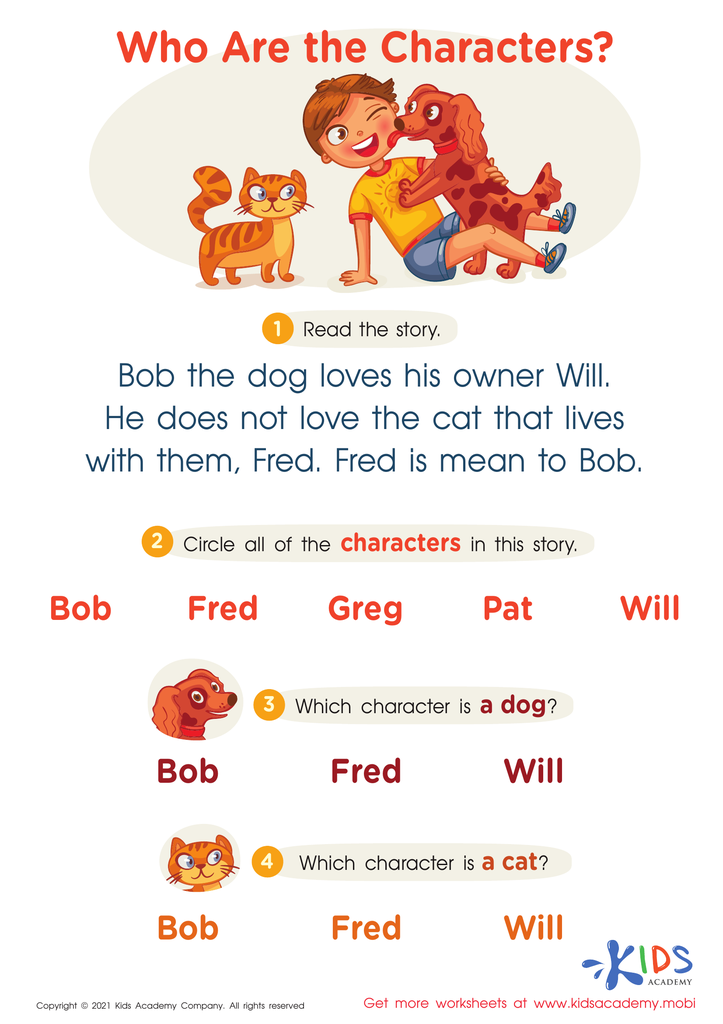
Original: The annual summer festival takes place on the last day of June and is celebrated with a parade and a carnival that features rides, games, and yummy food. Rewrite: Every June end marks the annual summer festival with a parade and carnival. Enjoy rides, games, and delicious food!
Who Are the Characters? Worksheet
Worksheet
Puss in Boots Vocabulary Worksheet


Puss in Boots Vocabulary Worksheet

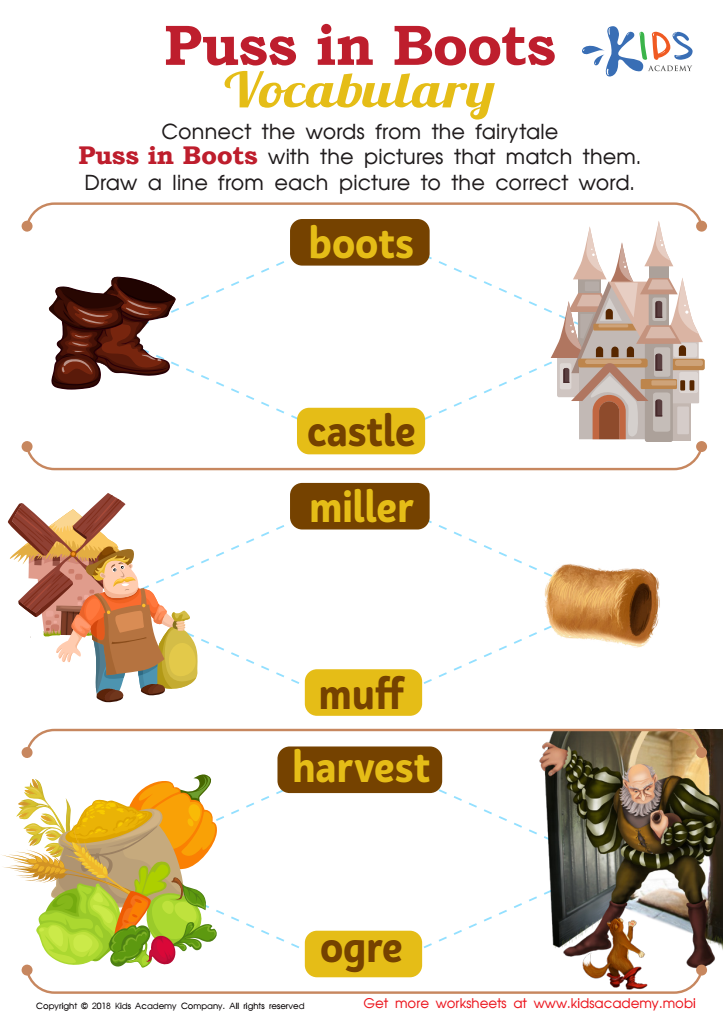
Let your kids enjoy story-telling while learning at the same time. Help them learn from the fairytale, Puss in Boots, by connecting words from the worksheet with the matching pictures. Ask them to draw a line between each picture and corresponding word to build their vocabulary.
Puss in Boots Vocabulary Worksheet
Worksheet


Story analysis for ages 5-6 is essential because it aids in the foundational development of literacy and cognitive skills in children. At this age, young minds are highly receptive, and engaging them in story analysis helps improve their comprehension and critical thinking abilities. When parents and teachers encourage children to reflect on and discuss stories, they promote understanding of narrative structures, character motivations, and plot sequences.

Moreover, story analysis fosters vocabulary expansion and language proficiency. Children learn new words and phrases within contextual settings, improving their verbal expression. Discussing stories helps in boosting listening skills and patience, as young students learn to wait for their turn and engage in meaningful conversations.

Emotional intelligence is another crucial benefit. Stories often present diverse characters and situations that mirror real-world emotions and dilemmas. Analyzing these allows children to empathize with various perspectives, developing their social-emotional awareness.

Finally, fostering a love for reading through stories can spark a lifelong passion for learning. Early engagement sets a positive tone towards reading and learning, cultivating an inquisitive mindset. Hence, integrating story analysis into early education is a multifaceted approach that significantly contributes to a child's holistic development.