Understanding currency Worksheets for Ages 5-6
5 filtered results
-
From - To
Boost your child’s financial literacy with our engaging "Understanding Currency Worksheets for Ages 5-6"! Perfectly designed for young learners, these worksheets introduce basic money concepts such as identifying coins, counting money, and simple addition using currency. Through fun and interactive exercises, children will better grasp the value of money and cultivate essential math skills. These printable worksheets make learning about currency enjoyable with vibrant illustrations and age-appropriate activities. Create a solid foundation for smart money management and numeracy skills as your child explores the world of money. Visit Kids Academy to download your worksheets today!
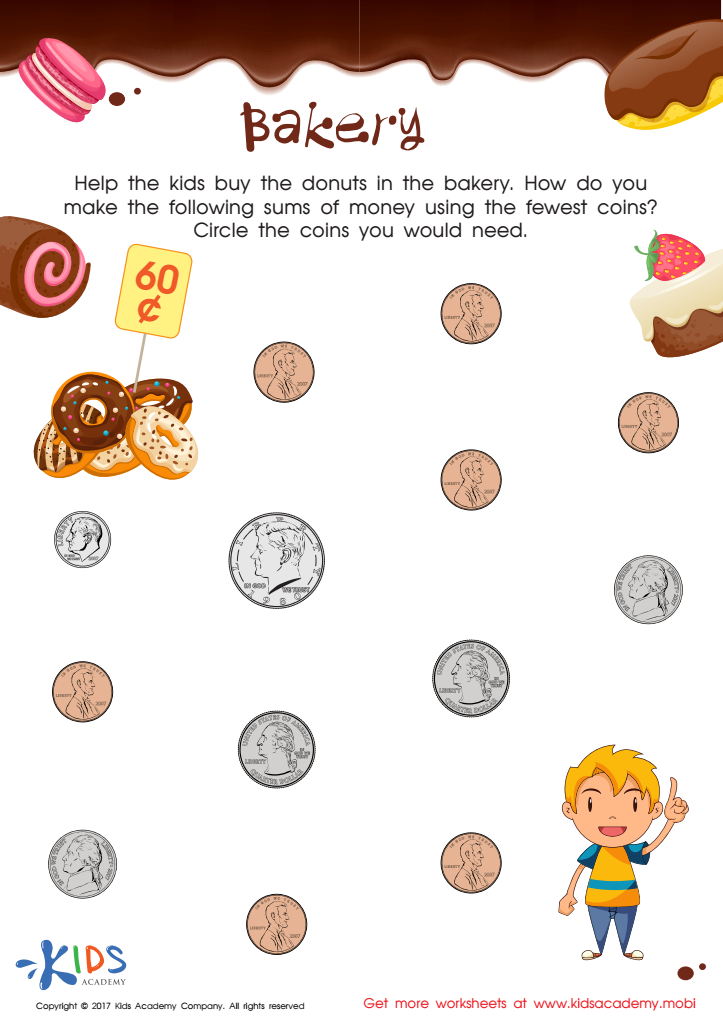
Counting Coins Worksheet
 Assign to My Students
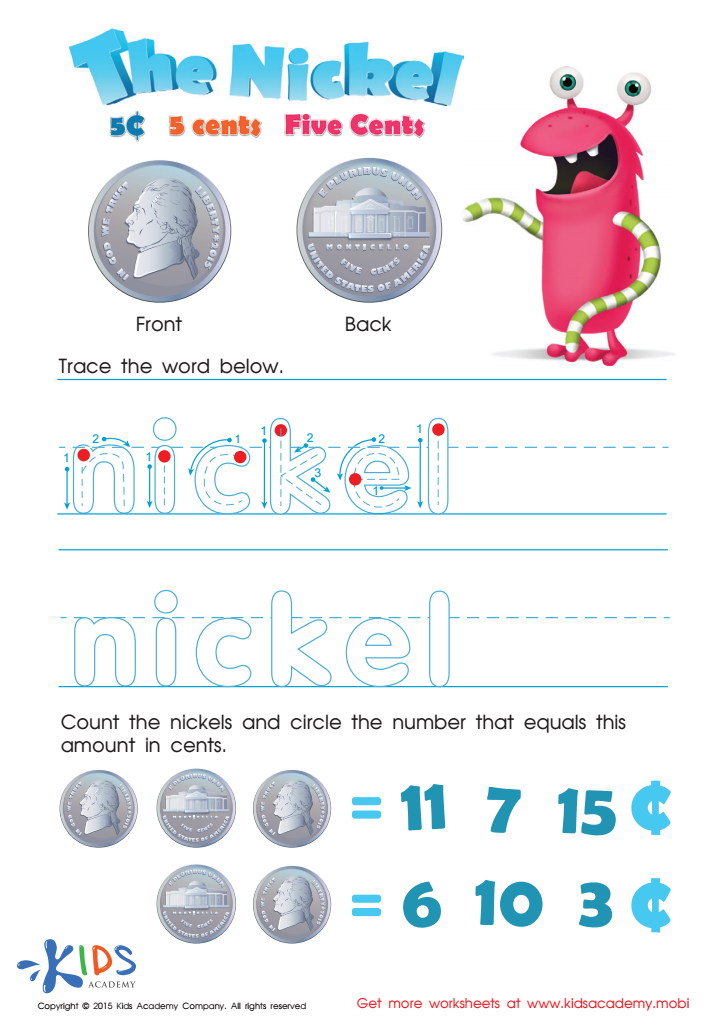
Five Cents or the Nickel Money Worksheet
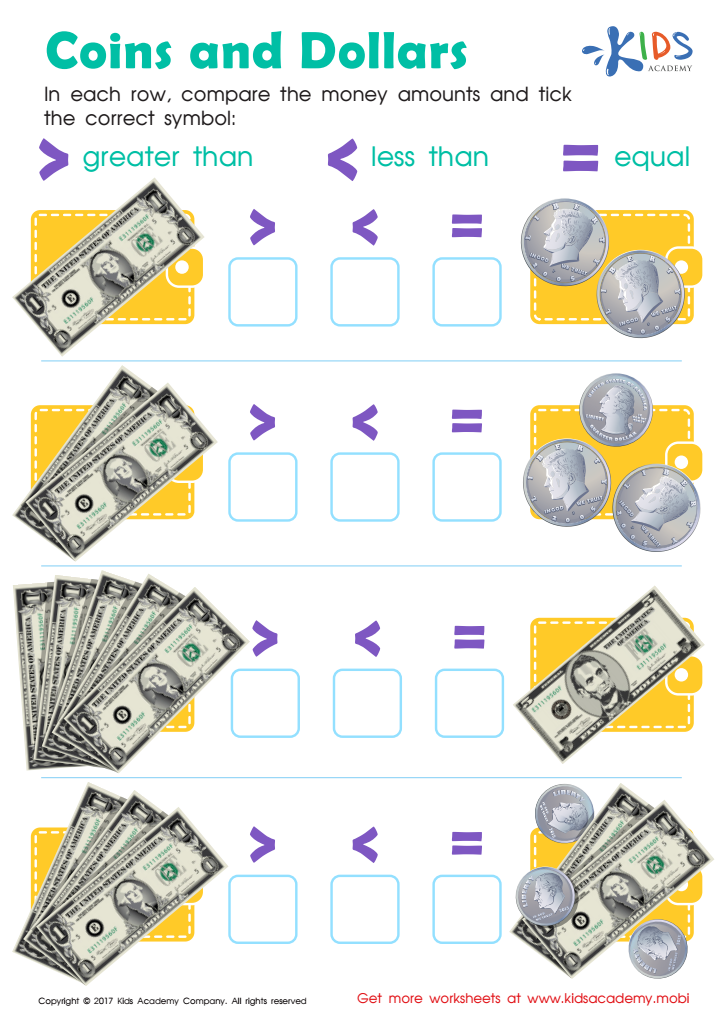
Money: Coins Dollars Printable
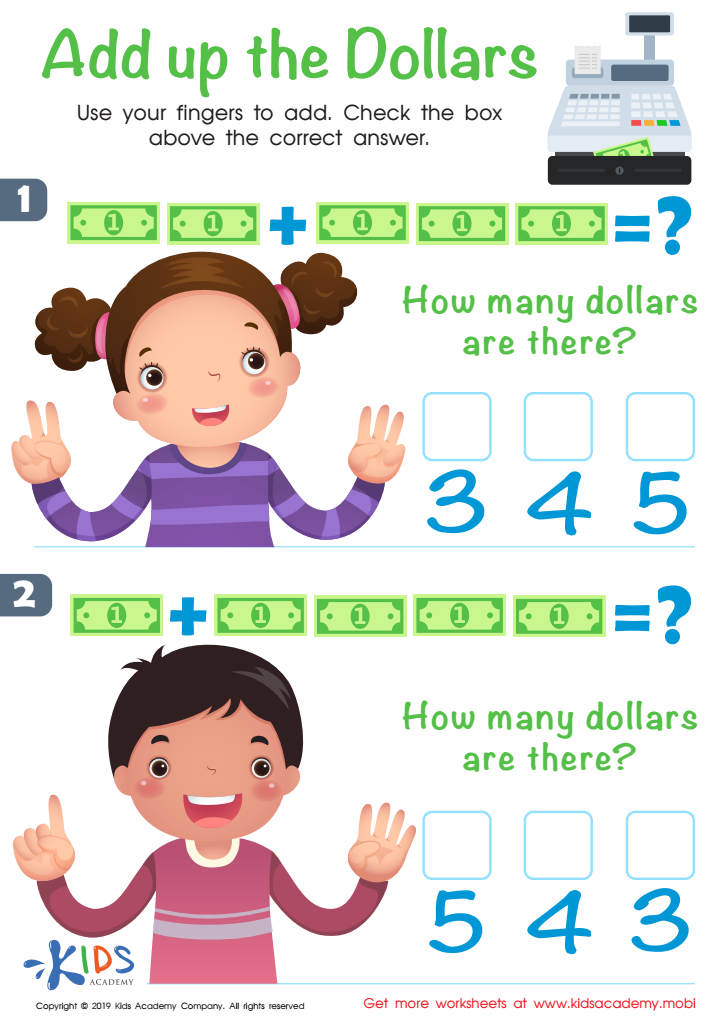
Add up the Dollars Worksheet








Understanding currency is crucial for children aged 5-6 as it lays the foundation for essential life skills and cognitive development. For one, comprehending the value of money and basic transactions helps children develop numerical and mathematical skills. Learning to count, recognizing currency, and understanding simple addition and subtraction with money not only enhances their math abilities but also boosts their cognitive and problem-solving skills.
Moreover, teaching young children about currency fosters financial responsibility and lays the groundwork for smart money management in the future. When children grasp the concept of earning, saving, and spending, they begin to understand the value of hard work and the importance of financial planning. This awareness aids in instilling disciplined financial habits from an early age.
Additionally, understanding currency supports social and practical life skills. For instance, children practicing buying small items fosters independence, decision-making, and communication skills as they learn to interact in transactional settings. It also teaches them the value of goods and services, promoting informed choices.
Parents and teachers play vital roles in making these concepts accessible and engaging through practical experiences, games, and everyday interactions. A solid foundation in currency understanding during these formative years becomes an investment in the child's future financial literacy and overall competence in managing life's daily challenges.








