Understanding shapes Worksheets for Ages 5-6
6 filtered results
-
From - To
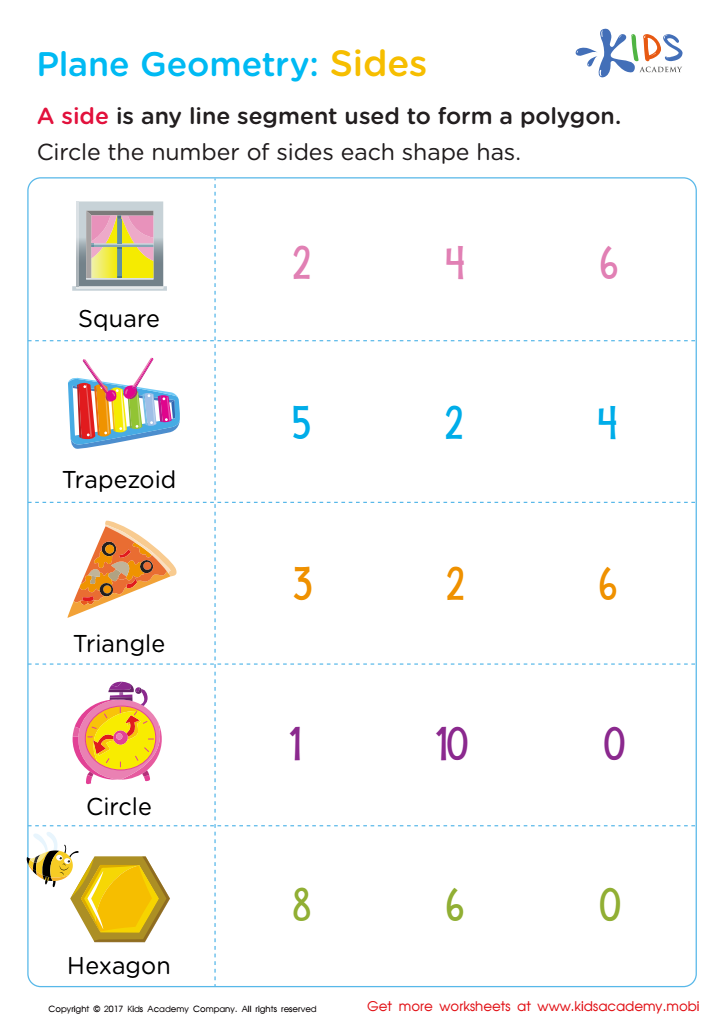
Shape your child's learning journey with our "Understanding Shapes Worksheets for Ages 5-6." These engaging and educational printables are designed to make learning about geometric shapes fun and interactive for young minds. The worksheets help children recognize, trace, and draw various shapes, fostering key skills important for early math development. Perfect for home or classroom use, our worksheets support cognitive development and enhance fine motor skills. Explore a world of circles, squares, and triangles with your child today and watch their confidence grow as they master the basics of geometry with ease.
 Assign to My Students
Adding With Longs and Cubes Worksheet
Let's Check! Assessment Worksheet
Find Diagonals Worksheet
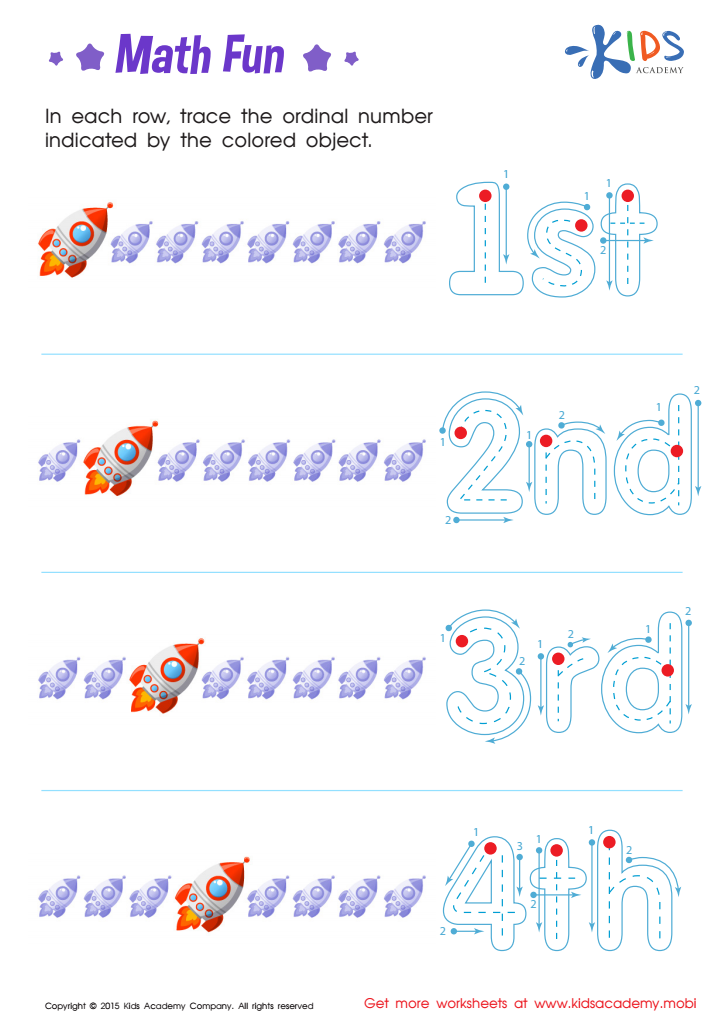
Ordinal Numbers: Math Fun Worksheet
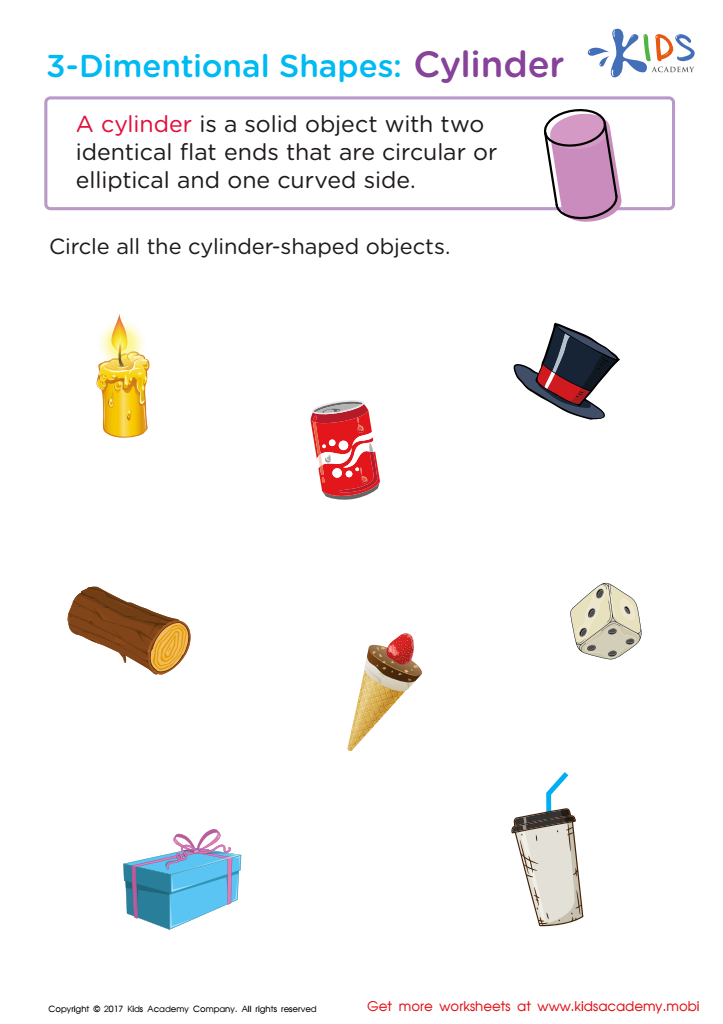
Three–Dimensional Shapes: Cylinder Worksheet







Understanding shapes is crucial for young children, typically ages 5-6, as it lays the foundation for numerous cognitive and developmental skills. Firstly, recognizing and distinguishing different shapes enhances children's spatial awareness, enabling them to comprehend the physical relationships between objects. This spatial reasoning is a building block for later skills in math, science, and even daily tasks like reading maps or assembling furniture.
Shapes also play a significant role in early geometry, a key component of the mathematical curriculum in school. Mastery of basic geometric concepts prepares children for more complex mathematical problems they will encounter in later grades. Furthermore, understanding shapes contributes to improved problem-solving skills as children learn to identify patterns and make connections between different objects or ideas.
Beyond academics, learning about shapes boosts language development. When children describe shapes (e.g., round, square, triangular), they expand their vocabulary and enhance their ability to express themselves clearly and accurately. Shape recognition, involving sorting and classifying, boosts cognitive skills essential for organizing and processing information.
Moreover, engaging with shapes through hands-on activities and playful learning significantly supports fine motor skills. Manipulating objects to create or identify shapes encourages children to develop hand-eye coordination and precision.
Ultimately, caring about understanding shapes means fostering a broad spectrum of skills that are vital for a child's comprehensive growth, confidence, and preparedness for future schooling.








