Animal recognition Adding in the Forest Worksheets for Ages 5-6
15 filtered results
-
From - To
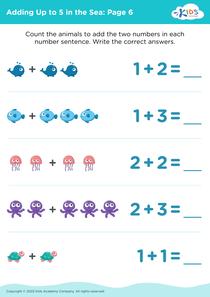
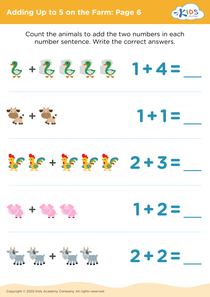
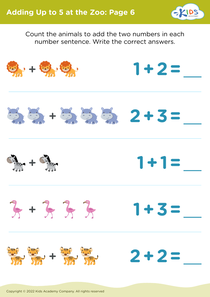
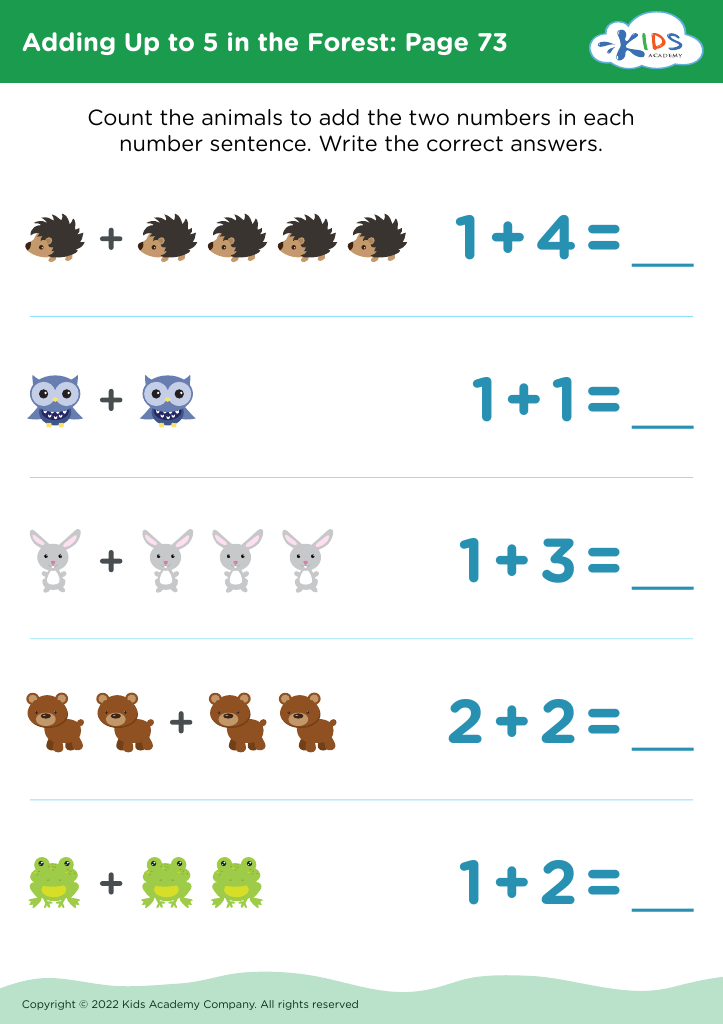
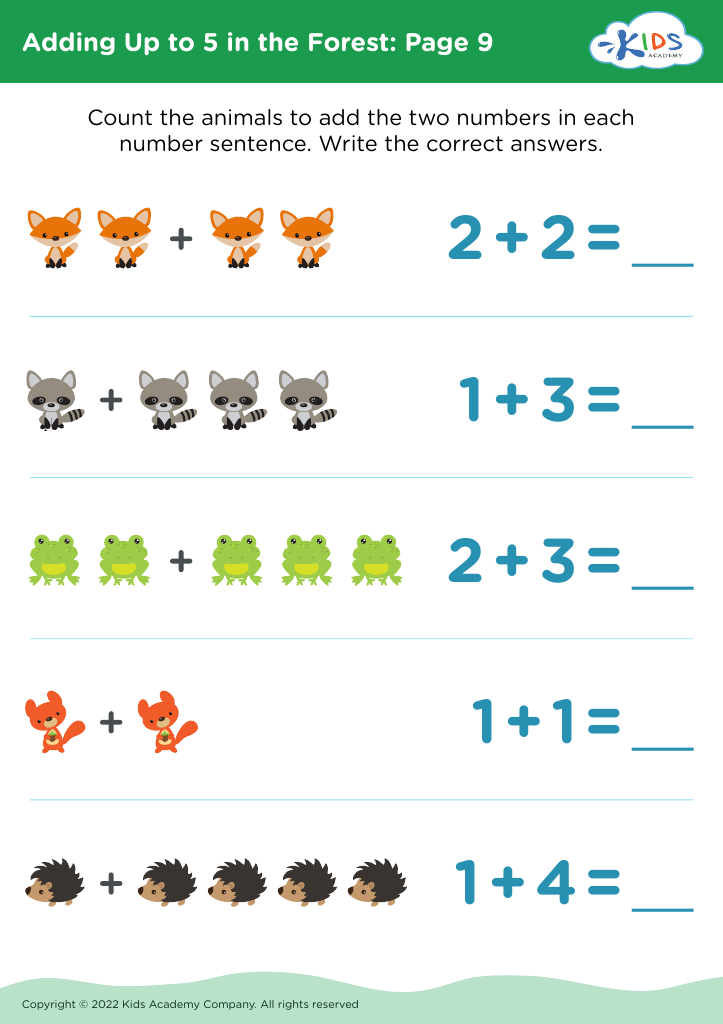
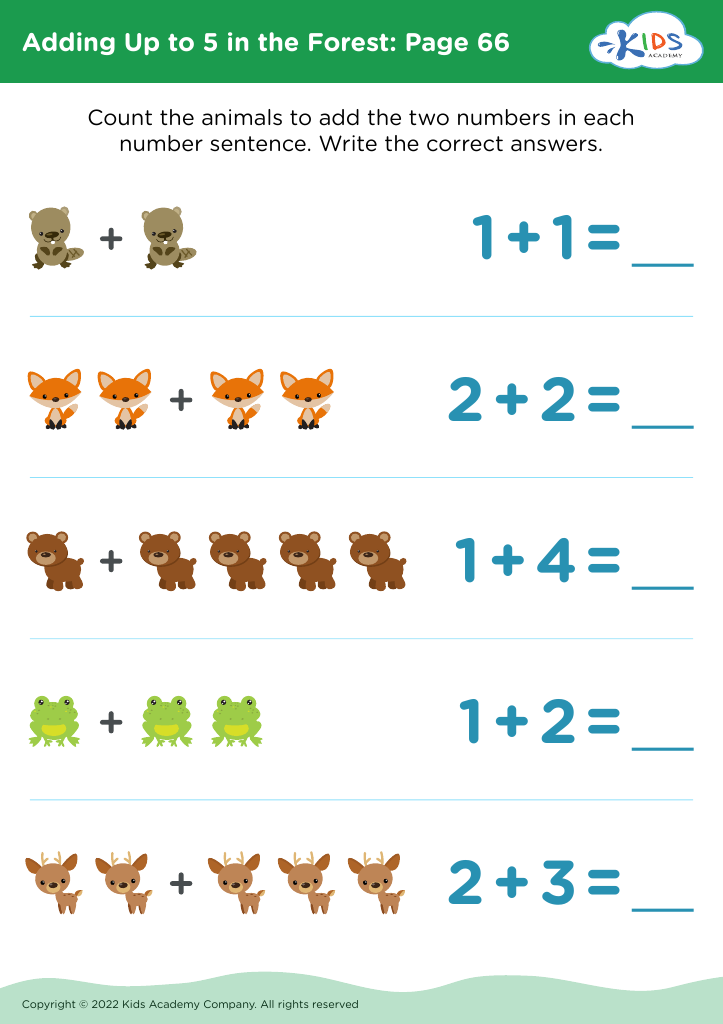
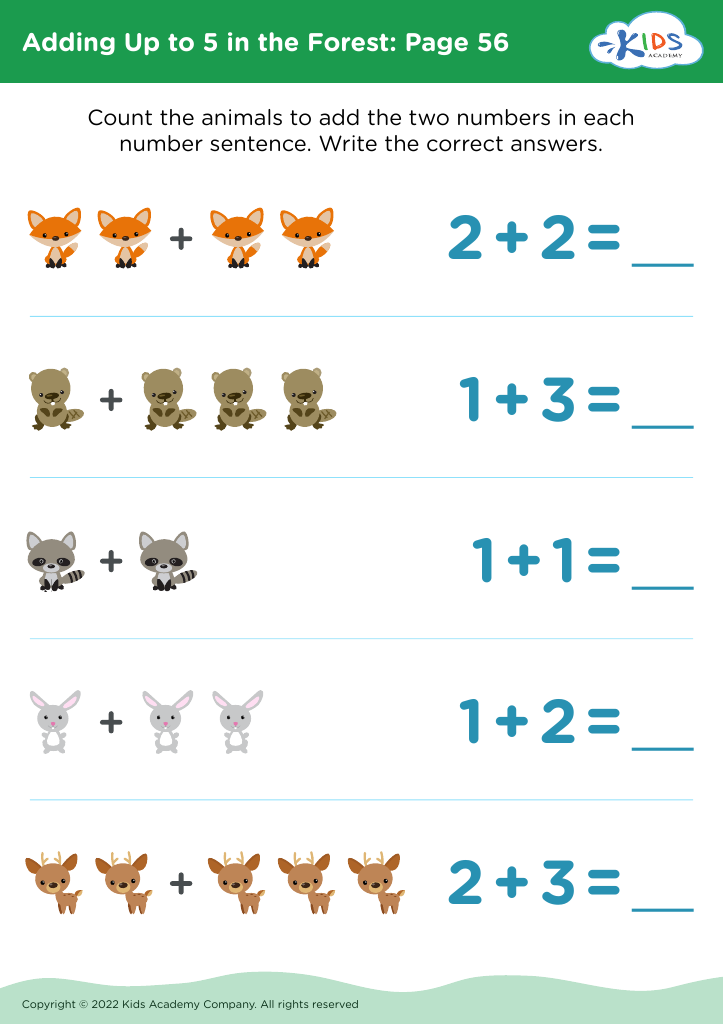
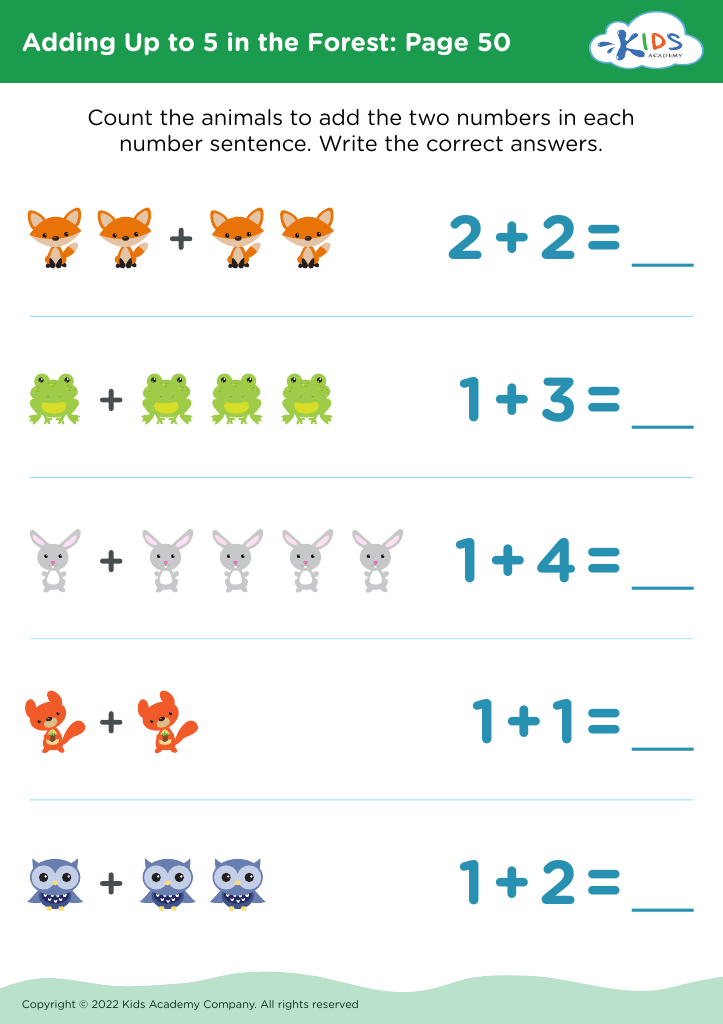
Our "Animal Recognition Adding in the Forest" worksheets are perfect for children aged 5-6. These engaging, educational printables blend math practice with wildlife exploration. Kids will have fun counting and adding forest animals while enhancing their math and animal recognition skills. These activities not only build fundamental addition ability but also introduce children to various forest creatures, making learning enjoyable and impactful. Equip your little ones with the tools to succeed in math and nature knowledge, engaging kids in a captivating way that encourages their love for learning. Start their educational journey with these delightful worksheets!
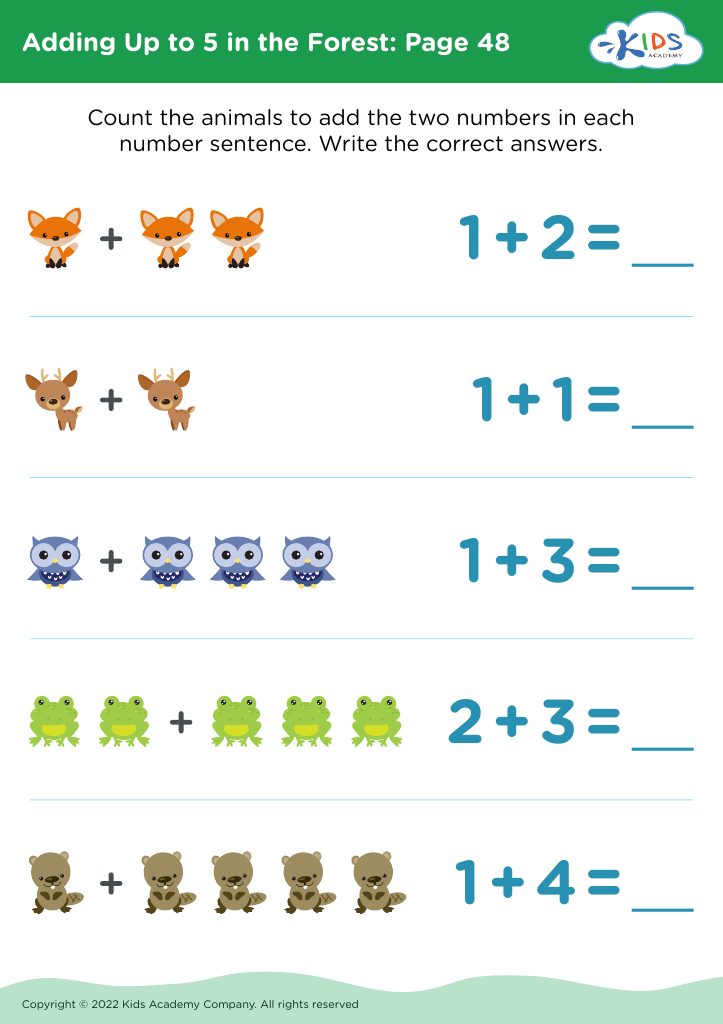
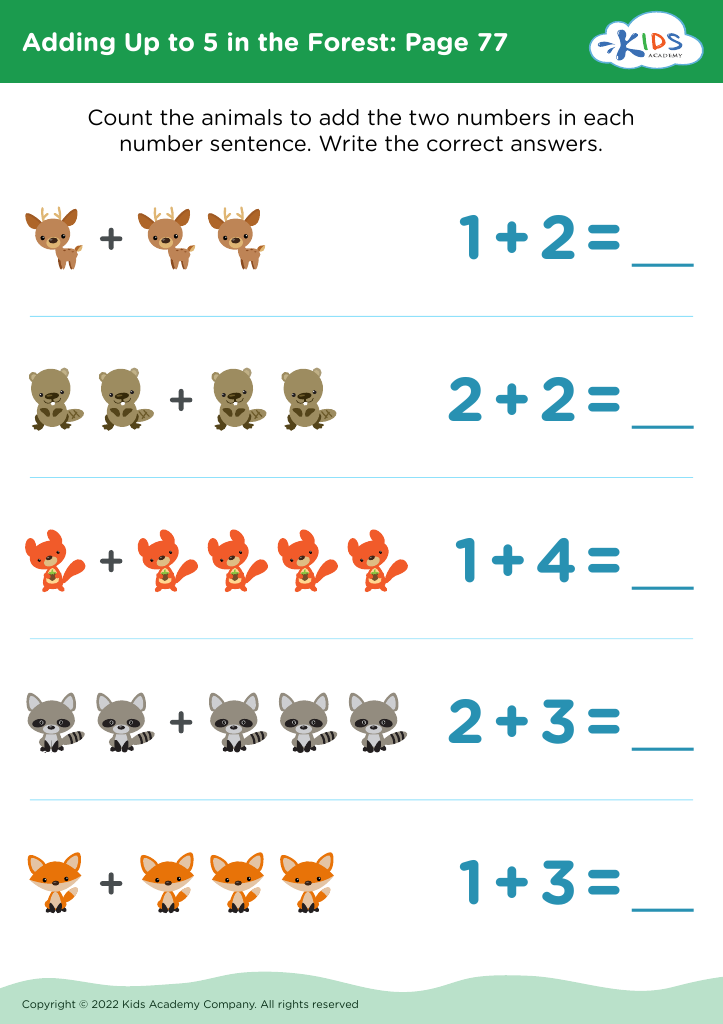
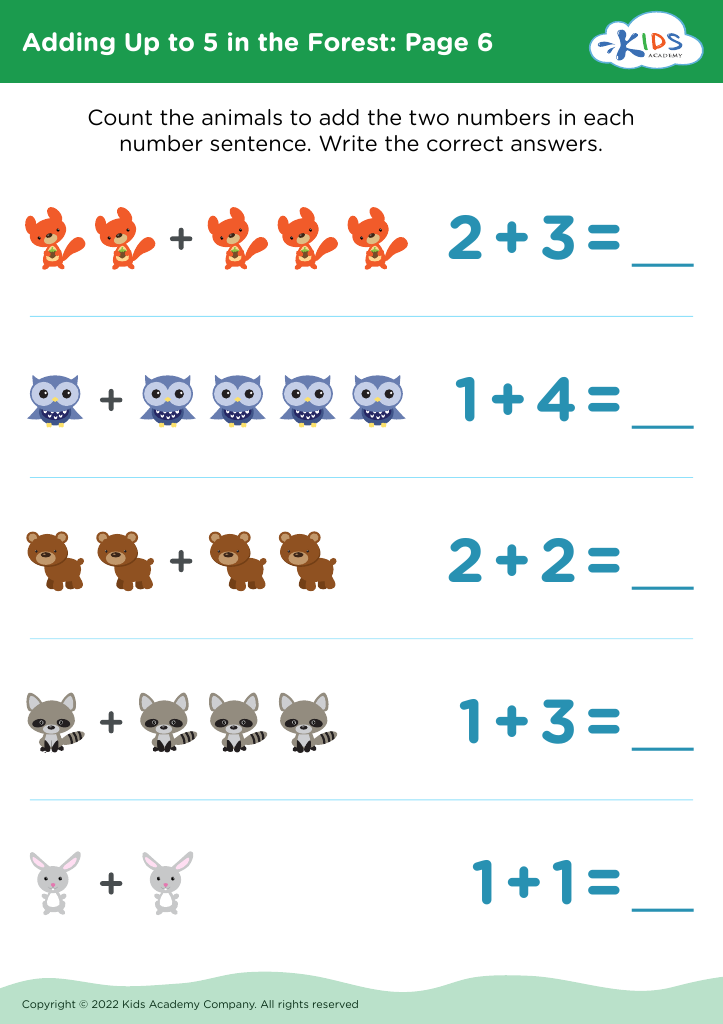
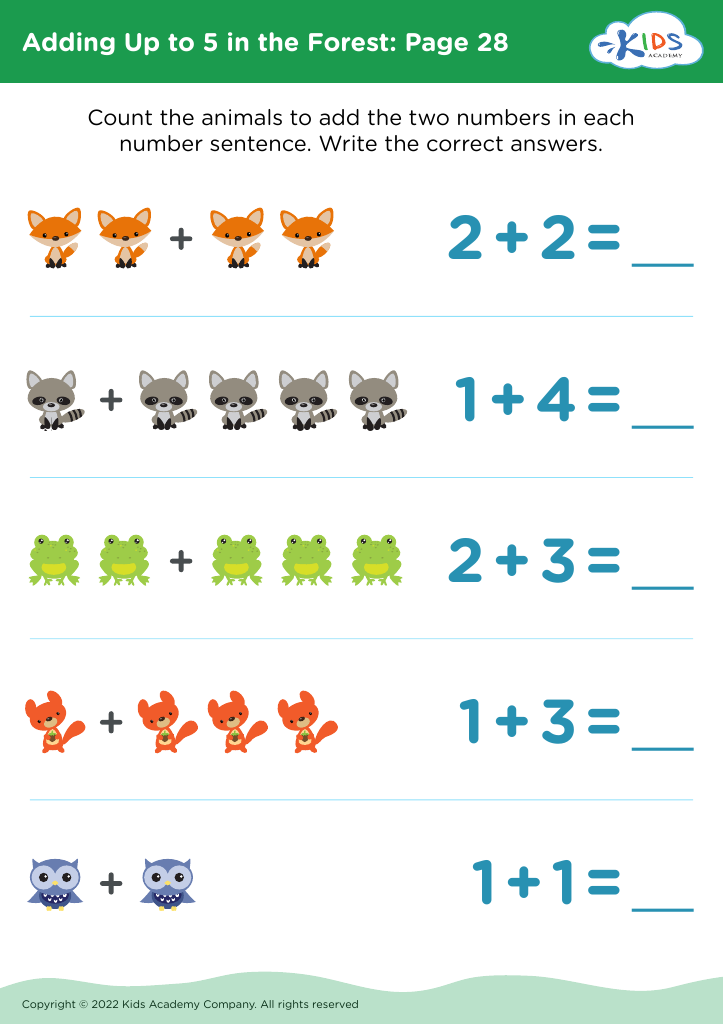
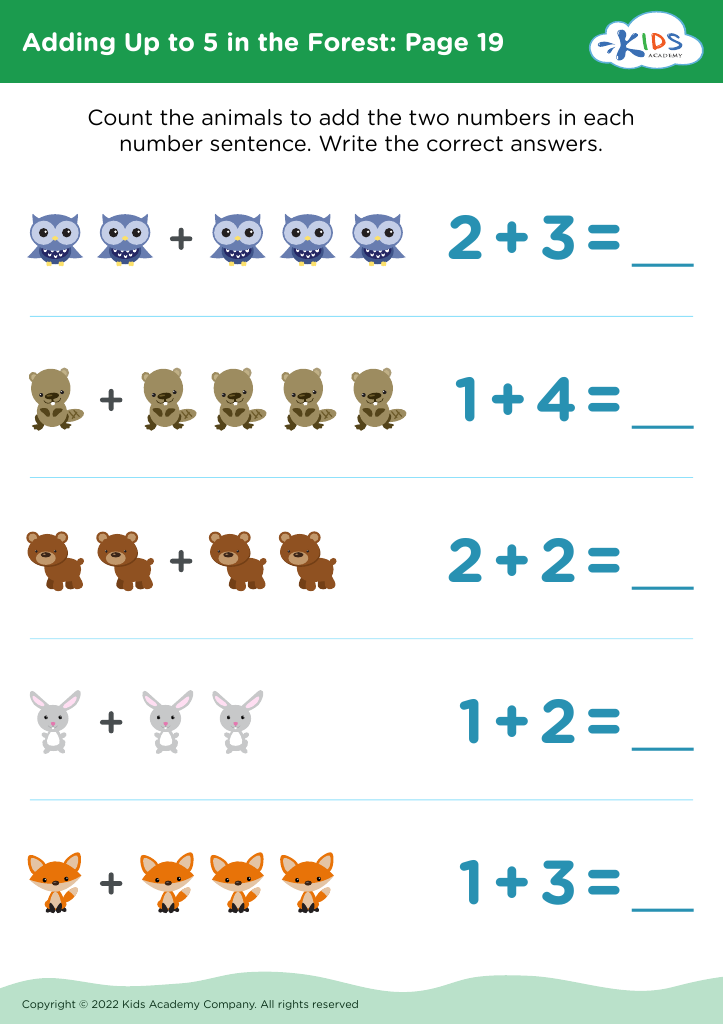
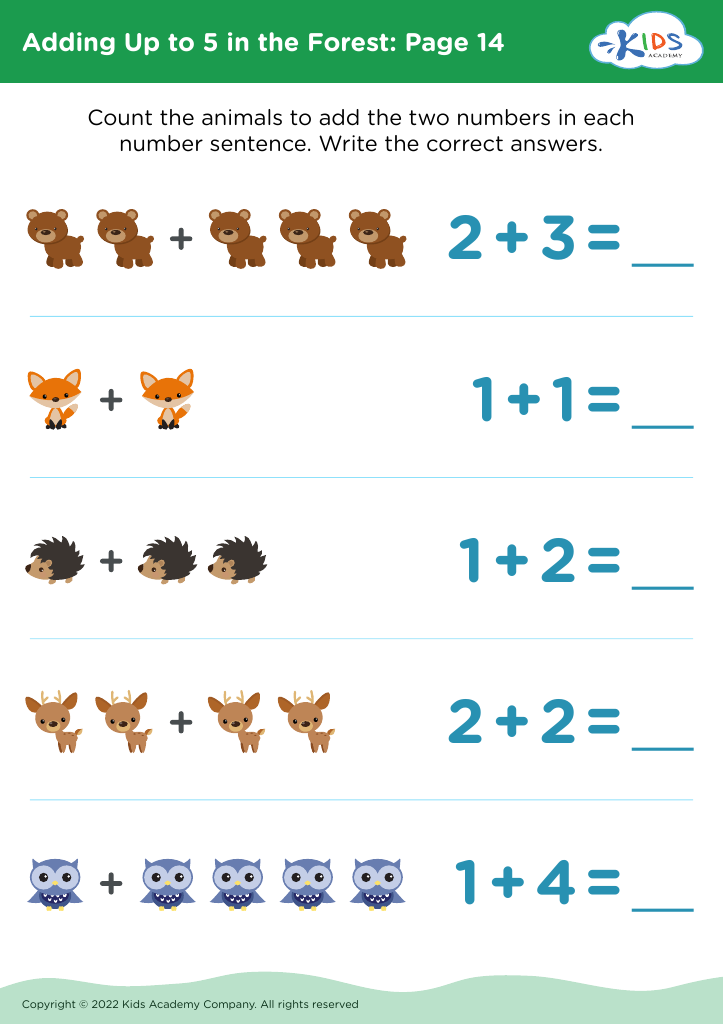
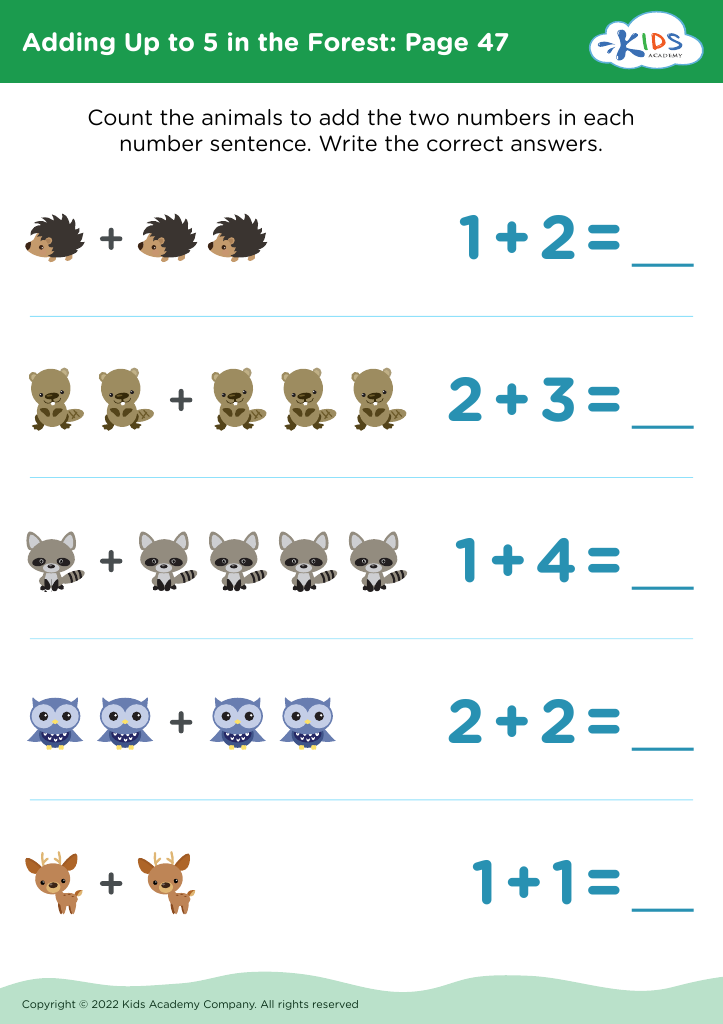
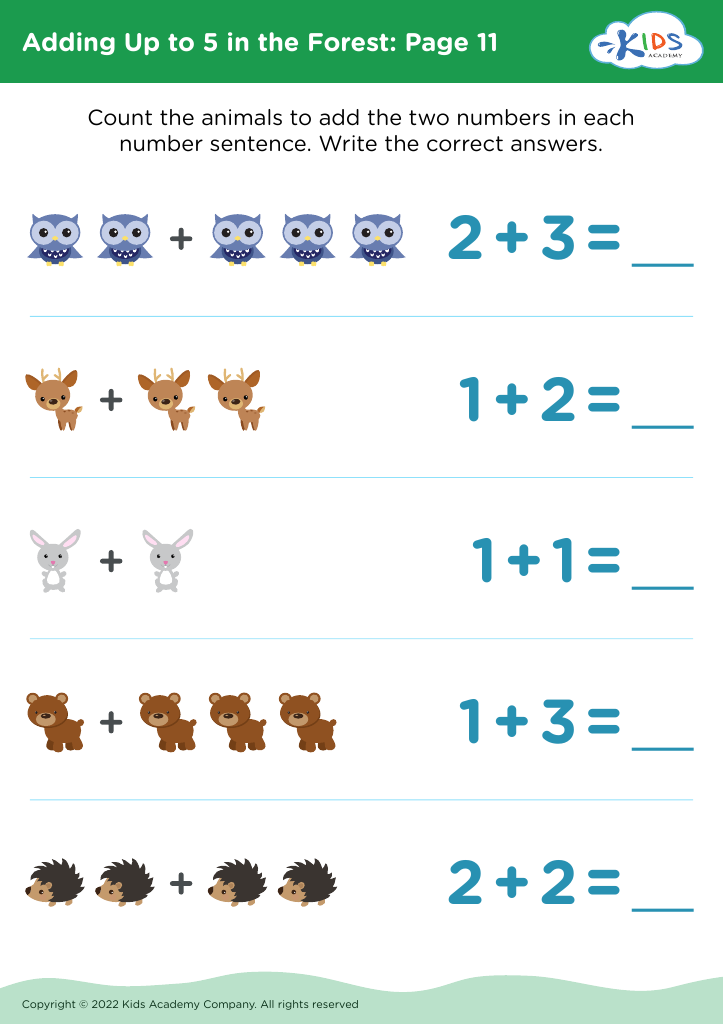
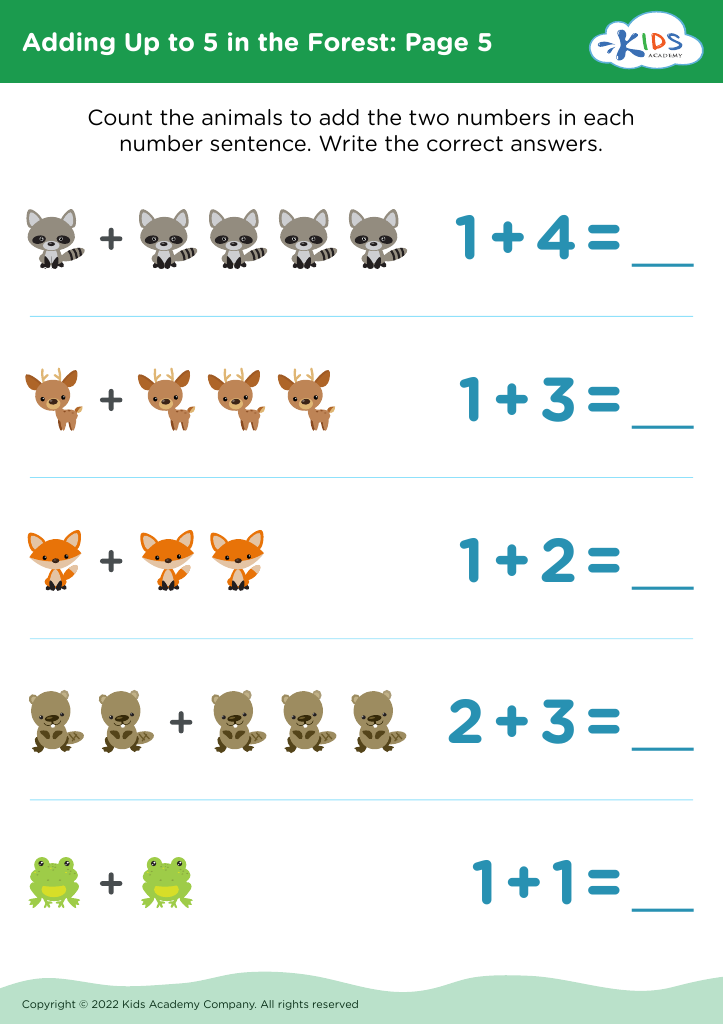
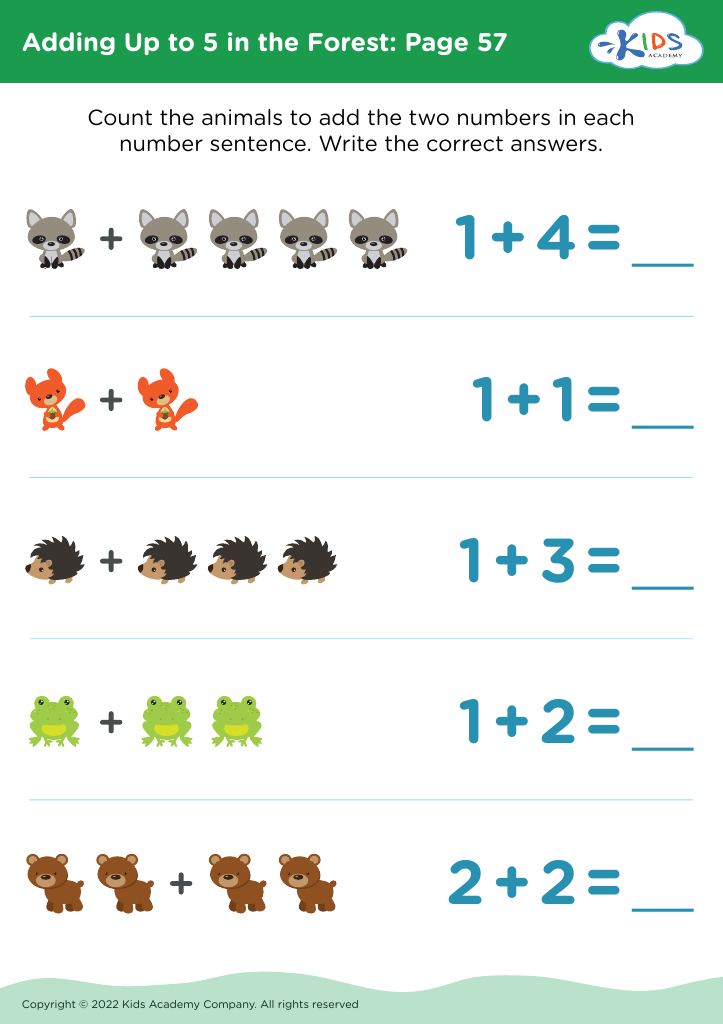



Animal recognition and understanding forest ecosystems are vital components of early education for children ages 5-6. Firstly, learning about different animals cultivates a sense of wonder and curiosity about the natural world. Recognizing various animals and their habitats fosters empathy and respect for living creatures, laying the foundation for environmental stewardship.
Through animal recognition activities in the forest, children develop key cognitive skills such as observation, categorization, and comparison. These skills are essential building blocks for more complex scientific concepts. Furthermore, engaging with nature boosts sensory development and can improve children's attention spans and problem-solving abilities compared to traditional classroom settings.
Forest activities are also beneficial for physical health, offering opportunities for exercise and hands-on exploration. Children develop their motor skills through activities like hiking and interacting with natural elements. These experiences can foster a lifelong appreciation for outdoor activities, which is particularly important in an increasingly digital age.
Moreover, social skills are nurtured as children work together to identify animals and complete tasks. Collaboration enhances communication skills and teaches the value of teamwork. Emotional benefits include reduced stress and anxiety, with nature outings providing a calming, grounding experience.
In summary, parents and teachers should incorporate animal recognition and forest exploration into early education to foster cognitive, physical, social, and emotional growth.